
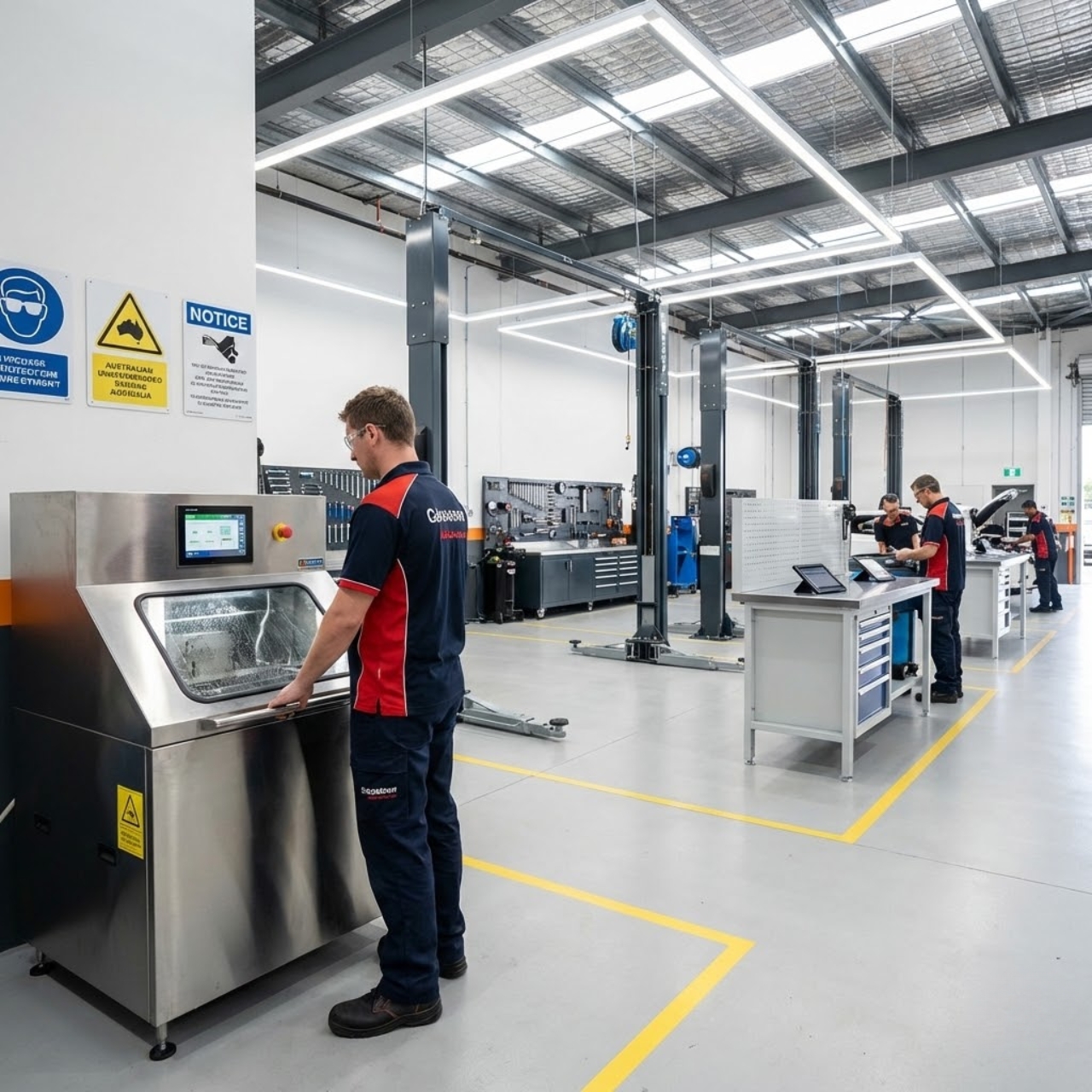
Automotive workshops across Australia face a persistent challenge that threatens operational efficiency and profitability – finding and retaining skilled technicians. The Australian Automotive Aftermarket Association reports that 68% of workshop owners identify technician recruitment as their most pressing operational concern, with average vacancy periods stretching beyond four months for qualified positions.
The technician shortage creates a cascade of operational problems: extended job turnaround times, declined work, customer dissatisfaction, and increased pressure on existing staff. Yet many workshop managers overlook a critical retention factor that sits in plain sight on their shop floor – the quality and capability of their equipment. Professional technicians evaluate potential employers not just on wages and conditions, but on whether they’ll have access to tools and equipment that make their work safer, faster, and less physically demanding.
Modern automated parts washing equipment, particularly automated systems from manufacturers like Hotwash, represents exactly this type of workshop investment that influences workshop equipment technician retention decisions. When skilled professionals compare workshop environments, the presence of professional-grade cleaning equipment signals operational standards, safety priorities, and respect for technician time and wellbeing.
How Equipment Quality Influences Technician Recruitment Decisions
Experienced automotive technicians conduct informal equipment audits during job interviews and facility tours. They notice whether workshops rely on manual cleaning methods or invest in automated systems. They observe whether parts washing requires physical scrubbing with brushes and solvents, or whether technicians can load components into an automated washer and return to skilled diagnostic work.
This evaluation process reflects practical experience. Technicians who’ve worked in facilities with heavy-duty parts washers understand the efficiency difference between manual and automated cleaning. A transmission overhaul that previously required 45 minutes of manual parts scrubbing can be reduced to 15 minutes of actual technician involvement when automated equipment handles the cleaning cycle. The remaining 30 minutes becomes available for billable diagnostic or repair work, increasing both workshop revenue and technician productivity bonuses.
Professional-grade equipment also signals workshop investment in operational standards. When candidates observe modern parts washing systems, they recognise management commitment to efficiency and quality. This perception influences acceptance decisions, particularly for experienced technicians comparing multiple offers. A workshop with outdated manual cleaning methods communicates different priorities than one equipped with automated systems designed for professional automotive applications.
The technician recruitment advantage extends beyond initial impressions. Word-of-mouth recommendations among technicians frequently reference equipment quality and working conditions. Technicians who work with quality cleaning equipment mention these advantages to colleagues, creating positive recruitment channels that attract skilled candidates without advertising costs.
Reducing Physical Strain and Workplace Fatigue
Manual parts cleaning represents one of the most physically demanding aspects of automotive repair work. Scrubbing heavy components with wire brushes, handling harsh chemical solvents, and maintaining awkward postures while cleaning large parts creates cumulative physical strain that contributes to technician fatigue, injury risk, and long-term musculoskeletal problems.
Australian workplace health and safety data identifies manual handling and repetitive strain as leading causes of technician injuries and workers’ compensation claims in automotive facilities. The physical demands of manual parts cleaning contribute directly to these statistics, particularly for workshops servicing heavy vehicles, mining equipment, or industrial machinery where component sizes and contamination levels intensify cleaning challenges.
Automated parts washing systems deliver significant physical strain reduction. Manual parts washers designed for professional workshops still require technicians to load components, but automated spray cycles eliminate scrubbing requirements. For larger operations, fully automated systems with rotating spray arms and programmable cycles remove even loading demands for many cleaning tasks.
This physical strain reduction delivers measurable retention benefits. Technicians approaching mid-career increasingly prioritise working conditions that allow sustainable long-term employment without cumulative physical damage. A 45-year-old master technician with 25 years of experience represents substantial knowledge and skill value – retaining these experienced professionals requires addressing the physical sustainability of their daily work environment.
Workshops that invest in equipment reducing physical demands demonstrate recognition of technician wellbeing as an operational priority. This recognition influences retention decisions when technicians evaluate whether to remain with current employers or explore opportunities offering better working conditions.
Creating Time for Skilled Work Instead of Manual Labour
Skilled automotive technicians train for years to develop diagnostic expertise, electrical system knowledge, and complex repair capabilities. These professionals command higher wages because their specialised knowledge creates value that less-experienced workers cannot provide. Yet many workshops inadvertently waste this expensive expertise by requiring skilled technicians to perform manual cleaning tasks that automated equipment could handle more efficiently.
The hourly cost differential proves significant: a qualified automotive technician might cost $45-60 per hour in wages and on-costs, while an automated parts washer operates for approximately $3-5 per hour in electricity, water, and detergent costs. When skilled technicians spend 30-45 minutes manually cleaning components for each major service or repair job, workshops essentially pay premium rates for work that equipment could perform at a fraction of the cost.
This inefficiency affects both workshop profitability and technician satisfaction. Experienced professionals recognise when their skills are underutilised through manual labour requirements. Many technicians enter the automotive trade specifically to work with complex systems and diagnostic challenges – not to scrub oil pans and transmission housings with wire brushes.
Stainless steel parts washers and other automated systems allow technicians to load contaminated components, initiate cleaning cycles, and immediately return to diagnostic or repair work requiring their specialised knowledge. The equipment completes cleaning cycles independently, freeing skilled labour for tasks that generate greater workshop revenue and provide more professional satisfaction.
Workshops that structure operations around this efficiency principle create working environments where technicians spend their time on intellectually engaging diagnostic and repair challenges rather than repetitive manual cleaning. This operational approach directly influences technician satisfaction and workshop equipment technician retention, particularly among skilled professionals who value opportunities to apply their expertise rather than perform basic manual labour.
Safety Improvements That Matter to Experienced Professionals
Automotive technicians develop acute awareness of workplace safety risks through years of hands-on experience. They understand chemical exposure hazards, recognise repetitive strain injury patterns, and identify facilities that prioritise safety versus those that treat it as a compliance formality. This safety awareness significantly influences employment decisions, particularly for experienced professionals who’ve witnessed or experienced workplace injuries.
Manual parts cleaning presents multiple safety concerns that quality equipment addresses directly. Solvent-based cleaning exposes technicians to chemical vapours, skin contact risks, and potential long-term health effects. Manual scrubbing creates repetitive strain patterns affecting wrists, shoulders, and backs. Handling large, contaminated components increases slip and handling injury risks.
Professional parts washing equipment mitigates these hazards through enclosed cleaning chambers, automated spray systems, and proper ventilation. Extra heavy-duty parts washers designed for larger components eliminate the need for technicians to manually manipulate heavy parts during cleaning, reducing handling injury risks while delivering superior cleaning results.
The cleaning automation benefits extend beyond immediate injury prevention to long-term health protection. Enclosed automated systems minimise chemical vapour exposure compared to open manual cleaning methods. This protection matters increasingly to technicians aware of long-term health risks associated with solvent exposure, particularly as Australian workplace health regulations strengthen chemical safety requirements.
Workshops demonstrating genuine safety commitment through equipment investment create reputational advantages in technician recruitment markets. Safety-conscious professionals actively seek employers who invest in hazard reduction rather than simply maintaining minimum compliance standards. Quality parts washing equipment represents visible evidence of this safety priority, influencing both recruitment and workshop equipment technician retention outcomes.
Professional Standards and Quality Consistency
Experienced automotive technicians understand that cleaning quality directly affects repair outcomes and workshop reputation. Inadequately cleaned components compromise gasket sealing, contaminate lubricants, accelerate wear, and create premature failure risks. Manual cleaning methods produce inconsistent results dependent on individual technician effort, fatigue levels, and time pressure – variability that professional technicians find frustrating and professionally concerning.
Automated parts washing systems deliver consistent cleaning results regardless of workload pressure or technician fatigue. Hot tank systems and heated spray washers remove contamination that manual methods struggle to address, particularly for components with complex internal passages or heavy carbon buildup. This consistency allows technicians to maintain quality standards without additional time investment, supporting both professional pride and workshop reputation.
The quality consistency matters particularly for warranty work and critical repairs where component cleanliness directly affects longevity and performance. Technicians working on engine rebuilds, transmission overhauls, or differential services recognise that proper parts cleaning represents foundational quality that determines repair success. Equipment that reliably delivers this cleaning quality supports the professional standards that skilled technicians maintain throughout their careers.
Workshops equipped with professional-grade cleaning systems also demonstrate quality commitment to customers during facility tours or service consultations. When clients observe modern automated equipment, they perceive higher operational standards and greater confidence in service quality. This customer perception creates positive feedback that reinforces technician pride in their workplace and employer.
Equipment Investment as Competitive Differentiation
The Australian automotive service market contains thousands of workshops competing for both customers and skilled technicians. In this competitive environment, operational investments that create tangible working condition advantages deliver recruitment and retention benefits that extend well beyond the equipment’s direct productivity improvements.
Two workshops offering similar wages and conditions but with different equipment standards present vastly different propositions. Workshop A relies on manual parts cleaning methods with basic sink washers and solvent tanks. Workshop B operates super heavy-duty parts washers for large components and automated systems for routine cleaning tasks. Skilled technicians comparing these environments recognise immediate differences in working conditions, physical demands, and operational efficiency.
The equipment differential creates technician recruitment advantages that reduce hiring costs and vacancy periods. When workshops can attract skilled candidates more quickly, they maintain productivity levels, avoid declined work, and reduce pressure on existing staff. These operational benefits compound over time, creating performance advantages that equipment-limited competitors struggle to match.
The competitive differentiation extends to customer service capabilities. Workshops with efficient parts washing systems can offer faster turnaround times for major services and repairs, creating customer satisfaction advantages that drive repeat business and referrals. Technicians working in these high-performance environments experience greater job security, professional pride, and career satisfaction – factors that directly influence long-term workshop equipment technician retention decisions.
Calculating the True Cost of Technician Turnover
Workshop managers evaluating equipment investments often focus narrowly on purchase costs and direct operational savings. This limited analysis overlooks the substantial hidden costs of technician turnover that quality equipment helps prevent. Understanding these complete cost dynamics reveals why equipment investment delivers returns that extend well beyond direct productivity improvements.
Recruiting a skilled automotive technician typically costs $8,000-$15,000 when accounting for advertising, interview time, reference checking, and administrative processing. Training and integration periods then require 3-6 months before new technicians reach full productivity, during which workshop efficiency suffers and experienced staff spend time mentoring rather than generating revenue.
The productivity loss during vacancy periods creates additional costs. When skilled positions remain unfilled for 4-6 months (the current Australian average), workshops either decline work, extend turnaround times, or overload existing technicians. Each option carries revenue implications – declined work represents direct income loss, extended turnarounds damage customer satisfaction, and technician overload increases stress and subsequent turnover risk.
Equipment investments that improve retention eliminate these recurring costs. A $25,000 investment in professional parts washing equipment might prevent just one skilled technician departure over three years to deliver positive return on investment – yet the actual retention benefits typically extend to multiple staff members who all experience improved working conditions, physical strain reduction, and greater job satisfaction.
The calculation becomes even more compelling when considering the technician recruitment advantages that quality equipment provides. Workshops known for modern equipment and good working conditions fill vacancies faster and attract higher-quality candidates, reducing both recruitment costs and integration periods. These advantages compound annually, creating cumulative value that far exceeds the initial equipment investment.
Supporting Career Development and Professional Growth
Skilled automotive technicians increasingly view their careers through long-term sustainability lenses, evaluating whether current employers support professional growth or simply extract maximum short-term productivity. This perspective influences retention decisions, particularly for mid-career professionals with 10-20 years of experience who represent substantial knowledge and skill assets.
Modern automated equipment supports professional development by allowing technicians to focus on diagnostic challenges and complex repair procedures rather than manual cleaning tasks. When workshops invest in equipment that handles routine processes efficiently, they create environments where technicians can develop advanced skills, pursue manufacturer certifications, and engage with emerging vehicle technologies.
This development focus matters increasingly as automotive technology evolves toward electric vehicles, advanced driver assistance systems, and complex electronic architectures. Technicians working in facilities that demonstrate commitment to operational excellence through equipment investment recognise employers who will likely support ongoing training and technology adaptation as industry requirements evolve.
The professional growth environment also influences recruitment of younger technicians entering the trade. Apprentices and early-career professionals evaluate potential employers based on learning opportunities and career trajectory possibilities. Workshops with modern equipment and efficient operational systems signal commitment to professional standards that support career development rather than simply extracting labour at minimum cost.
Implementation Considerations for Workshop Managers
Workshop managers recognising the retention value of quality equipment face practical implementation questions: which systems deliver the greatest impact, how to justify capital investment, and how to communicate equipment upgrades to staff as retention initiatives rather than simple operational improvements.
The equipment selection process should prioritise systems addressing the most physically demanding or time-consuming cleaning tasks in current operations. For workshops servicing heavy vehicles or mining equipment, hot blasters designed for intensive cleaning applications deliver immediate impact on technician workload and job satisfaction. For general automotive facilities, automated spray washers handling routine component cleaning free skilled labour for more valuable diagnostic and repair work.
Financial justification should account for both direct productivity improvements and retention-related cost avoidance. When presenting equipment investments to ownership or financial decision-makers, workshop managers should quantify the complete value including reduced technician turnover costs, faster recruitment, improved customer service capabilities, and enhanced competitive positioning in tight labour markets.
Staff communication about equipment upgrades should explicitly connect investments to technician wellbeing and working condition improvements. When introducing new parts washing systems, workshop managers should emphasise physical strain reduction, safety improvements, and time savings that allow technicians to focus on skilled work. This communication demonstrates that management recognises technician concerns and invests in solutions addressing workplace quality beyond minimum operational requirements.
The implementation approach should also involve technicians in equipment selection and setup processes. When staff participate in evaluating equipment options and configuring systems for optimal workflow integration, they develop ownership and appreciation for operational improvements. This involvement creates positive engagement that reinforces cleaning automation benefits beyond the equipment’s direct functional advantages.
Building Long-Term Competitive Advantage
The Australian automotive service industry will continue facing skilled technician shortages for the foreseeable future as demographic trends, alternative career options, and trade training capacity constraints limit qualified candidate availability. In this sustained tight labour market, workshops that create genuine competitive advantages in recruitment and retention will outperform competitors struggling with chronic staffing challenges.
Quality equipment investment represents one of the most tangible and verifiable competitive advantages available to workshop managers. Unlike intangible benefits such as “positive culture” or “career development opportunities,” professional-grade parts washing systems and other operational equipment create immediate, visible working condition improvements that technicians recognise and value.
These equipment advantages compound over time as word-of-mouth reputation develops among technician networks. Workshops known for modern equipment and efficient operations attract unsolicited applications from skilled professionals seeking better working environments. This reputation-driven recruitment reduces advertising costs, shortens vacancy periods, and allows selective hiring that further improves operational performance.
The long-term competitive advantage extends beyond direct labour benefits to customer service capabilities and market positioning. Workshops operating with full skilled staff, efficient processes, and consistent quality standards capture market share from competitors struggling with technician shortages and operational inefficiencies. This market position creates business value that substantially exceeds the initial equipment investment costs.
Conclusion
The skilled technician shortage affecting Australian automotive workshops requires strategic responses beyond traditional recruitment advertising and wage competition. Quality equipment investment – particularly automated parts washing systems that reduce physical strain, eliminate manual labour, and improve working conditions – creates tangible competitive advantages in both attracting skilled automotive technicians and retaining experienced professionals.
The workshop equipment technician retention value of professional-grade equipment extends across multiple dimensions: physical strain reduction supports long-term career sustainability, automated systems free skilled labour for more engaging diagnostic work, safety improvements demonstrate genuine workplace health commitment, and operational efficiency creates professional pride in workshop standards. These factors collectively influence technician satisfaction and employment decisions in ways that directly affect workshop performance and profitability.
For workshop managers facing persistent recruitment challenges and concerning turnover rates, equipment investment represents a strategic response that delivers measurable returns through reduced hiring costs, shorter vacancy periods, improved operational efficiency, and enhanced competitive positioning. The Australian-made parts washing systems that Hotwash manufactures specifically address the demanding cleaning requirements of automotive and heavy equipment facilities while supporting the working condition improvements that skilled technicians increasingly prioritise in employment decisions.
Workshops ready to address workshop equipment technician retention through operational improvements should evaluate how current equipment and processes affect daily working conditions, physical demands, and job satisfaction. Contact us to discuss parts washing solutions designed for Australian automotive facilities, with specifications and capacity options supporting operations from independent workshops to major dealership service departments. Professional-grade cleaning equipment represents an investment in both operational efficiency and the skilled workforce that determines long-term workshop success.

Leave A Comment