
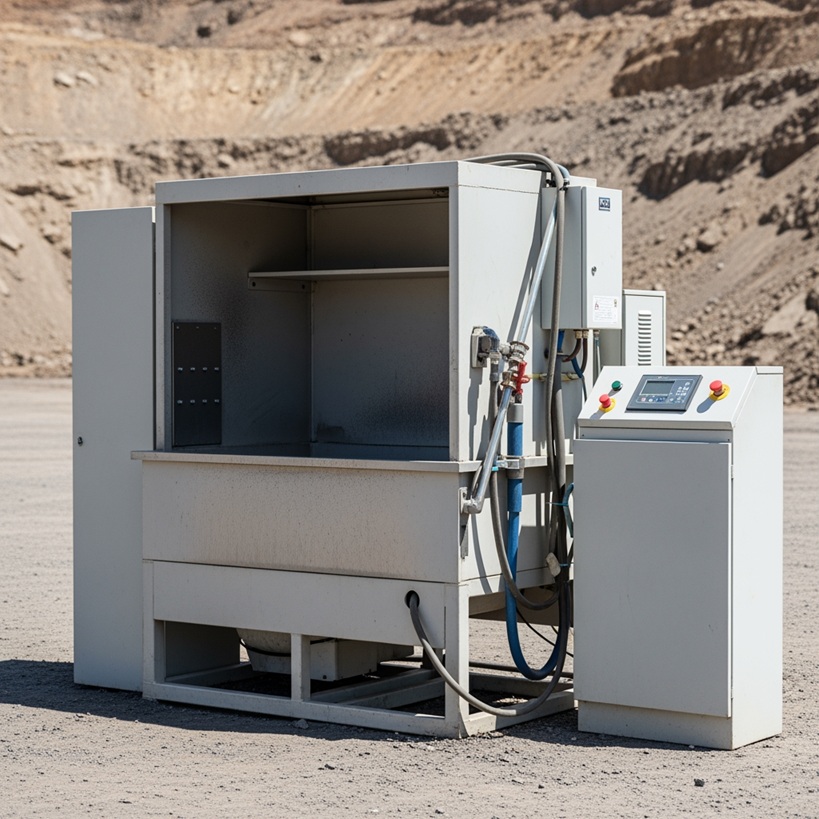
Mine site procurement teams see the price difference immediately. A standard industrial parts washer might cost $15,000. The mine-spec equivalent? Closer to $45,000. For operations managers defending capital expenditure requests, that gap demands explanation. The reality is that mining industry cleaning equipment isn’t just marked up – it’s fundamentally engineered for conditions that destroy conventional equipment within months.
The cost difference reflects genuine engineering requirements, not inflated pricing. Mine-spec systems incorporate materials, construction methods, and safety features that standard industrial equipment simply doesn’t need. Understanding these differences helps operations teams make informed decisions about equipment that will face some of Australia’s harshest industrial environments.
The Engineering Reality Behind Mine-Spec Pricing
Mine site conditions create equipment challenges that workshop or light industrial environments never encounter. Dust levels in open-cut mines can exceed 10mg/m³ during operations – roughly 100 times higher than typical workshop environments. Temperatures in Pilbara mine sites regularly hit 45°C, while underground operations expose equipment to humidity levels above 90%. This isn’t occasional stress – it’s the baseline operating environment, every shift, every day.
Standard industrial equipment uses materials selected for moderate conditions. Powder-coated mild steel cabinets work perfectly in climate-controlled workshops. Those same cabinets corrode within 18 months on mine sites where salt-laden dust combines with temperature extremes and equipment wash-down protocols. Mine-spec construction requires marine-grade stainless steel or heavy-gauge powder-coated steel with specialised corrosion-resistant treatments. The material cost alone increases by 40-60% before considering engineering modifications.
Electrical systems face similar challenges. Standard equipment uses IP54-rated components suitable for workshop dust protection. Mine sites demand IP65 or IP66 ratings – complete protection against dust ingress and high-pressure water jets from wash-down procedures. These ratings require sealed electrical enclosures, specialised cable glands, and waterproof control panels. Each component costs 2-3 times more than standard alternatives, and installation requires additional labour hours for proper sealing and testing.
Durability Engineering That Prevents Catastrophic Failures
The structural engineering differences between standard and mine-spec equipment become obvious when examining construction methods. Standard heavy duty parts washers use 2mm steel sheet for cabinet construction – adequate for workshop loads and occasional bumps. Mine-spec systems require 3-5mm steel plate construction with reinforced corners and structural bracing. This isn’t over-engineering – it’s responding to real-world conditions where forklifts bump equipment, heavy components drop into wash chambers, and vibration from nearby machinery creates constant stress.
Pump systems illustrate the durability gap clearly. A standard industrial parts washer might use a 2HP pump rated for 5,000 hours of operation – roughly three years of typical workshop use. Mine sites run equipment continuously across multiple shifts, accumulating 5,000 hours in less than 12 months. Mine-spec pumps use heavy-duty motors rated for 20,000+ hours, with sealed bearings, oversized impellers, and thermal overload protection. The pump assembly alone costs three times more, but prevents the catastrophic failure that shuts down cleaning operations and creates maintenance backlogs.
Heat exchangers face similar demands. Standard systems use copper coil heat exchangers adequate for heating water to 60-70°C in controlled conditions. Mine environments require stainless steel plate heat exchangers that maintain consistent temperatures despite incoming water temperature variations, high mineral content, and continuous operation. These exchangers cost 4-5 times more than copper coil alternatives but deliver 10+ years of reliable service versus 2-3 years for standard components.
Safety Compliance That Protects Workers and Operations
Mine site safety requirements extend beyond general workplace health and safety standards. Equipment must comply with mine spec equipment standards covering electrical safety, pressure vessel standards, and hazardous area classifications. These aren’t optional certifications – they’re mandatory requirements that prevent equipment from entering mine sites.
Electrical safety certifications for mine sites require third-party testing and documentation that standard equipment doesn’t undergo. Each super heavy duty parts washer destined for major mining operations must have electrical drawings reviewed, components tested, and complete documentation provided showing compliance with AS/NZS 3000 and AS/NZS 3010 standards. This certification process adds $3,000-$5,000 per unit but provides the documentation that mine site electrical supervisors require before allowing equipment connection.
Pressure vessel compliance for heated wash systems creates additional costs. Any system operating above 100°C or maintaining pressurised heated water requires pressure vessel certification under Australian standards. This involves engineering calculations, pressure relief valve specifications, and regular inspection schedules. The certification process costs $2,000-$4,000 initially, with ongoing inspection requirements. Standard workshop equipment operating at lower temperatures avoids these requirements entirely.
Emergency shutdown systems represent another requirement within mine spec equipment standards. Standard parts washers use simple on/off controls. Mine-spec systems require emergency stop buttons positioned for quick access, with control circuits that prevent automatic restart after power interruptions. These safety interlocks add complexity to electrical systems and require additional components, but they prevent accidents when operators face unexpected situations.
The Hidden Costs of Standard Equipment in Mining Environments
Operations managers sometimes approve standard industrial equipment purchases to reduce upfront costs, expecting reasonable service life. The actual cost calculation reveals a different story. A $15,000 standard parts washer lasting 18 months before requiring major repairs or replacement costs $10,000 annually. A $45,000 mine-spec system delivering 10 years of reliable service costs $4,500 annually – less than half the annualised cost despite the higher purchase price.
Downtime costs amplify this difference. When a parts washer fails on a mine site, the impact extends beyond the equipment itself. Maintenance teams can’t clean components properly, creating backlogs that delay equipment returns to service. A single day of delayed repairs on a haul truck costs $50,000-$100,000 in lost production. That context makes a $45,000 investment in reliable cleaning equipment look remarkably cost-effective compared to a $15,000 unit that fails every 18 months.
Repair costs in remote mining locations add another layer of expense. When standard equipment fails at a Pilbara mine site, replacement parts must be air-freighted from Perth or interstate suppliers. A $200 pump becomes a $600 emergency repair when adding freight costs and technician callout fees. Mining industry cleaning equipment from Australian manufacturers like Hotwash Australia includes readily available spare parts and local service support, reducing repair costs and minimising downtime.
Australian Standards and Local Manufacturing Advantages
Australian-manufactured mining industry cleaning equipment offers advantages beyond meeting local standards. Equipment designed and built in Australia incorporates knowledge of local mining conditions, water quality variations, and operational requirements specific to Australian mine sites. This localised engineering prevents problems that imported equipment frequently encounters.
Water quality variations across Australian mine sites create specific challenges. Pilbara bore water contains different mineral compositions than Queensland mine sites, affecting detergent effectiveness and scale buildup rates. Australian manufacturers design extra heavy duty parts washers accounting for these variations, incorporating appropriate filtration and water treatment systems. Imported equipment designed for European or North American water conditions often requires expensive modifications to function properly in Australian conditions.
Local manufacturing also provides supply chain reliability. Global supply chain disruptions between 2020-2023 delayed imported equipment deliveries by 6-12 months, leaving mine sites waiting for critical cleaning systems. Australian manufacturers maintain local inventory and can deliver equipment within weeks rather than months. For mine expansions or equipment replacements, this delivery reliability prevents project delays that cost millions in deferred production.
Warranty support and service availability create practical advantages. When mine-spec equipment requires service, Australian manufacturers provide technicians familiar with the equipment and local conditions. They arrive within days, not weeks, and carry appropriate spare parts. This service response prevents extended downtime that turns a minor repair into a major operational disruption.
Real-World Performance in Major Mining Operations
Major Australian mining companies consistently specify mine-spec equipment despite higher upfront costs because they’ve calculated the total cost of ownership. BHP, Rio Tinto, and Fortescue operations use equipment engineered for continuous operation in extreme conditions. Their procurement specifications reflect years of experience with equipment failures and the true cost of downtime.
A Pilbara iron ore operation running hot tank systems for cleaning drill bits and heavy components illustrates the performance difference. Standard industrial hot tanks failed within 12 months, with corroded tanks requiring complete replacement. Mine-spec stainless steel hot tanks from Australian manufacturers have delivered 8+ years of continuous service at the same sites. The mine-spec units cost three times more initially but lasted six times longer – cutting annualised costs in half while eliminating unexpected failures.
Underground coal operations face different challenges but reach similar conclusions. High humidity and dust levels combined with continuous operation destroy standard equipment rapidly. Mine-spec systems with sealed electrical components and corrosion-resistant construction deliver reliable service where standard alternatives fail repeatedly. Maintenance supervisors at these operations report that mining industry cleaning equipment built to mine spec equipment standards reduces maintenance callouts by 70% compared to previous standard equipment installations.
When Mine-Spec Requirements Justify the Investment
Not every mining operation requires the most robust mine-spec equipment. Small-scale mining operations with controlled workshop environments can sometimes use heavy-duty industrial equipment successfully. The decision depends on specific operational conditions rather than blanket rules.
Operations should specify mine-spec equipment when facing these conditions: continuous multi-shift operation, outdoor or semi-outdoor installation locations, exposure to extreme temperatures or weather, high dust or humidity environments, or critical cleaning applications where downtime creates significant production losses. These conditions justify the additional investment in engineering and materials that mine-spec construction provides.
Smaller operations with climate-controlled workshops and single-shift operation might find that robust industrial equipment meets their needs. A manual parts washer in a controlled workshop environment can deliver years of reliable service without requiring full mine-spec construction. The key is honest assessment of actual operating conditions rather than assuming that any mining-related operation automatically requires maximum-spec equipment.
The Total Cost Calculation That Matters
Procurement decisions based solely on purchase price consistently deliver poor outcomes in mining environments. The relevant calculation includes equipment lifespan, maintenance costs, downtime impact, and replacement frequency. Mine-spec equipment costing three times more but lasting six times longer while requiring half the maintenance represents genuine cost savings.
Consider a typical scenario: A mine site needs parts washing capacity for maintaining mobile equipment. Option A costs $15,000 and lasts 18 months before major repairs or replacement. Option B costs $45,000 and delivers 10 years of reliable service. Over 10 years, Option A requires 6-7 equipment purchases totalling $90,000-$105,000, plus installation costs for each replacement. Option B costs $45,000 once. The “expensive” option saves $45,000-$60,000 while eliminating the operational disruption of repeated equipment failures.
Downtime costs strengthen this calculation further. If equipment failure delays maintenance on production equipment worth $100,000 per day in output, even one failure incident exceeds the cost difference between standard and mine-spec equipment. Risk-adjusted calculations that include downtime probability make mine-spec equipment investment decisions straightforward for operations where cleaning capacity affects production continuity.
Making the Right Equipment Specification Decision
Operations managers evaluating cleaning equipment for mining applications should focus on total cost of ownership rather than purchase price. Mine-spec equipment costs more because it incorporates genuine engineering requirements for harsh environments, not because of arbitrary markups. The materials, construction methods, safety features, and durability engineering justify the price difference through extended service life and reduced operational risk.
Australian-manufactured mine-spec equipment offers additional advantages through local standards compliance, appropriate engineering for Australian conditions, and reliable service support. These factors combine to deliver equipment that performs reliably in conditions that destroy standard alternatives within months.
For mining operations requiring equipment that delivers consistent performance in extreme conditions, mine-spec construction represents sound financial investment. The upfront cost difference disappears quickly when measured against extended service life, reduced maintenance requirements, and eliminated downtime costs. Operations that have experienced standard equipment failures in mining environments consistently conclude that mine-spec equipment isn’t expensive – it’s the only cost-effective option.
To discuss specific equipment requirements for mining applications and determine appropriate specifications for operational conditions, contact us to speak with industrial cleaning specialists who understand the genuine engineering requirements of Australian mining environments.

Leave A Comment