
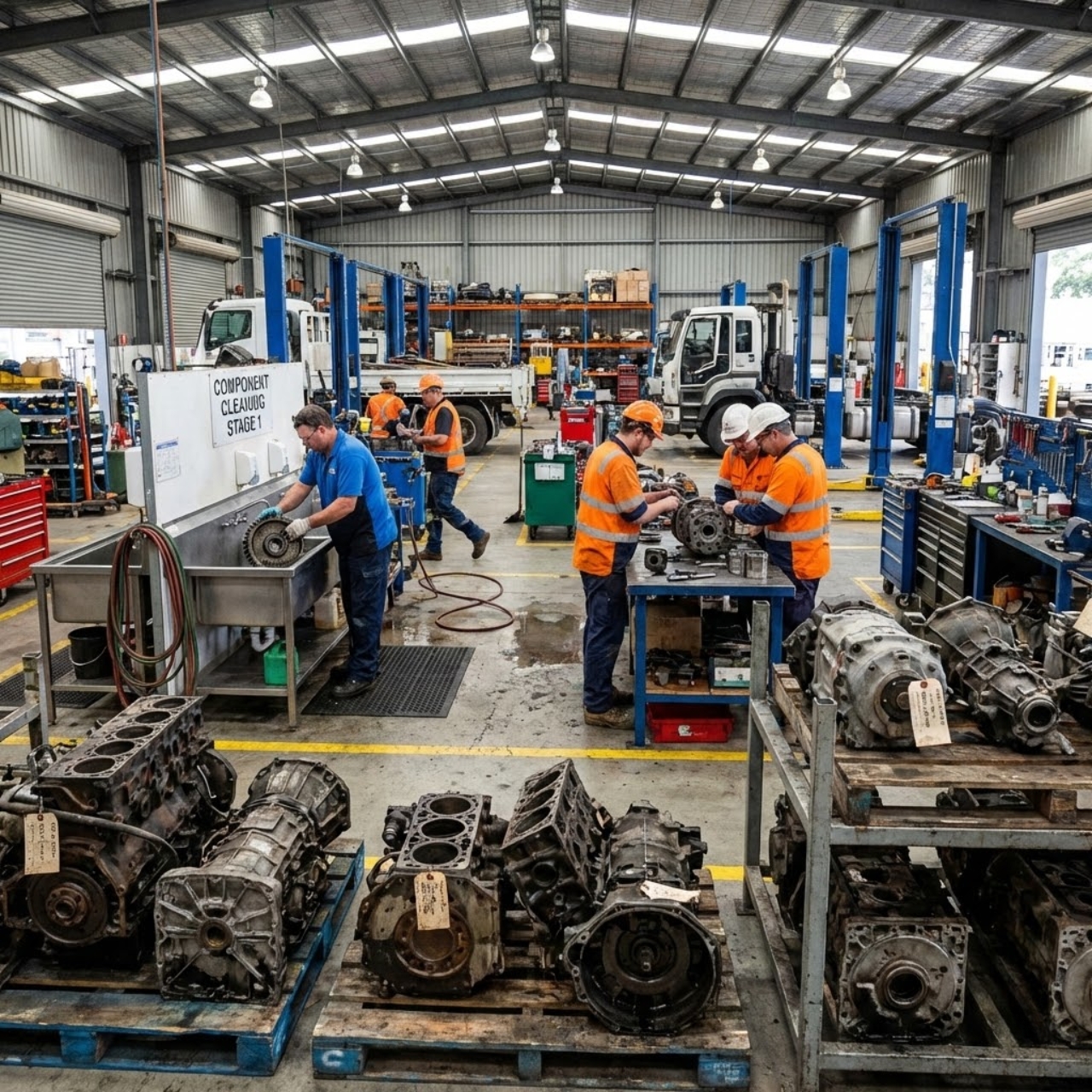
Workshop managers across Australian mining, manufacturing, and heavy industry operations face a familiar pattern: cleaning bottlenecks that emerge gradually, then suddenly become critical. A parts washing system that handled 20 components daily now faces 40. Manual cleaning that took two hours per shift now consumes four. The equipment hasn’t changed – the operational demands have.
These workshop equipment capacity mismatches cost more than time. They cascade into labour overtime, production delays, quality inconsistencies, and safety risks. Recognising the cleaning backlog indicators early allows operations managers to address equipment limitations before they impact bottom-line performance. Hotwash systems address these capacity challenges through scalable industrial cleaning solutions designed for Australian workshop conditions.
Cleaning Backlogs That Never Clear
The most visible sign of inadequate workshop equipment capacity appears in persistent cleaning backlogs. Components wait hours or days for washing rather than minutes. What started as occasional delays becomes standard operating procedure.
Mining operations illustrate this pattern clearly. A workshop supporting five haul trucks might manage parts cleaning adequately with manual systems. When the fleet expands to twelve trucks, the same cleaning infrastructure can’t keep pace. Maintenance schedules slip. Equipment returns to service with inadequate cleaning. Contamination causes premature component failures.
Quantifiable cleaning backlog indicators include:
- Components waiting more than 30 minutes for cleaning availability
- Shift handovers where cleaning tasks carry over incomplete
- Weekend overtime scheduled primarily for parts washing catch-up
- Maintenance delays attributed to cleaning capacity rather than parts availability
- Temporary storage areas created for “awaiting cleaning” inventory
These backlogs reveal fundamental workshop equipment capacity mismatches. The workshop equipment no longer matches operational throughput requirements. Manual processes that worked at lower volumes become systematic workshop bottleneck signs at scale.
Labour Hours Consumed by Manual Cleaning
Labour allocation provides hard data on equipment inadequacy. When manual parts washing consumes increasing staff hours, the operational cost becomes measurable and significant.
A workshop technician earning $45 per hour who spends three hours daily on manual parts washing represents $33,750 annually in direct labour costs for that single task. Double the cleaning workload and the annual cost reaches $67,500 – before considering overtime premiums, opportunity costs, or the skilled work that technician isn’t performing.
Labour cost escalation patterns include:
- Manual cleaning hours exceeding 15% of total maintenance labour time
- Skilled technicians performing cleaning tasks instead of diagnostic or repair work
- Regular overtime approved specifically for parts washing completion
- Temporary labour hired to address cleaning backlogs during peak periods
- Production staff diverted from primary duties to assist with component cleaning
Operations managers often discover that heavy-duty parts washers deliver ROI within 12-18 months purely through labour reduction. Industrial spray systems eliminate manual scrubbing while freeing technicians for higher-value maintenance activities.
Inconsistent Cleaning Quality Between Shifts
Workshop equipment capacity limitations create quality variability. When workshops rely on manual cleaning under time pressure, results vary based on operator fatigue, technique differences, and available time per component.
This inconsistency impacts equipment reliability directly. A hydraulic valve cleaned thoroughly operates reliably. The same valve cleaned hastily under backlog pressure fails prematurely due to residual contamination. The workshop then spends additional labour hours on repeat maintenance that proper initial cleaning would have prevented.
Quality inconsistency indicators include:
- Component failures attributed to inadequate cleaning during post-failure analysis
- Visible contamination remaining on parts after washing processes
- Re-cleaning required before components meet assembly standards
- Different cleaning outcomes for identical parts processed on different shifts
- Customer complaints or internal quality audits citing cleaning inadequacy
Food processing operations face particularly strict consequences from inconsistent cleaning. A stainless steel parts washer delivers repeatable sanitation results that manual methods cannot match consistently. Every cycle produces identical cleaning performance regardless of operator variation or time pressure.
Safety Incidents Related to Manual Handling
Workplace health and safety data reveals equipment inadequacy through injury patterns and near-miss reporting. Manual parts washing involves repetitive strain, chemical exposure, and manual handling of heavy contaminated components.
A single workplace injury can cost $50,000-$150,000 when considering medical expenses, workers’ compensation, lost productivity, investigation time, and potential regulatory penalties. Equipment upgrades that eliminate manual handling risks deliver measurable safety ROI beyond operational efficiency gains.
Safety indicators suggesting equipment inadequacy include:
- Repetitive strain injuries among staff performing manual parts cleaning
- Chemical exposure incidents from manual application of cleaning solutions
- Manual handling injuries from lifting contaminated components to wash stations
- Slip hazards from water and cleaning solution spillage around manual wash areas
- Fatigue-related incidents during extended manual cleaning sessions
Extra heavy-duty parts washers eliminate these manual handling risks entirely. Operators load components into automated systems without scrubbing, chemical handling, or repetitive motion exposure. The equipment performs the high-risk tasks while staff supervise from safe positions.
Production Delays Traced to Cleaning Capacity
Maintenance operations exist to support production uptime. When cleaning capacity limitations delay component availability, the downstream production impact reveals equipment inadequacy clearly.
A mining operation where haul truck maintenance extends four hours beyond schedule due to parts washing delays loses significant production capacity. At 200 tonnes per hour capacity, those four hours represent 800 tonnes of unmined material. The revenue impact dwarfs the cost of adequate cleaning equipment.
Production impact indicators include:
- Maintenance completion times extending beyond scheduled windows due to parts washing delays
- Production equipment waiting for cleaned components rather than immediate reassembly
- Emergency cleaning prioritisation decisions that delay other maintenance work
- Production schedule adjustments required to accommodate cleaning capacity limitations
- Lost production hours specifically attributed to parts washing bottlenecks in root cause analysis
Operations managers who track total cost of ownership recognise that cleaning equipment represents a fraction of production value. A super heavy-duty parts washer costing $50,000 pays for itself rapidly when it eliminates production delays worth thousands of dollars per hour.
Workspace Congestion From Cleaning Activities
Physical workshop layout reveals workshop equipment capacity mismatches through spatial congestion. Inadequate cleaning equipment forces workshops to allocate excessive floor space to cleaning activities, contaminated component staging, and manual wash station areas.
This spatial inefficiency reduces workshop capacity for primary maintenance activities. Floor space consumed by manual parts washing represents space unavailable for vehicle bays, component storage, or assembly areas. The opportunity cost extends beyond the cleaning task itself.
Spatial congestion indicators include:
- Contaminated components staged in production pathways awaiting cleaning capacity
- Manual wash stations occupying premium workshop floor space near maintenance bays
- Temporary cleaning areas established in non-designated spaces during peak demand
- Workspace conflicts where cleaning activities interfere with maintenance operations
- Safety hazards created by congested component storage in cleaning areas
Automated industrial spray systems consolidate cleaning operations into defined equipment footprints. Components move from maintenance to cleaning to reassembly efficiently without consuming excessive floor space or creating congestion throughout the workshop.
Equipment Running Beyond Designed Capacity
Existing cleaning equipment operating continuously at maximum capacity signals inadequacy for current operational demands. Systems designed for intermittent use that now run continuously experience accelerated wear, increased failure rates, and reduced cleaning effectiveness.
A manual parts washer designed for 20 cleaning cycles weekly that now processes 60 cycles operates at 300% of designed capacity. Component lifespan decreases proportionally. Maintenance costs escalate. Cleaning effectiveness diminishes as systems degrade under excessive use.
Overcapacity indicators include:
- Cleaning equipment operating continuously rather than intermittently throughout shifts
- Accelerated maintenance intervals required for cleaning systems
- Reduced cleaning effectiveness as equipment degrades under excessive use
- Emergency repairs interrupting operations when overcapacity equipment fails
- Manufacturer specifications exceeded for cycle frequency or operating hours
Upgrading to appropriately sized hot tank systems or automated washers designed for continuous operation eliminates these overcapacity issues. Equipment rated for the actual operational demand delivers reliable performance without premature failure or effectiveness degradation.
Cleaning Methods That Can’t Handle Current Contamination
Operational changes often increase contamination severity beyond existing equipment capabilities. Mining operations moving to deeper, muddier deposits face heavier contamination. Manufacturing operations adding processes create different residue types. Food operations expanding production hours accumulate more organic buildup.
When cleaning methods adequate for previous contamination levels fail with current conditions, equipment upgrade becomes necessary rather than optional. Manual scrubbing that removed light oil buildup proves inadequate for heavy drilling mud contamination. Spray washers effective for water-based residues fail with baked-on carbon deposits.
Contamination capability gaps include:
- Multiple cleaning cycles required where single cycles previously sufficed
- Manual pre-cleaning necessary before automated systems can process components
- Chemical cleaning solutions requiring increased concentration or contact time
- Components that remain visibly contaminated after standard cleaning procedures
- Shortened intervals between equipment cleaning due to heavier contamination accumulation
Hot blaster systems deliver the thermal cleaning power required for heavy contamination that standard spray washers cannot address. High-temperature cleaning combined with appropriate pressure and chemical action removes contamination that defeats lower-capacity industrial spray systems.
Cost Per Component Increasing Without Explanation
Financial analysis reveals equipment inadequacy through rising unit costs. When cost per cleaned component increases without corresponding labour rate changes or chemical price increases, operational inefficiency indicates workshop equipment capacity limitations.
This cost escalation stems from reduced automated cleaning throughput efficiency. Equipment operating beyond designed capacity processes fewer components per hour. Labour overtime premiums increase costs. Repeat cleaning attempts waste chemicals and energy. The per-unit economics deteriorate even as total volume increases.
Financial indicators suggesting equipment inadequacy:
- Cost per cleaned component trending upward over consecutive quarters
- Labour cost per component increasing faster than wage rate changes
- Chemical consumption per component rising without contamination severity changes
- Energy costs per cleaning cycle increasing due to extended processing times
- Maintenance cost per component escalating as equipment degrades under overcapacity operation
Operations managers evaluating automated industrial cleaning systems should calculate total cost per component including labour, chemicals, energy, maintenance, and opportunity costs. Modern automated systems often deliver lower per-unit costs than manual methods when all factors are considered, particularly at higher volumes.
Competitor Operations Outperforming Your Maintenance Turnaround
Industry benchmarking reveals relative equipment inadequacy. When competing operations achieve faster maintenance turnaround times or higher equipment availability despite similar operational conditions, cleaning capacity often explains the performance gap.
A mining operation completing haul truck maintenance in 8 hours while competitors require 12 hours for identical work should investigate workshop bottleneck signs related to cleaning. The four-hour difference might represent cleaning capacity rather than maintenance efficiency. Equipment availability percentages reflect these cumulative delays across the fleet.
Competitive performance gaps suggesting equipment limitations:
- Maintenance turnaround times exceeding industry benchmarks for comparable operations
- Equipment availability percentages trailing competitors with similar asset profiles
- Maintenance backlog growth rates higher than comparable operations
- Customer satisfaction scores lower due to maintenance-related delays
- Market share loss to competitors with superior equipment availability
Australian manufacturing operations competing globally require equipment that matches international productivity standards. Investing in industrial parts washers built to Australian standards ensures domestic operations maintain competitive maintenance efficiency without compromising safety or quality.
Making the Equipment Upgrade Decision
Recognising workshop equipment capacity limitations represents the first step toward operational improvement. The second step involves evaluating appropriate equipment solutions that match current operational demands while providing headroom for future growth.
Operations managers should quantify the total cost of inadequate equipment including labour inefficiency, production delays, quality issues, safety risks, and opportunity costs. This comprehensive analysis typically reveals that equipment upgrades deliver rapid ROI through multiple benefit categories simultaneously.
Australian-made industrial cleaning systems provide the durability, capacity, and automated cleaning throughput required for demanding workshop environments. Systems engineered for continuous operation in mining, manufacturing, and heavy industry applications deliver reliable service across multi-year lifecycles without the degradation that occurs when light-duty equipment operates beyond designed capacity.
Workshop equipment decisions impact operational performance for years following installation. Selecting systems with appropriate capacity, automation level, and contamination handling capability ensures that cleaning operations support rather than constrain maintenance efficiency. When demand has outgrown capacity, addressing the equipment limitation directly proves more cost-effective than managing around inadequate systems indefinitely.
For operations managers evaluating workshop equipment upgrades, contact us to discuss capacity requirements, contamination challenges, and system specifications. Australian-engineered industrial cleaning solutions deliver the performance, durability, and ROI that mining, manufacturing, and heavy industry operations require when operational demands exceed existing equipment capabilities.

Leave A Comment