
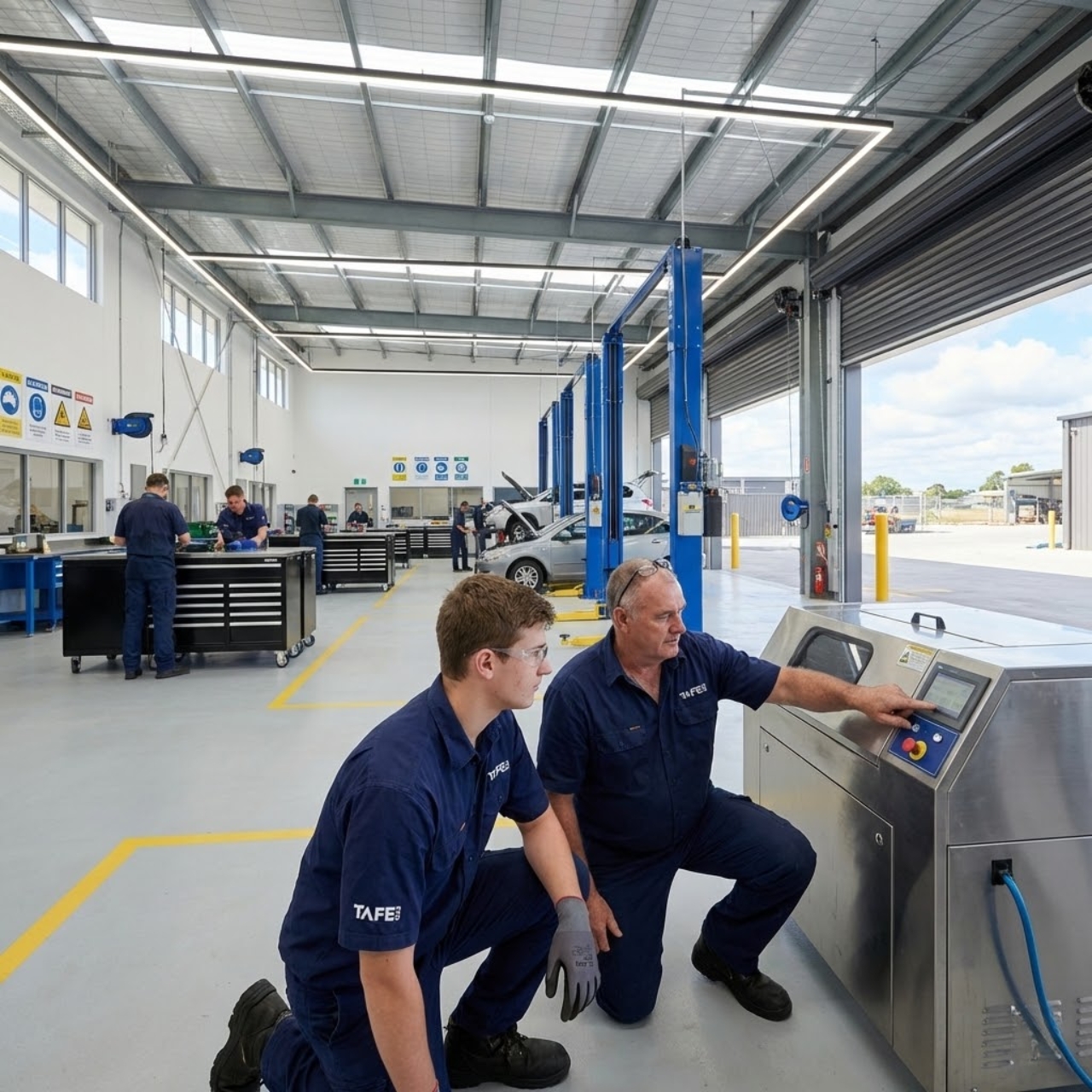
Attracting skilled apprentices has become one of the toughest recruitment challenges facing Australian workshops. With apprenticeship completion rates hovering around 55% nationally, and competition for quality candidates intensifying across trades, workshops that want to secure the next generation of skilled technicians need to understand what drives young people’s employment decisions.
The apprentices entering workshops today grew up with smartphones, expect workplace technology to function seamlessly, and have watched their parents’ generation navigate unstable employment. They’re weighing workshop opportunities against university pathways, FIFO roles, and other trades. The workshops that successfully attract and retain apprentices aren’t just offering a job – they’re demonstrating a genuine commitment to professional development, workplace safety, and professional cleaning standards that prepare apprentices for long-term careers.
Modern Equipment and Workshop Technology
Young apprentices entering the trade have grown up watching automotive technology evolve rapidly. They expect to work with equipment that reflects current industry standards, not outdated systems that limit their skill development.
Workshops equipped with modern diagnostic tools, computerised alignment systems, and modern cleaning technology signal to prospective apprentices that the business invests in staying current. When apprentices see Hotwash automated parts washers replacing manual scrubbing with hot solvent tanks, they recognise an employer who values efficiency and workplace improvement.
The presence of quality equipment directly impacts an apprentice’s training experience. Learning on automated workshop systems builds transferable skills that remain relevant throughout their career. Conversely, workshops relying exclusively on manual processes and outdated equipment struggle to demonstrate they’re preparing apprentices for contemporary workshop environments.
Equipment considerations that matter to apprentices:
- Diagnostic technology – Scan tools, oscilloscopes, and computer systems that match modern vehicle complexity
- Automated cleaning systems – Heavy-duty parts washers that eliminate manual scrubbing and chemical exposure
- Lifting equipment – Modern hoists, jacks, and material handling systems that meet current safety standards
- Hand and power tools – Quality tool sets that perform reliably and safely
- Workshop management software – Digital job cards, inventory systems, and scheduling platforms
Apprentices recognise that workshops investing in quality equipment are more likely to invest in their development. The correlation between modern cleaning technology and business success isn’t lost on young people evaluating potential employers.
Workplace Safety Standards and Culture
Apprentices today are more safety-conscious than previous generations, having grown up with comprehensive workplace health and safety education throughout their schooling. They expect employers to demonstrate genuine commitment to safety, not just compliance paperwork.
Visible safety systems matter. Apprentices notice whether workshops have proper ventilation, adequate lighting, designated walkways, and organised storage. They observe how experienced technicians handle hazardous materials, whether personal protective equipment is readily available, and how the workshop responds to near-misses or safety concerns.
The transition from manual parts cleaning to automated workshop systems like industrial spray washers demonstrates tangible safety improvements. Apprentices recognise that eliminating manual scrubbing with harsh chemicals reduces their exposure to dermatitis, respiratory irritants, and musculoskeletal injuries from repetitive manual labour.
Apprentice safety expectations include:
- Chemical handling protocols – Proper storage, labelling, and safety data sheet accessibility
- Equipment guarding and maintenance – Regular servicing schedules and documented maintenance records
- Personal protective equipment provision – Employer-supplied safety gear appropriate to tasks
- Incident reporting systems – Clear processes for reporting hazards and near-misses without fear of blame
- Safety training delivery – Structured induction programs and ongoing safety education
Workshops that treat safety as a core operational value rather than a compliance burden create environments where apprentices feel valued. Young workers notice when experienced staff take shortcuts or ignore safety protocols – these behaviours signal that management doesn’t enforce professional cleaning standards consistently.
Structured Training and Mentorship Programs
Apprentices want clear pathways for skill development. Workshops that articulate structured training programs, assign dedicated mentors, and provide regular feedback demonstrate they’re invested in apprentice success beyond simply having cheap labour.
The quality of mentorship directly influences apprentice retention. Young technicians thrive when paired with experienced tradespeople who genuinely enjoy teaching, provide constructive feedback, and create opportunities for progressive skill development. Conversely, apprentices placed with mentors who view training as an inconvenience or who fail to explain the reasoning behind procedures quickly become disillusioned.
Effective training programs balance hands-on experience with theoretical understanding. Apprentices want to understand why procedures matter, not just how to perform them. Workshops that encourage questions, explain diagnostic reasoning, and involve apprentices in problem-solving develop more capable technicians.
Training elements apprentices value:
- Documented training plans – Clear progression through skill levels with defined competencies
- Dedicated mentor allocation – Consistent supervision from experienced technicians
- Varied work exposure – Rotation through different service types and vehicle systems
- Technical education support – Employer flexibility for TAFE attendance and study commitments
- Regular performance feedback – Structured reviews that identify strengths and development areas
Workshops that invest time in structured onboarding, even for tasks as specific as operating manual parts washers correctly, demonstrate attention to proper training. Apprentices notice when employers take time to explain equipment operation, safety procedures, and quality standards rather than expecting them to figure things out independently.
Fair Compensation and Employment Conditions
While apprentice wages are regulated by awards, workshops still differentiate themselves through employment conditions. Apprentices compare total compensation packages, including overtime opportunities, allowances, tool provisions, and benefits beyond base wages.
Young people entering apprenticeships understand they’ll earn less initially than peers in other industries, but they expect fair treatment and transparency about wage progression. Workshops that clearly communicate wage increases tied to competency development and training milestones build trust with apprentices.
Compensation factors apprentices consider:
- Award compliance – Correct wage rates, superannuation contributions, and leave entitlements
- Overtime availability – Opportunities to increase earnings through additional hours
- Tool allowances – Employer contributions toward required tool purchases
- Uniform provision – Employer-supplied workwear and safety equipment
- Performance incentives – Bonuses or wage increases tied to skill development
Workshops that pay correctly, on time, and transparently establish credibility. Apprentices talk to each other, and word spreads quickly about employers who underpay, misclassify employment, or fail to meet superannuation obligations.
Workshop Culture and Team Dynamics
Apprentices spend considerable time evaluating workplace culture during interviews and trial periods. They observe how team members interact, whether experienced staff are willing to help, and how management responds to mistakes or questions.
Positive workshop cultures balance professionalism with approachability. Apprentices want to work in environments where they can ask questions without ridicule, where team members support each other during busy periods, and where management treats staff respectfully.
The physical workshop environment reflects cultural priorities. Clean, organised workshops with automated workshop systems that maintain professional cleaning standards signal that management values workplace quality. Conversely, chronically disorganised workshops with poor housekeeping standards suggest operational dysfunction that extends beyond cleanliness.
Cultural indicators apprentices notice:
- Communication styles – Whether feedback is constructive or demeaning
- Team cooperation – How experienced technicians respond to requests for assistance
- Management accessibility – Whether supervisors are approachable and responsive
- Problem-solving approaches – Whether mistakes become learning opportunities or blame sessions
- Work-life balance respect – How the business handles personal commitments and unexpected absences
Apprentices recognise that workshop culture directly impacts their daily experience. A technically well-equipped workshop with toxic team dynamics will struggle to retain apprentices, while a supportive culture can offset other limitations.
Career Progression Opportunities
Forward-thinking apprentices evaluate potential employers based on long-term career prospects, not just immediate training opportunities. They want to understand what career paths exist after completing their apprenticeship and whether the business supports ongoing professional development.
Workshops that articulate clear progression pathways – from apprentice to qualified technician, diagnostic specialist, workshop supervisor, or business owner – demonstrate they view apprentices as long-term investments. Businesses that have promoted previous apprentices into senior roles provide tangible evidence of advancement opportunities.
Career development factors apprentices consider:
- Post-qualification opportunities – Clear roles for qualified technicians within the business
- Specialisation pathways – Opportunities to develop expertise in specific systems or vehicle types
- Leadership development – Potential progression into supervisory or management roles
- Ongoing training support – Employer investment in advanced certifications and skill development
- Business growth trajectory – Whether the workshop is expanding and creating new opportunities
Apprentices increasingly recognise that their career extends beyond a single employer, but they prefer businesses that demonstrate commitment to staff development. Workshops that support technicians pursuing advanced diagnostics training, manufacturer certifications, or management qualifications position themselves as employers of choice.
Workshop Reputation and Business Stability
Young people entering apprenticeships research potential employers extensively. They read online reviews, ask current and former employees about their experiences, and evaluate the workshop’s reputation within the local automotive community.
Business stability matters to apprentices making four-year training commitments. They want confidence that their employer will remain operational throughout their apprenticeship, providing consistent training and employment. Workshops with strong customer bases, modern facilities, and visible investment in equipment like extra heavy-duty parts washers signal financial stability and operational commitment.
Reputation factors apprentices investigate:
- Online reviews – Customer feedback on Google, Facebook, and industry platforms
- Industry standing – Relationships with manufacturers, suppliers, and industry associations
- Business longevity – Years of operation and track record within the community
- Previous apprentice outcomes – Success rates of past apprentices completing qualifications
- Customer base – Whether the workshop has consistent work and diverse service offerings
Workshops with poor reputations – whether for customer service, employee treatment, or business practices – face significant workshop apprentice recruitment challenges. Apprentices can easily access information about potential employers, making reputation management increasingly important for attracting quality candidates.
Embracing Operational Efficiency and Innovation
Today’s apprentices have grown up in an era of rapid technological change. They’re attracted to workshops that embrace efficiency improvements and operational innovation rather than maintaining “we’ve always done it this way” attitudes.
The adoption of modern cleaning technology for routine tasks demonstrates forward-thinking management. When apprentices see workshops using stainless steel cleaning systems to eliminate hours of manual parts cleaning, they recognise employers who value their time and invest in productivity improvements that benefit everyone.
Workshops that actively seek operational improvements, whether through better equipment, improved processes, or enhanced customer service systems, create environments where apprentices can contribute ideas and see their suggestions implemented. This involvement builds engagement and demonstrates that the business values innovation from all team members.
Innovation indicators apprentices value:
- Technology adoption – Willingness to invest in equipment and systems that improve efficiency
- Process improvement culture – Openness to suggestions for better ways of working
- Environmental responsibility – Investment in sustainable practices and waste reduction
- Customer service excellence – Modern booking systems, communication tools, and service standards
- Continuous improvement mindset – Regular evaluation of operations and willingness to change
Apprentices want to build careers in workshops that will remain competitive and relevant as the automotive industry evolves. Employers demonstrating adaptability and innovation signal they’re preparing for future challenges rather than clinging to outdated practices.
Conclusion
Attracting quality apprentices requires workshops to demonstrate genuine commitment across multiple dimensions – from equipment investment and apprentice safety expectations to training quality and workplace culture. The workshops succeeding in workshop apprentice recruitment recognise that today’s young tradespeople have options and evaluate potential employers critically.
Modern apprentices expect to work with current technology, including automated workshop systems that eliminate unnecessary manual labour and chemical exposure. They want structured training from dedicated mentors, fair compensation, and clear career progression pathways. Most importantly, they seek workshop environments where they’re valued as developing professionals rather than cheap labour.
Workshops investing in operational improvements like Australian-made automated parts washing systems demonstrate they prioritise efficiency, safety, and professional cleaning standards that attract quality apprentices. These investments signal to prospective apprentices that the business is financially stable, operationally progressive, and committed to providing quality working conditions.
The workshops that successfully attract and retain apprentices understand that recruitment begins long before posting job advertisements. Building a reputation as an employer of choice requires consistent operational excellence, genuine investment in staff development, and workplace cultures where young technicians can thrive professionally.
For workshops ready to demonstrate their commitment to operational excellence and apprentice development, contact us to discuss how automated parts washing systems can improve workshop efficiency, safety, and professional standards that attract quality apprentices.

Leave A Comment