
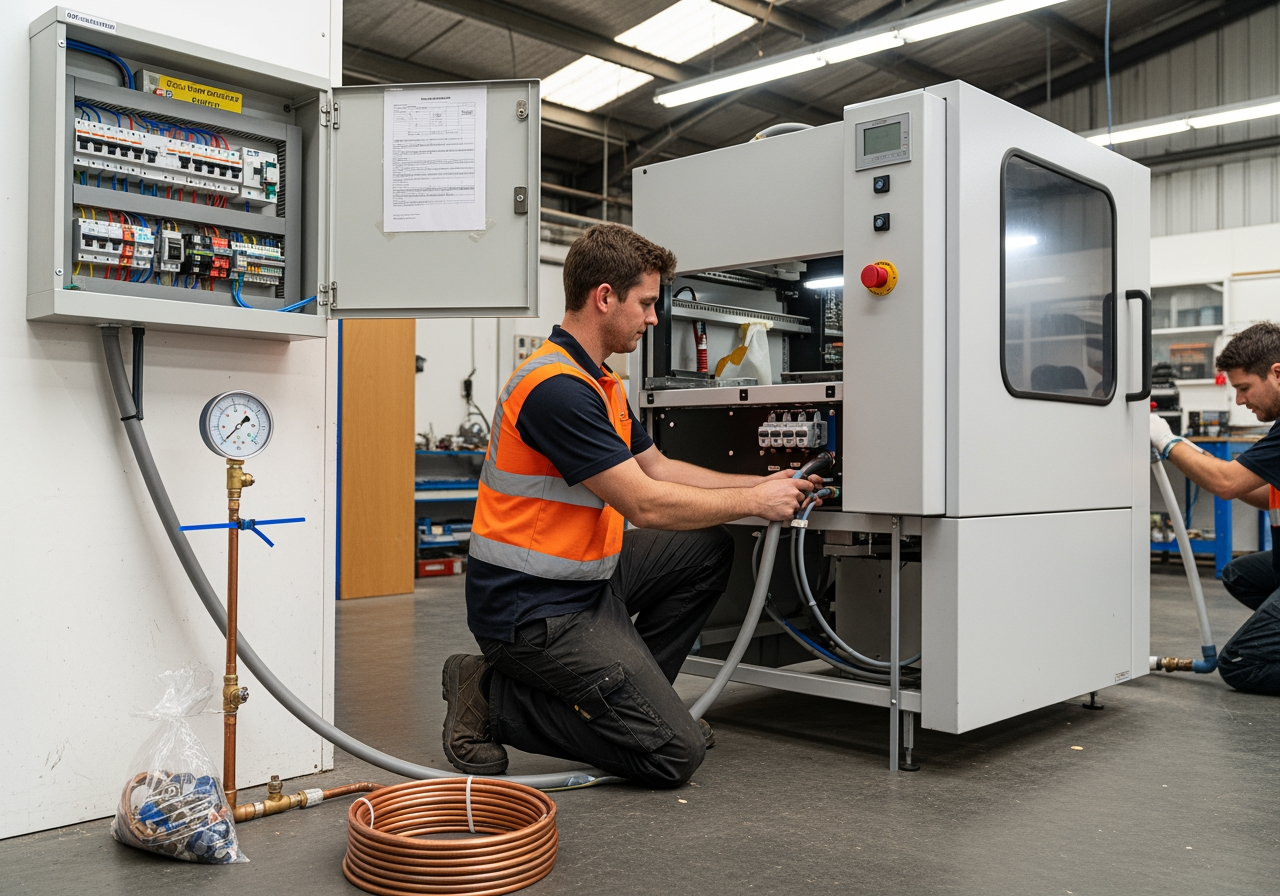
Installing an automated parts washer is not as simple as wheeling it into your workshop and plugging it in. These machines need proper water supply and electrical infrastructure to run safely and efficiently. Get these wrong and you face downtime, poor cleaning performance, or serious electrical hazards.
Most workshop managers discover infrastructure problems only after the machine arrives. The three-phase power point is on the wrong side of the room. Water pressure is too low. The drainage system cannot handle the flow rate. These issues delay automated parts washer installation by days or weeks whilst electricians and plumbers fix what should have been sorted beforehand.
This guide explains exactly what parts washers need for water supply, electrical power, and drainage. You will know what infrastructure to prepare before your machine arrives.
Understanding Three-Phase Power Requirements
The electrical requirements parts washer operators most often underestimate involve three-phase power. Most automated parts washers run on three-phase power, not standard single-phase. This catches small workshops off guard.
Three-Phase vs Single-Phase Power
Three-phase power delivers electricity through three separate conductors. This provides more consistent power for heavy machinery, especially equipment with large heating elements and high-pressure pumps. A standard parts washer draws 15-30 kilowatts during operation. Single-phase circuits simply cannot handle that load.
Typical three-phase specifications for Australian workshops:
- Voltage: 415V (Australian standard three-phase)
- Frequency: 50Hz
- Current draw: 20-60 amps depending on machine size
- Connection type: 5-pin plug (3 active, 1 neutral, 1 earth)
Smaller stainless models and manual units may run on single-phase 240V power, drawing 10-15 amps. These suit workshops without three-phase infrastructure. But automated spray washers with heating elements and high-pressure pumps need three-phase power to operate safely.
Three phase power workshop availability varies widely. Check your workshop’s electrical capacity before ordering. A qualified electrician can confirm whether your switchboard handles the additional load.
Our parts washers range covers machines from stainless steel single-phase models through to super heavy duty three-phase units. Understanding your power supply determines which machines are compatible with your site.
Calculating Electrical Load and Circuit Protection
Understanding the electrical requirements parts washer specifications involve helps you size your circuit correctly. Start with the machine’s nameplate specifications. A heavy duty system might list 25kW at 415V three-phase. Convert this to current draw: 25,000 watts divided by (415 volts x 1.732) equals approximately 35 amps. Add 20% safety margin for startup surge and you need a 42-amp circuit minimum.
Circuit protection requirements:
- Circuit breaker rated 25-30% above continuous operating current
- RCD protection for earth leakage
- Isolation switch within 3 metres of machine for emergency shutdown
- Proper cable sizing to handle current without voltage drop
RCD protection industrial equipment like these washers require means a residual current device. This safety switch trips instantly if electrical current leaks to ground. RCD protection industrial equipment standards in Australia mandate 30mA sensitivity for personnel protection in wet environments.
Cable sizing matters more than most workshops realise. Running 35 amps through undersized cable causes voltage drop. This reduces heating performance and pump pressure. A 20-metre cable run at this current needs minimum 6mm squared copper conductors. Install the isolation switch where operators can reach it quickly.
Heavy duty parts washers with larger heating elements draw higher currents. Confirm the exact electrical specifications with your supplier before the electrician visits.
Parts Washer Water Supply Requirements
Consistent water pressure and adequate flow rate are core parts washer water supply requirements. Too little pressure means weak spray action and poor cleaning. Too much pressure can damage seals and spray nozzles.
Water Pressure, Flow Rate, and Connection Specs
Most industrial spray washers require 300-600 kPa (43-87 PSI) inlet water pressure. This is standard mains pressure in most Australian workshops. Rural properties on tank water or areas with low mains pressure may need booster pumps.
Water supply requirements by specification:
- Inlet pressure: 300-600 kPa (check machine nameplate)
- Flow rate: 20-60 litres per minute depending on machine size
- Connection size: typically 20mm (3/4 inch) or 25mm (1 inch) BSP
- Water quality: filtered to remove sediment above 100 microns
Extra heavy duty parts washers have larger tanks requiring higher flow rates to fill efficiently. Water supply planning should include a live pressure test. Attach a pressure gauge to the tap nearest the machine location. Run it for 5 minutes to check pressure stays consistent.
Some workshops have adequate static pressure but poor dynamic pressure – pressure drops when multiple taps run simultaneously. This is a common problem that water supply planning workshop managers often miss until commissioning.
Water Quality, Hard Water, and Scale Prevention
Hard water causes scale buildup in heating elements and spray nozzles. If your area has water hardness above 200mg/L, common in some parts of Australia, consider a water softener or filtration system. Scale reduces heating efficiency by 20-30% and clogs spray jets within months.
Test your water quality as part of pre-installation preparation. Your local water supplier can provide hardness data for your area. An inline water softener adds modest upfront cost but prevents expensive heating element replacements.
Parts washer water supply requirements also include the fill and top-up schedule. Larger automated machines have 400-600 litre tanks. At 40 litres per minute, filling takes 10-15 minutes. Factor this into your workflow planning.
Super heavy duty parts washers hold 800 or more litres. Filling times and flow rate demands are significantly higher for these machines. Confirm your water supply can meet peak demand before finalising the machine location.
Drainage and Wastewater Infrastructure
What goes in must come out. These machines generate significant wastewater during rinse cycles and tank changes. Your drainage system must handle this flow without backing up or causing environmental compliance issues.
Drainage Capacity and Compliance Requirements
Drainage specifications for automated washers:
- Drain connection: 40mm or 50mm depending on machine model
- Floor waste capacity: minimum 100 litres per minute
- Trap requirement: grease trap or oil-water separator for environmental compliance
- Floor slope: minimum 1:100 gradient toward drain
Hotwash Australia recommends positioning the machine near existing floor drains wherever possible. Running new drainage across a workshop floor creates trip hazards and adds installation cost.
If you must install new drainage, use proper trade waste fittings and get council approval where required.
Waste Management and Environmental Standards
Oil and grease from parts washing cannot go directly into stormwater drains. Most councils require grease traps or oil-water separators for workshop wastewater. These separate petroleum products from water before discharge. Fines for improper disposal start at several thousand dollars in most Australian states.
Stainless steel parts washers and larger automated models can hold 800 or more litres. Draining this volume overwhelms small floor wastes designed for mop water. The water backs up, floods the workshop floor, and creates slip hazards. Size your drainage to handle full tank volume in 10-15 minutes.
Some workshops use closed-loop systems with no discharge. These filter and recirculate all water, with periodic sludge removal. Higher initial cost but they eliminate trade waste permits and ongoing discharge fees.
Pre-Installation Site Assessment
Walk through this checklist before ordering your parts washer. It prevents installation delays and unexpected costs.
Electrical and Water Infrastructure Checklist
Electrical infrastructure:
- Confirm three phase power workshop circuit capacity before machine delivery. Three phase power workshop installations require a licensed electrician to certify the circuit before commissioning.
- Measure distance from switchboard to machine location
- Check existing circuit loads and available capacity
- Identify isolation switch location
- Verify RCD protection industrial equipment compliance with AS/NZS 3000
Water supply:
- Test static and dynamic water pressure at the machine location
- Confirm flow rate meets machine specifications
- Check water hardness and quality levels
- Locate nearest tap connection point and measure distance
Drainage and environmental:
- Locate nearest floor drain and measure distance
- Confirm drain capacity and pipe condition
- Check requirement for grease trap or oil separator
- Verify council trade waste approval requirements
Physical Space and Safety Verification
Hot blasters and other specialised cleaning equipment have unique space requirements beyond standard washers. Confirm ceiling height and overhead clearance for all lid-opening equipment.
Hot blasters require additional overhead clearance for cabinet lid operation. Hot tanks need adequate ventilation for steam and vapour management. Both need floor space that accounts for loading, unloading, and operator movement.
Physical space checks:
- Measure machine footprint plus 600mm clearance each side
- Check ceiling height for lid clearance (add 400mm to machine height)
- Confirm floor load capacity for machines holding 500 or more litres
- Identify forklift or crane access for delivery
Safety compliance:
- Verify adequate lighting around machine location
- Check ventilation requirements for steam and vapour
- Confirm emergency eyewash station is within 10 metres
- Review WHS requirements for hot water and pressure equipment
Taking measurements and photos helps when briefing electricians and plumbers. Exact measurements eliminate confusion and reduce quote variations.
Testing and Commissioning After Installation
Do not assume everything works correctly because it is installed. Proper testing prevents problems during your first production shifts.
Parts Washer Commissioning Checklist
Electrical testing:
- Verify correct voltage at machine terminals (should be 415V, plus or minus 10%)
- Check earth continuity and insulation resistance
- Test RCD operation (should trip within 30 milliseconds)
- Confirm isolation switch operates correctly
- Run machine through complete cycle and monitor current draw
Water and drainage testing:
- Check for leaks at all connections after initial fill
- Verify water pressure during fill cycle
- Confirm heating element reaches target temperature
- Test drainage flow rate and check for backups
- Verify grease trap or oil separator operates correctly
The parts washer commissioning checklist should always include an empty test cycle first. This tests all systems without risking parts damage if something fails. Most problems show up in the first 30 minutes of operation.
Performance Verification and Documentation
Run the machine empty for the first full cycle. Then load a batch of typical parts for the second test cycle. Spray coverage that looks good when empty may miss certain areas when parts are loaded.
Performance verification steps:
- Measure actual water temperature against specifications
- Check spray pressure and coverage pattern
- Verify cycle timing matches programmed settings
- Test safety interlocks including lid switches and emergency stops
- Confirm all controls and indicators function correctly
Document everything during commissioning. Record water pressure, electrical voltage, cycle times, and temperature readings. These baseline measurements help diagnose problems later. If cleaning performance drops in six months, compare current readings to commissioning data to identify what changed.
A completed commissioning record also matters for insurance and compliance purposes. Keep it on file alongside your electrical and plumbing compliance certificates.
Conclusion
Proper infrastructure preparation prevents installation delays and ensures your automated parts washer installation performs from day one. Getting automated parts washer installation right the first time saves both time and money. Meeting the electrical requirements parts washer installations demand, plus confirmed parts washer water supply requirements, eliminates the most common problems workshop managers face.
Parts washers vary significantly in their power and water demands. From stainless steel single-phase models to super heavy duty three-phase machines, infrastructure requirements scale with machine capacity. Sorting these details before delivery day protects your timeline and your budget.
The upfront investment in professional electrical and plumbing work pays back quickly through reliable operation and compliance with Australian standards.
For advice on the right parts washer for your workshop, contact our parts washer specialists or email us at sales@hotwash.com.au.

Leave A Comment