
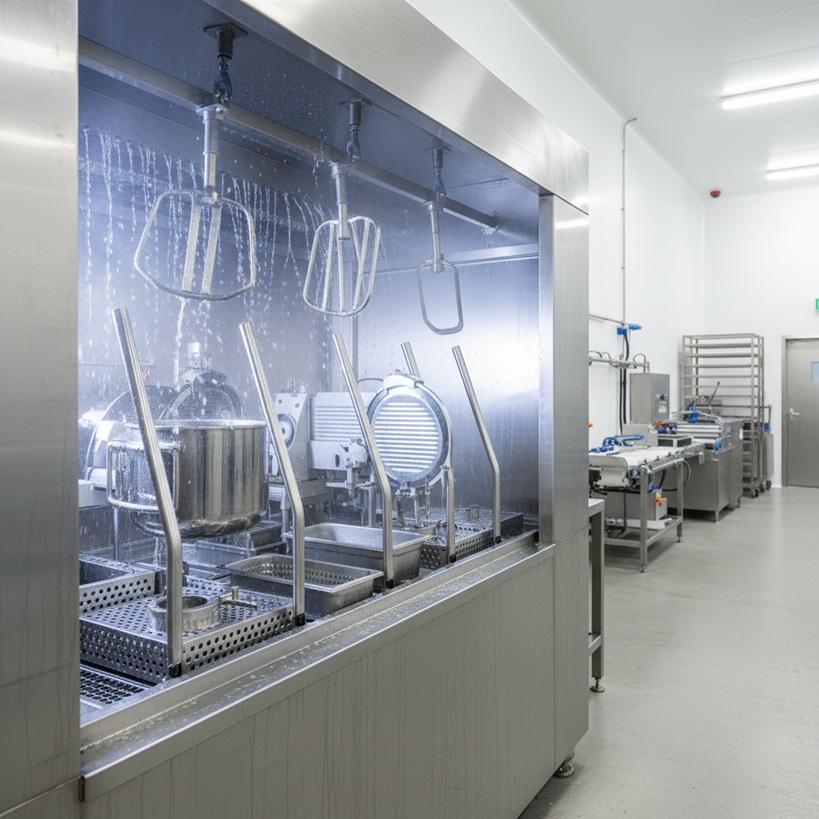
Australian workshops face mounting pressure to reduce water consumption. With water costs rising 15-20% annually in major industrial areas and stricter environmental regulations across manufacturing sectors, traditional once-through cleaning systems have become financially unsustainable. A mining equipment workshop in Western Australia running conventional parts washers can consume 50,000-80,000 litres monthly – translating to $15,000-$24,000 in annual water costs before factoring in wastewater disposal fees.
Modern water recycling system workshop solutions integrated with industrial parts washers deliver measurable results: 75-85% reduction in fresh water consumption, elimination of wastewater disposal costs, and payback periods of 12-18 months for medium to large operations. These systems work through multi-stage filtration, oil separation, and heated water recirculation – maintaining cleaning performance whilst dramatically cutting resource consumption. For operations cleaning 100+ components weekly, the operational savings extend beyond water bills to labour time, chemical usage, and compliance management.
The technology has evolved beyond basic settling tanks. Current workshop water conservation systems combine mechanical filtration, coalescing oil separators, and automated pH monitoring to maintain cleaning solution quality through hundreds of wash cycles. This article examines the engineering behind effective water recycling for parts washing, quantifies the financial returns across different operation sizes, and outlines the selection criteria for matching system capacity to workshop requirements.
The Engineering Behind Industrial Water Recycling Systems
Industrial water recycling system workshop technologies operate through three integrated stages: contamination removal, oil separation, and water quality restoration. The process begins when used cleaning solution drains from the parts washer chamber into a collection tank. Mechanical filtration removes solid contaminants – metal shavings, dirt particles, and debris – through progressively finer screens or bag filters down to 25-50 microns.
Oil Separation – The Primary Challenge
The second stage addresses the primary challenge in parts washing applications: oil separation. Free-floating oils, emulsified lubricants, and petroleum-based contaminants must be removed to prevent recontamination of cleaned parts. Coalescing separators force small oil droplets to combine into larger globules that float to the surface for automated skimming. Advanced systems achieve oil removal rates of 95-98%, maintaining cleaning solution clarity through 200-300 wash cycles before requiring complete replacement.
Water Quality Restoration
The final stage restores water chemistry and temperature. pH monitoring systems automatically dose alkaline cleaners to maintain optimal cleaning conditions (typically pH 10-12 for heavy degreasing applications). Integrated heating elements bring recycled water back to operating temperature – 60-80°C for standard applications, up to 95°C for hot blaster systems requiring maximum cleaning power. This continuous conditioning allows recycled water to deliver identical cleaning performance to fresh water whilst consuming only 15-25% of the volume.
System Capacity Considerations
System capacity determines processing speed and storage volume. A workshop cleaning 20-30 components daily requires 500-800 litre treatment capacity with 2-3 hour processing cycles. Large mining operations processing 100+ heavy equipment components need 2,000-4,000 litre systems with continuous filtration capabilities. The sizing calculation accounts for wash cycle frequency, average contamination levels, and peak demand periods when multiple washers operate simultaneously.
Quantifying Water Savings Across Different Workshop Operations
The water consumption reduction from recycling systems varies by operation size, contamination levels, and equipment configuration. Small automotive workshops running manual parts washers typically consume 800-1,200 litres weekly with conventional once-through systems. Installing a 500-litre recycling system reduces fresh water consumption to 150-250 litres weekly – an 80-85% reduction. Annual savings reach $3,200-$4,800 based on average industrial water rates of $3.50-$4.20 per kilolitre in major Australian manufacturing centres.
Medium-Sized Fabrication Shop Savings
Medium-sized fabrication shops operating heavy-duty parts washers for daily production cleaning face higher consumption. Baseline usage of 3,000-5,000 litres weekly drops to 600-1,000 litres with workshop water conservation systems – maintaining the 80% reduction benchmark. These operations gain additional savings from eliminated wastewater disposal costs. Contaminated wash water classified as industrial wastewater costs $180-$280 per 1,000 litres for compliant disposal. A workshop generating 15,000 litres monthly saves $32,400-$50,400 annually in combined water purchase and disposal expenses.
Large Mining Facility Reductions
Large mining maintenance facilities demonstrate the most substantial absolute savings. A regional mining operation running multiple extra heavy duty parts washers for continuous equipment cleaning consumes 80,000-120,000 litres monthly without recycling. Implementing comprehensive water treatment reduces this to 16,000-24,000 litres – an 80,000-96,000 litre monthly reduction. At industrial water rates plus disposal fees, annual savings reach $180,000-$240,000 for major operations. The capital investment of $45,000-$75,000 for industrial-scale recycling systems delivers payback in 4-7 months.
The consistency of the 80% reduction figure across operation sizes stems from the fundamental engineering: regardless of scale, properly designed systems recycle water through 5-7 complete wash cycles before requiring replacement. The remaining 20% accounts for evaporation losses during heated washing, water carried away with cleaned parts, and periodic system flushing for maintenance.
Oil Separation Technology: The Critical Component for Parts Washing Applications
Oil contamination represents the primary technical challenge in recycling parts washing water. Unlike general industrial wastewater, cleaning solution from workshop parts washers contains 3-8% petroleum-based contaminants – cutting oils, hydraulic fluids, gear lubricants, and diesel fuel. Without effective oil removal, recycled water redeposits contamination onto supposedly cleaned parts, defeating the purpose of the washing process.
Gravity Separation Foundations
Gravity separation provides the foundation. Oil droplets lighter than water naturally float to the surface when wash water velocity drops below 3-5 metres per minute in settling tanks. Basic systems rely solely on this principle, requiring 4-6 hour settling periods and achieving 60-70% oil removal. This proves insufficient for professional parts washing applications where visible oil films on cleaned components indicate process failure.
Coalescing Separation Technology
Coalescing separation technology delivers the performance required for industrial applications. Wash water flows through structured media – typically corrugated plates or tubular elements – that force oil droplets into contact. Small droplets (10-50 microns) combine into larger globules (200-500 microns) that rapidly float to the surface. Quality coalescing systems achieve 95-98% oil removal with 30-60 minute processing times. The concentrated oil layer – now 40-60% petroleum content – undergoes automated skimming into a separate waste oil container for compliant disposal or recycling.
Advanced Dissolved Air Flotation
Advanced systems incorporate dissolved air flotation for emulsified oils that resist conventional separation. Microscopic air bubbles attach to oil particles, accelerating their rise to the surface. This technology handles synthetic coolants and heavily emulsified lubricants common in modern manufacturing. The additional complexity increases system cost by 30-40% but proves essential for operations using water-soluble cutting fluids or high-pressure spray washing that creates stable emulsions.
Waste Oil Management
The separated oil requires proper management. A workshop generating 15,000 litres of contaminated wash water monthly produces approximately 600-900 litres of concentrated waste oil after recycling system processing. This volume qualifies for commercial waste oil collection services at $0.80-$1.20 per litre – substantially less than the $180-$280 per 1,000 litres cost for disposing of the entire contaminated water volume. Some operations negotiate zero-cost collection when waste oil quality meets recycling specifications for fuel blending.
System Integration with Different Parts Washer Configurations
Water recycling system workshop solutions integrate differently depending on parts washer type and capacity. Hotwash Australia spray cabinet washers with 200-400 litre tank capacities typically connect to 500-800 litre external recycling units. Used wash water gravity drains from the washer sump into the recycling system’s collection tank after each wash cycle. The recycling unit processes this water through filtration and oil separation, then pumps treated water back to the washer’s clean water storage tank. This closed-loop configuration operates automatically with minimal operator intervention beyond weekly filter cleaning and monthly waste oil disposal.
Hot Tank System Integration
Hot tank systems present different integration requirements. These immersion washers hold 800-2,000 litres of heated cleaning solution maintained at 80-95°C for continuous soaking applications. Rather than draining after each cycle, hot tanks require continuous filtration to remove accumulated contamination whilst parts remain immersed. Side-stream recycling systems draw 100-200 litres per minute from the tank, process it through filtration and oil separation, then return cleaned solution to the tank. This maintains solution clarity and extends cleaning bath life from 2-3 weeks to 3-4 months between complete changes.
Multiple Washer Installations
Multiple washer installations require centralised recycling systems. A fabrication facility operating three heavy duty parts washers across different production areas benefits from a single 2,000-3,000 litre recycling system serving all units. Contaminated water from each washer drains to a common collection sump, undergoes centralised treatment, then distributes to clean water storage tanks at each washer location. This approach reduces capital cost compared to individual recycling units whilst simplifying maintenance to a single system.
Plumbing Configuration Impact
The plumbing configuration impacts installation costs significantly. Gravity drainage systems require floor-mounted recycling units positioned below washer drain height – typically 300-500mm lower than the washer base. This necessitates pit installation or raised washer platforms in facilities with concrete slab floors. Pumped drainage systems eliminate this constraint, allowing flexible recycling unit placement, but add $3,000-$5,000 in pump equipment and controls. Operations planning new facility construction should specify floor drainage infrastructure during initial building design to minimise retrofitting costs.
Chemical Management in Closed-Loop Washing Systems
Recycling water through multiple wash cycles concentrates cleaning chemicals, requiring active management to maintain optimal performance. Fresh alkaline cleaning solution starts at pH 10-11 with specific concentrations of surfactants, builders, and corrosion inhibitors. After 5-7 wash cycles processing heavily contaminated parts, pH drops to 8-9 as alkaline cleaners neutralise acidic oils and organic contamination. Simultaneously, surfactant levels decrease through carryout with cleaned parts and degradation from heat exposure.
Automated Dosing Systems
Automated dosing systems address this chemical depletion. pH sensors continuously monitor solution chemistry, triggering metered addition of concentrated alkaline cleaner when readings fall below setpoints. A workshop processing 100 components weekly with 80% water recycling typically consumes 25-35 litres of concentrated cleaner monthly – compared to 15-20 litres with once-through systems. The 40-60% increase in chemical usage represents a minor cost addition ($120-$180 monthly) relative to water savings of $1,200-$2,000 monthly.
Surfactant Concentration Management
Surfactant concentration requires periodic laboratory testing or field measurement with refractometers. Most industrial cleaning chemicals specify 2-4% working concentration. As recycled solution ages, surfactant levels drift outside this range – too low reduces cleaning effectiveness, too high creates excessive foaming that interferes with spray washing. Operations running super heavy duty parts washers for continuous production typically test solution chemistry weekly, adjusting with concentrated surfactant additions or partial solution replacement.
Solution Replacement Intervals
The complete solution replacement interval depends on contamination loading. Light to moderate applications – automotive workshops cleaning engine components – achieve 8-12 week solution life with proper recycling and chemical management. Heavy contamination environments like mining equipment maintenance require 4-6 week replacement cycles. The replacement process involves draining the entire system, flushing tanks and filters, disposing of spent solution as industrial wastewater, and refilling with fresh cleaning chemical at proper concentration. This periodic reset prevents buildup of non-removable contaminants that gradually reduce cleaning performance.
Financial Analysis: Capital Investment and Payback Periods
Workshop water conservation systems costs vary by capacity, automation level, and oil separation technology. Entry-level systems for small workshops – 500 litre capacity with manual filtration and basic gravity oil separation – start at $8,000-$12,000 installed. These suit operations running manual parts washers with modest cleaning volumes below 50 components weekly.
Mid-Range System Investment
Mid-range systems serving medium workshops cost $18,000-$35,000. This category includes 800-1,500 litre capacity, automated coalescing oil separation, pH monitoring, and integrated heating. The automation reduces labour requirements to 15-20 minutes weekly for filter cleaning and waste oil disposal. These systems match heavy-duty parts washers processing 50-150 components weekly across automotive, manufacturing, and light industrial applications.
Industrial-Scale System Costs
Industrial-scale systems for major operations range from $45,000-$85,000. Capacity of 2,000-4,000 litres, continuous processing capability, advanced dissolved air flotation, and multi-stage filtration handle the demands of mining maintenance facilities and large manufacturing plants. These installations serve multiple parts washers simultaneously, processing 200+ heavily contaminated components daily.
Payback Calculations
Payback calculations demonstrate compelling returns across all operation sizes. A medium fabrication shop investing $25,000 in a recycling system saves $3,800 monthly in combined water purchase ($1,200) and wastewater disposal ($2,600). The 6.6-month payback period excludes additional benefits: reduced chemical costs from eliminating disposal-driven solution changes, decreased labour time for wastewater management, and improved environmental compliance. Over the system’s 10-12 year operational life, cumulative savings reach $380,000-$460,000 against the initial $25,000 investment.
Large mining operations demonstrate even stronger returns. A $65,000 system investment delivering $18,000 monthly savings achieves payback in 3.6 months. Annual savings of $216,000 compound over the system life to $2.16-$2.59 million in total cost avoidance. These figures explain why major mining companies now specify water recycling as standard equipment for all parts washing installations in new maintenance facilities.
Regulatory Compliance and Environmental Reporting Benefits
Australian environmental regulations increasingly restrict industrial wastewater discharge. State Environmental Protection Authorities classify contaminated parts washing water as industrial waste requiring licensed disposal. Facilities discharging to municipal sewers without proper treatment face penalties of $15,000-$50,000 per violation plus remediation costs.
Compliance Management Simplification
Water recycling system workshop installations dramatically simplify compliance management. Reducing wastewater generation by 80% proportionally reduces documentation requirements, licensed disposal frequency, and regulatory reporting obligations. A workshop generating 5,000 litres of contaminated water monthly requires quarterly disposal contractor visits and associated paperwork. With recycling reducing this to 1,000 litres monthly, disposal frequency drops to once or twice annually.
Environmental Stewardship Benefits
Many operations gain additional compliance advantages from closed-loop systems. Facilities located near sensitive environmental areas – coastal zones, drinking water catchments, or protected habitats – face stricter discharge limitations. Implementing water recycling demonstrates environmental stewardship that satisfies regulatory requirements whilst reducing monitoring and reporting burdens. Some jurisdictions offer expedited permit approvals or reduced licensing fees for operations employing water conservation technologies.
Corporate Sustainability Reporting
Corporate sustainability reporting benefits from quantifiable water conservation metrics. Companies tracking environmental performance for ESG reporting, carbon neutrality programs, or industry certifications can document specific water savings. An operation reducing consumption from 60,000 to 12,000 litres monthly reports 576,000 litres annual conservation – a concrete figure for sustainability dashboards and stakeholder communications. This quantification proves particularly valuable for operations supplying major mining companies or manufacturers with strict supplier environmental standards.
Maintenance Requirements and Operational Considerations
Workshop water conservation systems require routine maintenance to sustain performance. Daily tasks involve visual inspection of oil skimmer operation and verification of proper water levels in treatment tanks – requiring 2-3 minutes per shift. Weekly maintenance includes cleaning mechanical filters (15-20 minutes), emptying waste oil collection containers (10-15 minutes), and checking pH levels (5 minutes). Total weekly labour averages 30-40 minutes for properly designed systems.
Monthly and Annual Service
Monthly maintenance adds coalescing media inspection and cleaning. Oil separator elements require removal and flushing with hot water to restore efficiency – typically 45-60 minutes monthly. Some systems specify disposable coalescing cartridges replaced quarterly at $180-$280 per set. This trade-off between cleaning labour and consumable costs depends on operation preferences and available maintenance resources.
Annual service involves complete system inspection, pump seal replacement, heating element descaling, and control system calibration. Most operations schedule this during planned facility shutdowns or low-production periods. Annual service costs range from $800-$1,500 for professional technician visits, or operations can perform these tasks internally with proper training and documentation.
Component Longevity
Component longevity impacts long-term operating costs. Quality industrial recycling systems deliver 10-12 year service life with proper maintenance. Pumps require seal replacement every 2-3 years ($300-$500). Heating elements last 5-7 years before requiring replacement ($800-$1,200). pH sensors need annual calibration and replacement every 3-4 years ($400-$600). Budgeting $1,200-$1,800 annually for parts and consumables maintains system reliability whilst still delivering substantial net savings compared to once-through water consumption.
Selecting the Right System Capacity for Your Operation
Proper system sizing prevents under-capacity problems and over-investment in excess capability. The fundamental calculation starts with weekly wash water volume. Count the number of wash cycles performed weekly and multiply by the washer’s tank capacity. A workshop running 40 wash cycles weekly in a 300-litre capacity washer generates 12,000 litres of contaminated water weekly requiring treatment.
Processing Capacity Requirements
The recycling system capacity should process this weekly volume within 3-4 days to maintain operational continuity. The 12,000 litre weekly example requires a system processing 3,000-4,000 litres daily – suggesting a 1,500-2,000 litre capacity unit with 8-12 hour processing cycles. This sizing provides buffer capacity for peak demand periods whilst avoiding the higher capital cost of oversized equipment.
Contamination Loading Factors
Contamination loading influences capacity requirements. Light contamination – precision machined components with cutting oil residue – processes faster through filtration and oil separation than heavy contamination from mining equipment covered in thick grease and mud. Operations handling heavy contamination should increase system capacity by 30-40% to account for longer processing times and more frequent filter cleaning.
Future Growth Planning
Future growth considerations affect sizing decisions. A workshop planning production expansion over 2-3 years should specify system capacity for projected future volumes rather than current needs. The capital cost difference between a 1,500 litre and 2,000 litre system typically runs 15-20% – modest compared to the disruption and expense of replacing an undersized system after 18 months of operation.
Conclusion: Implementing Water Recycling for Long-Term Operational Savings
Water recycling system workshop technologies deliver proven 75-85% reductions in fresh water consumption across workshop operations of all sizes. The technology combines mechanical filtration, coalescing oil separation, and automated chemical management to maintain cleaning performance whilst dramatically reducing environmental impact and operational costs.
The financial case proves compelling across all operation scales. Small workshops achieve $3,200-$4,800 annual savings with payback periods under 24 months. Medium operations save $32,000-$50,000 annually with 6-8 month payback. Large mining facilities realise $180,000-$240,000 annual savings with payback in 4-7 months. These returns compound over the system’s 10-12 year operational life, delivering cumulative savings that dwarf initial capital investment.
Beyond direct cost savings, workshop water conservation systems simplify regulatory compliance, reduce wastewater disposal frequency by 80%, and provide quantifiable sustainability metrics for corporate environmental reporting. Operations gain competitive advantages through demonstrated environmental stewardship whilst reducing administrative burdens associated with industrial wastewater management.
Successful implementation requires proper system sizing matched to workshop cleaning volumes, contamination types, and operational intensity. The combination of appropriate capacity, proven oil separation technology, and routine maintenance protocols ensures sustained performance and maximum water conservation across diverse industrial applications.
Hotwash Australia manufactures stainless steel parts washers and integrated water recycling systems specifically engineered for Australian industrial conditions. The systems handle contamination levels from light precision manufacturing to heavy mining equipment maintenance whilst delivering consistent 80% water reduction performance. Contact us to discuss water conservation requirements and explore recycling system configurations appropriate for specific workshop applications.

Leave A Comment