
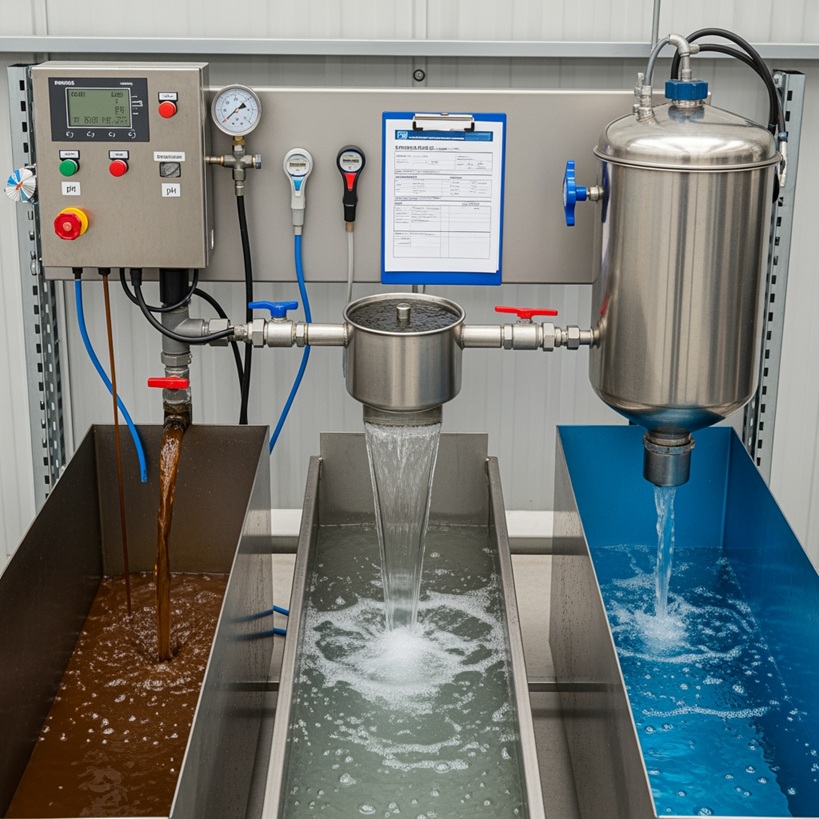
Industrial facilities across Australia face increasingly stringent requirements for wastewater discharge, with state Environmental Protection Authorities (EPAs) enforcing regulations that protect waterways, ecosystems, and public health. For operations using industrial parts washers and cleaning systems, understanding these discharge standards isn’t just about compliance – it’s about avoiding penalties that can reach hundreds of thousands of dollars and preventing operational shutdowns.
The challenge intensifies for mining operations, manufacturing plants, and heavy industrial workshops where parts washing generates wastewater containing oils, greases, heavy metals, and chemical contaminants. A single non-compliant discharge event can trigger EPA investigations, community complaints, and costly remediation requirements.
What Are EPA Wastewater Discharge Standards?
EPA wastewater discharge standards establish maximum permissible levels of contaminants that industrial facilities can release into sewer systems, waterways, or land. Each Australian state and territory maintains its own EPA with jurisdiction over environmental protection, though standards align broadly across jurisdictions based on national guidelines.
Regulated Contaminant Parameters
These regulations typically specify limits for:
- pH levels (usually 6.0-10.0 for sewer discharge)
- Total suspended solids (TSS) – particulate matter in wastewater
- Biochemical oxygen demand (BOD) – organic pollution measurement
- Chemical oxygen demand (COD) – total organic compound levels
- Heavy metals (lead, cadmium, chromium, zinc, copper, nickel)
- Petroleum hydrocarbons – oils, greases, and fuel residues
- Temperature – typically below 38°C for sewer discharge
- Prohibited substances – specific chemicals banned from discharge
Discharge Destination Variables
The specific limits vary based on discharge destination. Trade waste discharge to sewers faces different standards than direct environmental discharge to waterways or land application systems.
State-Specific EPA Requirements
Victoria EPA Discharge Regulations
Environment Protection Authority Victoria enforces discharge standards through the Environment Protection Act 2017 and associated regulations. Industrial facilities must obtain trade waste agreements with water authorities, which specify discharge quality limits based on the receiving sewer system’s capacity.
Victorian facilities discharging directly to waterways require works approvals and environmental entitlements that set stringent discharge quality objectives. Heavy metals limits for sewer discharge typically range from 0.5 mg/L for cadmium to 5.0 mg/L for zinc, with petroleum hydrocarbon limits around 10-50 mg/L depending on the water authority.
NSW EPA Standards
The NSW Environment Protection Authority regulates industrial wastewater through protection of environment licences (POEO licences) and trade waste agreements. Sydney Water, Hunter Water, and regional water utilities maintain specific acceptance standards for trade waste discharge.
NSW facilities using heavy-duty parts washers must demonstrate compliance with discharge limits that typically restrict total petroleum hydrocarbons to 10 mg/L and individual heavy metals to levels below 1.0 mg/L for most substances.
Queensland EPA Wastewater Requirements
Queensland’s Department of Environment and Science administers environmental protection through the Environmental Protection Act 1994. Industrial facilities receive environmental authorities that specify discharge conditions based on risk assessment and receiving environment capacity.
Queensland’s trade waste acceptance standards vary by region, with Urban Utilities (Brisbane) and other water service providers setting limits that typically restrict oil and grease to 100 mg/L and suspended solids to 600 mg/L for standard discharges.
Western Australia EPA Standards
The Western Australian Department of Water and Environmental Regulation enforces wastewater discharge standards through works approvals and licences. Water Corporation maintains trade waste guidelines that establish acceptance criteria for industrial discharges to sewers.
WA facilities must demonstrate that wastewater from industrial parts washers meets pH requirements of 6.0-10.0 and temperature limits below 38°C, with specific contaminant limits negotiated based on discharge volume and composition.
South Australia EPA Requirements
The South Australian Environment Protection Authority administers environmental protection through the Environment Protection Act 1993. SA Water’s trade waste policy establishes acceptance standards for industrial discharges, with facilities requiring trade waste authorisations for regulated discharges.
South Australian standards typically limit petroleum hydrocarbons to 20 mg/L and require wastewater pre-treatment of high-strength industrial wastewater before sewer discharge.
Discharge Destinations and Applicable Standards
Sewer System Discharge
Most industrial facilities discharge wastewater to municipal sewer systems under trade waste agreements. Water authorities assess discharge applications based on:
- Volume – daily and peak flow rates
- Contaminant concentrations – compared to acceptance standards
- Treatment capacity – whether the sewage treatment plant can handle the waste
- Infrastructure protection – preventing damage to pipes and equipment
Trade waste agreements specify monitoring requirements, with facilities typically required to conduct quarterly or annual testing to demonstrate ongoing Australian industrial wastewater compliance.
Direct Environmental Discharge
Facilities in remote locations or with high-volume discharges may release treated wastewater directly to waterways, land application systems, or evaporation ponds. These discharges face significantly stricter standards because they bypass municipal treatment systems.
Direct environmental discharge requires comprehensive environmental assessment, including impact studies on receiving ecosystems. Standards typically require near-drinking water quality for waterway discharge, with heavy metals limits often below 0.1 mg/L and petroleum hydrocarbons virtually eliminated.
Operations using extra heavy-duty parts washers for large-scale mining equipment cleaning rarely qualify for direct environmental discharge without extensive pre-treatment infrastructure.
On-Site Treatment and Reuse
Some facilities implement closed-loop systems that treat and recycle wastewater, eliminating or minimising discharge. While this approach reduces discharge compliance burdens, facilities must still manage concentrated waste products (sludges, filter media, spent solutions) according to hazardous waste regulations.
Key Contaminants from Industrial Parts Washing
Petroleum Hydrocarbons
Oil, grease, diesel, and other petroleum products represent the primary contaminants from parts washing operations. These substances interfere with biological treatment processes at sewage plants and can create environmental damage if discharged to waterways.
Standard trade waste limits typically range from 10-100 mg/L total petroleum hydrocarbons, depending on jurisdiction and receiving system capacity. Workshop operations cleaning engine components, mining equipment, and heavy machinery regularly exceed these limits without pre-treatment.
Heavy Metals
Parts washing removes metal particles, corrosion products, and metallic contaminants that accumulate in wastewater. Common heavy metals include:
- Zinc – from galvanised components
- Copper – from brass fittings and electrical components
- Lead – from older equipment and solder
- Chromium – from stainless steel and plated parts
- Nickel – from alloy steels and plating
These metals accumulate in sewage sludge and can exceed land application limits, creating disposal challenges for water authorities. Discharge limits typically range from 0.5-5.0 mg/L depending on the specific metal and jurisdiction.
Suspended Solids
Dirt, rust, carbon deposits, and particulate matter create suspended solids that can damage sewer infrastructure and overload treatment systems. Trade waste standards typically limit suspended solids to 300-600 mg/L, though some water authorities accept higher concentrations with appropriate surcharges.
Facilities using hot tank systems for immersion cleaning often generate high suspended solids concentrations requiring settlement or filtration before discharge.
pH Extremes
Alkaline cleaning solutions and acidic rust removers can create pH extremes that damage sewer infrastructure and disrupt biological treatment processes. Most jurisdictions require discharge pH between 6.0-10.0, with some authorities restricting the range to 7.0-9.0.
Automated pH monitoring and neutralisation systems prevent non-compliant discharges when facilities use strong chemical cleaners.
Compliance Strategies for Industrial Facilities
Pre-Treatment Systems
Oil-water separators represent the minimum pre-treatment requirement for most parts washing operations. These systems use gravity separation to remove free-floating oils and settle suspended solids before discharge to sewers.
Effective oil-water separators achieve:
- 90-95% removal of free-floating petroleum hydrocarbons
- Significant reduction in suspended solids
- Protection of sewer infrastructure from grease buildup
More sophisticated wastewater pre-treatment options include:
- Coalescing plate separators – enhanced oil removal through laminar flow
- Dissolved air flotation – removes emulsified oils and fine solids
- Chemical treatment – breaks emulsions and precipitates metals
- Filtration systems – removes fine particulates
- pH adjustment – neutralises acidic or alkaline wastewater
Large operations using super heavy-duty parts washers for oil and gas applications typically require multi-stage treatment combining several technologies.
Monitoring and Testing Programs
Trade waste agreements specify monitoring requirements, typically including:
- Self-monitoring – facility-conducted testing at prescribed intervals
- Water authority audits – verification sampling by the regulator
- Continuous monitoring – automated pH and flow measurement for high-risk discharges
- Record keeping – maintaining test results and discharge records for inspection
Quarterly testing represents the minimum requirement for most industrial facilities, with monthly or continuous monitoring required for high-volume or high-risk discharges.
Operational Controls
Preventing contamination provides more cost-effective compliance than treating contaminated wastewater. Effective operational controls include:
- Dry cleaning first – removing bulk contamination before washing
- Segregated waste streams – separating high-contamination loads
- Solution management – maintaining cleaning solution effectiveness to reduce discharge frequency
- Spill prevention – containing leaks and preventing floor wash contamination
- Training programs – ensuring operators understand discharge requirements
Facilities using stainless steel parts washers for small-scale operations can often maintain compliance through operational controls alone, without sophisticated pre-treatment infrastructure.
Financial Implications of Non-Compliance
Penalties and Fines
EPA enforcement actions for wastewater discharge violations carry substantial financial penalties:
- Victoria – up to $1.6 million for corporations under the Environment Protection Act 2017
- NSW – up to $1 million for Tier 1 offences under the POEO Act
- Queensland – up to $4.5 million for environmental harm offences
- Western Australia – up to $500,000 plus daily penalties for continuing offences
- South Australia – up to $250,000 for corporations under the Environment Protection Act 1993
These maximum penalties apply to serious or repeated violations. First-time administrative breaches typically result in warning notices, improvement orders, or lower-level penalties ranging from $5,000-$50,000.
Trade Waste Charges
Water authorities charge for trade waste discharge based on volume and contaminant loading. Facilities exceeding standard acceptance limits pay surcharges calculated using formulas that account for:
- Discharge volume above domestic strength
- Contaminant concentrations exceeding thresholds
- Additional treatment costs imposed on the sewage plant
High-strength industrial wastewater can incur trade waste charges 5-10 times higher than standard sewer rates. A facility discharging 50,000 litres daily with elevated petroleum hydrocarbons might pay $15,000-$30,000 annually in trade waste charges compared to $3,000-$5,000 for compliant discharge.
Remediation Costs
Serious discharge violations may require environmental remediation, including:
- Sewer system cleaning and repair
- Contaminated soil excavation and disposal
- Waterway monitoring and ecological assessment
- Community consultation and notification
Remediation costs for significant pollution events routinely exceed $100,000, with major incidents reaching millions of dollars.
Emerging Regulatory Trends
PFAS Restrictions
Per- and poly-fluoroalkyl substances (PFAS) face increasing regulatory scrutiny across Australia. While industrial parts washers rarely generate PFAS contamination, facilities using firefighting foams or specialised cleaning agents should verify product formulations and prepare for potential discharge restrictions.
Microplastics Monitoring
Research into microplastic pollution has prompted discussion of future monitoring requirements for industrial discharges. Facilities using plastic media blasting or synthetic filter materials may face new reporting obligations as regulations develop.
Water Recycling Incentives
Several jurisdictions offer reduced trade waste charges or regulatory concessions for facilities implementing water recycling systems. Hotwash Australia manufactures industrial cleaning systems with closed-loop designs and solution recycling capabilities that help facilities reduce discharge volumes while maintaining cleaning effectiveness.
Practical Compliance Checklist
Industrial facilities should implement these compliance fundamentals:
- Obtain required approvals – secure trade waste agreements or environmental licences before commencing discharge
- Install appropriate pre-treatment – implement oil-water separation as minimum requirement
- Establish monitoring programs – conduct testing at required intervals and maintain records
- Train operators – ensure staff understand discharge requirements and operational controls
- Maintain equipment – service pre-treatment systems and cleaning equipment regularly
- Plan for emergencies – develop spill response procedures and maintain containment equipment
- Review regularly – assess compliance status and identify improvement opportunities
Facilities uncertain about compliance status should request pre-application meetings with water authorities to discuss discharge characteristics and treatment requirements before investing in equipment or infrastructure.
Conclusion
EPA wastewater discharge standards create significant compliance obligations for industrial facilities across Australia, with penalties for violations reaching into hundreds of thousands of dollars. Understanding jurisdiction-specific requirements, implementing appropriate wastewater pre-treatment systems, and maintaining effective operational controls prevents costly enforcement actions while protecting environmental quality.
The financial case for Australian industrial wastewater compliance extends beyond penalty avoidance. Effective wastewater management reduces trade waste charges, prevents operational disruptions from discharge restrictions, and demonstrates environmental responsibility to regulators and communities. For operations using industrial cleaning systems, selecting equipment designed for solution longevity and implementing proper pre-treatment infrastructure delivers compliance certainty alongside operational efficiency.
Australian manufacturing facilities, mining operations, and heavy industrial workshops face complex discharge requirements that vary by location and discharge destination. Proactive engagement with water authorities, investment in appropriate treatment technology, and commitment to operational best practices position facilities for sustainable compliance as regulatory expectations continue evolving. For guidance on cleaning systems designed to support wastewater management objectives, contact us to discuss application-specific requirements and compliance strategies.

Leave A Comment