
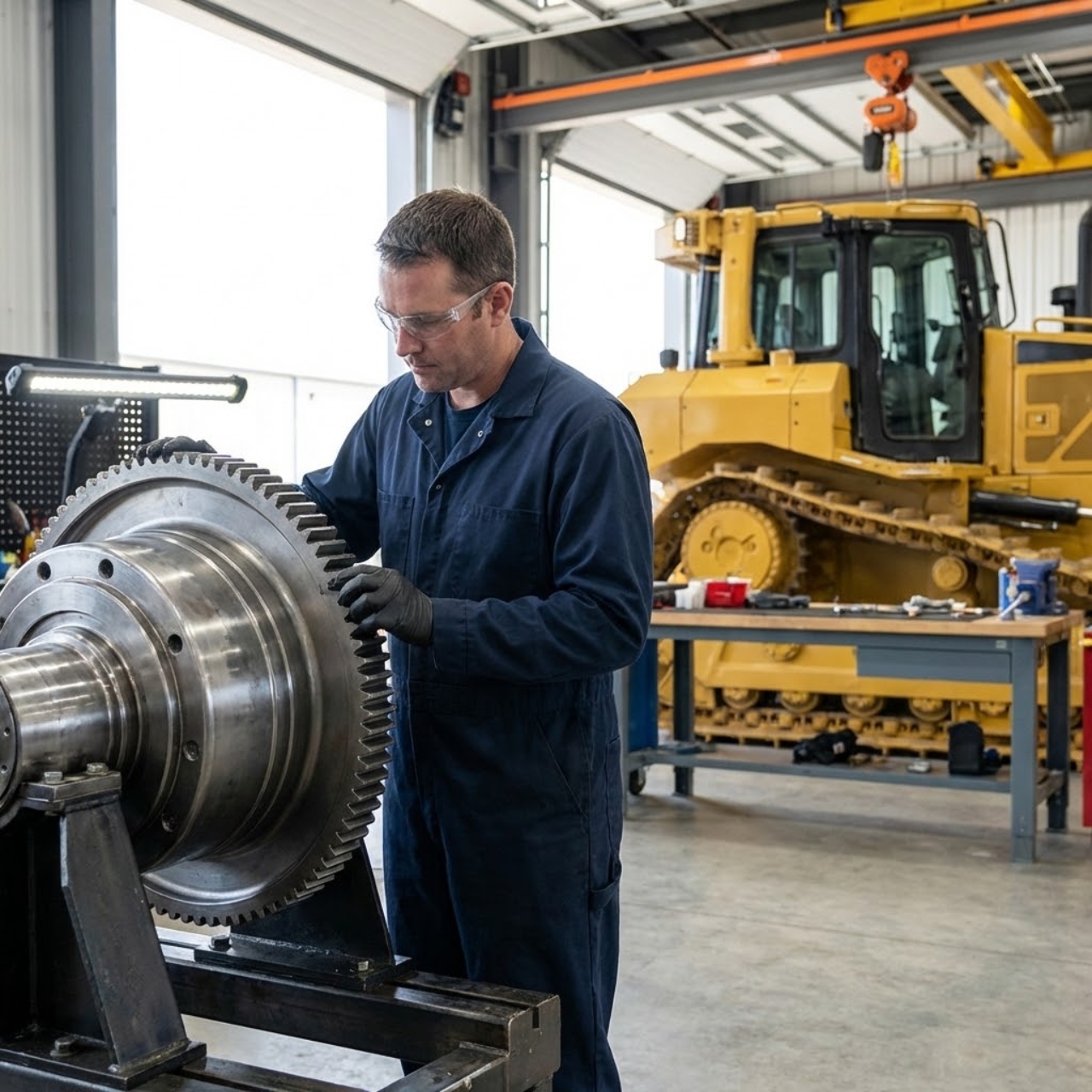
Tracked vehicles operating in Australian mining, construction, and heavy industry environments face relentless contamination. Final drives, sprockets, idlers, and undercarriage components accumulate tonnes of compacted mud, oil, grease, and mineral deposits that accelerate wear and trigger premature failures. A single final drive replacement on a large dozer can cost $40,000-$80,000, while undercarriage rebuilds routinely exceed $200,000. Yet many operations still rely on manual pressure washing – a labour-intensive approach that rarely achieves the thorough cleanliness these precision components demand.
The financial impact extends beyond parts replacement. Contaminated undercarriages mask wear patterns, preventing accurate condition monitoring. Inspections become guesswork when technicians cannot see pin bosses, bushings, or seal surfaces through layers of baked-on material. This creates a cascade of problems: missed maintenance windows, unexpected breakdowns, and costly emergency repairs that halt production.
Hotwash addresses these challenges with industrial cleaning systems specifically engineered for tracked vehicle maintenance. These automated solutions remove contamination that manual methods cannot reach, delivering consistent results that support predictive maintenance programmes and extend component service life across heavy equipment fleets.
Why Final Drives and Undercarriages Require Specialised Cleaning
Final drives contain precision gears, bearings, and seals operating under extreme loads. Contamination creates three critical failure modes that undermine reliability and inflate maintenance costs.
Seal Degradation and Oil Contamination
Abrasive particles embedded in external surfaces work past seals during operation, contaminating lubricant and accelerating internal wear. A single contaminated final drive can lose $3,000-$5,000 worth of gear sets and bearings before the problem becomes apparent. Clean external surfaces reduce this risk by eliminating the contamination source at seal interfaces.
Inspection Accuracy and Condition Monitoring
Maintenance teams cannot assess component condition through layers of contamination. Pin and bushing wear, crack propagation, and seal weeping remain hidden until failures occur. Operations that implement thorough cleaning protocols identify problems 2-3 months earlier than those relying on visual inspection of contaminated components, creating intervention opportunities that prevent catastrophic failures.
Heat Dissipation and Thermal Management
Compacted material acts as insulation, trapping heat in final drives and undercarriage components. Elevated operating temperatures reduce lubricant effectiveness and accelerate seal degradation. Clean components dissipate heat efficiently, maintaining optimal operating temperatures that extend service intervals and component life.
Limitations of Manual Cleaning Methods for Tracked Components
Most maintenance facilities rely on pressure washers operated by technicians who spend hours manually cleaning each component. This approach creates consistent problems that undermine maintenance effectiveness.
Incomplete Contamination Removal
Manual pressure washing removes surface material but rarely achieves the thoroughness required for accurate inspection. Operators cannot maintain consistent spray angles and dwell times across complex geometries. Material remains in recesses, behind mounting flanges, and in seal grooves – exactly where contamination causes the most damage.
A maintenance supervisor at a Pilbara iron ore operation reported that technicians spent 4-6 hours manually cleaning each dozer undercarriage, yet still missed 30-40% of contamination in critical areas. This incomplete cleaning compromised inspection accuracy and contributed to three unexpected final drive failures over six months.
Labour Cost and Safety Risks
Manual cleaning consumes significant labour hours that could support higher-value maintenance activities. A technician earning $45/hour who spends five hours cleaning a single undercarriage represents $225 in direct labour costs per component – costs that multiply across fleet maintenance schedules.
The work also exposes technicians to repetitive strain injuries, chemical exposure, and high-pressure water hazards. Operations focused on workplace safety increasingly recognise that manual cleaning creates unnecessary risks that automated systems eliminate entirely.
Inconsistent Results and Quality Control
Manual cleaning quality varies based on operator experience, fatigue, and time pressure. Morning shifts might deliver thorough results while afternoon cleaning becomes rushed as technicians face competing priorities. This inconsistency undermines condition monitoring programmes that depend on reliable, repeatable cleaning standards.
How Automated Parts Washers Transform Undercarriage Maintenance
Automated parts washing systems designed for tracked vehicle components deliver cleaning performance that manual methods cannot match. These industrial systems combine high-temperature water, precision spray patterns, and programmable cycles to remove contamination from every surface and recess.
Comprehensive Coverage Through Engineered Spray Systems
Industrial spray washers use multiple rotating spray arms positioned to cover components from all angles. High-pressure jets reach into recesses, behind flanges, and around complex geometries where manual wands cannot maintain effective spray angles. The result is complete contamination removal that exposes every inspection surface.
A coal mining operation in Queensland documented this difference when they installed an automated system for dozer undercarriage cleaning. Components that previously required 4-5 hours of manual washing emerged spotless after 45-minute automated cycles. Inspection times decreased by 60% because technicians no longer spent time removing residual contamination before assessing component condition.
Temperature-Enhanced Cleaning Performance
Heated water dramatically improves cleaning effectiveness on oil, grease, and baked-on contamination. Heated immersion tanks maintain water temperatures between 60-80°C, softening hardened deposits and emulsifying oils that cold water cannot remove. This thermal action reduces cycle times and improves results without requiring aggressive chemicals that create disposal problems.
Final drives benefit particularly from high-temperature cleaning. Gear oil residue and seal grease that resist cold water pressure washing dissolve readily in heated systems, leaving surfaces clean enough for accurate seal inspection and proper gasket seating during reassembly.
Programmable Cycles and Consistent Quality
Automated systems deliver identical results every cycle, regardless of operator experience or time constraints. Maintenance teams programme wash parameters – temperature, pressure, cycle duration – based on contamination type and component requirements. The system executes these parameters precisely, eliminating the quality variations inherent in manual processes.
This consistency supports predictive maintenance programmes that depend on reliable baseline data. When every component receives identical cleaning treatment, wear measurements and condition assessments become directly comparable across inspection intervals, improving trend analysis and failure prediction accuracy.
Selecting the Right System Capacity for Fleet Requirements
Tracked vehicle components vary dramatically in size and contamination levels. Matching system capacity to actual maintenance requirements ensures efficient operation without over-investing in unnecessary capability.
Chamber Dimensions and Component Fit
Standard dozer final drives measure 600-900mm in diameter, while complete undercarriage sections can exceed 2 metres in length. Systems must accommodate these dimensions with adequate clearance for spray arm rotation and effective water circulation.
Operations maintaining smaller tracked equipment – compact excavators, skid steers, agricultural machinery – achieve excellent results with standard workshop cleaning stations featuring 1200-1500mm chambers. These systems handle final drives, sprockets, idlers, and track sections from equipment up to 20-tonne operating weight.
Larger mining and earthmoving operations require high-capacity industrial washers with chambers exceeding 2000mm. These units accommodate complete undercarriage assemblies from 40-tonne excavators and large dozers, supporting efficient cleaning without component disassembly.
Heating Capacity and Throughput Requirements
Heating systems must maintain target temperatures throughout extended wash cycles. Undersized heaters struggle to maintain temperature when cold components enter the chamber, reducing cleaning effectiveness and extending cycle times.
Operations processing 3-5 undercarriage components daily require heating capacity of 36-54kW to maintain consistent performance. High-volume facilities cleaning 8-10 components per shift benefit from systems with 72kW+ heating capacity that recovers temperature quickly between cycles.
Contamination Type and Cleaning Intensity
Clay-based mud, coal dust, and mineral deposits require different cleaning approaches than oil and grease contamination. Operations should assess typical contamination profiles when selecting system specifications.
Coal mining operations dealing with compacted coal dust and clay benefit from thermal cleaning systems that combine high temperature with maximum pressure delivery. These intensive systems break down stubborn deposits that resist standard spray washing.
Workshop environments maintaining equipment with primarily oil and grease contamination achieve excellent results with standard heated spray systems. The combination of 60-70°C water and properly positioned spray arms removes petroleum-based contamination without requiring maximum pressure specifications.
Operational Benefits Beyond Cleaning Performance
Automated parts washing systems deliver value that extends well beyond contamination removal. Operations that implement these systems report improvements across multiple maintenance and operational metrics.
Reduced Inspection Time and Improved Accuracy
Clean components allow technicians to complete thorough inspections in 40-60% less time than inspecting partially cleaned parts. Visual assessment becomes straightforward when every surface is visible, and measurement tools contact clean metal rather than contamination layers that compromise accuracy.
A Western Australian gold mining operation documented this benefit after installing an industrial parts washer for tracked equipment maintenance. Undercarriage inspections that previously required 90 minutes per machine decreased to 35 minutes, allowing the maintenance team to complete monthly fleet inspections without additional labour hours.
Extended Component Service Life
Thorough cleaning removes abrasive particles that accelerate wear during operation. Components reinstalled after automated cleaning show measurably reduced wear rates compared to those cleaned manually. Several mining operations report 15-20% service life extensions on pins, bushings, and track links after implementing automated cleaning protocols.
This improvement stems from removing contamination that manual methods leave behind. Particles trapped in bushing bores and pin recesses act as lapping compounds during operation, accelerating wear. Automated systems remove these particles completely, eliminating this wear mechanism.
Labour Reallocation to Higher-Value Activities
Eliminating 4-5 hours of manual cleaning labour per component allows maintenance teams to focus on skilled work that manual washing displaces. Technicians perform additional preventive maintenance, support reliability improvement projects, or complete training rather than spending entire shifts operating pressure washers.
Operations calculate labour savings by multiplying hours saved per component by cleaning frequency and hourly labour costs. A facility cleaning 12 undercarriage assemblies monthly saves approximately 50-60 labour hours – equivalent to $2,500-$3,000 monthly at typical maintenance labour rates. These savings typically recover system investment within 18-24 months while delivering ongoing operational benefits.
Improved Workplace Safety and Compliance
Automated cleaning eliminates high-pressure water exposure, repetitive strain risks, and chemical handling that manual processes create. Operators load components, start programmed cycles, and remove cleaned parts without the physical demands and hazards of manual pressure washing.
This safety improvement supports workplace health and safety compliance while reducing injury risks that create workers’ compensation costs and productivity losses. Operations focused on zero-harm safety cultures recognise automated cleaning as an engineering control that eliminates hazards rather than merely managing them.
Integration with Predictive Maintenance Programmes
Modern maintenance strategies depend on accurate condition data to predict failures and optimise intervention timing. Automated parts washing directly supports these programmes by ensuring consistent component cleanliness that enables reliable measurements and meaningful trend analysis.
Baseline Data Quality
Predictive maintenance requires comparing current component condition against historical baselines. These comparisons only provide value when cleaning standards remain consistent across measurement intervals. Automated systems deliver this consistency, ensuring that measurement variations reflect actual wear rather than differences in cleaning thoroughness.
Measurement Accuracy
Ultrasonic thickness gauges, laser measurement systems, and precision callipers require clean surfaces to deliver accurate readings. Contamination layers as thin as 0.5mm create measurement errors that compromise wear rate calculations. Automated cleaning removes these layers completely, allowing measurement tools to contact actual component surfaces.
Photographic Documentation
Many operations photograph components during inspections to document condition and support failure analysis. These photographs provide limited value when contamination obscures relevant features. Clean components yield clear images that support accurate condition assessment and provide meaningful historical records for trend analysis.
Implementation Considerations for Mining and Heavy Industry Operations
Operations considering automated parts washing systems should evaluate several factors that influence successful implementation and return on investment.
Facility Requirements and Installation Planning
Industrial parts washers require adequate floor space, electrical service, and water supply. Standard systems need 3-4 square metres of floor space plus clearance for component loading. Electrical requirements range from 32-amp single-phase for smaller systems to 100-amp three-phase for high-capacity units.
Water supply considerations include both initial fill requirements and ongoing consumption. Systems with water recycling capability reduce consumption to 50-100 litres per cycle after initial fill, making them practical for remote sites where water availability limits operations.
Maintenance and Operating Costs
Automated systems require minimal ongoing maintenance – primarily heating element inspection, pump seal replacement, and spray nozzle cleaning. Annual maintenance costs typically range from $800-$1,500 depending on system size and usage intensity.
Operating costs include electricity for heating and pumping, plus water and detergent consumption. Operations with high cleaning volumes benefit from systems featuring water filtration and recycling that reduce per-cycle costs while supporting environmental compliance.
Training and Operational Integration
Staff require minimal training to operate automated systems effectively. Most operators become proficient within 2-3 cycles, learning to position components for optimal spray coverage and select appropriate wash programmes. This simplicity contrasts with manual pressure washing, where achieving consistent results requires significant experience and technique development.
Successful operations integrate automated cleaning into maintenance workflows by scheduling wash cycles to align with inspection intervals. Components enter the washer at shift start, complete cycles during disassembly and measurement activities, and emerge clean when technicians are ready for detailed inspection.
Cost-Benefit Analysis for Fleet Maintenance Operations
Evaluating automated parts washing investment requires comparing system costs against quantifiable operational improvements and cost reductions.
Direct Labour Savings
Labour savings provide the most straightforward return on investment calculation. Operations that clean 10 undercarriage assemblies monthly, saving 4 hours per assembly at $45/hour, realise $1,800 monthly labour savings. Over a 36-month period, this totals $64,800 – typically exceeding the installed cost of appropriate cleaning equipment.
Component Life Extension Value
Extending component service life by 15-20% through improved cleaning creates substantial savings on parts that cost $150,000-$250,000 per complete undercarriage rebuild. A single avoided premature failure often justifies system investment, while ongoing service life improvements deliver continuous value.
Reduced Downtime Costs
Unexpected component failures create downtime costs that dwarf parts and labour expenses. A production dozer generating $8,000-$12,000 daily revenue that experiences a preventable final drive failure costs the operation 3-5 days of production – $24,000-$60,000 in lost revenue plus emergency repair costs.
Improved inspection accuracy enabled by thorough cleaning helps prevent these failures by identifying problems before catastrophic breakdowns occur. Operations can plan interventions during scheduled maintenance windows rather than responding to emergency failures that disrupt production.
Australian Manufacturing Quality for Harsh Operating Environments
Tracked vehicles in Australian mining and construction environments operate under conditions that demand exceptional equipment durability. Automated parts washing systems must withstand these same harsh conditions while delivering reliable performance across years of continuous service.
Equipment manufactured to Australian standards incorporates design features that address local operating conditions – high ambient temperatures, remote site operation, and intensive daily use. Robust construction using heavy-gauge materials, corrosion-resistant components, and industrial-grade pumps and heating elements ensures systems maintain performance despite demanding environments.
Local manufacturing also supports rapid parts availability and technical service access. Operations in regional and remote locations benefit from Australian-based support that understands their specific requirements and can respond quickly when technical assistance becomes necessary.
Conclusion
Final drives and undercarriage components represent major capital investments that demand thorough cleaning to support accurate inspection, reliable condition monitoring, and maximum service life. Manual pressure washing cannot deliver the consistent, comprehensive results these precision components require, creating maintenance blind spots that contribute to premature failures and unexpected downtime.
Automated parts washing systems eliminate these limitations through engineered spray coverage, temperature-enhanced cleaning, and programmable cycles that deliver identical results regardless of operator experience or time constraints. Operations that implement these systems report dramatic reductions in inspection time, measurable component life extensions, and substantial labour savings that typically recover investment within 18-24 months.
The technology supports modern predictive maintenance strategies by ensuring the consistent component cleanliness that accurate condition monitoring requires. Clean baselines enable meaningful trend analysis, reliable wear measurements, and photographic documentation that supports data-driven maintenance decisions.
For mining operations, heavy construction contractors, and industrial maintenance facilities managing tracked equipment fleets, automated cleaning represents a practical engineering solution to problems that manual methods cannot adequately address. The combination of improved maintenance effectiveness, labour efficiency, and component protection creates compelling operational and financial benefits.
Contact us to discuss parts washing solutions matched to specific tracked vehicle maintenance requirements. The team provides technical specifications, capacity recommendations, and return on investment analysis based on actual fleet maintenance parameters and operating conditions.

Leave A Comment