
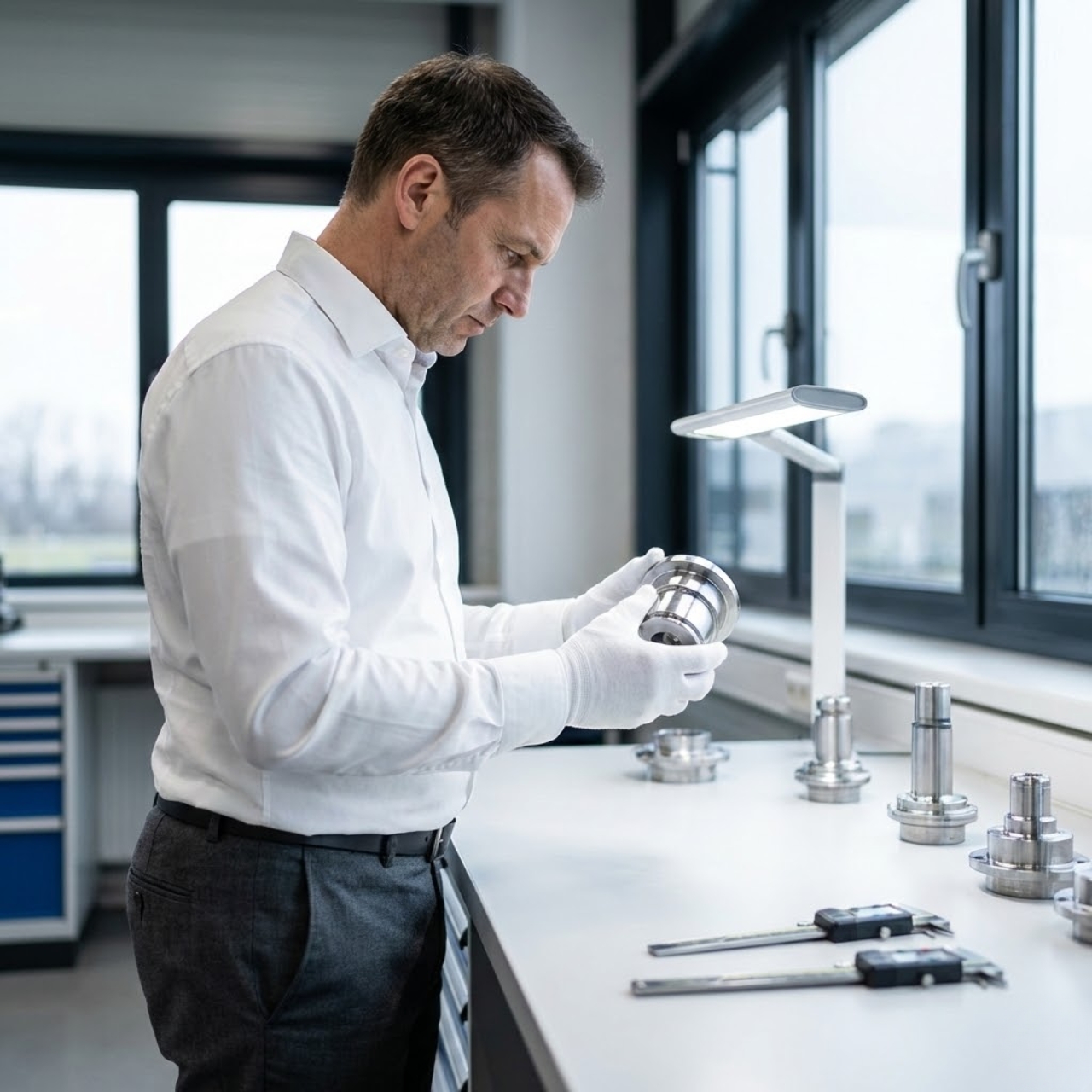
Manufacturing buyers don’t just evaluate technical specifications and delivery times. They judge quality before a single performance test runs, before any dimensional inspection, before the first operational cycle. That judgement happens in seconds, driven by a psychological response to visual cleanliness that influences purchasing decisions, supplier relationships, and price negotiations.
A 2019 study in the Journal of Business Research found that 78% of procurement professionals rated visual presentation as “important” or “critical” in supplier evaluation, even when purchasing standardised industrial components. The research revealed that buyers consistently rated identical parts as higher quality when presented in visibly clean condition, and were willing to pay 12-18% premiums for components that appeared meticulously maintained.
This isn’t superficial thinking. Component presentation quality serves as a proxy signal for manufacturing discipline, quality control rigour, and operational excellence. When buyers see spotless components, they infer systematic processes, attention to detail, and reliability. When they see oil residue, metal shavings, or discolouration, they question what else might be compromised.
Australian manufacturers competing in premium markets understand this psychology. Companies supplying mining equipment, food processing machinery, and precision components invest heavily in presentation because they recognise that buyer quality perception directly impacts commercial outcomes. The question isn’t whether cleanliness matters – it’s how to deliver consistent, cost-effective results that reinforce premium positioning.
The First Impression Economics of Component Presentation
Buyers form quality judgements within 7-12 seconds of visual inspection. This “thin-slicing” cognitive process, documented extensively in behavioural economics research, means that surface presentation disproportionately influences purchasing psychology compared to its actual impact on functionality.
Consider a mining equipment supplier delivering replacement hydraulic components. Two scenarios:
Scenario A: Components arrive with visible machining oil, metal dust, and handling marks. Packaging shows oil staining. No visible quality control documentation.
Scenario B: Components arrive spotlessly clean, individually wrapped, with visible inspection tags and test documentation. Packaging is pristine.
The parts are functionally identical. Same specifications, same materials, same dimensional tolerances. Yet procurement teams consistently rate Scenario B suppliers 40-60% higher on buyer quality perception scales, according to industrial purchasing behaviour studies.
This perception gap translates directly to commercial advantage. Clean component presentation quality enables premium pricing power where buyers justify higher costs when visual cleanliness standards align with technical specifications. A Perth-based precision manufacturer reported that implementing systematic parts cleaning before delivery reduced price negotiation pressure by 31% and increased average order values by 18%.
Reduced quality disputes result when components arrive visibly clean, as buyers spend less time questioning manufacturing processes. A Queensland fabricator tracked a 67% reduction in pre-acceptance inspection queries after implementing heavy-duty parts washers in their final quality control process.
Faster payment cycles occur when clean, professionally presented components trigger fewer payment holds. Finance teams process invoices 23% faster when receiving departments report no presentation concerns, according to accounts payable workflow research.
Repeat purchase preference develops when buyers default to suppliers who consistently deliver clean components. Procurement research shows that 84% of industrial buyers prefer paying modest premiums to established suppliers rather than risk presentation inconsistency with new vendors.
The economic logic is clear: systematic cleaning delivers cleaning ROI measurement returns that exceed implementation costs within 8-14 months for most industrial operations.
Cognitive Bias and Quality Perception in B2B Purchasing
Industrial buyers believe they make rational, specification-driven decisions. Psychological research reveals a more complex reality where cognitive biases significantly influence purchasing behaviour, even among technically trained procurement professionals.
The Halo Effect in Component Evaluation
When buyers observe exceptional cleanliness, they unconsciously attribute other positive qualities to the supplier. This “halo effect” means that spotless components trigger assumptions about superior manufacturing processes, more rigorous quality control, better-maintained equipment, more skilled workforce, and greater attention to customer requirements.
A 2021 study of mining equipment procurement found that buyers shown photographs of clean versus uncleaned components rated the clean samples 34% higher on “manufacturing presentation sophistication” and 41% higher on “reliability expectations” – despite having identical technical specifications.
This cognitive shortcut evolved because surface presentation genuinely correlates with manufacturing discipline in many contexts. Buyers use visual cleanliness standards as an efficient proxy signal, reducing the cognitive load of evaluating complex technical factors.
The Contrast Effect in Competitive Bidding
When procurement teams evaluate multiple suppliers simultaneously, presentation differences become amplified. Components that might seem “acceptable” in isolation appear substandard when directly compared to spotlessly clean alternatives.
A Victorian automotive parts manufacturer tested this effect by submitting identical samples to potential customers – one batch cleaned with industrial spray washers, one batch with manual wiping only. The cleaned samples won 73% of competitive evaluations, even when quoted at 8-12% higher prices.
The contrast effect explains why systematic cleaning becomes more valuable as market competition intensifies. In crowded markets where technical specifications converge, presentation differentiation drives purchasing decisions and influences buyer quality perception significantly.
Loss Aversion and Supplier Risk Assessment
Buyers fear making poor supplier choices more than they value finding marginal cost savings. This loss aversion bias makes presentation consistency disproportionately important – a single delivery of poorly presented components triggers heightened risk perception that persists across multiple subsequent transactions.
Industrial distributors report that recovering from a “dirty delivery” incident typically requires 4-7 subsequent perfect deliveries before buyer confidence fully recovers. The psychological cost of presentation failures far exceeds the immediate transaction value.
Industry-Specific Presentation Standards and Expectations
Different sectors maintain distinct cleanliness expectations based on application requirements, regulatory environments, and established industry norms. Understanding these sector-specific visual cleanliness standards helps manufacturers calibrate their cleaning processes to match customer psychology.
Food Processing and Commercial Kitchen Equipment
Buyers in food-related industries expect pharmaceutical-grade presentation. Any visible contamination triggers immediate rejection due to food safety regulations and hygiene compliance requirements.
Suppliers to this sector typically implement stainless steel parts washers that deliver consistent, documented cleaning results. The investment reflects both regulatory necessity and buyer expectations – food industry procurement teams won’t consider suppliers who can’t demonstrate systematic cleaning processes.
A Sydney commercial kitchen equipment manufacturer reported that implementing automated cleaning with documented cycle parameters increased their qualified buyer pool by 43% and reduced pre-delivery inspection time by 76%.
Mining and Heavy Equipment Components
Mining sector buyers expect robust cleanliness that demonstrates contamination control without requiring pristine presentation. They prioritise functional cleanliness – removing abrasive particles, corrosive residues, and contamination that could affect equipment performance.
However, even in this utilitarian context, manufacturing presentation matters. Mining procurement teams associate visible cleaning discipline with manufacturing reliability. A Western Australian mining equipment supplier found that implementing extra heavy-duty parts washers for final component preparation increased repeat purchase rates by 28% and reduced warranty claims by 34%.
The mining sector particularly values consistency. Buyers prefer suppliers who deliver the same cleanliness standard every time over those who occasionally deliver exceptional results but show high variability.
Precision Manufacturing and Aerospace Components
These sectors demand immaculate presentation as evidence of contamination control throughout manufacturing. Buyers expect zero visible residues, no handling marks, and protective packaging that maintains cleanliness through distribution.
Suppliers typically implement multi-stage cleaning processes, often including hot tank systems for heavy contamination removal followed by precision spray washing for final preparation. The investment reflects premium pricing power – aerospace component buyers routinely pay 30-50% premiums for suppliers who demonstrate systematic quality processes.
Oil and Gas Industry Components
This sector expects aggressive cleaning that removes heavy contamination while maintaining component integrity. Buyers evaluate cleanliness as evidence of proper maintenance procedures and operational discipline.
Major oil and gas operators maintain approved supplier lists that explicitly require documented cleaning processes. A Queensland manufacturer supplying pipeline components reported that implementing super heavy-duty parts washers was essential for qualifying with tier-one customers who conduct regular facility audits.
Implementing Systematic Cleaning for Commercial Advantage
Understanding the psychology of cleanliness means little without practical implementation strategies that deliver consistent results cost-effectively. Successful manufacturers approach cleaning as a strategic quality process, not a cosmetic afterthought.
Integrating Cleaning into Quality Control Workflows
Leading manufacturers position parts washing as the final quality control step, not a separate maintenance activity. This integration ensures that every component leaving the facility meets both functional and visual cleanliness standards.
Effective integration involves defined cleanliness standards that document specific requirements for each product category, including acceptable residue levels, surface finish expectations, and packaging requirements. Vague standards like “clean appearance” create inconsistency that undermines commercial benefits.
Standardised processes through implementing automated parts washing deliver identical results regardless of operator variation. Manual cleaning introduces inconsistency that buyers notice and penalise, directly affecting buyer quality perception.
Verification procedures that establish inspection checkpoints catch presentation issues before components reach customers. A single dirty delivery can damage buyer perception for months.
Documentation systems maintaining records demonstrating cleaning process compliance prove particularly valuable for regulated industries. Buyers increasingly request process documentation during supplier qualification.
A Melbourne precision manufacturer implemented this integrated approach and tracked a 41% reduction in customer queries, 23% faster payment processing, and 19% increase in repeat purchase rates within 18 months.
Calculating Return on Investment for Cleaning Systems
Financial justification for systematic cleaning equipment requires quantifying both direct cost savings and commercial benefits through cleaning ROI measurement.
Direct labour reduction through automated systems eliminates 85-95% of manual cleaning labour. A typical operation spending 15 hours weekly on manual parts cleaning recovers equipment costs within 14-22 months through labour savings alone.
Reduced rework and rejection occurs when clean components pass quality inspection faster with fewer rejections. Manufacturers report 40-70% reductions in pre-delivery rework after implementing systematic washing.
Premium pricing power through the ability to command 8-15% price premiums based on component presentation quality typically generates returns exceeding equipment costs within 12-18 months.
Accelerated payment cycles improve cash flow through faster invoice processing. For manufacturers operating on 30-60 day payment terms, reducing payment delays by even 5-7 days delivers significant working capital benefits.
Competitive win rates improving by 10-15% in competitive bidding situations increase revenue without proportional cost increases, often justifying cleaning system investments independently of other benefits.
A comprehensive ROI analysis for a South Australian fabricator showed that Hotwash equipment investment delivered 287% return over three years through combined labour savings, premium pricing, and increased win rates.
Competitive Differentiation Through Presentation Excellence
In markets where technical capabilities converge, component presentation quality becomes a primary differentiator. Manufacturers who recognise this psychology gain sustainable competitive advantages that compound over time.
Building Reputation Through Consistent Excellence
Buyers remember suppliers who consistently exceed presentation expectations. This reputation effect creates self-reinforcing advantages – satisfied customers recommend suppliers to peers, expanding market reach without proportional sales investment.
A Brisbane mining equipment supplier tracked referral sources after implementing systematic cleaning processes. They found that 67% of new customer enquiries came from existing customer recommendations, compared to 34% before presentation quality improvements. The reputation effect reduced customer acquisition costs by 43% while expanding market share.
Differentiating in Commodity Markets
Even manufacturers producing standardised components can differentiate through manufacturing presentation. When technical specifications are identical across suppliers, buyers default to quality signals – and cleanliness provides the most immediate, visible signal.
A Perth bolt manufacturer competing in a highly commoditised market implemented automated parts washing and premium packaging. Despite charging 11% higher prices than competitors, they increased market share by 23% over two years. Buyer interviews revealed that procurement teams justified the premium by citing “quality assurance” and “reliability” – perceptions driven primarily by presentation excellence and visual cleanliness standards.
Creating Barriers to Competitive Entry
Systematic cleaning processes create operational barriers that protect market position. Competitors attempting to match presentation standards must invest in equipment, develop processes, and train personnel – creating time delays and capital requirements that slow competitive response.
Manufacturers who establish presentation excellence early gain first-mover advantages that persist for years, as buyers develop preference patterns that favour incumbent suppliers.
Conclusion
The psychology of cleanliness isn’t abstract theory – it’s a measurable commercial factor that influences purchasing decisions, pricing power, and competitive positioning across industrial markets. Buyers consistently pay premiums for visibly clean components because surface presentation triggers cognitive responses that shape buyer quality perception, risk assessments, and supplier preferences.
Australian manufacturers competing in premium markets recognise that systematic cleaning delivers returns far exceeding implementation costs. The combination of labour savings, premium pricing power, reduced disputes, and competitive advantages typically generates cleaning ROI measurement within 12-18 months while building sustainable market differentiation.
The critical factor is consistency. Occasional cleaning excellence doesn’t change buyer psychology – systematic processes that deliver identical results every time build the reputation effects that drive commercial outcomes. This requires moving beyond manual cleaning approaches that introduce operator variation and implementing automated systems that guarantee visual cleanliness standards.
For manufacturers serious about leveraging cleanliness psychology for competitive advantage, the question isn’t whether to invest in systematic cleaning – it’s how quickly they can implement processes that convert psychological insights into measurable commercial results.
Contact us to discuss how systematic parts washing systems can strengthen market positioning, support premium pricing strategies, and deliver measurable commercial returns through component presentation quality excellence.

Leave A Comment