
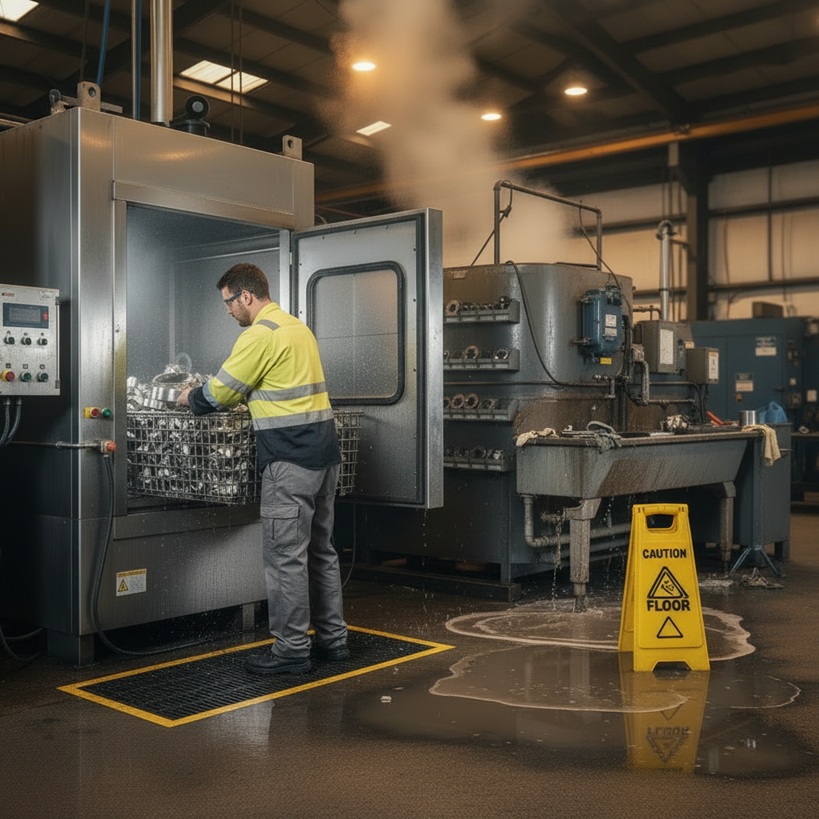
Mechanical workshops face a persistent safety challenge that costs Australian businesses thousands in workers’ compensation claims annually – wet floors from parts washing operations, coolant spills, and cleaning processes. While workshop managers focus on productivity and equipment maintenance, the slippery surfaces created by industrial cleaning activities create hazardous conditions that lead to preventable injuries, lost work time, and regulatory compliance issues.
The financial impact extends beyond immediate medical costs. WorkSafe Australia data shows slip and fall incidents account for approximately 20-25% of all workplace injuries, with average claims exceeding $12,000 per incident when factoring in rehabilitation, lost productivity, and investigation costs. For mechanical workshops handling automotive components, mining equipment parts, or manufacturing machinery, wet areas become unavoidable – making effective workshop slip prevention strategies essential for operational safety and cost control.
The Hidden Costs of Wet Workshop Floors
Workshop managers often underestimate the full financial burden of slip incidents. Direct costs include workers’ compensation premiums, which increase following claims, and immediate medical expenses. However, indirect costs multiply the impact – replacement labour during recovery periods, productivity losses from experienced workers on light duties, investigation time, potential WorkSafe inspections, and the administrative burden of incident reporting.
Operational Disruptions and Morale Impact
A single serious slip incident can trigger a cascade of operational disruptions. When an experienced mechanic or maintenance technician suffers an injury, workshops lose specialised skills that cannot be immediately replaced. Training temporary staff, redistributing workloads among remaining team members, and managing the injured worker’s gradual return to duties all drain management time and resources.
Beyond financial considerations, slip incidents damage workplace morale and safety culture. Workers become hesitant around wet areas, slowing their movements and reducing efficiency. The psychological impact of witnessing a colleague’s injury creates anxiety that affects team performance long after the incident.
Primary Wet Area Hazards in Mechanical Workshops
Parts washing operations create the most significant slip risks in mechanical workshops. Traditional manual cleaning methods involve removing components from equipment, scrubbing with solvents or degreasers, and rinsing – processes that inevitably splash water, cleaning solutions, and contaminated runoff onto workshop floors. Workers carrying dripping parts from wash stations to assembly areas leave trails of slippery residue throughout the workspace.
Coolant and Pressure Washing Hazards
Coolant and lubricant spills represent another persistent hazard. Machine tools, hydraulic systems, and equipment maintenance activities generate fluid leaks that spread across smooth concrete floors. These petroleum-based substances create extremely slippery conditions, particularly when mixed with water or dust. Unlike water that eventually evaporates, oil-based contaminants remain hazardous until properly cleaned.
Pressure washing and steam cleaning equipment introduce additional complications. While these tools effectively remove stubborn contamination from large components, they generate substantial water volumes that pool in low-lying floor areas or spread across wide sections of the workshop. The high-pressure spray can also propel cleaning solutions and dislodged debris considerable distances, extending the hazardous area beyond the immediate cleaning zone.
Engineering Controls That Eliminate Slip Risks
The most effective approach to workshop slip prevention involves eliminating wet floor conditions rather than managing them. Automated heavy duty parts washers fundamentally change the cleaning process by containing all water, cleaning solutions, and contaminated runoff within enclosed chambers. Workers load dirty components into the washer cabinet, close the door, and retrieve spotlessly clean parts after the automated cycle completes – without creating any floor contamination.
Containment and Secondary Prevention
This containment principle delivers immediate safety improvements. Workshop floors remain dry throughout the cleaning process, eliminating the primary slip hazard source. Workers no longer handle dripping components or transport parts through the workspace while wet. The controlled environment prevents cleaning solution splashes, overspray, and the contaminated runoff trails that traditional manual washing creates across workshop floors.
Enclosed cleaning systems also address the secondary contamination issue. Manual parts washing typically requires workers to rinse components over sinks or drain grates, with splashing and dripping creating wet zones around washing stations. Automated systems complete all washing, rinsing, and initial drying stages inside sealed cabinets, keeping moisture contained until parts emerge clean and substantially drier.
Drainage Design and Floor Surface Selection
Effective drainage infrastructure provides critical backup protection when wet conditions occur in wet floor safety workshops. Workshop floors should incorporate properly positioned and adequately sized floor drains near all cleaning equipment, parts washing areas, and locations where hydraulic or coolant systems operate. Drainage capacity must handle peak flow volumes during cleaning operations or emergency spill situations without allowing water to pool on floor surfaces.
Floor Slope and Surface Texture
Floor slope design directly impacts drainage effectiveness. Properly graded concrete floors direct water flow toward drain locations, preventing pooling in low spots where workers walk. The optimal slope ranges from 1-2% (approximately 1-2cm drop per metre of distance), providing sufficient gradient for water movement without creating noticeable unevenness that could itself become a trip hazard.
Surface texture selection balances traction requirements against cleaning practicality. Smooth concrete floors become dangerously slippery when wet but clean easily and allow equipment to move freely. Heavily textured surfaces provide better traction but trap contaminants in surface irregularities, making thorough cleaning difficult. Medium-texture finishes or specialised non-slip coatings offer compromise solutions, though they require more aggressive cleaning to prevent contamination buildup.
Implementing Effective Spill Response Protocols
Even with engineering controls in place, wet floor safety workshops need rapid spill response capabilities. Designated spill cleanup stations positioned strategically throughout the workshop enable immediate action when leaks or spills occur. These stations should contain absorbent materials suitable for petroleum products, clearly marked wet floor warning signs, appropriate personal protective equipment, and disposal containers for contaminated absorbents.
Response Time and Training
Response time directly correlates with slip risk severity. Spills addressed within minutes create minimal hazard exposure, while those left unattended for extended periods endanger numerous workers and increase the likelihood of incidents. Establishing clear responsibility protocols ensures spills receive immediate attention rather than being ignored because “someone else will handle it.”
Training programmes must emphasise spill recognition and response procedures. Workers should understand which spills they can safely address with available materials versus situations requiring specialised cleanup or maintenance team intervention. Clear communication protocols ensure appropriate personnel receive notification when spills exceed basic cleanup capabilities or affect multiple work areas.
The Role of Automated Cleaning in Comprehensive Safety Programs
Hotwash Australia systems demonstrate how equipment selection directly impacts workplace safety outcomes. By eliminating the need for manual parts washing activities that create wet floor conditions, automated cleaning equipment removes the hazard source rather than attempting to manage risks after they occur. This proactive approach aligns with hierarchy of controls principles that prioritise elimination and engineering controls over administrative measures and personal protective equipment.
Multi-Benefit Safety Improvements
The safety benefits extend beyond workshop slip prevention. Enclosed automated washers also eliminate worker exposure to cleaning chemical vapours, reduce repetitive motion injuries associated with manual scrubbing, and prevent skin contact with harsh degreasers and solvents. Workshop managers implementing industrial spray washers typically observe multiple safety improvements alongside the primary goal of eliminating wet floor hazards.
Operational efficiency gains complement safety improvements. Automated systems clean components more consistently and thoroughly than manual methods, reducing the likelihood that workers need to re-clean parts or handle them multiple times. The faster cleaning cycles mean components spend less time in the washing process and more time available for inspection, maintenance, or reassembly activities – improving overall workshop productivity while simultaneously enhancing safety.
Footwear Standards and Personal Protective Equipment
Appropriate footwear provides essential protection when engineering controls and administrative measures cannot completely eliminate wet surface exposure. Australian Standard AS/NZS 2210.3 specifies requirements for slip-resistant footwear, defining testing methods and performance criteria. Workshop safety programmes should mandate footwear meeting these standards for all personnel working in areas where wet conditions may occur.
Sole Design and Inspection Protocols
Slip-resistant sole design incorporates specific tread patterns and rubber compounds that maintain traction on wet surfaces. However, footwear effectiveness degrades as soles wear smooth or become contaminated with oils and greases that fill tread channels. Regular footwear inspection and replacement protocols ensure workers maintain adequate protection throughout the footwear service life.
Beyond slip resistance, workshop safety footwear must provide protection against other hazards including falling objects, puncture risks from sharp metal debris, and electrical hazards in some environments. Selecting footwear that addresses multiple protection requirements while maintaining comfort for extended wear periods encourages consistent compliance with safety footwear policies.
Maintenance Schedules for Cleaning Equipment
Regular maintenance of parts washing systems prevents equipment malfunctions that could create safety hazards in wet floor safety workshops. Manual parts washers require periodic inspection of pump seals, hose connections, and cabinet drain systems to prevent leaks that could compromise the containment benefits these systems provide. Establishing preventive maintenance schedules based on manufacturer recommendations ensures equipment continues operating safely and effectively.
Filtration and Tank Inspection
Filtration system maintenance deserves particular attention. Clogged filters reduce cleaning effectiveness, potentially causing operators to extend cycle times, increase solution temperatures, or resort to supplementary manual cleaning that reintroduces wet floor hazards. Monitoring filter condition and replacing elements according to contamination levels rather than arbitrary time intervals optimises both cleaning performance and safety.
Solution tank inspection protocols should include checking for corrosion, crack development, or seal deterioration that could allow cleaning solution to escape containment. Early detection of potential failure points enables scheduled repairs during planned downtime rather than emergency responses to active leaks during production periods.
Integrating Slip Prevention Into Workshop Layout Design
Workshop layout decisions significantly influence slip hazard exposure. Positioning parts washing equipment in dedicated cleaning zones with appropriate drainage infrastructure, non-slip flooring, and clear boundaries separates wet operations from general work areas. This zoning approach limits the number of workers exposed to potential wet conditions and simplifies implementation of enhanced safety measures in higher-risk areas.
Traffic Flow and Clear Demarcation
Traffic flow patterns should minimise the need for workers to carry wet or dripping components through general workshop areas. Locating hot tank systems or other cleaning equipment near the workstations where cleaned components will be used reduces transport distances and associated contamination risks. Where longer transport cannot be avoided, designated routes with enhanced drainage and slip-resistant surfaces provide safer pathways.
Clear demarcation of wet areas through floor marking, signage, and physical barriers helps workers recognise and avoid slip hazards. Visual cues remind personnel to exercise appropriate caution when entering cleaning zones and alert them to temporarily wet conditions during cleaning operations or following spills.
Measuring Safety Performance and Continuous Improvement
Effective workshop slip prevention programmes require ongoing monitoring and measurement. Tracking slip and fall incident rates, near-miss reports, and hazard observations provides quantitative data about programme effectiveness and identifies areas requiring additional attention. Workshops should establish baseline metrics before implementing new safety measures to enable accurate assessment of improvement.
Leading Indicators and Worker Feedback
Leading indicators offer more proactive safety management than lagging indicators like injury rates. Monitoring compliance with spill cleanup protocols, completion rates for equipment maintenance schedules, and participation in safety training programmes helps identify potential problems before they result in incidents. Regular workplace inspections documenting wet floor conditions, drainage system performance, and cleaning equipment condition provide valuable trend data.
Worker feedback mechanisms capture valuable frontline insights about slip hazards and prevention measure effectiveness. Maintenance technicians and workshop personnel working daily with cleaning equipment and in potentially wet areas often identify risks or improvement opportunities that may not be apparent during periodic management inspections. Creating accessible reporting channels and demonstrating responsive action on reported concerns encourages ongoing participation.
Regulatory Compliance and Due Diligence Requirements
Australian workplace health and safety legislation places clear obligations on workshop operators to manage slip and fall risks. The model Work Health and Safety Act requires businesses to eliminate risks “so far as is reasonably practicable” or, where elimination is not possible, minimise risks through appropriate control measures. This legal framework emphasises proactive hazard management rather than reactive responses to incidents.
Documentation and Risk Assessment
Demonstrating due diligence requires documented evidence of systematic risk assessment, implementation of appropriate controls, worker training, and ongoing monitoring. Workshops should maintain records of safety equipment purchases, maintenance activities, training completion, incident investigations, and corrective actions. This documentation proves compliance during regulatory inspections and provides legal protection if incidents occur despite reasonable prevention efforts.
Regular risk assessments should specifically address slip hazards associated with parts cleaning operations, equipment maintenance activities, and other processes that create wet conditions. These assessments must consider the effectiveness of existing controls and identify opportunities for improvement as new equipment, processes, or technologies become available.
Cost-Benefit Analysis of Automated Cleaning Systems
Workshop managers evaluating automated cleaning equipment investments should consider comprehensive cost comparisons beyond initial purchase prices. While extra heavy duty parts washers represent significant capital expenditures, the total cost of ownership calculation must include avoided workers’ compensation expenses, reduced insurance premiums, eliminated productivity losses from injuries, and decreased labour costs for both parts cleaning and floor cleanup activities.
Premium Reductions and Labour Savings
Australian businesses typically see workers’ compensation premium reductions following sustained periods without claims. Implementing engineering controls that demonstrably reduce slip incident frequency strengthens the case for premium adjustments during insurance renewals. Some insurers offer specific premium discounts for documented safety improvements including automated cleaning equipment installation.
Labour cost analysis reveals substantial savings potential. Manual parts washing requires dedicated worker time for the cleaning process itself plus additional time for pre-cleaning setup, post-cleaning floor cleanup, and managing cleaning solution disposal. Automated systems handle all these tasks with minimal operator involvement, freeing skilled maintenance workers for higher-value activities while simultaneously eliminating the wet floor hazards that manual methods create.
Conclusion
Workshop slip prevention requires a systematic approach that prioritises eliminating wet floor conditions rather than simply managing hazards after they occur. Automated parts washing systems provide the most effective engineering control by containing all cleaning solutions, water, and contaminated runoff within enclosed cabinets – keeping workshop floors dry throughout the cleaning process.
The financial benefits extend well beyond avoided injury costs. Reduced workers’ compensation claims, lower insurance premiums, improved productivity from eliminated cleanup activities, and enhanced operational efficiency create compelling return on investment for automated cleaning equipment. Australian workshops implementing comprehensive slip prevention programmes typically achieve payback periods of 18-24 months through combined safety and productivity improvements.
For mechanical workshops seeking to eliminate slip hazards while improving cleaning effectiveness and operational efficiency, contact us to discuss how automated parts washing systems can transform workplace safety and productivity outcomes. The combination of Australian-built durability, proven contamination containment, and measurable safety improvements makes automated cleaning equipment a strategic investment in both worker protection and operational excellence.

Leave A Comment