
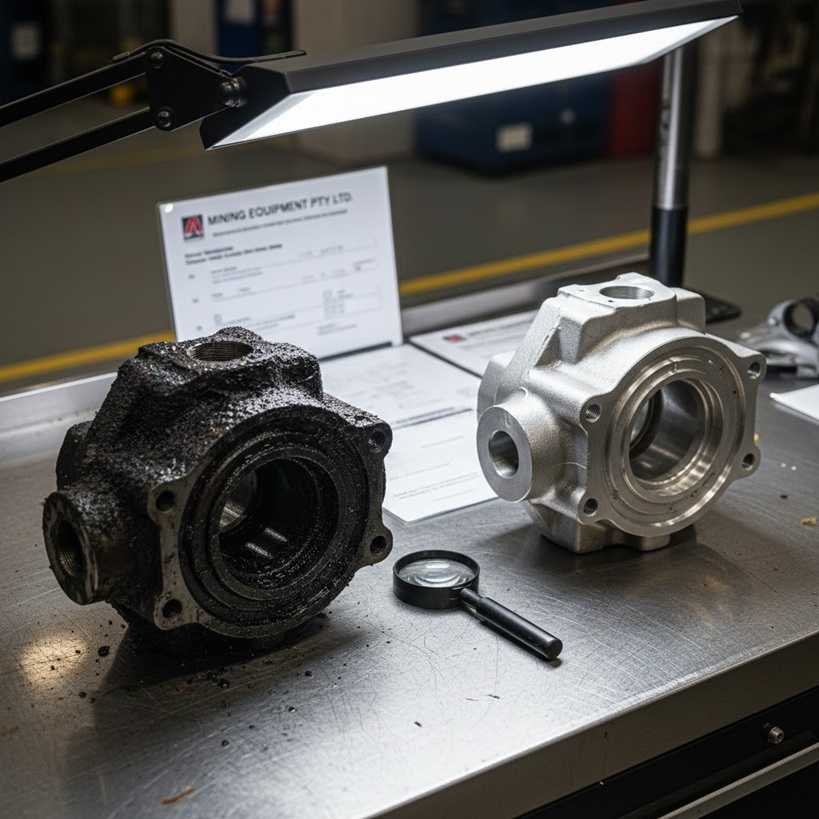
Manufacturing equipment breaks down. Parts fail. Warranty claims follow. But here is what most operations do not realise. Contamination causes 70-80% of hydraulic system failures. It also causes a significant portion of mechanical breakdowns across industrial equipment. That is not wear and tear. That is preventable damage from dirt, metal particles, and chemical residue.
Australian manufacturers and mining operations often face a harsh reality. Contamination does not just damage equipment. It triggers warranty disputes. It creates downtime during claim investigations. It leaves operations paying for failures that should not have happened. The fix is systematic. Implementing proper contamination control methods through professional parts cleaning prevents the majority of warranty-triggering failures before they occur.
Why Contamination Voids Warranties
Equipment manufacturers include specific contamination control requirements in warranty terms. Most operators never read them until a claim gets denied. Manufacturers build components to precise tolerances. They know that foreign particles destroy these tolerances quickly.
When a part fails, the manufacturer performs a forensic analysis. They look for scoring on cylinder walls. They check for embedded particles in bearings. They test oil samples for silicon or wear metals. If they find evidence of contamination, they reject the claim. They classify the failure as “improper maintenance” or “external damage.” This shifts the entire cost back to you.
Common Triggers for Warranty Rejection
You must understand what triggers a rejection to prevent it. Manufacturers look for specific signs of negligence.
Improper Assembly Procedures
Mechanics often install components without removing manufacturing residue. New parts arrive with metal shavings from machining. They have packaging debris. Manufacturers require clean assembly environments. They demand verified particle-free components. If you skip cleaning new parts, warranty coverage disappears immediately.
Inadequate Fluid Cleanliness
Hydraulic systems and gearboxes specify ISO cleanliness codes. Operating outside these parameters provides grounds for denial. This applies even if the contaminated operation was brief. Contaminated oil accelerates wear rapidly. Manufacturers can prove improper maintenance through simple oil analysis history.
Cross-Contamination During Maintenance
Rebuilding a gearbox on a dirty workbench introduces particles. These particles cause premature failure. Using dirty tools or rags during assembly does the same. The failure might look like a material defect. However, forensic analysis reveals foreign material. This is a common issue in workshops relying on parts washers where solvent quality is not monitored.
Chemical Incompatibility
Cleaning solvents that leave residue can attack seals. They damage gaskets and coatings. Manufacturers specify compatible cleaning methods. If you use the wrong chemical, you damage the component. The warranty claim fails. You must use neutral, compatible detergents that rinse away completely.
The Real Cost of Contamination-Related Failures
Warranty denial represents just one expense. The total cost includes multiple impacts that hurt your bottom line.
Equipment Downtime and Productivity Loss
A failed hydraulic pump on a haul truck costs thousands per day. You lose productivity whilst waiting for warranty assessment. Claim processing takes time. Part replacement takes longer. Contamination-related failures often damage multiple components. This extends downtime from days to weeks.
Secondary Damage to Systems
Contaminated hydraulic fluid does not just destroy one pump. It circulates through the entire system. It damages valves, cylinders, and motors. What starts as a simple pump failure becomes a system-wide disaster. A $4,000 repair becomes a $40,000 system rebuild.
Investigation and Replacement Costs
Disputed warranty claims require forensic analysis. You pay for oil sampling and component teardown. You handle extensive documentation. These investigations cost thousands before repair work begins. When claims get denied, you face immediate out-of-pocket replacement costs. You often pay retail pricing without negotiated service agreements.
One Perth-based fabrication workshop tracked these costs. They identified $67,000 in warranty denials over 12 months. All were traced to inadequate parts cleaning during assembly.
Contamination Sources in Industrial Operations
Understanding where contamination enters systems helps prevent it. Most operations focus on obvious dirt whilst missing systematic contamination sources.
Built-In Contamination
New components arrive with manufacturing residue. They have grinding dust and rust preventative coatings. They often contain packaging fibres. Installing “new” parts without cleaning introduces contamination immediately. You must treat new parts as dirty until you verify they are clean. Castings may require wet abrasive blasters to remove sand and scale before assembly.
Generated Contamination
Normal operation creates wear particles. It produces oxidation products and degraded seal material. These particles accelerate further wear in a destructive cycle. Regular contamination control methods through filtration and cleaning break this pattern.
Ingressed and Maintenance Contamination
Dust enters through worn seals and breathers. Mining and earthmoving equipment operates in extremely dusty environments. Ingress represents a primary contamination source.
Maintenance-introduced contamination causes the most warranty denials. Dirty tools and contaminated workbenches introduce particles. Inadequate cleaning between disassembly and reassembly seals dirt inside the component. Australian mining sites report high ambient dust levels. Without systematic control, dust enters every opened component within minutes.
Parts Cleaning Standards That Satisfy Warranty Requirements
Equipment manufacturers specify cleanliness levels for warranty compliance. These are contractual requirements. Understanding them protects your coverage.
ISO 4406 Cleanliness Codes
Hydraulic systems specify particle counts at three size ranges. These are 4μm, 6μm, and 14μm. A specification of 16/14/11 means specific maximum particle counts per millilitre. Exceeding these levels voids warranty coverage. You need cleaning equipment capable of achieving these standards consistently.
Visual Cleanliness Standards
Many manufacturers require “visually clean” components. This is defined as no visible particles or residue under specified lighting. This standard applies to gearbox internals and hydraulic components. It is critical for precision assemblies.
Residue-Free Surfaces
Components must be free from cleaning chemical residue. They must be free from oils and films. This requires proper rinsing and drying procedures. Degreasing alone is not enough. You must rinse away the detergent that lifted the dirt. For components requiring coating or bonding, wet abrasive blasters can achieve the surface profile needed for proper adhesion whilst removing all contamination.
Implementing Contamination Control Procedures
Effective contamination control requires systematic procedures. Occasional cleaning is not enough. Operations that excel at warranty claim prevention follow documented processes.
Incoming Component Cleaning
All new parts undergo cleaning before installation. This applies regardless of packaging condition. Manufacturing residue and preservation oils get removed. Hot water spray washing with biodegradable detergent is effective. This step alone prevents a significant percentage of contamination-related failures. For castings with baked-on mould release or rust, wet abrasive blasters provide thorough surface cleaning that chemical methods cannot match.
Rebuild Procedure Standards
Maintenance procedures specify cleaning requirements at each stage. You need initial disassembly cleaning. You need component inspection cleaning. You need pre-assembly final cleaning. Hotwash Australia provides systems that integrate into these workflows seamlessly.
Documentation Requirements
Warranty protection requires proving proper procedures. Operations maintain cleaning logs. They keep fluid analysis records. They keep photographic documentation of component cleanliness. This documentation defeats warranty denial attempts. It proves you followed the manufacturer’s instructions.
Equipment Selection for Warranty-Compliant Cleaning
Not all cleaning methods meet warranty requirements. Manual cleaning with solvents and rags introduces variables. Manufacturers often reject these methods during claim investigations. Professional equipment delivers consistent results.
Automated Spray Washers
Hot water spray systems with biodegradable detergent remove contamination effectively. They do not leave chemical residue. Programmable cycles ensure consistent cleaning regardless of operator variation. Stainless steel parts washers suit operations requiring corrosion resistance. They are essential for maintaining strict cleanliness in food processing or precision manufacturing.
Hot Tank Systems
Large components require immersion cleaning. Hot tanks handle excavator parts and haul truck components. Heated immersion removes heavy contamination. It maintains the cleanliness levels warranty compliance demands. The soaking action loosens baked-on carbon and grease that spray washing might miss.
Capacity and Chemistry Matching
Operations must match washer capacity to component size. Undersized equipment forces rushed cleaning. It leads to manual supplementation. This creates the inconsistency that leads to failures. Extra heavy duty parts washers handle the component sizes that large mining operations generate. They ensure the entire part is cleaned in one cycle.
You must also consider surface preparation. For rebuilding engines or gearboxes, wet abrasive blasters provide excellent surface prep. They remove rust and old paint without damaging the base metal. This ensures gaskets seal correctly, preventing future ingress.
The Financial Case for Contamination Control
Investing in proper equipment seems expensive until you calculate the cost of failure.
ROI on Cleaning Equipment
A single approved $25,000 hydraulic system warranty claim pays for significant investment. Operations that prevent denials avoid out-of-pocket costs. They maintain manufacturer relationships. The equipment often pays for itself within months through labour savings alone.
Preventing Repeat Failures
Contamination-related failures often recur. This happens because the contamination source was not addressed. Operations face repeated downtime. They face multiple repair attempts. Systematic contamination control methods break this cycle.
One Pilbara mining operation calculated their ROI. They installed super heavy duty parts washers across their facilities. They prevented $340,000 in warranty denials in the first year. They avoided $180,000 in secondary damage. They recovered 1,200 hours of mechanic labour. Equipment payback occurred in eight months.
Building a Contamination Control Culture
Equipment alone does not prevent claims. Operations need systematic procedures and workforce understanding.
Maintenance teams must understand the “why.” They need to know how contamination causes failures. They must understand warranty terms. This is not obvious to experienced mechanics trained in an era of “rag wiping.”
You need written procedures. Specify cleaning requirements and verification methods. Conduct random inspections of cleaned components. Visual inspection under good lighting identifies inadequate cleaning. Use oil analysis trends to identify gaps. Operations that track these metrics continuously improve.
Management support is crucial. Contamination control requires time and resources. If you treat cleaning as a cost, you will face shortcuts. This leads to inadequate procedures and warranty denials.
Conclusion
Contamination causes the majority of hydraulic failures. It triggers warranty denials that leave operations paying the bill. For Australian mining operations and heavy industry workshops, the solution is clear. Systematic contamination control methods protect warranty coverage. They prevent the failures that cause downtime.
The financial case is straightforward. A single prevented warranty denial pays for the investment. The operational benefits extend further. You reduce downtime and eliminate repeat failures. You improve equipment reliability and protect manufacturer relationships.
Operations serious about warranty claim prevention implement documented procedures. They support these with professional heavy duty parts washers. The alternative is manual cleaning and inconsistent results. This invites the warranty denials that cost Australian operations millions annually.
Contact Hotwash to discuss contamination control solutions that protect warranty coverage. Our Australian-made systems deliver the cleaning consistency and documentation you need. Contact our warranty protection specialists or email us on sales@hotwash.com.au to safeguard your equipment and your budget.

Leave A Comment