
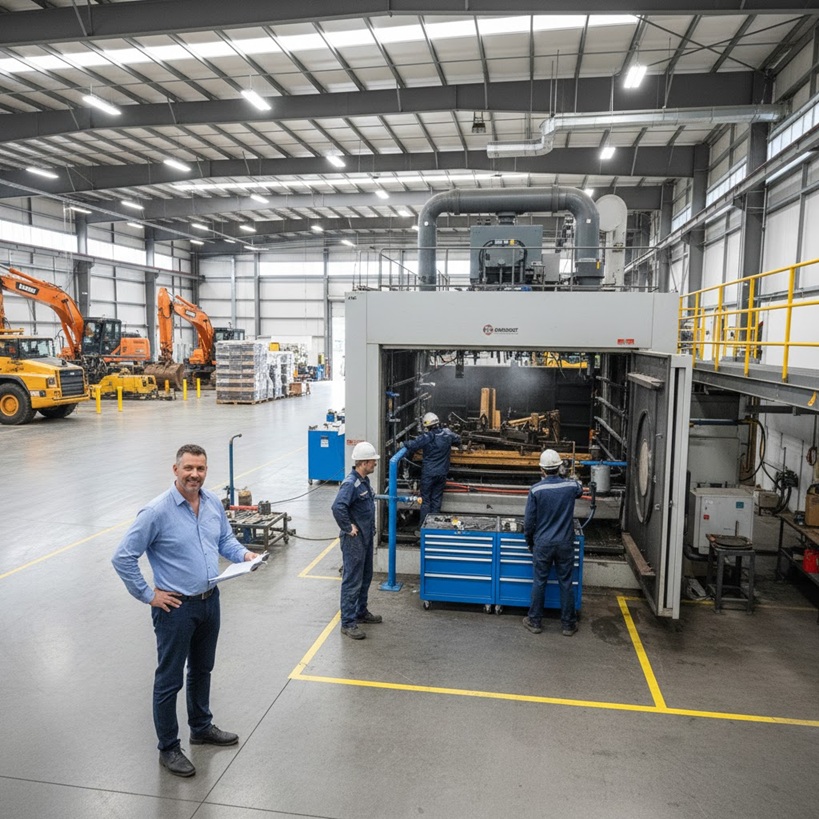
Workshop owners face a familiar tension. Equipment needs upgrading to handle new work. However, your capital sits locked in inventory, work-in-progress, and receivables. A $180,000 parts washer delivers measurable returns through labour savings and faster turnaround. Yet writing that cheque drains working capital precisely when growth demands flexibility.
Workshop asset finance shifts this calculation. Rather than depleting reserves, businesses preserve cash whilst acquiring equipment. This equipment generates immediate operational improvements. This approach separates equipment investment from day-to-day liquidity needs. It works well for workshops managing expansion, seasonal fluctuations, or healthy margins.
The Mechanics of Workshop Asset Finance
Traditional equipment purchases extract cash in a single transaction. A workshop buying a heavy duty parts washer outright removes significant funds from available accounts. That money could otherwise cover payroll during a slow month. It could purchase materials for a large contract. It provides a buffer against late-paying clients.
Asset finance structures payments across the equipment’s productive life. Instead of $180,000 upfront, a workshop might pay $3,800 monthly over five years. This preserves $176,200 in immediate working capital. You still get the operational benefits. These include faster parts cleaning, reduced manual labour, and improved workshop throughput.
Protecting Capital During Growth Phases
The mathematics favour cash preservation particularly during growth phases. A workshop expanding from three to five bays needs more than just machines. You need additional staff, higher inventory levels, and marketing investment simultaneously.
Workshop asset finance allows owners to fund equipment without compromising other areas. You maintain the ability to meet payroll. You can purchase materials. You can respond to unexpected opportunities.
Consider a typical scenario. A mining services workshop wins a maintenance contract requiring faster parts turnaround. The contract generates $45,000 monthly revenue but demands investment in automated cleaning systems. Purchasing equipment outright consumes cash reserves needed for hiring additional technicians. Finance enables the workshop to acquire equipment, hire staff, and build inventory simultaneously. The contract’s cash flow funds the payments.
Hotwash Australia works with financiers who understand industrial equipment. We help workshops structure finance arrangements that preserve working capital whilst upgrading cleaning capacity.
Matching Payment Terms to Equipment Life
Industrial parts washers operate productively for 15-20 years with proper maintenance. Financing over five years aligns payments with the equipment’s most intensive use period. You preserve value long after the final payment.
A workshop financing a super heavy duty system pays a set monthly amount. Total payments include interest, but the equipment continues delivering value for another decade after the loan ends. Compare this to leasing. Lease payments continue indefinitely without building equity. Outright purchase depletes working capital immediately.
Understanding Terms and Residuals
Finance terms typically range from 24 to 60 months. This depends on equipment value and business circumstances. Shorter terms mean higher monthly payments but lower total interest costs. Longer terms reduce monthly obligations. This improves cash flow management flexibility during the finance period.
Residual value options further reduce monthly costs. You can structure agreements with a final balloon payment. This is typically 20-30% of the equipment value. It reduces monthly obligations whilst preserving options. You can refinance, pay out, or upgrade at the term end.
Tax Treatment and Effective Cost
Australian tax provisions recognise asset finance as a legitimate business expense. Monthly payments typically qualify as tax-deductible operating expenses. This reduces the effective cost of equipment acquisition.
For a workshop operating at the 25% company tax rate, a monthly finance payment costs less after tax benefits. Over 60 months, this tax treatment reduces the effective financing cost significantly compared to the gross payment total.
Instant Asset Write-Off
Instant asset write-off provisions can accelerate these benefits when available. Businesses meeting eligibility thresholds may claim immediate deductions for equipment purchases. This creates substantial first-year tax savings. These savings help offset initial finance payments.
Depreciation treatment varies depending on finance structure. Traditional hire purchase agreements allow the borrower to claim depreciation. Finance leases typically keep depreciation with the lender. Rental payments remain deductible. Accountants provide guidance on optimal structures based on individual business circumstances.
Essential Approval Criteria
Financiers assess applications based on business stability. They look at trading history, cash flow stability, and existing debt obligations. Established workshops with two years of financial statements typically qualify readily. Newer businesses with strong order books can also secure approval.
Documentation Requirements
You typically need to provide specific documents:
Financial statements: Two years of business accounts showing revenue and profitability.
Cash flow evidence: Bank statements demonstrating consistent trading patterns.
Business activity statements: Recent BAS submissions showing tax compliance.
Equipment details: Specifications and quotations for the proposed acquisition.
Credit history influences approval decisions and interest rates. Businesses with clean credit records access better rates. Maintaining timely payments on existing commitments protects access to competitive finance terms.
Deposit requirements vary by lender. Some approve 100% funding for established businesses. Others require 10-20% deposits. This reduces risk whilst preserving substantial working capital.
Comparing Finance Structures
Choosing the right structure impacts your balance sheet and tax position.
Chattel Mortgage
Chattel mortgage agreements suit businesses wanting ownership from day one. The lender provides funds to purchase the equipment. They secure the loan against the asset itself. Monthly payments cover principal and interest. Full ownership transfers once the loan concludes. This structure allows depreciation claims. It qualifies for instant asset write-off provisions when applicable.
Hire Purchase
Hire purchase arrangements defer ownership until the final payment. You have immediate use rights. The business operates the equipment throughout the term. Once all payments complete, ownership transfers automatically. Tax treatment mirrors chattel mortgages. The business claims depreciation and deducts interest components.
Finance and Operating Leases
Finance leases keep legal ownership with the lender throughout the term. The business rents the equipment. You often have an option to purchase at the term end. Operating leases function as pure rental agreements. Payments remain fully tax-deductible. This structure suits businesses wanting to test stainless steel equipment before committing to purchase.
Strategic Timing Considerations
Equipment acquisition timing affects both operational outcomes and financial efficiency. Workshops experiencing capacity constraints lose revenue daily whilst waiting to save capital. Asset finance eliminates this delay.
A workshop operating at 95% capacity turns away work. This frustrates customers and limits revenue growth. Installing additional cleaning capacity immediately captures this demand. The revenue gained typically exceeds any interest costs incurred.
Seasonal Business Management
Seasonal businesses face particular timing challenges. A workshop servicing agricultural equipment needs maximum capacity during harvest season. Workshop asset finance allows equipment acquisition before peak season. You do not deplete cash reserves needed to sustain operations during quieter periods.
End of Financial Year
Tax year timing can optimise deduction benefits. Acquiring equipment before the financial year end brings forward depreciation claims. This reduces tax obligations for the current year. This timing consideration benefits businesses experiencing strong profit years.
Maintaining Finance Relationships
Approved finance facilities often extend beyond initial purchases. Businesses demonstrating reliable payment patterns build relationships with financiers. This streamlines future applications.
A workshop successfully financing one parts washer establishes credibility. This helps when financing additional equipment like hot tanks or spray booths. Relationship capital reduces approval friction. It accelerates access to funding for expansion opportunities.
Payment consistency protects these relationships. Setting up automatic payments ensures obligations meet due dates. Most financiers offer payment date flexibility. This allows alignment with customer payment cycles.
Alternative Funding Comparisons
Bank loans provide another capital source. They typically offer lower interest rates than specialist finance. However, banks often require substantial security. This might include property mortgages or cash deposits. Application processes run longer. Approval criteria focus heavily on balance sheet strength.
Vendor Finance
Vendor finance programmes offer streamlined approvals. Equipment manufacturers provide funding options. Hotwash customers access multiple finance options. Applications process efficiently alongside equipment specifications.
Retained Earnings
Retained earnings represent the zero-interest option. You save profits until sufficient capital accumulates. This approach eliminates interest costs. However, it delays equipment benefits. It ties up working capital that could generate returns elsewhere. The opportunity cost of delayed acquisition often exceeds interest expenses.
Risk Management Through Finance
Spreading equipment costs across multiple years diversifies business risk. Rather than concentrating capital risk in a single decision, finance distributes this exposure. You make monthly decisions about cash flow.
This flexibility matters during economic uncertainty. A workshop that purchased equipment outright cannot recover that capital easily. A financed workshop retains the capital. You make ongoing decisions about continuing or refinancing.
Insurance requirements typically form part of finance agreements. This protects both lender and borrower against equipment damage. Enforced insurance discipline ensures workshops maintain adequate coverage. This prevents catastrophic risk if hot blasters or other expensive assets suffer damage.
For workshops requiring comprehensive cleaning solutions, financing both parts washers and wet abrasive blasters becomes manageable. Wet abrasive blasters complement parts washers by handling surface preparation tasks. Financing both systems preserves working capital whilst building complete workshop capability.
Making the Finance Decision
Equipment acquisition decisions should start with operational requirements. Financing considerations come second. You must determine what capacity the workshop needs. You need to identify the cleaning challenges.
Once operational requirements are clear, perform financial analysis. Calculate monthly finance costs. Compare this to the opportunity cost of capital. Factor in tax benefits that reduce effective costs. Consider impacts on business flexibility.
Most workshops find that preserving working capital delivers better outcomes. Acquiring productive equipment immediately beats depleting reserves. The interest cost of finance typically runs lower than the opportunity cost of tied-up capital. This is especially true for growing operations where cash flow management enables revenue expansion.
Whether financing manual parts washers for light duty work or wet abrasive blasters for heavy surface preparation, the same principle applies. Preserving working capital enables growth opportunities that outweigh financing costs.
Conclusion
Workshop growth rarely follows smooth patterns. Opportunities emerge suddenly. A major contract might appear. A competitor might close. Businesses positioned to respond capture these opportunities. Capital-constrained competitors watch from the sidelines.
Workshop asset finance creates this positioning. You preserve working capital whilst maintaining modern, efficient equipment. This builds financial flexibility. The difference often traces to capital availability when timing demands action.
Equipment investment should enhance business capability. It should not compromise financial resilience. Asset finance achieves both objectives. You get operational improvements through modern equipment. You maintain the working capital buffer needed for confident management.
Whether upgrading parts washers for daily cleaning or adding wet abrasive blasters for surface preparation, asset finance preserves the cash flow flexibility growing workshops require. Both equipment types qualify for the same financing structures and tax benefits.
Ready to explore finance options for your extra heavy duty upgrade? Contact our asset finance specialists to discuss a structure that suits your cash flow or email us on sales@hotwash.com.au for a confidential quote.

Leave A Comment