
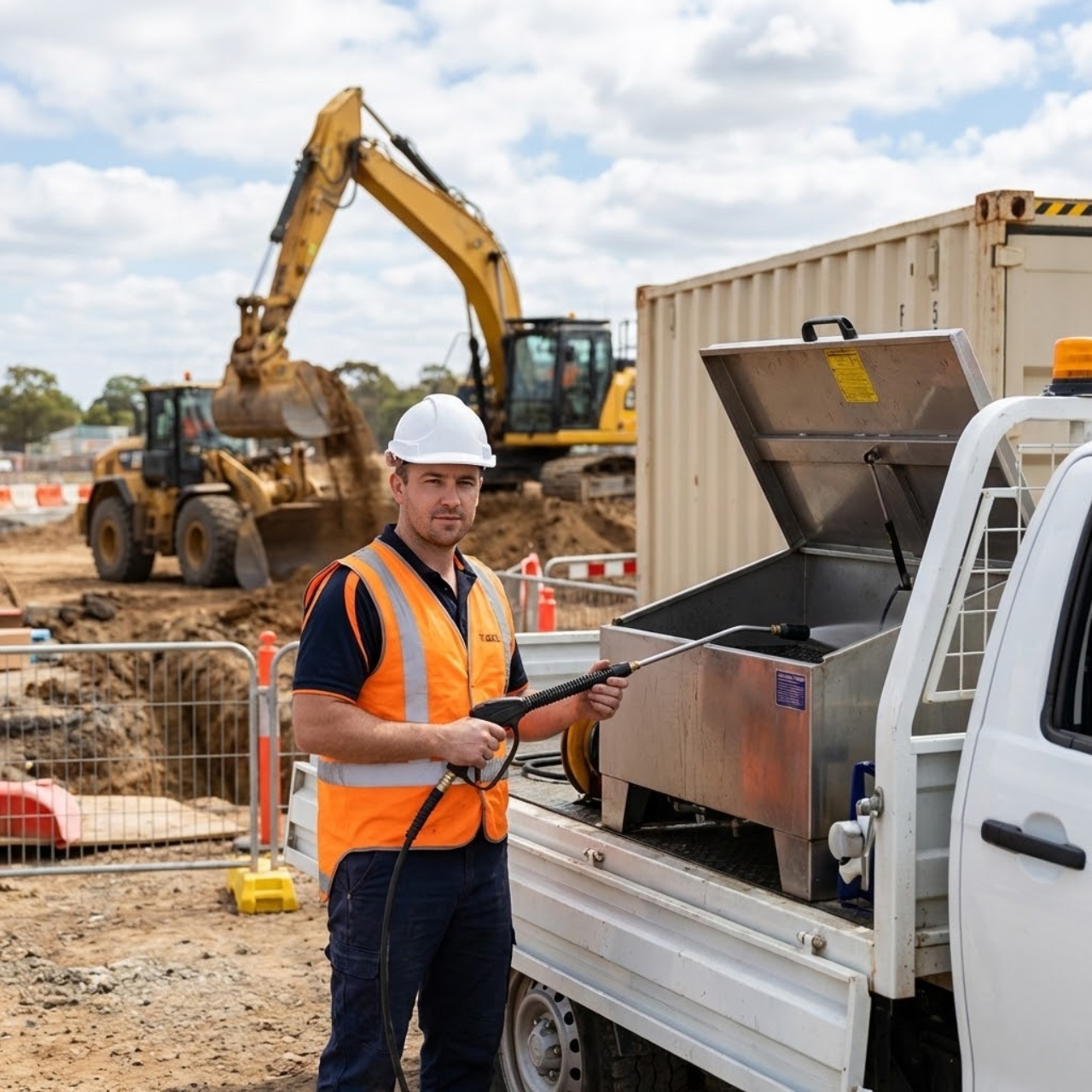
Construction sites across Australia face a persistent challenge – keeping heavy plant equipment operational without losing productive hours to off-site maintenance. When a loader, excavator, or haul truck breaks down, every minute of downtime translates directly to project delays and cost overruns. Mobile plant maintenance workshops solve this problem by bringing professional cleaning and servicing capabilities directly to construction sites, but only when equipped with the right industrial cleaning systems.
The difference between an effective mobile maintenance operation and a makeshift cleaning setup comes down to equipment selection. Construction contractors, plant hire companies, and mining support services need parts washers from Hotwash that can handle the intensity of field conditions while delivering workshop-quality results. This requires understanding which cleaning technologies work in mobile applications and how to match system capacity to the scale of equipment being serviced.
Why Construction Sites Need Dedicated Mobile Maintenance Capabilities
Construction equipment operates in some of the harshest conditions imaginable – mud, dust, concrete residue, hydraulic oil, diesel fuel, and abrasive materials coat components daily. Traditional maintenance approaches require transporting equipment to fixed workshops, which creates multiple problems:
Transport logistics consume productive time. Moving a 40-tonne excavator off-site for routine maintenance can take half a day before any actual work begins. For contractors managing tight project schedules, this represents unacceptable downtime.
Off-site servicing disrupts project workflows. When key equipment leaves the site for maintenance, other operations often grind to a halt. Earthmoving projects, demolition work, and material handling all depend on having the right plant available when needed.
Contamination issues complicate diagnostics. Mechanics cannot properly inspect hydraulic systems, undercarriage components, or engine parts when they are covered in layers of mud and grease. Effective maintenance requires clean components, which means cleaning must happen before transport or at the servicing location.
Fleet management becomes inefficient. Large construction projects might have 20-50 pieces of plant equipment on-site. Coordinating off-site maintenance for this fleet creates scheduling nightmares and increases the risk of equipment shortages during critical work phases.
Mobile plant maintenance workshops address these challenges by establishing professional servicing capabilities directly at construction sites. However, the effectiveness of these mobile operations depends entirely on having proper cleaning equipment that can handle construction-grade contamination without requiring fixed workshop infrastructure.
Essential Cleaning Technologies for Mobile Plant Maintenance
Mobile maintenance workshops need cleaning systems that balance three critical factors – cleaning power sufficient for heavy contamination, portability for site deployment, and durability for field conditions. Several technologies meet these requirements when properly specified.
Spray Cabinet Systems for Component Cleaning
Enclosed spray washers provide the most versatile solution for mobile plant maintenance workshops. These systems use high-pressure heated water with industrial detergents to remove oil, grease, mud, and construction residue from engine components, hydraulic parts, transmission assemblies, and other serviceable items.
For construction site applications, spray cabinet systems need specific capabilities. Chamber dimensions must accommodate typical plant components – hydraulic cylinders up to 1.2 metres long, differential assemblies, turbochargers, and fuel injection systems. Pressure ratings between 1000-1500 PSI deliver sufficient cleaning force for caked-on mud and grease without requiring manual pre-scrubbing.
Temperature control matters significantly in mobile applications. Water heated to 70-80°C cuts through hydraulic oil and diesel residue far more effectively than cold water washing, reducing cleaning cycle times from 30-45 minutes down to 15-20 minutes per load. This efficiency gain directly impacts how many components maintenance teams can process during a shift.
Australian-manufactured systems designed for mobile applications include features specifically for construction site deployment – reinforced construction to handle transport vibration, compact footprints that fit in shipping containers or service trucks, and electrical specifications compatible with site generators.
Hot Tank Immersion Systems for Heavy Contamination
When components carry extreme contamination levels, immersion cleaning delivers results that spray systems cannot match. Hot tank systems submerge parts in heated alkaline solution, allowing chemical action and temperature to break down carbonised oil, baked-on grease, and stubborn construction residues.
Mobile hot tank applications work best for components that do not require immediate turnaround. Differential housings, transmission cases, engine blocks, and hydraulic pump bodies can soak for several hours or overnight, emerging completely clean without manual scrubbing. This allows maintenance crews to process heavily contaminated items without dedicating labour hours to scrubbing.
Tank capacity determines what equipment a mobile workshop can handle. A 200-litre hot tank accommodates most automotive-sized components from loaders, excavators, and smaller plant equipment. Operations supporting larger mining-class equipment need 400-600 litre capacity to handle bigger assemblies.
The chemical management aspect of hot tanks suits mobile operations particularly well. Unlike spray systems that require frequent detergent replacement, hot tank solutions remain effective for weeks of continuous use. This reduces the logistical burden of maintaining cleaning chemistry at remote construction sites.
High-Pressure Washers for Undercarriage and External Cleaning
Before any internal maintenance can begin, construction equipment needs external cleaning to remove mud, concrete residue, and accumulated debris. High-pressure water systems rated at 3000-4000 PSI blast away caked-on material from undercarriages, tracks, hydraulic cylinders, and engine compartments.
Mobile maintenance workshops typically mount these systems on trailers or service vehicles, with diesel-powered burners providing hot water capability independent of site power supply. Water temperatures above 90°C prove essential for cutting through the combination of clay soil and hydraulic oil that coats equipment operating in wet conditions.
The key specification for construction applications is flow rate rather than just pressure. Systems delivering 15-20 litres per minute at 3000 PSI clean large equipment surfaces far more efficiently than lower-flow units, even if pressure ratings are similar. This matters when maintenance windows are tight and equipment needs to return to service quickly.
Matching Equipment Capacity to Construction Site Scale
The size and scope of construction projects directly determines what cleaning capacity mobile maintenance workshops require. Undersized equipment creates bottlenecks that defeat the purpose of on-site servicing, while oversized systems waste budget and complicate site logistics.
Small to Medium Construction Projects (5-15 Equipment Units)
Residential developments, small commercial builds, and road construction projects with limited plant fleets need compact but capable cleaning systems. A single manual parts washer or small spray cabinet (600-800mm chamber width) handles routine maintenance for loaders, excavators, skid steers, and support equipment.
These operations typically establish maintenance areas in shipping containers or under temporary shelters. Cleaning equipment needs to fit within these space constraints while still processing the components that require regular servicing – hydraulic filters, fuel system parts, air intake assemblies, and smaller mechanical components.
Power requirements matter significantly at this scale. Many small construction sites operate on limited generator capacity, making 15-amp single-phase cleaning systems more practical than three-phase industrial units. Australian-manufactured systems designed for workshop applications adapt well to these site conditions when properly specified.
Large Construction and Infrastructure Projects (20-50 Equipment Units)
Major infrastructure developments, large commercial construction, and civil engineering projects operate substantial plant fleets that generate continuous maintenance demands. These sites justify dedicated mobile maintenance workshops equipped with multiple cleaning systems.
A typical setup includes extra heavy-duty parts washers with 1000-1200mm chambers for larger components, supplemented by hot tank capacity for heavily contaminated items. This combination allows maintenance teams to process 15-20 major components daily while handling routine cleaning for smaller parts.
Three-phase power becomes standard at this scale, with sites typically providing 32-amp or 63-amp supply to maintenance areas. This supports larger cleaning systems with 36-54kW heating capacity, delivering the temperature and pressure needed for efficient cleaning of construction-grade contamination.
Mining Support and Major Earthworks Operations (50+ Equipment Units)
Large-scale mining support contracts, major earthworks projects, and plant hire operations servicing multiple sites need super heavy-duty parts washers with maximum capacity. These operations process components from 100-tonne haul trucks, large excavators, bulldozers, and other mining-class equipment.
Chamber dimensions expand to 1500-2000mm to accommodate transmission assemblies, final drive components, and other large mechanical parts. Pressure ratings reach 1500-2000 PSI to handle the extreme contamination levels these machines accumulate. Multiple cleaning stations operate simultaneously to prevent maintenance bottlenecks.
These installations often include dedicated hot tank capacity of 600-1000 litres for engine blocks, differential housings, and other components requiring immersion cleaning. The combination of spray washing and hot tank capabilities ensures maintenance teams can handle any cleaning requirement without sending items off-site.
Operational Considerations for Mobile Cleaning Systems
Installing industrial cleaning equipment at construction sites involves challenges that do not exist in fixed workshop environments. Successful mobile plant maintenance operations address these factors during equipment selection and site setup.
Water Supply and Drainage Management
Cleaning systems consume significant water volumes – a typical spray cabinet uses 40-60 litres per wash cycle, while external pressure washing can consume 200-300 litres per equipment unit. Construction sites need adequate water supply infrastructure to support continuous operation.
Most mobile workshops connect to site water supplies via standard hose connections, with inline filtration protecting pump systems from sediment and debris common in construction water sources. Some operations deploy water storage tanks (1000-2000 litres) to ensure consistent supply during peak maintenance periods.
Drainage presents a more complex challenge. Wash water contaminated with oil, grease, and heavy metals requires proper collection and disposal according to environmental regulations. Mobile maintenance operations typically use settling tanks or oil-water separators to treat effluent before discharge, or collect contaminated water for off-site disposal at licensed facilities.
Power Supply Requirements and Generator Compatibility
Construction sites often provide power through temporary distribution systems or generators, which creates compatibility considerations for cleaning equipment. Voltage stability matters particularly for systems with electronic controls and heating elements.
Single-phase systems rated at 15 amps operate reliably on most site generators, making them suitable for smaller mobile workshops. Larger three-phase systems require 32-amp or 63-amp supply with proper earth leakage protection. Equipment specifications should match the site’s available power infrastructure rather than forcing electrical upgrades.
Some remote construction sites lack reliable power supply, making diesel-powered pressure washers the only viable option for external cleaning. These self-contained units provide hot water capability without electrical connection, though they lack the enclosed cleaning and containment benefits of spray cabinet systems.
Protection from Site Conditions and Weather
Construction environments expose cleaning equipment to dust, moisture, temperature extremes, and physical impacts that do not occur in controlled workshop settings. Equipment selection must account for these conditions to ensure reliable operation.
Stainless steel construction provides superior durability compared to painted steel enclosures, particularly in wet conditions where rust and corrosion quickly degrade painted surfaces. Stainless steel parts washers cost more initially but deliver longer service life in mobile applications where equipment faces daily exposure to moisture and cleaning chemicals.
Electrical components need appropriate ingress protection (IP) ratings for outdoor or semi-sheltered locations. Control panels with IP65 rating resist dust and water spray, while standard IP20 workshop controls fail quickly in construction environments.
Physical protection matters as well. Mobile maintenance areas often operate in congested spaces where forklifts, service vehicles, and equipment manoeuvre in close proximity. Mounting cleaning systems on reinforced frames or within protective enclosures prevents damage from accidental impacts.
Productivity Impact of Proper Mobile Cleaning Equipment
The business case for investing in quality cleaning systems for mobile plant maintenance centres on measurable productivity improvements and cost reductions. Operations that equip mobile workshops properly see returns across multiple areas.
Maintenance Cycle Time Reduction
Manual cleaning of plant components consumes 40-60% of total maintenance time for typical servicing tasks. A mechanic spending 45 minutes scrubbing a hydraulic pump housing with solvent and brushes represents pure non-productive labour. Automated spray washing reduces this to 15 minutes of actual cleaning time, with the mechanic free to work on other tasks while the washer operates.
This efficiency gain multiplies across fleet maintenance operations. A mobile workshop servicing 30 equipment units monthly might process 150-200 individual components. Reducing cleaning time from 45 minutes to 15 minutes per component saves 75-100 labour hours monthly – equivalent to 1.5-2 full-time positions redirected to productive mechanical work.
Equipment Availability Improvement
Construction projects lose revenue whenever plant equipment sits idle. Reducing maintenance turnaround time directly increases equipment availability and project productivity. When mobile workshops can complete routine servicing on-site within 4-6 hours instead of requiring 2-3 days for off-site maintenance, equipment returns to productive work faster.
For plant hire companies, this availability improvement translates to higher utilisation rates and increased revenue. An excavator generating $1,500 daily hire revenue that spends 30 days annually in maintenance loses $45,000 in potential income. Cutting maintenance time by 40% through efficient on-site servicing recovers $18,000 annually per equipment unit.
Component Inspection Quality
Properly cleaned components reveal problems that remain hidden under layers of contamination. Hydraulic cylinder scoring, seal deterioration, bearing wear, and crack development become visible only after thorough cleaning. This allows mechanics to identify issues before they cause catastrophic failures.
The cost difference between planned component replacement and emergency breakdown repair often reaches 300-500%. A hydraulic pump showing early wear signs might cost $2,000 to replace during scheduled maintenance. The same pump failing catastrophically can cause $8,000-12,000 in collateral damage to hydraulic systems, plus project delays while waiting for emergency repairs.
Mobile workshops equipped with proper cleaning systems enable this preventive approach by making thorough component inspection practical during routine servicing. The investment in cleaning equipment pays returns through reduced emergency repairs and extended component life.
Selecting Cleaning Systems for Specific Construction Applications
Different construction sectors impose unique demands on mobile maintenance operations. Equipment selection should match the specific contamination types, component sizes, and maintenance frequencies characteristic of each application.
Civil Construction and Earthworks
Civil projects involve continuous exposure to soil, mud, clay, and aggregate materials. Equipment accumulates thick layers of caked-on material that requires aggressive cleaning before mechanical maintenance can proceed. High-pressure external washing becomes the primary cleaning requirement, supplemented by spray cabinet capacity for components.
Mobile workshops for civil construction typically prioritise powerful pressure washers (3000-4000 PSI with hot water) for undercarriage and external cleaning, combined with mid-sized spray cabinets for hydraulic components, filters, and mechanical assemblies. Hot tank capacity remains optional unless the fleet includes large equipment requiring engine or transmission overhauls on-site.
Building and Commercial Construction
Building sites generate different contamination patterns – concrete residue, cement dust, and construction adhesives mixed with hydraulic oil and diesel fuel. This combination creates stubborn deposits that resist cold water cleaning but respond well to heated alkaline solutions.
Spray cabinet systems with 70-80°C water temperature and alkaline detergents handle this contamination effectively. Chamber capacity of 800-1000mm accommodates components from typical building site equipment – telehandlers, small excavators, skid steers, and concrete equipment. Manual parts washers supplement automated systems for smaller items and quick cleaning tasks.
Mining Support and Resource Sector Construction
Mining environments impose the most demanding conditions on plant equipment and cleaning systems. Fine dust penetrates every component, while heavy contamination from ore, coal, and mineral processing combines with hydraulic oil and grease. Equipment sizes scale up accordingly, with 100-tonne haul trucks and large excavators requiring correspondingly capable cleaning systems.
Mobile workshops supporting mining operations need maximum-capacity cleaning equipment – chamber dimensions of 1200-1500mm, pressure ratings of 1500-2000 PSI, and substantial hot tank capacity for large components. These installations represent significant capital investment but prove essential for maintaining mining-class equipment fleets without losing productive time to off-site servicing.
Establishing Effective Mobile Maintenance Operations
Successfully deploying mobile plant maintenance workshops requires more than just purchasing cleaning equipment. Operational planning determines whether mobile servicing delivers the productivity benefits and cost savings that justify the investment.
Site Layout and Workflow Design
Mobile maintenance areas need sufficient space for equipment positioning, component handling, and safe work practices. A typical layout includes the cleaning station, component storage areas, workbenches for assembly/disassembly, and waste collection points. Minimum area requirements range from 40-60 square metres for basic operations to 150-200 square metres for comprehensive mobile workshops.
Workflow efficiency depends on logical positioning – contaminated components should move through cleaning to inspection to reassembly without backtracking. Locating spray washers near component disassembly areas minimises handling of dirty parts, while positioning clean component storage away from contaminated areas prevents re-contamination.
Staff Training and Safety Procedures
Industrial cleaning systems operate at high temperatures and pressures that create safety hazards without proper training. Maintenance staff need instruction on safe operation, chemical handling, personal protective equipment requirements, and emergency procedures.
Australian workplace health and safety regulations require documented training for staff operating industrial cleaning equipment. This includes understanding pressure washer risks (high-pressure water injection injuries), hot water hazards (scalding), chemical safety (detergent handling), and electrical safety (operating equipment in wet conditions).
Maintenance and Support for Field-Deployed Equipment
Cleaning systems operating at construction sites need regular maintenance to sustain performance and prevent breakdowns. Pump systems, heating elements, spray nozzles, and filtration components all require periodic inspection and servicing.
Australian-manufactured equipment offers significant advantages for mobile operations – local parts availability, faster service response, and support from manufacturers who understand construction site conditions. When a cleaning system breaks down at a remote construction site, having access to next-day parts delivery and local service technicians prevents extended downtime that defeats the purpose of mobile maintenance capability.
Achieving Measurable Returns from Mobile Cleaning Investment
Construction contractors, plant hire companies, and mining support operations invest in mobile maintenance workshops to improve equipment availability and reduce operating costs. The financial returns from proper cleaning equipment installation become measurable across several metrics.
Labour cost reduction – Automated cleaning eliminates 30-40 hours of manual scrubbing labour weekly for typical fleet maintenance operations. At $45-55 hourly labour cost including overheads, this represents $65,000-110,000 annual savings.
Equipment utilisation improvement – Reducing maintenance turnaround time from 2-3 days off-site to 4-6 hours on-site increases equipment availability by 15-20%. For a $500,000 excavator generating $1,200 daily revenue, this availability gain adds $35,000-50,000 annual income.
Component life extension – Thorough cleaning enables proper inspection and early problem detection, preventing catastrophic failures that cause collateral damage. Reducing emergency repairs by 30-40% saves $25,000-40,000 annually for typical 20-unit fleets.
Project schedule compliance – Maintaining equipment availability prevents delays caused by breakdowns or extended off-site servicing. For projects with liquidated damages clauses, this risk reduction carries substantial value beyond direct cost savings.
The combined financial impact typically delivers 18-24 month payback periods for mobile maintenance workshop investments, with continuing benefits throughout equipment service life.
Conclusion
Mobile plant maintenance workshops transform construction site operations by eliminating the delays, logistics challenges, and productivity losses associated with off-site equipment servicing. The effectiveness of these mobile operations depends entirely on selecting cleaning equipment capable of handling construction-grade contamination while operating reliably in field conditions.
Spray cabinet systems, hot tank immersion cleaning, and high-pressure washers each serve specific roles within mobile maintenance operations. Matching system capacity to project scale – from small residential builds to major mining support contracts – ensures operations achieve the productivity gains and cost reductions that justify investment.
Australian-manufactured cleaning equipment provides critical advantages for mobile applications: robust construction suited to harsh site conditions, compatibility with local power and water infrastructure, and accessible service support when equipment requires maintenance.
For construction contractors, plant hire companies, and mining support operations seeking to establish or upgrade mobile maintenance capabilities, the path forward starts with understanding specific cleaning requirements and matching equipment specifications to actual operational demands.
Contact us to discuss mobile plant maintenance workshop requirements. The team provides equipment recommendations, capacity specifications, and return on investment analysis based on fleet size, contamination types, and operational parameters specific to construction site applications.

Leave A Comment