
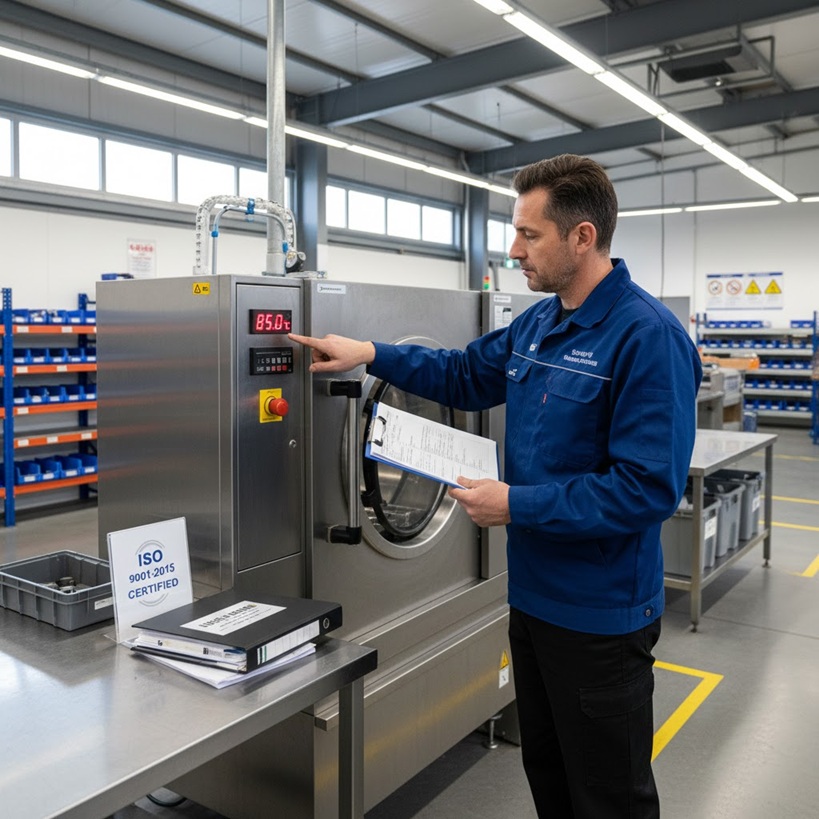
Manufacturing operations seeking ISO 9001 or ISO 14001 certification often face a distinct challenge. They must prove that their parts cleaning processes meet documented quality and environmental standards. For Australian workshops and industrial facilities, this means transforming routine cleaning operations into repeatable, measurable procedures. Auditors need verification that your processes work every time.
The difference between passing and failing an ISO audit often comes down to documentation. An auditor might ask how you ensure parts are cleaned to specification for every batch. Pointing at equipment is not enough. You need process documentation standards, cleaning parameters, and inspection criteria. You must produce records that prove consistent results.
Automated cleaning systems simplify this compliance journey. They deliver repeatable cleaning cycles with known parameters. Instead of relying on individual worker judgment, automated systems follow the same process every time. This makes documentation straightforward and audits less stressful.
Why ISO Standards Care About Parts Cleaning
ISO 9001 focuses on quality management. ISO 14001 focuses on environmental management. Both standards require documented processes for operations that affect product quality or environmental impact. Parts cleaning falls squarely into both categories.
Inadequately cleaned parts cause quality failures. Oil residue prevents proper coating adhesion. Carbon deposits affect machining tolerances. Contamination leads to premature equipment failure. From an ISO 9001 perspective, parts cleaning directly impacts product quality. It also affects customer satisfaction and warranty rates.
Environmental management under ISO 14001 scrutinizes cleaning chemicals. It looks at waste disposal, water usage, and worker exposure to hazardous substances. Manual cleaning with solvent tanks creates environmental risks. These risks require extensive documentation and control measures to satisfy auditors.
Australian manufacturing facilities must also demonstrate compliance with local environmental regulations. ISO cleaning certification requires documenting not just what you clean. You must document chemical handling, waste management, and safety protocols.
What ISO Auditors Look for in Cleaning Documentation
ISO auditors verify three core elements. They look for documented procedures, implementation evidence, and continuous improvement records.
Documented Procedures (SOPs)
Documented procedures must specify exactly how parts cleaning occurs. This includes cleaning method selection and chemical concentrations. It covers water temperatures, cycle times, and inspection criteria. Vague instructions like “clean thoroughly” fail audit requirements. Specific parameters like “wash at 80°C for 15 minutes” meet process documentation standards.
Implementation Evidence
Implementation evidence proves you follow documented procedures. This requires cleaning logs and inspection records. It needs maintenance schedules and traceability records. Auditors randomly select parts. They trace them back through cleaning records to verify compliance. If the paperwork does not match the procedure, you receive a non-conformance.
Continuous Improvement Records
Continuous improvement records demonstrate that you monitor cleaning effectiveness. You must identify problems and implement corrective actions. This includes tracking cleaning failures. You analyze root causes and adjust procedures. Then you measure the results to prove the fix worked.
The Documentation Gap: Manual vs. Automated Cleaning
Manual cleaning operations struggle with audit requirements. It is difficult to document that a worker scrubbed a part “thoroughly enough.” Proving consistent water temperature is hard when someone fills a sink from a tap. Tracing which parts were cleaned by whom is a logistical nightmare.
The Challenge with Manual Operations
Manual cleaning introduces variability. One operator might scrub for five minutes. Another might scrub for two. Pressure applied changes with fatigue. This inconsistency is a red flag for ISO auditors. Creating a reliable audit trail for manual parts washers requires strict discipline and frequent logging.
The Automated Advantage
Heavy duty parts washers eliminate documentation ambiguity. They automate process parameters. Every cycle runs at the same temperature, pressure, and duration. Digital controls record cycle parameters automatically. Inspection criteria become objective. If the automated cycle completed successfully, parts meet the cleaning specification. This consistency builds trust with auditors.
Creating ISO-Compliant Cleaning Procedures
Effective cleaning documentation starts with a Standard Operating Procedure (SOP). This defines the entire cleaning process from contaminated part to inspected clean part.
Defining Part Preparation
Your SOP must specify part preparation steps. What pre-cleaning inspection occurs? How are parts positioned in the washer basket? Proper orientation ensures complete coverage. These details prevent cleaning failures caused by improper loading. You must document how to secure light parts so they do not fly around.
Setting Measurable Parameters
Define cleaning parameters with measurable specifications. Water temperature ranges (e.g., 75-85°C) are critical. Detergent concentration (e.g., 1.5-2%) must be maintained. Cycle duration and pressure settings give auditors concrete verification points. Automated systems maintain these parameters automatically. Manual operations require constant monitoring and adjustment to stay compliant. For surface preparation tasks, wet abrasive blasters offer consistent pressure and media flow that manual methods cannot match.
Establishing Acceptance Criteria
Document inspection criteria determine cleaning acceptance. Visual inspection standards work if you define what “clean” means. Specify that parts must have no visible oil, carbon deposits, or discolouration. Better yet, specify objective tests. White glove inspection or solvent wipe testing provides clear pass/fail results. For critical applications, surface cleanliness standards like ISO 16232 provide quantifiable contamination limits.
Environmental Procedures and Compliance
ISO 14001 certification requires documented environmental management. This goes beyond quality concerns. It addresses environmental impact and pollution prevention.
Chemical Management and Safety
Chemical management documentation must cover selection and handling. It includes storage and disposal of cleaning detergents. You must document why a chemical was selected. How is it stored to prevent spills? Where does waste go? Stainless steel parts washers often use biodegradable detergents. Documenting the switch from solvents to aqueous solutions demonstrates environmental improvement.
Waste Management Documentation
Waste management documentation covers everything from used filters to spent detergent. How often are filters changed? Where do they go? How is contaminated detergent disposed of? Proper waste documentation satisfies ISO 14001 and Australian environmental regulations. You must keep receipts and transfer notes for all waste removal. When using wet abrasive blasters, document spent media disposal and water treatment processes as part of your environmental compliance.
Record Keeping That Satisfies Auditors
ISO cleaning certification requires records that prove consistent implementation. The specific records needed depend on your cleaning operations.
Essential Cleaning Logs
Cleaning logs document every cleaning cycle. Minimum information includes date, time, and operator name. You need the batch number or description of parts cleaned. Record the cycle parameters and inspection results. Manual operations require workers to record this information after every session. This compliance burden often fails during busy periods.
Automated systems with digital controls generate cleaning records automatically. Cycle completion logs and parameter verification provide auditor-ready documentation. Some systems store this data digitally. This makes audit preparation as simple as printing reports.
Maintenance and Calibration Records
Maintenance records prove that cleaning equipment operates within specification. Pump pressure checks and temperature calibration are vital. Filter replacements and detergent system maintenance require documentation. Scheduled maintenance logs demonstrate preventive care. Corrective maintenance records show rapid response to equipment issues.
Suppliers like Hotwash Australia can provide equipment specifications. These documents support your maintenance planning. They prove your machine is designed for the task at hand.
Training and Competency Records
Training records prove that operators understand documented procedures. Initial training documentation is required. Competency assessments verify skills. Refresher training logs demonstrate workforce capability. For manual cleaning operations, operator skill impacts cleaning consistency significantly. This makes training documentation critical for ISO 9001 compliance. Specialized equipment like wet abrasive blasters requires additional certification and documented operator competency to meet safety and quality standards.
Traceability Requirements for Critical Parts
Some manufacturing operations require complete traceability. This connects cleaned parts to production batches. Aerospace and medical device manufacturers face these requirements. Automotive safety component manufacturers also need strict tracking.
Linking Cleaning to Production Batches
Traceability documentation connects specific parts to specific cleaning cycles. This requires unique identifiers. You might use batch numbers or work order numbers. These link parts through the cleaning process. When a quality issue emerges downstream, traceability lets you identify the cleaning cycle.
Traceability in High-Risk Industries
Implementing traceability with manual cleaning requires meticulous record keeping. Workers must log every part. They record cleaning parameters manually. Human error breaks traceability chains. This creates audit findings and quality risks.
Automated systems simplify traceability. You load parts and start the cycle. The system records all parameters automatically. You assign a batch number to that cycle. You have created a traceable connection. Super heavy duty parts washers used in mining often clean critical components. Traceability proves these components received proper cleaning. This protects against liability concerns.
Continuous Improvement and Corrective Actions
ISO standards require continuous improvement. You must identify problems, implement solutions, and measure results. Parts cleaning operations provide numerous opportunities for this.
Analyzing Cleaning Failures
Cleaning failure analysis investigates why parts did not meet process documentation standards. Was the cycle time insufficient? Was the detergent concentration too low? Were parts improperly positioned? Document the failure and the root cause. Implement corrective action and verify effectiveness. This closed-loop problem solving demonstrates commitment to ISO principles.
Process Optimization
Process optimization improves efficiency while maintaining quality. Can you reduce cycle time without compromising cleanliness? Can you lower water temperature to save energy? Test changes systematically. Document the results. Implement improvements that work. These records prove continuous improvement.
Equipment upgrades often represent significant improvements. Replacing manual cleaning with hot tanks eliminates variability. Document the business case and implementation process. Auditors view capital investments in quality favourably.
Preparing for ISO Audits
Successful ISO audits require organized documentation. You need confident presentation. Preparation starts months before the actual audit date.
Document Organization Strategies
Document organization makes information retrieval quick. Auditors request specific records. They might ask for cleaning logs from a particular date. They could request maintenance records for specific equipment. Well-organized files let you produce requested records immediately. This builds auditor confidence.
Conducting Mock Audits
Mock audits identify documentation gaps before real auditors arrive. Have someone unfamiliar with your operations review your cleaning documentation. Can they understand your procedures? Can they verify that you follow them? Can they trace parts through your cleaning process?
Mock audits reveal weaknesses while you still have time to fix them. You might discover that a logbook is missing entries. You might find that a training record is outdated. Catching these issues early prevents non-conformances during the official audit.
For extremely tough cleaning jobs, such as preparing surfaces for coating, you might use wet abrasive blasters. Ensure the operating procedures for these high-pressure units are just as well documented as your standard washing cycles.
Conclusion
ISO cleaning certification transforms parts cleaning. It changes routine maintenance into a documented, controlled process. The documentation requirements seem daunting initially. However, they ultimately improve operational consistency. They reduce quality failures and demonstrate environmental responsibility.
Automated parts washing systems simplify ISO compliance. They eliminate variability and generate objective records. When cleaning parameters are controlled automatically, audit preparation becomes straightforward. You stop worrying about what the operator did on the night shift. You know the machine followed the program.
Australian manufacturers pursuing ISO 9001 or ISO 14001 certification need robust cleaning processes. You need documented procedures and consistent implementation. Continuous improvement records satisfy auditors and improve operational performance simultaneously.
Start building ISO-compliant cleaning documentation by defining your current process. Identify gaps between current practice and ISO requirements. Implement systems that close those gaps. Proper parts cleaning documentation protects quality. It demonstrates environmental responsibility and simplifies audit success.
For assistance selecting parts washing equipment that supports ISO compliance, contact our compliance specialists or email us on sales@hotwash.com.au to discuss your certification goals.

Leave A Comment