
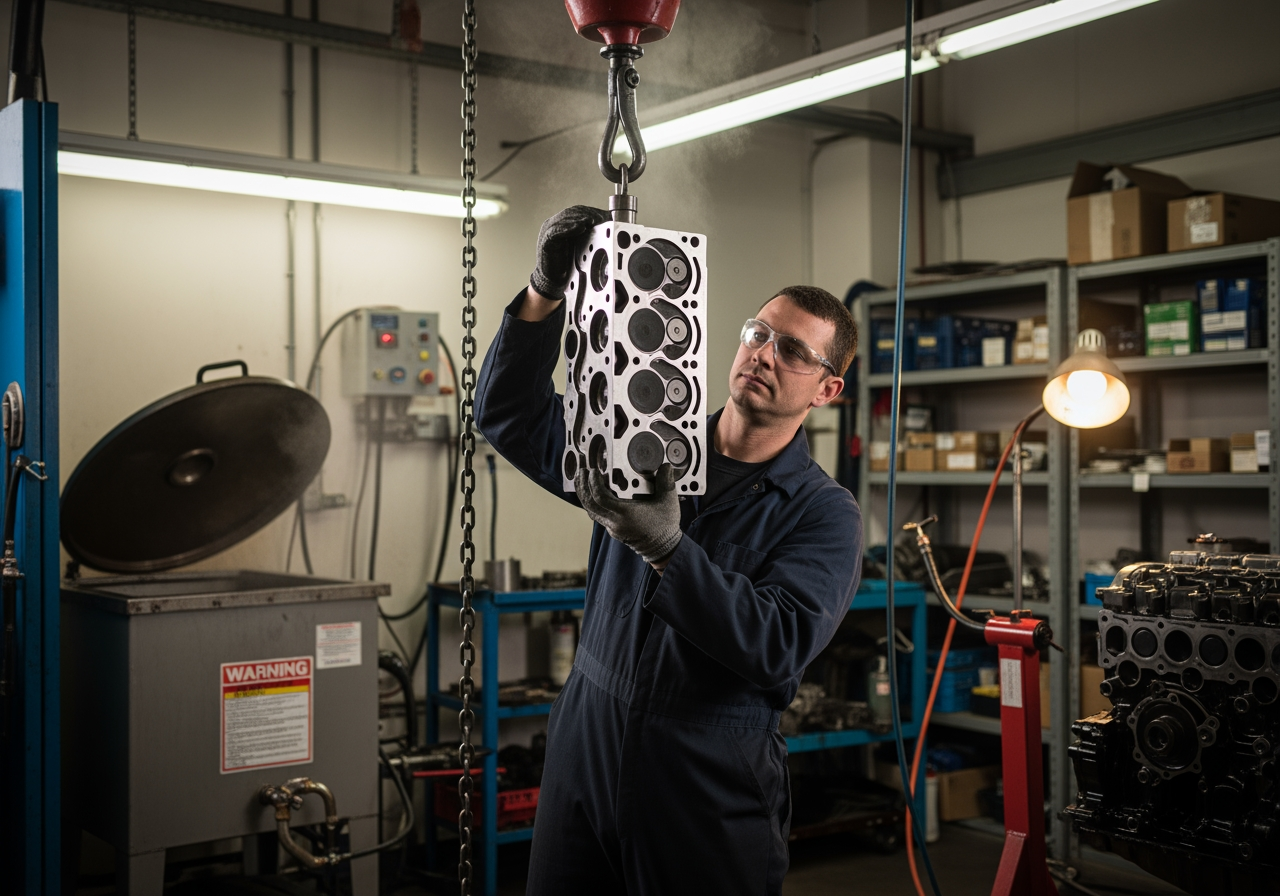
Engine reconditioning shops face a stubborn problem: carbon deposits baked onto cylinder heads, pistons, and valve covers don’t surrender easily. The choice between hot tank cleaning and spray washing systems determines whether your shop spends hours managing safety risks and long soak times, or moves components through quickly whilst technicians focus on skilled work.
Both systems work. Both have genuine strengths. The right choice depends on what you’re cleaning, how much you’re cleaning, and what your technicians can manage safely. This guide breaks down the differences so you can make the right call for your specific operation.
Understanding Carbon Deposits and Cleaning Challenges
What Carbon Deposits Are Made Of
Carbon buildup comes from incomplete fuel combustion. It accumulates in combustion chambers, on valve faces, and throughout exhaust ports. The deposit is a mixture of hardened carbon, oil residue, and combustion byproducts that bonds to metal at high temperatures. Once baked on, it resists solvents and refuses to wipe away.
Manual scrubbing with wire brushes and scrapers takes 3-4 hours per cylinder head. That’s expensive, inconsistent, and creates significant chemical exposure for workshop staff. Automated cleaning removes that manual effort – the question is which automated system handles your specific carbon removal needs.
How Hot Tank Cleaning Works
The Immersion Process
Hot tanks immerse parts in heated alkaline solution – typically sodium hydroxide (caustic soda) maintained at 80-95°C. The combination of heat, chemical action, and time breaks down carbon deposits and dissolves oil residue from metal surfaces.
Parts sit in the solution for 30-90 minutes depending on contamination levels. The heated caustic penetrates carbon layers, loosening the bond between deposits and metal. When you lift the part out, most carbon wipes away with minimal effort. No scrubbing required.
Advantages and Limitations of Hot Tank Cleaning
Hot tank cleaning reaches every surface regardless of geometry. The solution flows into internal passages, blind holes, and complex castings that spray jets might miss. Part positioning doesn’t matter – the immersion cleans everything the solution touches.
The limitations are real and non-negotiable. Caustic solutions attack aluminium, zinc, and soft metals aggressively. Aluminium cylinder heads, alloy components, and anodised surfaces cannot safely go into a hot caustic tank. Safety requirements are significant too. Heated caustic solution causes severe chemical burns on contact. Proper protective equipment, ventilation, and trained staff are all mandatory.
Cycle times are fixed. You cannot speed up the chemical process. If a technician needs a part clean in 15 minutes, hot tank cleaning won’t deliver. Workshop scheduling must accommodate 30-90 minute immersion windows.
How Spray Washers Remove Carbon
The Spray Washing Process
Spray washers blast parts with heated water and biodegradable detergent under pressure. Multiple rotating spray arms direct high-pressure jets at surfaces from different angles. Water temperature reaches 80-85°C, and pump pressure typically runs 80-120 PSI in heavy duty parts washers designed for engine reconditioning applications.
The mechanical action of pressurised spray combined with heat and detergent chemistry removes carbon deposits layer by layer. Technicians load the washer, start the cycle, and return to productive work whilst the machine runs.
Advantages and Limitations of Spray Washing
Speed is the primary advantage. Most engine parts come clean in 15-20 minutes – significantly faster than hot tank immersion. Spray washers also handle aluminium, zinc, and mixed-metal assemblies without material damage concerns. The biodegradable detergent cleans effectively without the material restrictions of caustic solutions.
Worker safety improves dramatically. The enclosed cabinet contains spray, heat, and detergent. No caustic exposure, no chemical burns, no special ventilation requirements beyond standard workshop practice. Running costs are lower too. Detergent costs less than caustic solution, and water usage is manageable with proper filtration and recycling.
The honest limitations: extremely heavy carbon buildup – the kind accumulated over 200,000+ kilometres or from severe overheating – may require multiple spray cycles. Hot tanks handle these extreme cases more reliably in a single cycle.
Real-World Performance Comparison
Technicians at one diesel engine workshop tested identical cylinder heads with 180,000km of carbon buildup from highway trucks. Here’s what the results showed.
Time and Labour Comparison on Identical Parts
Hot tank cleaning:
- Immersion time: 60 minutes at 90°C
- Rinse and inspection: 10 minutes
- Light scrubbing of stubborn deposits: 15 minutes
- Total time: 85 minutes | Active labour: 10 minutes
- Result: All carbon removed, slight surface etching on aluminium valve guides
Spray washer cleaning:
- Wash cycle: 18 minutes at 85°C
- Inspection: 5 minutes
- Second cycle on stubborn areas: 12 minutes
- Total time: 35 minutes | Active labour: 8 minutes
- Result: All carbon removed, no surface damage
The spray washer delivered clean parts in 41% of the hot tank time. For engine shops running multiple jobs daily, that time difference compounds into significant throughput gains across a full week.
Operating Cost Comparison Over Six Months
Hotwash Australia has documented the cost impact at engine reconditioning shops that switched from hot tanks to spray washing. One shop tracked monthly costs over six months after switching from an existing hot tank to an extra heavy duty spray washer:
Hot tank monthly costs:
- Caustic solution: $280
- Disposal fees: $120
- Protective equipment: $85
- Dedicated cleaning labour: $3,200
- Monthly total: $3,685
Spray washer monthly costs:
- Biodegradable detergent: $180
- Water and electricity: $95
- Maintenance: $45
- Labour (technicians loading): $800
- Monthly total: $1,120
Monthly savings: $2,565. Annual savings: $30,780. The equipment paid for itself in 14 months purely through operating cost reduction.
When Hot Tank Cleaning Makes More Sense
Applications That Favour Immersion Cleaning
Certain applications still favour hot tank immersion despite longer cycle times and safety requirements.
Cast iron engine components with extreme carbon buildup respond particularly well to hot tank treatment. Older diesel engine blocks, marine engine parts exposed to poor fuel quality, and industrial engines that haven’t been cleaned in years benefit from the aggressive chemical action that immersion provides.
High-volume small parts cleaning works efficiently in hot tanks. Drop 50 pistons, rings, and small components into a basket, immerse, and retrieve everything clean. Spray washing these items individually takes longer when volume is high.
Extra heavy duty parts washers handling severe contamination from mining and industrial equipment may also benefit from a hot tank pre-soak before the final spray wash cycle. This hybrid approach works well for components arriving with extreme grease and carbon buildup.
Shops already equipped with hot tanks and trained staff may not justify switching if their current process works and aluminium components represent a small percentage of their work.
When Spray Washers Are the Better Choice
Applications That Favour Spray Washing
Most modern engine reconditioning shops benefit more from spray washing for practical reasons.
Aluminium cylinder heads represent the majority of automotive and light commercial engine work today. These components clean safely in a spray washer without any material damage concerns. Hot tanks would etch and pit these components. The spray washer handles mixed-metal assemblies that would require careful material sorting before any hot tank immersion.
Faster turnaround times keep workshop bays productive. A technician strips an engine, loads cylinder heads into the washer, and returns to disassembly work. Twenty minutes later, clean parts are ready for inspection and machining. Stainless steel parts washers offer the additional benefit of hygiene and corrosion resistance for marine engine shops and food equipment reconditioning.
Lower operating costs accumulate significantly over time. Biodegradable detergent costs $8-12 per wash cycle. Caustic solution replacement and disposal adds up to considerably more. Water and electricity costs for spray systems typically run $3-5 per cycle.
Material Compatibility: What Each System Can Clean
Material compatibility guides which system handles your specific components safely. Getting this wrong damages parts and creates expensive mistakes.
Materials to Avoid in Hot Tanks
Hot caustic solution damages aluminium (causing pitting and etching), zinc and zinc-plated parts, paint and powder coating, anodised surfaces, and soft metals and alloys. Any of these materials in a hot tank causes immediate or progressive damage.
Materials Safe for Spray Washing
Spray washers handle all metals including aluminium, mixed-metal assemblies, painted surfaces, coated components, and – depending on temperature settings – plastics and rubber components. This universal material compatibility gives manual parts washers and automated spray systems a clear advantage in modern workshops handling diverse engine types and component materials.
The Hybrid Approach for High-Volume Shops
Running Both Systems for Maximum Flexibility
Several high-volume engine shops across Australia run both systems – a spray washer for routine work and a hot tank for extreme cases. Their typical split:
- 80% of components go through spray washing first
- Parts that don’t clean fully get hot tank treatment
- Severely contaminated cast iron goes straight to hot tank
- All aluminium and mixed-metal components stay with spray washing
Super heavy duty parts washers in high-volume shops processing 15 or more engines monthly often justify this dual investment through increased throughput and reduced labour costs. The spray washer handles daily volume quickly whilst the hot tank handles extreme cases.
Making the Decision for Your Engine Shop
Key Factors That Favour Hot Tanks
Hot tank cleaning suits your operation when you primarily work with cast iron engines, extreme carbon buildup is common, you have dedicated cleaning staff who can meet safety requirements, and cycle time isn’t critical to your workflow.
Key Factors That Favour Spray Washers
Spray washing is the right choice when you work with modern aluminium engines, mixed-metal assemblies are common, technicians handle their own parts cleaning between jobs, fast turnaround drives your business model, and lower operating costs are a priority.
Hot blasters – wet abrasive blasting systems – provide a third option for components with extreme surface contamination, removing rust, carbon, and scale through abrasive media projection rather than chemical immersion. These suit specialised reconditioning work where surface preparation matters as much as cleaning.
Most workshops reconditioning modern engines find spray washing delivers better results across more applications with lower costs and faster cycles. The technology has developed to where spray systems handle carbon deposits that once required hot tank immersion – and they do it faster, more safely, and at lower cost.
Conclusion
Hot tank cleaning remains a powerful tool for severe cast iron carbon deposits and high-volume small parts batches. But for modern engine reconditioning shops handling aluminium components, mixed-metal assemblies, and high daily volumes, spray washing delivers faster turnaround, lower operating costs, and significantly better workplace safety.
The choice comes down to your component mix. If aluminium engines represent more than 30% of your work, spray washing is almost certainly the right primary system. If cast iron diesel blocks dominate your workflow and your team is trained in caustic handling, hot tank cleaning remains highly effective.
For guidance on choosing the right carbon removal equipment for your engine reconditioning shop, speak with our hot tank cleaning specialists or email us on sales@hotwash.com.au.

Leave A Comment