
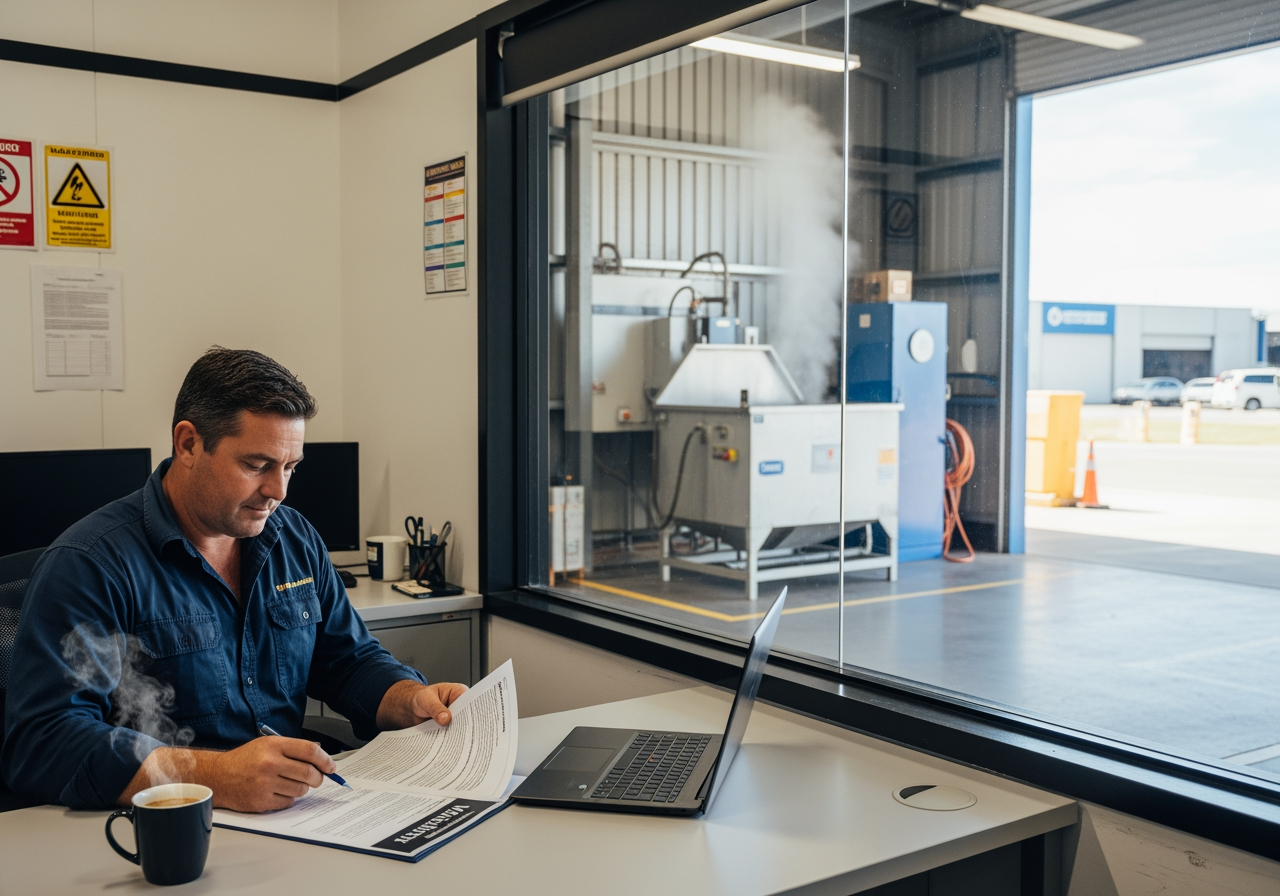
Workshop managers and maintenance supervisors purchasing industrial parts washers face a critical decision point – not just which machine to buy, but what protection comes with the investment. A heavy duty parts washer represents significant capital expenditure, and warranty coverage terms determine whether a component failure costs $200 or $20,000.
Australian industrial equipment warranties differ substantially from consumer product guarantees. Understanding warranty coverage before purchase prevents costly surprises and protects operational budgets.
Australian Warranty Law and Industrial Equipment Protection
What Australian Consumer Law Requires
Australian Consumer Law (ACL) establishes baseline consumer guarantees that apply regardless of manufacturer warranty terms. These guarantees state that goods must be fit for purpose, match their descriptions, and remain of acceptable quality for a reasonable timeframe. When evaluating industrial parts washer warranty Australia options, understanding ACL protection is the foundation.
For industrial parts washers, that reasonable timeframe depends on equipment type and usage intensity. A manual parts washer in a small workshop has different durability expectations than a super heavy duty parts washer running 24 hours a day in a mining operation. Australian Consumer Law equipment protections apply to all of these – the ACL provides minimum protection regardless of what manufacturer warranties say.
The key distinction workshop managers need to understand: consumer guarantees cannot be excluded by manufacturer terms, whilst warranty coverage represents additional protection beyond those legal minimums. A warranty claim goes through the manufacturer or dealer. A consumer guarantee claim can be pursued directly with the retailer, manufacturer, or both. Knowing this distinction matters when a component fails and a claim is disputed.
What Australian Parts Washer Warranties Typically Cover
Most Australian-manufactured industrial parts washers include 12-month comprehensive warranties covering parts and labour. This baseline protects against manufacturing defects and component failures under normal operating conditions.
Premium manufacturers extend coverage beyond 12 months for major components. Heating elements, pumps, and structural components often carry 24-36 month warranties. Extended coverage periods reflect manufacturer confidence in component quality and durability – and provide a useful quality signal when comparing suppliers.
Coverage begins from the installation date, not the purchase date. This distinction matters when equipment sits in storage before commissioning. Documentation of the installation date through service records protects warranty validity. A machine purchased in July and installed in October starts its warranty in October – make sure commissioning records reflect this correctly.
What Warranty Coverage Includes and Excludes
Covered Components and Service Agreement Conditions
Quality Australian-manufactured parts washers typically cover heating elements and thermostats, pump assemblies and motors, electrical components and control systems, structural steel and stainless steel construction, spray arms and rotating mechanisms, and door seals and gaskets.
Service agreement conditions typically cover technician callout fees, diagnostic time, component replacement labour, testing and commissioning after repair, replacement components shipped to site, and freight costs for warranty parts. These service agreement conditions represent significant value – labour accounts for 50-70% of repair costs on industrial equipment.
Commissioning documentation that verifies correct installation setup becomes critical evidence supporting warranty claims. Professional installation by manufacturer-approved technicians provides additional protection through the installation warranty.
Warranty Exclusions That Void Coverage
Understanding warranty exclusions prevents declined claims and clarifies operator maintenance obligations.
Consumable components including filters, detergents, and wear items require regular replacement as part of normal operation. Warranties exclude these consumables regardless of failure timing – a clogged filter after six months represents normal wear, not a warranty claim.
Operator damage from incorrect operation, unauthorised modifications, or negligent use voids coverage. A hot tank system damaged by operating at temperatures exceeding specifications represents operator error – the warranty excludes coverage because the failure resulted from misuse, not a manufacturing defect.
Environmental damage from harsh chemicals, improper installation location, or conditions outside specifications voids coverage. A parts washer installed outdoors without weather protection that develops corrosion damage is excluded.
Inadequate maintenance is among the most common grounds for warranty claim denial. Failure to perform scheduled maintenance as specified in operating manuals voids coverage. Service records documenting maintenance completion protect validity – missing logs provide manufacturers grounds to deny claims on components that might otherwise be covered.
Unauthorised repairs using non-approved parts or non-certified technicians void coverage. A pump replaced with an aftermarket alternative eliminates warranty coverage for related components.
How Installation and Maintenance Preserve Warranty Coverage
Installation Requirements That Affect Warranty Validity
Proper installation by qualified technicians is a warranty requirement, not a suggestion. Incorrect installation causes premature failures that warranty claims then exclude.
Electrical requirements must be met precisely. A heavy duty parts washer connected to incorrect voltage experiences electrical component damage excluded from warranty. Installation by licensed electricians and compliance verification protects coverage.
Plumbing connections for water supply, drainage, and venting must meet manufacturer specifications. Inadequate drainage causing water backup or insufficient supply pressure affecting pump operation represents an installation defect that voids relevant warranty coverage.
Floor loading capacity and equipment levelling affect operation and warranty validity. A parts washer installed on inadequate flooring that settles and causes misalignment experiences mechanical failures excluded from coverage.
Environmental conditions including temperature ranges, ventilation requirements, and clearance specifications protect performance. Installation in locations outside specified parameters voids coverage for related failures.
Maintenance Requirements and Documentation Standards
Manufacturer-specified maintenance schedules are warranty conditions. Documented compliance protects coverage validity.
Daily check logs demonstrate operational monitoring. Weekly maintenance records for filters, pump strainers, and spray arms show proactive care. Monthly service records from qualified technicians covering heating elements, electrical connections, and mechanical components provide strong supporting documentation. Annual service by manufacturer-approved technicians represents the highest-value maintenance requirement for warranty protection.
Maintenance records must include dates, technician details, work performed, and components replaced. Incomplete records weaken claims. Comprehensive documentation from day one builds the strongest possible protection for costly repairs that arise later.
Hotwash Australia provides recommended maintenance schedules with all equipment. Following these schedules precisely and documenting each service creates the paper trail that supports warranty claims throughout the coverage period.
Documenting and Submitting Warranty Claims Effectively
What to Document When a Component Fails
Successful warranty claims require thorough documentation from failure discovery through resolution.
Record the failure date, operating conditions at the time, symptoms observed, and immediate actions taken. Take photographs of failed components, any error codes displayed, and the surrounding installation area. Video documentation of intermittent failures provides valuable evidence that a static photo cannot capture.
Compile all service records demonstrating compliance with manufacturer maintenance requirements. Include daily check logs, weekly maintenance records, monthly inspections, and annual service documentation. Operating condition records showing usage patterns, cycle counts, and detergents used demonstrate operation within specifications.
Keep copies of all warranty claim communications – initial notifications, technical discussions, and resolution correspondence. A documented parts washer warranty claim process from start to finish – with photos, maintenance logs, and communication trails – is far more likely to succeed than an undocumented one. Submit claims promptly after failure discovery. Delays raise questions about failure cause and actions taken between failure and reporting.
Regional Service Coverage Across Australia
Warranty coverage value depends entirely on service availability. A comprehensive warranty means very little if technician response takes weeks or parts require international freight.
Australian-manufactured equipment provides significant warranty advantages through local service networks. Hotwash maintains service capabilities across Perth, Melbourne, Sydney, and Brisbane. Metro areas receive same-day or next-day service for urgent warranty claims. Parts availability through local stock eliminates international shipping delays.
Regional areas receive scheduled service visits or remote diagnostic support. Critical failures receive priority response with technician deployment within 48-72 hours. Parts ship via express freight to minimise downtime.
Remote mining operations and remote facilities receive phone support, video diagnostics, and expedited parts shipping. Manufacturer-approved local contractors provide on-site service under warranty coverage. This matters enormously for super heavy duty parts washers and hot tanks supporting continuous maintenance schedules in remote locations.
Service response times should be specified in warranty terms. Vague commitments like “reasonable timeframe” provide less protection than specific response time guarantees for different service areas.
Extended Warranty, Warranty Transfer, and Manufacturer Comparison
Extended Warranty Value Analysis
Extended warranty coverage beyond standard terms is an insurance decision. Manufacturers typically price extended coverage at 5-15% of equipment purchase price annually.
Coverage extensions must include both parts and labour to provide meaningful protection. Labour represents 50-70% of repair costs on industrial equipment – parts-only extended warranties leave significant expense exposure. Comprehensive coverage including pumps, heating elements, and electrical systems provides the maximum protection.
Value calculation is straightforward. A pump replacement costs $2,000-$4,000 including labour. A heating element replacement runs $1,500-$3,000. If the extended warranty parts washer cost is less than one major repair, the coverage provides genuine value.
For any operation that has experienced one major breakdown, the extended warranty parts washer option is easy to justify retrospectively – and far easier to justify proactively.
Extra heavy duty parts washers and stainless steel parts washers operating intensively benefit most from extended coverage. Continuous operation accelerates component wear faster than standard use – extended warranty value increases proportionally with operating hours.
Comparing Warranty Terms and Warranty Transfer for Used Equipment
When comparing manufacturers, warranty coverage terms reveal quality differences and commitment levels. Standard coverage ranges from 6 months to 24 months. Longer coverage signals manufacturer confidence in component durability. A manufacturer offering 24-month coverage demonstrates stronger product confidence than competitors providing 6-month terms.
Specific response time commitments provide stronger protection than vague clauses. Look for guarantees like “24-hour response for critical failures in metro areas” rather than “reasonable timeframe” language. Australian-manufactured equipment typically provides stronger warranty terms, faster parts availability, and simpler claim administration than imported alternatives.
Parts washers transfer between operations regularly through equipment sales or facility changes. Warranty transferability affects used equipment value and buyer protection. Some manufacturers allow warranty transfer with notification and a transfer fee. Non-transferable warranties reduce used equipment value because buyers lose protection – creating negotiation room for used equipment purchases. Transfer documentation requires formal manufacturer notification including new owner details and equipment condition verification.
Used equipment buyers should verify warranty status and transfer eligibility before purchase. A parts washer with 18 months of remaining transferable warranty offers substantially more value than identical equipment with expired or non-transferable coverage.
Conclusion
Strong warranty protection directly impacts parts washer ownership costs and operational reliability. Comprehensive coverage including parts and labour, clear service agreement conditions, reasonable duration, and documented claim procedures provides the strongest protection against unexpected repair expenses.
Australian-manufactured equipment offers warranty advantages through local service networks, faster parts availability, and simpler claim administration. For industrial parts washer warranty Australia purchases, local manufacturing means faster parts, better service coverage, and warranty terms backed by local service teams rather than offshore support desks. Understanding warranty exclusions, maintenance requirements, and the parts washer warranty claim process prevents denials and protects coverage throughout the coverage period.
Australian Consumer Law equipment protections provide a safety net regardless of what individual warranty documents say – but the strongest protection comes from comprehensive manufacturer coverage, rigorous documentation, and choosing equipment from a manufacturer with genuine local service capability.
To discuss warranty coverage terms and service agreement conditions for your specific operation, contact our equipment specialists or email us at sales@hotwash.com.au.

Leave A Comment