
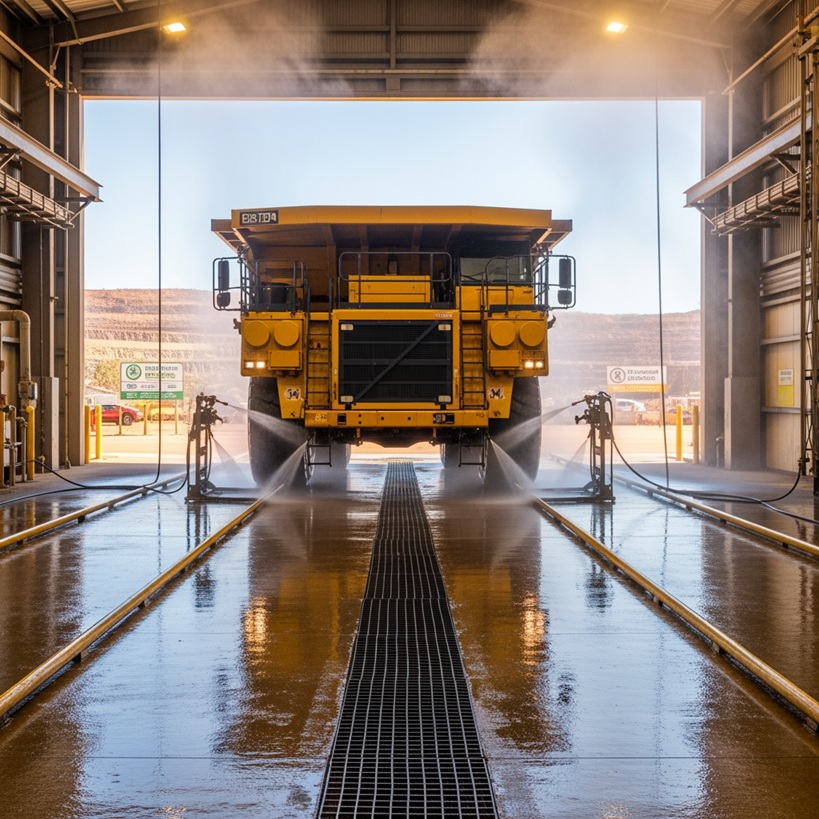
Mining operations face a regulatory paradox – haul trucks accumulate tonnes of contaminated material that must be removed, yet the cleaning process itself can trigger environmental penalties if not executed correctly. A single wash bay discharge containing hydrocarbons, heavy metals or elevated pH levels can result in fines exceeding $50,000 under Australian environmental protection legislation. The challenge isn’t just removing caked-on mud and oil; it’s doing so without creating a secondary environmental incident. Effective haul truck cleaning compliance requires purpose-built systems that address both performance and regulatory requirements.
Large-scale mining operations in Western Australia and Queensland now operate under intensified scrutiny from environmental regulators. The Environmental Protection Authority monitors discharge water quality, sediment management, and chemical handling procedures at mine sites. Operations that fail to demonstrate compliant cleaning practices risk prosecution, operational shutdowns, and reputational damage that affects social licence to operate. This creates an operational dilemma – haul trucks must be cleaned for maintenance access and safety, but traditional wash methods often violate discharge regulations.
The solution requires purpose-built equipment that addresses both cleaning performance and environmental containment. Hotwash Australia manufactures industrial parts washing systems designed specifically for mining applications where regulatory compliance cannot be compromised. These systems integrate high-pressure cleaning capability with closed-loop water management, preventing contaminated discharge from entering groundwater or surface water systems.
Understanding Environmental Regulations for Mining Equipment Cleaning
Australian environmental legislation treats wash bay discharge as industrial wastewater, subject to strict quality standards before release. The Protection of the Environment Operations Act 1997 (NSW), Environmental Protection Act 1994 (QLD), and equivalent state legislation establish maximum contaminant levels for petroleum hydrocarbons, suspended solids, pH, and heavy metals. Mining operations must either treat wash water to meet discharge standards or capture and dispose of it through licensed waste contractors.
The regulations apply regardless of operation size. A remote mine site washing three haul trucks per week faces the same compliance requirements as a major operation processing dozens daily. Environmental regulators conduct unannounced inspections and water sampling, with non-compliance triggering immediate enforcement action. The 2022 prosecution of a Queensland mining operation for wash bay discharge violations resulted in $180,000 in fines plus remediation costs exceeding $400,000.
Compliance requires documented procedures, water quality monitoring, and equipment capable of preventing uncontrolled discharge. Mining operations must demonstrate they have eliminated pathways for contaminated water to reach the environment. This means sealed wash bays, closed-loop water systems, or complete capture for disposal. The equipment used for haul truck cleaning compliance directly determines whether operations can meet these requirements without operational disruption.
The Contamination Challenge: What Accumulates on Haul Trucks
Haul trucks operating in open-cut mines accumulate multiple contamination layers that complicate both cleaning and environmental management. The undercarriage collects tonnes of mud, clay and ore material mixed with hydraulic fluid, gear oil and diesel fuel. Wheel wells pack with material that hardens into concrete-like masses. Engine compartments accumulate oil mist, dust and combustion residue. Each contamination type presents different environmental risks when removed.
Hydrocarbon contamination poses the greatest regulatory concern. Diesel fuel, hydraulic oil and lubricants contain benzene, toluene and other compounds classified as priority pollutants under environmental legislation. When wash water containing these hydrocarbons enters soil or waterways, it triggers immediate environmental harm and regulatory response. A single litre of diesel can contaminate one million litres of groundwater beyond drinking water standards.
Heavy metal contamination comes from ore material, brake dust and component wear. Iron oxide, copper, zinc and other metals leach from accumulated material during washing. These compounds bioaccumulate in aquatic ecosystems and persist in soil. Environmental regulations set strict limits – often measured in parts per million – for heavy metal discharge. Wash water that appears visually clean may still exceed regulatory limits for dissolved metals.
The volume of contamination matters. A single CAT 793 haul truck can carry 50-100 kilograms of accumulated material in the undercarriage alone. Washing ten trucks produces half a tonne of contaminated sediment that must be captured and managed. Operations that discharge this material face certain environmental violations. The cleaning system must handle this contamination volume while preventing environmental release. Mining sites managing both haul truck fleets and dust suppression equipment cleaning face compounded contamination volumes requiring robust treatment capacity.
Why Traditional Wash Methods Create Compliance Risks
Conventional pressure washing with uncontrolled discharge represents the highest-risk approach to haul truck cleaning. Operations spray trucks over unsealed ground, allowing contaminated water to soak into soil or run into drainage systems. This practice guarantees environmental contamination and regulatory violation. Hydrocarbons and heavy metals enter groundwater, surface water or sensitive environmental areas. The environmental damage continues long after the washing stops.
Some operations attempt compliance by directing wash water into sediment ponds or evaporation basins. This approach fails when contamination levels exceed what simple settling can address. Hydrocarbons float on water surfaces and don’t settle out. Dissolved metals remain in solution. Evaporation concentrates contaminants rather than removing them. Regulators increasingly reject evaporation as a disposal method, particularly where groundwater contamination risk exists.
Manual cleaning methods – workers using hand tools to scrape accumulated material – avoid water discharge issues but create occupational health and safety risks. Workers face exposure to contaminated material, manual handling injuries, and productivity losses. A maintenance team can spend eight hours manually cleaning a single haul truck’s undercarriage, time that could be eliminated with appropriate equipment. The labour cost alone justifies investment in automated cleaning systems.
Chemical cleaning agents introduce additional compliance complexity. Degreasers, surfactants and solvents improve cleaning performance but many contain substances regulated under environmental and dangerous goods legislation. Using these chemicals requires documented handling procedures, spill containment, and appropriate disposal. Operations that discharge chemically-enhanced wash water face compounded environmental violations. The cleaning system must deliver performance without relying on problematic chemical additives.
Closed-Loop Systems: The Compliance Solution
Closed-loop industrial cleaning systems eliminate environmental discharge by capturing, filtering and recycling wash water continuously. These systems operate as self-contained units – contaminated water never leaves the system. Haul trucks are cleaned inside enclosed wash bays or using extra heavy duty parts washers designed for large component processing. All wash water flows into collection sumps where solids settle and hydrocarbons separate.
The water treatment process removes contaminants through multiple stages. Primary separation allows heavy solids to settle while hydrocarbons float for skimming. Secondary filtration removes suspended particles down to 10-25 microns. Hydrocarbon coalescers extract dissolved oils to less than 10 parts per million. The cleaned water returns to the wash system for reuse. The only discharge is concentrated contaminated sludge, collected periodically for disposal through licensed waste contractors.
Water recycling reduces environmental impact beyond preventing discharge. A closed-loop system washing ten haul trucks daily uses 500-1,000 litres of water versus 50,000-100,000 litres for once-through pressure washing. This 99% reduction matters in water-scarce mining regions where water allocation limits operations. The system pays for itself through water savings alone, before considering compliance benefits and labour reduction.
Temperature control enhances cleaning performance in closed-loop systems. Hot tank systems heat wash water to 60-80°C, improving grease and oil removal without harsh chemicals. The heated water breaks down hydrocarbon contamination more effectively than cold water pressure washing. This means faster cleaning cycles and better results while maintaining complete environmental containment. Mining operations achieve spotless equipment without environmental risk.
Automated Cleaning Systems for Large Mining Equipment
Purpose-built automated systems address the scale challenge of haul truck cleaning. Drive-through wash bays allow trucks to enter, undergo complete automated cleaning, and exit without operator intervention. High-pressure spray arrays target wheel wells, undercarriage, body and cab surfaces. Rotating spray arms ensure complete coverage. The entire cleaning cycle completes in 10-15 minutes versus hours for manual methods.
The automation delivers consistency that manual cleaning cannot match. Every truck receives identical treatment, eliminating the variability that comes from worker fatigue or time pressure. Maintenance teams gain reliable access to clean equipment for inspections and servicing. Production managers eliminate cleaning-related delays. Operations directors demonstrate systematic compliance rather than relying on procedural adherence.
Super heavy duty parts washers handle components removed from haul trucks – transmission assemblies, differential units, engine blocks. These systems provide enclosed cleaning chambers with programmable wash cycles. Components emerge completely clean without worker exposure to contaminated material or cleaning chemicals. The closed-loop water management prevents any environmental discharge. Mining operations maintain haul truck cleaning compliance while processing the heavy components that require intensive cleaning.
The capital investment in automated cleaning systems generates measurable returns. Labour savings alone often justify the investment within 12-18 months. A maintenance team spending 40 hours weekly on manual equipment cleaning represents $80,000-100,000 in annual labour cost. Automated systems eliminate this expense while improving cleaning results. Adding compliance risk reduction and water savings creates compelling financial justification for operations of any size. Sites managing comprehensive equipment portfolios benefit from integrated solutions that handle both primary vehicle cleaning and dust suppression equipment cleaning requirements.
Water Treatment and Waste Management Integration
Effective compliance requires more than just capturing wash water – operations must manage the concentrated waste that results. Closed-loop systems accumulate contaminated sludge that contains all the hydrocarbons, heavy metals and sediment removed from equipment. This material classifies as regulated waste requiring proper characterisation, storage and disposal through licensed facilities.
The sludge management process begins with proper collection. Heavy duty parts washers incorporate settlement tanks and filter systems that consolidate waste into manageable volumes. Regular removal prevents system overload and maintains cleaning performance. Most mining operations schedule monthly or quarterly waste collection, depending on equipment throughput and contamination levels.
Waste characterisation determines disposal requirements and costs. Laboratory analysis identifies hydrocarbon concentrations, heavy metal content, and other regulated substances. This data guides proper classification under waste regulations and selection of appropriate disposal facilities. Operations that skip characterisation risk non-compliance if waste exceeds limits for standard disposal methods. The analytical cost is minor compared to potential penalties for improper waste handling.
Licensed waste contractors transport and dispose of concentrated cleaning waste according to environmental regulations. These specialists handle contaminated sludge, used filter media, and skimmed hydrocarbons. They provide documentation proving proper disposal, creating the audit trail that demonstrates compliance. Mining operations eliminate environmental liability by transferring waste to qualified contractors rather than attempting on-site disposal that risks regulatory violation.
Documentation and Compliance Verification
Environmental compliance requires documented evidence that cleaning operations meet regulatory standards. Mining operations must maintain records proving wash water containment, waste disposal, and system maintenance. Regulators expect to see cleaning procedures, water quality monitoring results, waste disposal certificates, and equipment service records. Incomplete documentation creates compliance risk even when actual practices meet standards.
Standard operating procedures document how haul truck cleaning occurs, what equipment is used, and how environmental protection is maintained. These procedures specify wash bay operation, water system management, spill response, and waste handling. They demonstrate that operations have systematic controls rather than ad-hoc practices. Written procedures also guide worker training and provide consistency across shifts and personnel changes. Comprehensive documentation covering all equipment types – from primary vehicles to dust suppression equipment cleaning protocols – ensures complete regulatory coverage.
Water quality monitoring provides objective evidence that closed-loop systems prevent environmental discharge. Operations sample wash water quality, test for regulated contaminants, and document results. This data proves the treatment system removes hydrocarbons and metals to safe levels before water recycling. Some operations also monitor groundwater near wash facilities to demonstrate no contamination pathways exist. The monitoring frequency depends on regulatory requirements and operational risk assessment.
Equipment maintenance records prove that cleaning systems function as designed. Documented filter changes, pump servicing, and system inspections show that environmental controls remain effective. Deferred maintenance can compromise water treatment performance, creating discharge risks. Regular servicing prevents system failures that could trigger environmental incidents. The maintenance documentation also supports capital equipment depreciation and operational cost tracking.
Selecting Compliant Cleaning Equipment for Mining Operations
Mining operations evaluating cleaning equipment must prioritise environmental compliance alongside cleaning performance. The system must handle the contamination volume and equipment size typical of the operation. It must incorporate water treatment adequate for the contaminant types present. And it must provide documentation and monitoring capabilities that satisfy regulatory requirements.
Capacity considerations start with equipment dimensions and throughput. Haul truck undercarriages require cleaning chambers or wash bays accommodating vehicles 8-12 metres long and 5-7 metres wide. Spray systems need pressure ratings of 1,500-3,000 PSI to remove caked material. Water flow rates of 100-200 litres per minute ensure adequate coverage. Operations cleaning multiple trucks daily need systems that complete cycles in 15 minutes or less to avoid production bottlenecks.
Water treatment specifications must match contamination characteristics. Mining operations dealing with heavy hydrocarbon contamination need coalescing filters and oil separation systems. Sites with high sediment loads require robust settlement tanks and filtration. Operations in regions with hard water may need water softening to prevent scale buildup. The treatment system must handle peak contamination loads, not just average conditions, to prevent discharge during high-intensity cleaning periods.
Australian manufacturing provides advantages for mining operations. Locally-built equipment arrives faster, integrates with Australian electrical standards, and receives ongoing support from accessible service networks. Systems designed specifically for Australian mining conditions withstand high temperatures, remote locations, and demanding operational requirements. The equipment maintains the reliability that haul truck cleaning compliance demands.
Conclusion: Compliance as Operational Advantage
Environmental compliance in haul truck cleaning represents more than regulatory risk management – it creates operational advantages that improve safety, productivity and cost control. Closed-loop cleaning systems eliminate the environmental liability that threatens mining operations with fines, shutdowns and reputational damage. They simultaneously reduce labour costs, improve cleaning consistency, and decrease water consumption. The same investment that prevents environmental penalties also delivers measurable operational returns.
Mining operations that continue using non-compliant cleaning methods face escalating risks. Environmental regulators intensify enforcement as community expectations for mining industry environmental performance increase. The penalties for wash bay violations grow more severe while the tolerance for repeat offenders diminishes. Operations that wait for regulatory action before addressing compliance face forced solutions under time pressure, typically at higher cost than proactive investment.
Purpose-built industrial cleaning equipment eliminates the compliance versus performance trade-off. Modern systems deliver superior cleaning results while preventing environmental discharge. They automate labour-intensive manual processes while capturing contaminated waste for proper disposal. Mining operations gain clean equipment, reduced costs, and documented compliance through integrated solutions designed for heavy industrial applications.
Selecting appropriate cleaning equipment requires understanding both operational requirements and regulatory obligations. The system must handle equipment size, contamination type, and cleaning frequency while incorporating water treatment and waste management that satisfies environmental standards. Operations that prioritise these requirements invest in equipment that supports long-term compliance rather than creating ongoing environmental risk.
For mining operations seeking compliant haul truck cleaning solutions that eliminate environmental penalties while improving operational efficiency, contact us to discuss system specifications, capacity requirements, and implementation approaches tailored to specific site conditions and regulatory obligations.

Leave A Comment