
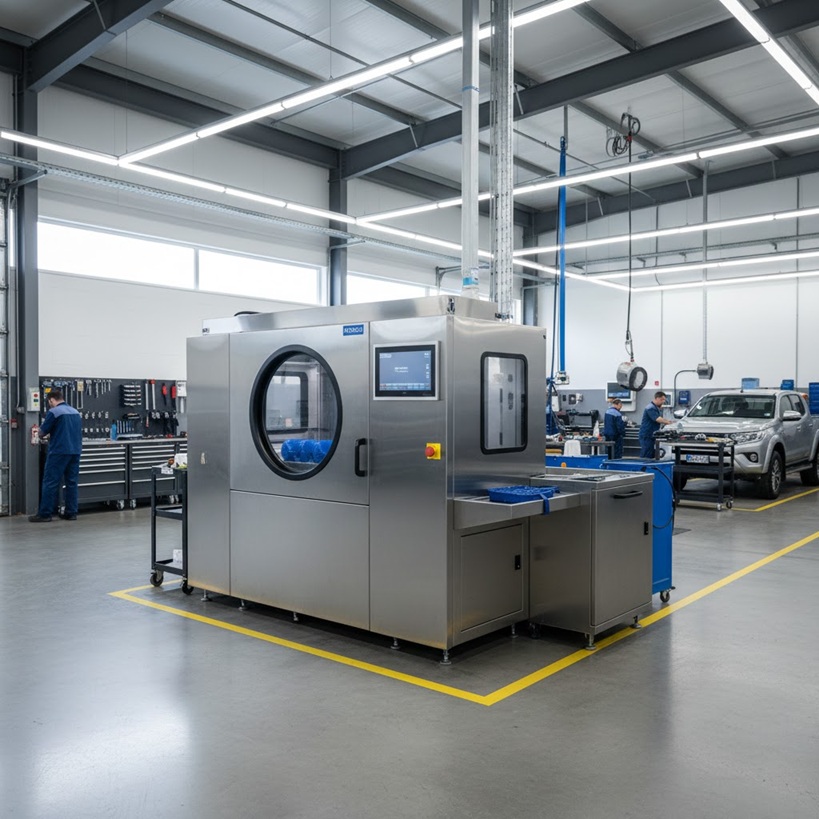
Australian workshops cleaned parts the same way for decades until recently. A mechanic in a Perth workshop once spent four hours scrubbing a single engine block. They used kerosene and a wire brush. Today, that same job takes 15 minutes in an automated parts washer. The mechanic works on billable repairs whilst the machine cleans.
The shift from manual cleaning to automated systems represents more than new equipment. It marks a fundamental change in how Australian workshops operate. It changes how they protect workers. It also changes how they compete in an efficiency-focused market. This workshop automation evolution separates modern, profitable businesses from those stuck in the past.
The Drum Washer Era: 1970s-1990s
Workshop cleaning in Australia started with 44-gallon drums cut in half. Mechanics filled them with kerosene or diesel. They stood over the drums with wire brushes for hours. They breathed fumes and got chemicals on their skin. The method worked to remove grease, but it came with high costs.
A typical automotive workshop in the 1980s allocated one worker to parts cleaning for several hours each day. That worker could not do productive repairs whilst scrubbing. The real cost was not just the cleaning time. It was the lost opportunity to generate revenue on customer vehicles.
Safety standards barely existed during this period of cleaning technology history. Mechanics worked with caustic soda, petrol-based solvents, and other harsh chemicals without proper protection. Skin conditions were common. Respiratory problems affected older mechanics. Chemical burns were occupational hazards that workers simply endured.
The environmental impact went unmeasured. Used solvents often went down drains or into general landfill. No one questioned whether better methods existed because everyone used the same approach.
Hot Caustic Tanks: The First Industrial Solution
Mining companies and large workshops moved to hot tanks in the 1980s and 1990s. These systems heated caustic soda solution to high temperatures. The heat dissolved grease and carbon deposits faster than manual scrubbing.
The improvement was significant for large components. A gearbox housing that took two hours to clean manually could be done in 30 minutes. Large operations saw immediate productivity gains. However, hot tanks brought new problems.
The caustic solution was dangerous. Splashes caused severe burns immediately. The tanks required constant monitoring to maintain temperature and chemical concentration. Parts made from aluminium corroded in the caustic solution. This limited what workshops could clean.
Workers still handled parts covered in hot caustic solution. The manual handling risk remained. Workshops needed proper ventilation and extensive protective equipment. Many small operations did not have the safety protocols to manage these risks effectively.
Despite these limitations, hot tanks represented progress. They proved that automated cleaning could work in Australian industrial conditions. The technology was crude, but it showed workshops that alternatives to manual scrubbing existed.
The Spray Washer Revolution: 2000s
Spray washer technology changed workshop cleaning fundamentally. These systems used high-pressure hot water and biodegradable detergent instead of soaking parts in chemicals. The difference was operational as well as technical.
At Hotwash Australia, we introduced robust spray washer systems to local workshops in the early 2000s. The company designed machines specifically for local conditions. We built units with robust construction for mining and compact sizes for urban workshops.
The spray washer approach solved multiple problems simultaneously. Workers loaded dirty parts into a chamber. They closed the door and started the cycle. The machine did the rest. There was no manual scrubbing. There was no chemical exposure.
The cleaning results exceeded what manual methods achieved. High-pressure spray jets reached internal passages and blind holes. Brushes could never access these areas. Parts came out spotless every time. The results were consistent regardless of which worker operated the machine.
A Melbourne automotive workshop installed a parts washer in 2005. They calculated the return on investment. Their mechanic previously spent 20 hours per week cleaning parts manually. At $35 per hour, that cost $700 in labour. The automated system reduced cleaning time to three hours per week. That cost only $105. The $595 weekly savings meant the machine paid for itself in 18 months.
Biodegradable Chemistry: The Environmental Shift
The move from solvents to water-based cleaning represented a fundamental change in workshop chemistry. Traditional parts cleaning relied on petroleum-based solvents. These dissolved grease but created disposal problems and health risks.
Biodegradable detergents work differently. They use surfactants that break down grease and oil. This allows hot water to wash contaminants away. The chemistry is less aggressive than solvents but more effective when combined with heat and pressure.
Australian workshops faced increasing environmental regulations in the 2000s. Used solvent disposal became expensive and complicated. Water authorities restricted what could go down drains. Workshops needed cleaning technology history to evolve towards compliance.
Water-based systems with biodegradable detergent solved this problem. The wash water could be treated and disposed of legally. There were no toxic fumes. Workshops did not need solvent storage permits.
The safety improvement was equally significant. Workers no longer breathed solvent vapours. They did not get petroleum products on their skin. Workplace health and safety inspectors approved the change. Insurance companies noticed fewer injury claims related to chemical handling.
Mining Industry Adoption: Heavy-Duty Requirements
Mining operations pushed parts washer technology to new levels. A haul truck component weighs hundreds of kilograms. It comes into the workshop covered with thick mud, grease, and coal dust. Standard workshop equipment could not handle the load.
Engineers developed extra heavy duty parts washers specifically for mining applications. These machines featured reinforced chambers and high-capacity pumps. They used construction materials that could handle continuous operation in remote locations.
A Pilbara iron ore mine installed a large-capacity system in 2008. Their maintenance team previously spent entire shifts cleaning excavator components by hand. The automated system cleaned the same parts in 30 minutes. The time saving was dramatic. However, the real benefit was keeping equipment in service.
Mining operations measure downtime in lost production. Every hour a haul truck sits idle waiting for a repaired component costs thousands in lost output. Faster parts cleaning meant faster repairs. This led to more productive equipment.
The mining industry’s adoption validated automated cleaning technology. If systems could handle the extreme conditions of mining operations, they could handle any Australian workshop application.
Food Industry Requirements: Stainless Steel Standards
Food processing facilities had different requirements entirely. They needed cleaning systems that met hygiene standards. They required food-safe materials. They needed to clean equipment between production runs quickly.
Stainless steel parts washers became the solution. These systems used 304-grade stainless steel construction throughout. This included chambers, spray manifolds, pumps, and doors. There were no painted surfaces that could chip and contaminate food products.
A commercial bakery in Brisbane installed a stainless steel system. They used it to clean mixer components, dough hooks, and production equipment. They previously spent hours each night manually washing equipment. The automated system reduced cleaning time from four hours to 45 minutes.
The time saving let them run an additional production shift. The equipment paid for itself in six months through increased production capacity alone. The improved hygiene was an additional benefit. It reduced contamination risks significantly.
Food industry adoption demonstrated that workshop automation evolution extended beyond mechanical workshops. The technology adapted to different requirements whilst maintaining the core benefits of speed and consistency.
Modern Automation: Programmable Systems
Current parts washer technology includes programmable controls and monitoring systems. A workshop manager can program different wash cycles for different part types. They use longer cycles for heavily contaminated parts. They use shorter cycles for routine cleaning.
Temperature control maintains optimal cleaning conditions automatically. Pressure sensors monitor pump performance. Cycle timers ensure consistent results. The operator loads parts, selects the programme, and starts the cycle.
This level of automation reduces operator skill requirements. Any worker can run the machine effectively. Results do not depend on technique or experience. The machine delivers the same performance every time.
Programmable systems also track usage data. Workshops can monitor how many cycles run per day. They can track total operating hours and maintenance intervals. This data helps plan servicing and calculate actual operating costs.
The Productivity Calculation
The evolution from manual cleaning to automation fundamentally changed workshop economics. Consider a typical automotive workshop with three mechanics.
They spend four hours daily cleaning parts. With a $40/hour mechanic labour rate, the daily cleaning cost is $160. The annual cost is $41,600. The lost billable work is approximately $80,000 annually.
Compare this to automation. Operator time drops to 30 minutes daily. The daily labour cost is $20. The annual labour cost is $5,200. Machine operating costs are around $3,000 annually. The total annual cost is $8,200.
The difference is $33,400 in direct savings. This does not include the recovered billable hours that generate additional revenue. A parts washer suitable for a three-mechanic workshop costs significantly less than the annual savings. The return on investment period is typically 8-12 months.
Larger operations see proportionally larger benefits. A mining maintenance facility that processes 50 components daily sees six-figure annual savings from automation.
Safety Improvements: Measurable Impact
The safety benefits of automated cleaning show up in workplace injury statistics. A manufacturing facility in Adelaide tracked injury reports before and after installing automated parts washers.
Before automation, they had eight reported chemical exposure incidents. They had three repetitive strain injuries from manual scrubbing. They had two slip incidents involving spilled solvents. They averaged 4.3 lost-time injuries per year.
After automation, the numbers dropped. They had zero chemical exposure reports. They had zero repetitive strain injuries. They had one minor incident due to operator error. They averaged 0.3 lost-time injuries per year.
The reduction was not coincidental. Automated systems eliminate the manual handling and repetitive motions that cause injuries. Workers load parts into machines instead of scrubbing them by hand. Insurance companies recognise this improvement. Workshops with automated cleaning systems often qualify for lower workers’ compensation premiums.
Current Technology: Where We Are Now
Modern parts washers combine decades of development into sophisticated systems. High-pressure pumps deliver 80-100 PSI spray force. Heating elements maintain water temperature at 80-85°C. Rotating spray arms ensure complete coverage. Programmable controls optimise cycle times.
Super heavy duty parts washers handle the largest components from major mining operations. These machines feature chambers large enough for excavator buckets and drilling equipment.
Wet abrasive blasters represent another leap forward. These systems combine water blasting with abrasive media. They clean and prepare surfaces simultaneously. This replaces multiple manual processes with one automated step. Modern wet abrasive blasters deliver precision surface preparation without the dust hazards of traditional dry blasting.
The technology continues evolving. Current development focuses on water recycling and energy efficiency. Each improvement reduces operating costs whilst maintaining cleaning performance.
The Australian Manufacturing Advantage
Australian-made parts washers offer advantages that imported equipment cannot match. Local manufacturing means designs account for Australian workshop conditions. These include temperature extremes, dust, and remote locations.
Support and servicing matter more than initial purchase price. When a parts washer breaks down, a mining operation needs parts immediately. They cannot wait six weeks for shipments from overseas. Australian manufacturers maintain local parts inventory.
A workshop in regional Queensland can get parts and service support within 24-48 hours. That responsiveness keeps operations running. Australian standards compliance is built in, not retrofitted. Electrical systems and safety features meet local regulations from the design stage. Workshops do not need expensive modifications.
Looking Forward: Next-Generation Systems
The workshop automation evolution continues. Current development focuses on several key areas. Water recycling systems filter and reuse wash water. This reduces consumption by 70-80%. These systems matter in water-scarce regions.
Energy recovery captures heat from wash water. It uses this heat to preheat incoming water. This reduces heating costs by 30-40% in high-volume operations.
Automated loading systems integrate with robotic handling equipment. Large manufacturing facilities are testing systems where robots load parts. They start wash cycles and unload clean components without human intervention.
IoT connectivity links parts washers to maintenance management systems. Machines report cycle counts and maintenance needs automatically. Maintenance teams can monitor equipment remotely. This allows them to schedule servicing proactively.
Conclusion
The evolution from drum washers to automated systems represents more than technological progress. It reflects changing priorities in Australian workshops. The industry moved from accepting inefficiency to demanding productivity. It moved from tolerating workplace hazards to requiring safety.
A mechanic who started working in 1990 has witnessed the entire transformation. They remember spending hours with wire brushes and kerosene. They have seen the cleaning technology history unfold firsthand. Each change improved their working conditions whilst making their workshop more productive.
The investment in automated parts washing delivers measurable returns. You see reduced labour costs and faster turnaround times. You get improved safety and consistent quality. Workshops that still use manual methods compete against operations that clean parts in a fraction of the time.
Australian manufacturing continues driving this evolution. Local engineers understand workshop requirements. They design equipment for Australian conditions. The technology will keep improving, but the fundamental advantage of automation is already proven.
Ready to move your workshop beyond manual parts cleaning? Contact our parts washer specialists to discuss which automated system fits your operation. Email us on sales@hotwash.com.au for expert advice on modernising your cleaning process.

Leave A Comment