
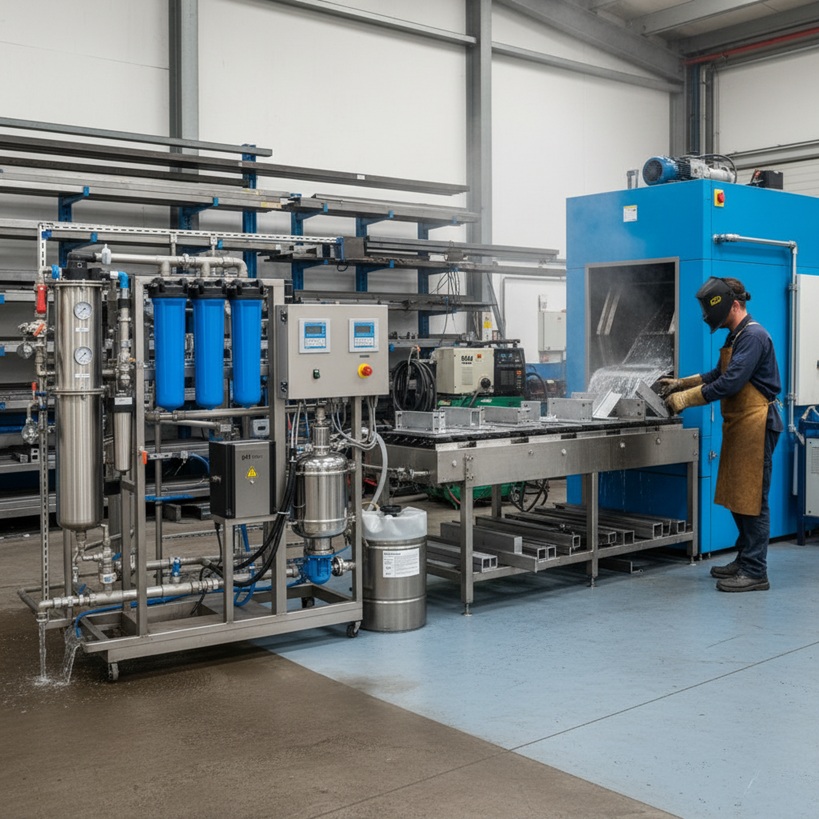
Metal fabrication workshops operate on tight margins where every minute of downtime and every hour of manual labour directly impacts profitability. Yet many facilities still rely on manual degreasing methods that consume significant labour hours, create safety risks, and deliver inconsistent results. The financial case for automated parts washing in fabrication environments isn’t just compelling – it’s often overwhelming when operators calculate the true cost of manual cleaning.
A medium-sized fabrication workshop typically spends 15-20 hours per week on manual parts degreasing. At current Australian labour rates, that represents $40,000-$50,000 annually in direct labour costs alone, before accounting for reduced productivity, safety incidents, or the opportunity cost of skilled fabricators spending time scrubbing parts instead of producing billable work.
The Hidden Costs of Manual Degreasing in Fabrication
Workshop managers frequently underestimate the total cost of manual parts cleaning because the expenses distribute across multiple budget categories. Direct labour represents only the most visible component of a much larger financial burden.
Labour Inefficiency and Opportunity Costs
Labour Inefficiency: Manual degreasing requires skilled workers to spend time on low-value tasks. When a fabricator earning $35-$45 per hour spends three hours weekly scrubbing cutting oil and grinding residue from components, the workshop loses both the labour cost and the potential revenue from productive fabrication work. This opportunity cost often exceeds the direct wage expense.
Inconsistent Results: Manual cleaning quality varies significantly based on worker fatigue, technique, and time pressure. Inconsistent degreasing leads to welding defects, coating adhesion failures, and rework costs. A single rejected batch of powder-coated components can cost thousands in materials and lost production time.
Chemical Exposure and Waste Management
Chemical Exposure Risks: Manual degreasing typically involves prolonged contact with aggressive solvents and degreasers. WorkSafe Australia data shows that dermatitis and respiratory issues from chemical exposure generate substantial workers’ compensation claims. A single accepted claim can cost $15,000-$30,000 in direct expenses, plus increased insurance premiums.
Waste Disposal Costs: Manual cleaning methods generate larger volumes of contaminated rags, used solvents, and hazardous waste requiring proper disposal. Environmental regulations mandate specific handling procedures, with disposal costs ranging from $200-$500 per drum for hazardous waste.
Quantifying the Return on Automated Degreasing Systems
The financial justification for heavy duty parts washers in fabrication environments becomes clear when operators calculate total cost of ownership over a five-year period. Real-world data from Australian fabrication workshops demonstrates consistent ROI patterns.
Labour Cost Reduction
An automated degreasing systems installation eliminates 12-15 hours of manual cleaning labour weekly. For a workshop operating 48 weeks annually, this represents 576-720 hours of recovered labour time. At $40 per hour (including on-costs), the annual labour saving reaches $23,040-$28,800. Over five years, labour savings alone typically exceed $120,000.
Productivity and Quality Gains
Productivity Gains: Automated degreasing systems clean parts during breaks, overnight, or while fabricators focus on production work. This parallel processing increases effective workshop capacity. A fabrication business billing fabricator time at $80-$100 per hour gains $46,080-$72,000 annually in additional billable capacity – often the single largest financial benefit.
Quality Improvement: Consistent automated cleaning eliminates rework from inadequate degreasing. Workshops report 60-80% reductions in coating failures and welding defects attributed to surface contamination. For operations producing 500-1,000 coated components monthly, eliminating even 2% rework saves $15,000-$25,000 annually in materials and labour.
Operating Cost Efficiencies
Chemical Cost Reduction: Automated degreasing systems use heated aqueous detergents more efficiently than manual methods, reducing chemical consumption by 40-60%. The closed-loop design also extends solution life. Annual chemical cost savings typically range from $3,000-$6,000 for medium-volume fabrication operations.
System Selection Criteria for Fabrication Applications
Fabrication workshops process diverse components with varying contamination levels, requiring careful system specification to ensure adequate cleaning performance and capacity. Several critical factors determine appropriate equipment selection.
Physical and Performance Requirements
Chamber Dimensions: The wash cabinet must accommodate the largest fabricated components requiring regular cleaning. Fabrication shops typically need chambers ranging from 1,200mm to 2,000mm in width to handle structural components, large brackets, and assembled frames. Hotwash Australia offers multiple cabinet sizes specifically designed for fabrication applications.
Contamination Type: Cutting oils, grinding residues, welding scale, and metal fines require different cleaning approaches than general workshop grime. High-pressure spray systems (80-120 PSI) with heated solutions (60-80°C) effectively remove the heavy contamination typical in fabrication environments. Operations dealing with particularly stubborn residues may require hot blaster systems delivering maximum thermal cleaning power.
Capacity and Durability Specifications
Throughput Requirements: Calculate the weekly volume of components requiring degreasing and the average cleaning time per batch. Workshops processing 50-100 components daily need fabrication workshop degreaser systems with 30-45 minute cycle times and sufficient capacity to handle multiple cleaning batches per shift without creating bottlenecks.
Construction Durability: Fabrication environments subject equipment to demanding conditions – metal dust, grinding debris, and heavy usage patterns. Systems built from 3mm steel with powder-coated finishes withstand workshop conditions better than lighter-duty alternatives. Australian-made equipment typically features more robust construction than imported units.
Automation and Control Features
Automation Features: Programmable wash cycles, automated door operation, and integrated drying functions reduce operator intervention and ensure consistent results. Higher-end systems include rotating spray arms, adjustable pressure settings, and multiple wash stages for complex cleaning requirements.
Integration Into Fabrication Workflows
Successful automated degreasing systems implementation requires thoughtful integration into existing production processes. Workshops achieving the highest ROI typically restructure workflows to maximise equipment utilisation and minimise handling.
Batch Processing and Scheduling
Batch Processing Strategy: Group similar components for sequential cleaning rather than processing individual parts as they complete fabrication. This approach maximises wash cycles per shift and reduces operator time spent loading and unloading. Many fabrication shops run 6-8 cleaning cycles daily by implementing structured batch schedules.
Pre-Fabrication Cleaning: Clean raw materials before cutting and forming operations to remove mill scale, storage rust, and protective coatings. This upstream cleaning improves cutting tool life, reduces grinding time, and ensures better fit-up during welding. The time savings in downstream processes often justify dedicated cleaning cycles for incoming materials.
Positioning and Maintenance Scheduling
Post-Fabrication Degreasing: Position the fabrication workshop degreaser near the coating or finishing area to minimise handling of clean components. Contamination from workshop dust and handling oils can compromise coating adhesion if significant time elapses between cleaning and finishing.
Maintenance Part Cleaning: Fabrication facilities typically maintain substantial equipment inventories requiring periodic cleaning. Scheduled equipment maintenance generates consistent parts washing demand that automated systems handle efficiently without disrupting production workflows.
Cost-Benefit Analysis: Three-Year Projection
A detailed financial model demonstrates the compelling economics of automated degreasing for a representative medium-sized fabrication workshop operating 48 weeks annually with three full-time fabricators.
Investment and Operating Costs
Initial Investment: An extra heavy duty parts washer suitable for fabrication applications typically costs $35,000-$55,000 installed, including electrical work and plumbing connections. This analysis uses $45,000 as the baseline investment.
Annual Operating Costs: Electricity ($2,400), water ($800), detergent ($4,500), and maintenance ($1,200) total approximately $8,900 annually. These costs remain relatively stable across the equipment lifespan with proper maintenance.
Benefits and Payback Period
Annual Benefits: Labour savings ($26,000), productivity gains ($55,000), quality improvements ($18,000), and chemical reduction ($4,500) total $103,500 in quantifiable annual benefits. These figures represent conservative estimates based on documented workshop performance data.
Three-Year Net Benefit: Total benefits over three years ($310,500) minus initial investment ($45,000) and operating costs ($26,700) yields a net benefit of $238,800. The payback period typically falls between 6-9 months, with subsequent years generating pure cost savings and productivity gains.
Safety and Compliance Considerations
Fabrication workshop degreaser installations deliver significant workplace safety improvements beyond the direct financial benefits. Australian workplace health and safety regulations increasingly scrutinise manual handling risks and chemical exposure, making automated alternatives strategically important for compliance.
Exposure and Handling Risk Reduction
Reduced Chemical Exposure: Enclosed automated systems minimise worker contact with cleaning chemicals. The closed-loop design contains vapours and prevents skin contact, dramatically reducing dermatitis and respiratory complaints. This improvement directly impacts workers’ compensation insurance premiums and reduces lost-time injuries.
Elimination of Manual Handling: Manual degreasing involves repetitive scrubbing motions that contribute to musculoskeletal disorders. Automated systems eliminate these repetitive tasks, reducing strain injuries and associated compensation claims. WorkSafe compliance audits increasingly focus on eliminating unnecessary manual handling tasks where mechanical alternatives exist.
Environmental and Housekeeping Improvements
Improved Housekeeping: Automated systems contain contaminated wash water and cleaning residues, preventing workshop floor contamination. Better housekeeping reduces slip hazards and creates a more professional working environment that supports quality management system requirements.
Environmental Compliance: Proper wastewater treatment and disposal becomes simpler with automated systems. Many units include filtration systems that separate metal fines and oils from wash water, simplifying environmental compliance and reducing disposal costs for hazardous waste.
Implementation Best Practices
Fabrication workshops maximise return on fabrication workshop degreaser investment by following structured implementation approaches that ensure rapid adoption and optimal utilisation.
Training and Documentation
Operator Training: Dedicate adequate time to training all operators on proper system operation, including loading techniques, cycle selection, and basic maintenance. Well-trained operators achieve better cleaning results and prevent equipment damage from improper use. Most suppliers provide comprehensive training as part of the installation process.
Process Documentation: Document standard operating procedures for different component types, including appropriate wash cycles, detergent concentrations, and quality inspection criteria. Written procedures ensure consistent results across shifts and operators while simplifying new employee training.
Maintenance and Performance Tracking
Preventive Maintenance: Implement scheduled maintenance for filters, spray nozzles, and heating elements. Regular maintenance prevents performance degradation and extends equipment life. Monthly filter cleaning and quarterly comprehensive inspections typically suffice for fabrication applications.
Performance Monitoring: Track key metrics including cycles per week, labour hours saved, and rework reduction to quantify ongoing benefits. Performance data supports capital investment decisions for additional equipment and demonstrates ROI to management.
Conclusion
The business case for automated degreasing in fabrication workshops rests on multiple compelling financial and operational benefits. Labour cost reduction, productivity gains, and quality improvements typically generate returns exceeding 200-300% over a five-year equipment life, with payback periods under one year.
Beyond direct financial returns, automated degreasing systems address increasingly stringent workplace safety requirements, improve environmental compliance, and enhance workshop professionalism. As labour costs continue rising and skilled fabricators become harder to recruit, the strategic value of eliminating low-value manual tasks through automation intensifies.
Fabrication businesses evaluating automated degreasing options should calculate their specific costs for manual cleaning, including often-overlooked factors like opportunity costs, rework expenses, and safety incidents. The total cost of manual methods almost always exceeds initial estimates, strengthening the case for automated alternatives.
Australian-made industrial parts washers deliver the durability and performance fabrication environments demand, backed by local support and compliance with Australian standards. Workshops ready to eliminate manual degreasing bottlenecks and recover substantial labour capacity should contact us to discuss system specifications matched to their specific fabrication applications and throughput requirements.

Leave A Comment