
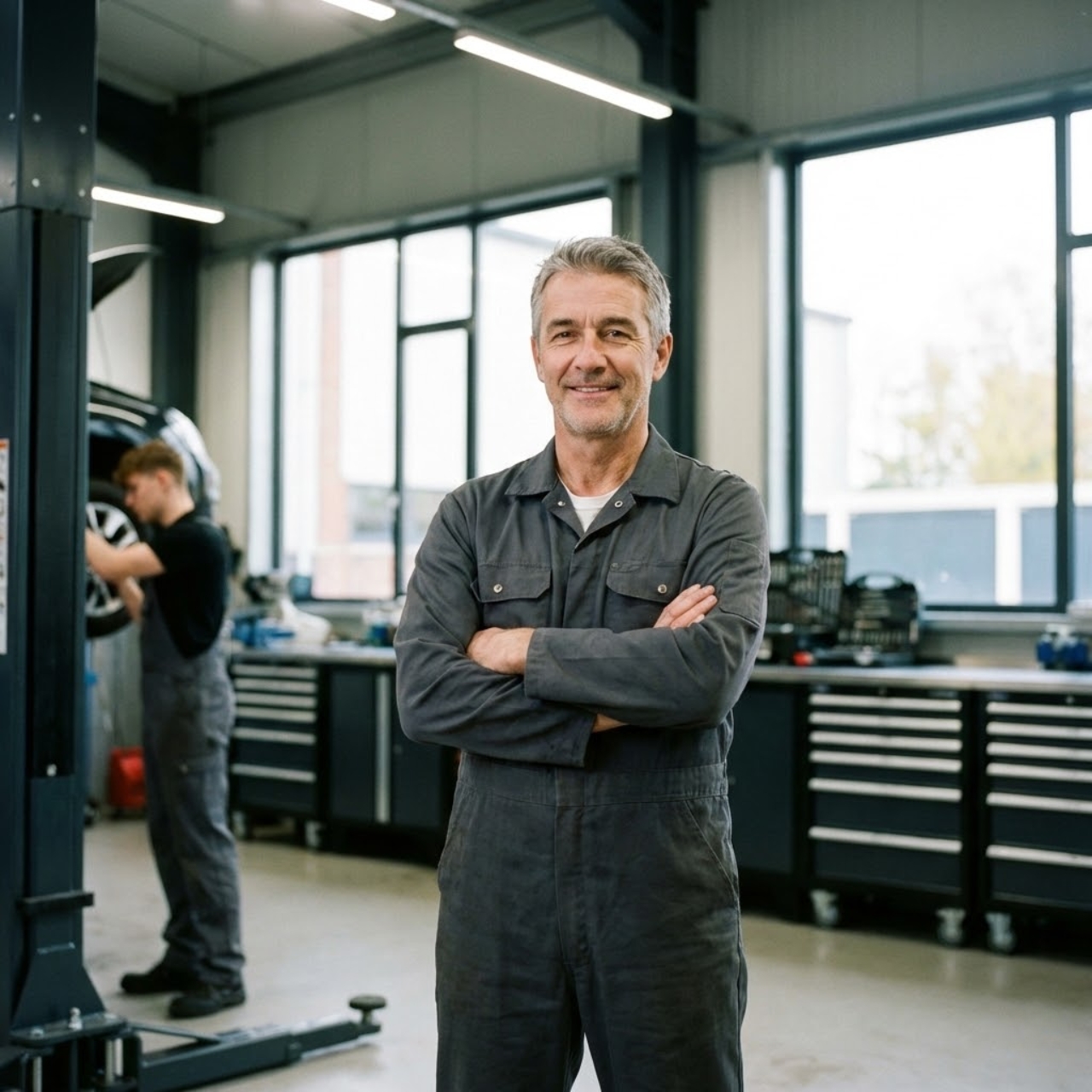
Skilled mechanics don’t leave workshops because of pay alone – they leave because the environment fails to recognise their expertise, respect their time, or provide the tools that make their work efficient. In Australia’s industrial sector, where experienced tradespeople are increasingly difficult to replace, workshop culture mechanic retention has become a competitive advantage that directly impacts operational continuity and service quality.
The cost of losing a senior mechanic extends beyond recruitment expenses. A mechanic with 15 years of experience carries institutional knowledge about equipment quirks, efficient diagnostic approaches, and client relationships that cannot be replicated through training manuals. When that person leaves, workshops face months of reduced productivity, increased error rates, and potential safety incidents as less experienced staff compensate for the knowledge gap.
Retention starts with understanding what experienced mechanics value most: efficient cleaning workflows that eliminate unnecessary frustration, equipment that performs reliably, recognition of their expertise, and an environment where their time isn’t wasted on preventable inefficiencies. Hotwash industrial cleaning systems address one critical frustration point – the time-consuming, physically demanding task of parts cleaning that diverts skilled labour from higher-value diagnostic and repair work.
Equipment Investment Signals Respect for Skilled Labour
Mechanics notice when management invests in tools that make their work more efficient versus when they’re expected to compensate for inadequate equipment through extra effort. A workshop that provides professional cleaning systems demonstrates a fundamental respect for tradespeople’s time and expertise through visible cleaning equipment investment.
The calculation is straightforward: a mechanic earning $45-55 per hour who spends 90 minutes daily on manual parts cleaning represents $30,000-40,000 annually in labour costs for a task that automated systems complete in 15-20 minutes. When workshops force experienced mechanics to perform manual scrubbing with brushes and solvents, they’re essentially saying “your time and skills aren’t valuable enough to warrant proper equipment.”
Experienced mechanics recognise this calculation immediately. They’ve worked in environments with proper equipment and those without. When recruitment conversations happen – and they do, frequently, in tight labour markets – the presence or absence of efficient cleaning systems becomes a tangible indicator of how the workshop values skilled labour.
Beyond the time calculation, equipment quality affects daily work satisfaction. Manual parts cleaning is physically demanding, exposes workers to harsh chemicals, and produces inconsistent results that require rework. Heavy-duty parts washers eliminate these frustrations, allowing mechanics to focus on diagnostic problem-solving and precision assembly work that utilises their expertise.
Reducing Unnecessary Physical Strain Extends Career Longevity
Experienced mechanics in their 40s and 50s represent peak value – they combine technical knowledge, diagnostic intuition, and efficiency that younger workers haven’t yet developed. Retaining these workers requires acknowledging that cumulative physical strain affects career sustainability.
Manual parts cleaning contributes significantly to this strain. Scrubbing heavy components with brushes, handling caustic cleaning chemicals, and repeatedly lifting parts in and out of cleaning tanks creates repetitive stress on hands, wrists, shoulders, and lower back. Over years, this accumulated strain contributes to chronic pain conditions that force capable mechanics into early retirement or career changes.
Workshops that implement manual parts washers or automated systems reduce this physical burden substantially. Instead of scrubbing for 30-40 minutes, mechanics load components into the washer, initiate the cycle, and return to find parts cleaned to consistent standards. This shift eliminates repetitive scrubbing motions and chemical exposure that contribute to long-term health impacts.
The retention benefit is measurable. Mechanics who experience chronic pain from accumulated workplace strain become less productive, take more sick leave, and actively seek less physically demanding positions. By contrast, workshops that reduce unnecessary physical strain through cleaning equipment investment see experienced staff remain productive well into their 50s and 60s, when their knowledge and efficiency are most valuable.
This consideration extends beyond cleaning equipment to the entire workshop environment – proper lifting equipment, ergonomic workstation design, and tools that reduce physical strain. However, parts cleaning represents one of the most frequently performed tasks where manual methods create avoidable strain, making it a logical starting point for retention-focused improvements.
Eliminating Workflow Interruptions Improves Job Satisfaction
Experienced mechanics value efficient cleaning workflows and workflow continuity. They’ve developed efficient processes for diagnostic sequences, disassembly procedures, and reassembly verification. Interruptions to these workflows – particularly for low-skill tasks like manual parts cleaning – create frustration that accumulates over time.
The typical workflow interruption reduction challenge looks like this: a mechanic diagnoses an issue, disassembles the component, then must stop technical work to spend 45-60 minutes manually cleaning parts before proceeding with inspection and repair. This interruption breaks concentration, delays project completion, and forces the mechanic to spend prime working hours on a task that doesn’t utilise their expertise.
Professional cleaning systems eliminate this disruption. The mechanic loads components into a hot tank system, initiates the cycle, and immediately returns to diagnostic or repair work on another project. When the wash cycle completes, parts are ready for inspection and reassembly. This efficient cleaning workflow maintains momentum and allows mechanics to manage multiple projects efficiently.
The satisfaction difference is significant. Mechanics report higher job satisfaction when their workday consists primarily of skilled tasks – diagnosis, precision repair, system troubleshooting – rather than time-consuming manual cleaning. This satisfaction directly influences workshop culture mechanic retention, particularly among experienced workers who have options in competitive labour markets.
Workshops that track project completion times notice measurable improvements after implementing automated cleaning systems. Jobs that previously required 6-8 hours complete in 4-5 hours, not because mechanics work faster, but because workflow interruption reduction eliminates delays. This efficiency improvement benefits both workshop profitability and mechanic satisfaction.
Consistent Cleaning Results Reduce Rework and Frustration
Nothing frustrates experienced mechanics more than discovering contamination during reassembly that requires disassembly and re-cleaning. Manual cleaning methods produce inconsistent results – hidden grease deposits, residual grit in threaded holes, carbon buildup in recessed areas – that create quality control problems and rework cycles.
Professional cleaning systems deliver consistent results through controlled pressure, temperature, and detergent concentration. Every component receives the same thorough cleaning, regardless of who loaded the machine or what time of day the cycle ran. This consistency eliminates the rework cycles that waste time and create frustration.
Experienced mechanics particularly value this consistency because they understand the consequences of inadequate cleaning. Contamination causes premature bearing failure, seal degradation, and hydraulic system malfunctions. When mechanics must warranty-repair equipment that failed due to cleaning inadequacy, they experience professional frustration even when the cleaning wasn’t their responsibility.
Workshops that implement extra heavy-duty parts washers see measurable reductions in contamination-related callbacks and warranty repairs. This improvement enhances the workshop’s professional reputation and reduces the frustrating rework that experienced mechanics find particularly demotivating.
The quality improvement extends beyond contamination removal to surface preparation. Automated systems with controlled detergent chemistry and rinse cycles prepare surfaces properly for inspection, measurement, and reassembly. Mechanics can immediately assess component condition without second-guessing whether residual contamination is hiding wear indicators or damage.
Creating Mentorship Opportunities Through Efficiency Gains
Experienced mechanics represent knowledge assets that workshops must transfer to younger staff. However, effective mentorship requires time – time that’s often unavailable when senior mechanics are occupied with manual cleaning tasks and workflow inefficiencies.
When workshops implement equipment that eliminates low-value tasks, they create capacity for experienced mechanics to mentor junior staff. Instead of spending 90 minutes daily on manual parts cleaning, senior mechanics can spend that time demonstrating diagnostic techniques, explaining system interactions, and reviewing proper assembly procedures with apprentices.
This mentorship capacity directly supports workshop culture mechanic retention in two ways. First, experienced mechanics report higher job satisfaction when they can share knowledge and develop the next generation of skilled workers. Teaching reinforces professional identity and provides recognition of expertise that salary alone cannot deliver.
Second, effective mentorship improves workshop culture by creating visible career progression pathways. Junior mechanics see experienced colleagues who are respected, consulted, and given opportunities to teach. This visibility makes the workshop more attractive as a long-term career environment, which benefits retention across all experience levels.
The efficiency gains from professional cleaning systems in high-volume workshops create substantial mentorship capacity. A workshop with three senior mechanics who each gain 90 minutes daily through automated cleaning creates 22.5 hours weekly for knowledge transfer activities – equivalent to three full days of mentorship capacity per month.
Recognition Through Problem-Solving Involvement
Experienced mechanics possess detailed knowledge about efficient cleaning workflows, equipment limitations, and process improvements. Workshops that involve these mechanics in equipment selection and process design decisions demonstrate respect for their expertise and create stronger retention outcomes.
When workshops consider implementing parts washing systems, involving senior mechanics in the evaluation process serves multiple purposes. First, it ensures equipment selection matches actual workflow requirements rather than theoretical specifications. Experienced mechanics understand which component types require cleaning most frequently, what contamination levels the system must handle, and how the equipment must integrate with existing workshop layouts.
Second, involvement in decision-making provides recognition that experienced mechanics value highly. Being consulted as a subject matter expert reinforces professional identity and demonstrates that management respects their knowledge. This recognition influences workshop culture mechanic retention more effectively than equivalent salary increases, particularly among mid-career and senior mechanics who prioritise professional respect alongside compensation.
Third, mechanics who participate in equipment selection become advocates for proper utilisation. They understand the system’s capabilities, can train colleagues effectively, and take ownership of achieving the efficiency improvements that justified the cleaning equipment investment. This advocacy improves implementation outcomes and reinforces the mechanic’s role as a valued team member.
Workshops that consistently involve experienced staff in process improvement decisions create cultures where knowledge is respected and expertise is leveraged. These cultures retain skilled workers because they provide the professional recognition that experienced mechanics seek alongside competitive compensation.
Addressing the Total Work Environment
Equipment investment represents one component of retention-focused culture, but experienced mechanics evaluate the complete work environment. Workshops that provide efficient cleaning systems but fail to address other cultural factors will still struggle with retention.
Successful retention strategies combine cleaning equipment investment with fair compensation, reasonable workload expectations, schedule flexibility, career development opportunities, and respectful management practices. However, equipment choices provide tangible evidence of management priorities that influence how mechanics interpret other workplace factors.
A workshop that provides super heavy-duty parts washers for large-scale operations but refuses to adjust unrealistic productivity targets will still experience retention problems. Conversely, a workshop that combines equipment investment with reasonable workload expectations and fair compensation creates a compelling value proposition that retains experienced mechanics even in competitive labour markets.
The most effective retention strategies recognise that experienced mechanics seek workplaces where they can perform skilled work efficiently, maintain their physical health throughout their career, receive recognition for their expertise, and work for organisations that demonstrate genuine respect through both policy and investment decisions.
Measuring Retention Impact Through Exit Interviews
Workshops serious about retention must understand why experienced mechanics leave. Exit interviews with departing staff provide direct insight into cultural factors that influence retention decisions. Common themes from these interviews include frustration with inadequate equipment, lack of recognition for expertise, unrealistic workload expectations, and environments where physical strain threatens career sustainability.
When multiple departing mechanics cite equipment inadequacy or workflow inefficiencies as contributing factors, workshops face a clear choice: invest in addressing these issues or accept ongoing recruitment costs and knowledge loss. The financial calculation strongly favours investment, particularly given that recruiting and training replacement mechanics costs $25,000-40,000 per position while equipment investments deliver value across multiple staff members for 15-20 years.
Workshops that implement retention-focused improvements should conduct follow-up surveys with remaining staff to measure cultural impact. Questions should address whether mechanics feel their time is valued, whether they have the equipment needed to work efficiently, and whether they envision remaining with the organisation long-term. These metrics provide early warning of retention risks before valuable staff depart.
Building Competitive Advantage Through Retention
In Australia’s tight labour market for skilled tradespeople, workshops that retain experienced mechanics gain substantial competitive advantages. They deliver faster turnaround times, higher quality work, and more reliable service than competitors constantly training replacement staff. These operational advantages translate directly to customer satisfaction, repeat business, and premium pricing capacity.
The retention advantage compounds over time. Workshops with stable, experienced teams develop efficient cleaning workflows, institutional knowledge about client equipment, and reputations for reliable service. These factors attract both skilled mechanics seeking quality employers and clients seeking dependable workshops. By contrast, workshops with high turnover struggle with inconsistent quality, training costs, and reputational damage from staff instability.
Equipment investment plays a central role in building this advantage. Workshops that provide professional cleaning systems and other efficiency-enhancing tools create environments where experienced mechanics want to remain. This investment pays returns through reduced recruitment costs, higher productivity, better quality outcomes, and enhanced competitive positioning.
Conclusion
Retaining experienced mechanics requires more than competitive wages – it demands workshop cultures that respect skilled labour, reduce unnecessary physical strain, eliminate workflow inefficiencies, and demonstrate genuine commitment to worker wellbeing. Cleaning equipment investment provides tangible evidence of these priorities, with automated parts washing systems addressing one of the most time-consuming and physically demanding tasks that divert mechanics from higher-value work.
Workshops that implement efficient cleaning systems create environments where experienced mechanics can focus on diagnostic problem-solving and precision repair work that utilises their expertise. This focus improves job satisfaction, reduces physical strain that threatens career longevity, and creates capacity for mentorship activities that strengthen overall workshop culture.
The retention benefits extend beyond individual mechanics to workshop-wide competitive advantages. Stable, experienced teams deliver superior service quality, faster turnaround times, and operational consistency that attracts both clients and additional skilled staff. In Australia’s competitive labour market, these advantages represent strategic differentiators that support long-term business success.
Hotwash manufactures industrial parts washing systems designed for Australian workshop environments, with construction quality and performance specifications that support efficient operations across automotive, mining, manufacturing, and heavy equipment maintenance sectors. For workshops evaluating equipment options that support retention-focused cultures, contact us to discuss system specifications, capacity requirements, and integration with existing workshop layouts.

Leave A Comment