
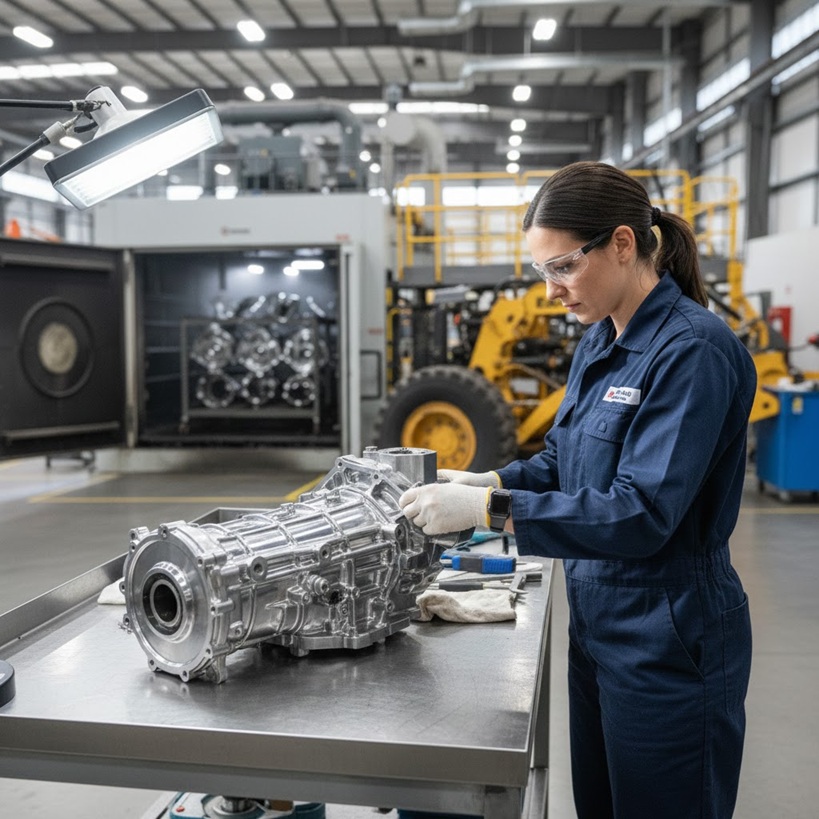
Walk into any modern manufacturing facility and you will see quality checkpoints everywhere. You see dimensional gauges, torque specifications, and pressure tests. These are all critical steps. But after years of troubleshooting assembly failures, we have learned a vital lesson. The cleanest part is often the most reliable part.
Pre-assembly inspection standards do more than make components look good. They remove invisible contaminants that cause huge issues. Industry data suggests that 40% of premature mechanical failures in industrial equipment stem from contamination. This includes metal shavings smaller than a human hair. It includes machining oils that prevent adhesives from bonding. It also includes dust particles that score precision surfaces the moment you turn the machine on.
Manufacturers often transform their quality metrics by treating cleanliness as their first checkpoint. It should not be an afterthought. When you inspect for contamination before assembly, you catch problems that no torque wrench or micrometer will ever detect.
Why Pre-Assembly Contamination Defeats Post-Assembly Testing
Standard quality protocols focus on what you can measure after assembly. You check dimensions, tolerances, electrical continuity, and pressure integrity. These tests assume you are working with clean components. That assumption costs Australian manufacturers millions of dollars annually.
A hydraulic valve body might pass every dimensional check. Yet, it could still harbour machining debris in deep internal passages. Those metal particles circulate through the system during commissioning. They score cylinder walls and damage seals. The failure appears weeks or months later. This happens long after the assembly passed its final pre-assembly inspection.
We have documented cases where food processing equipment failed hygiene audits despite passing mechanical tests. The culprit was often polishing compound trapped in threaded holes. It remained invisible until bacterial testing revealed the contamination. The equipment was mechanically perfect but operationally unusable.
Pre-assembly inspection protocols catch these problems when they are cheapest to fix. You want to find issues before you invest labour in assembly. You must find them before you ship to customers. Once warranty claims start arriving, it is too late.
The Four Contaminant Categories That Destroy Assembly Quality
Not all contamination behaves the same way. You must understand what you are removing. This helps you choose the right cleaning process and inspection criteria.
Particulate Contamination Risks
Particulate contamination includes metal chips, grinding dust, sand from castings, and abrasive particles. These often come from machining processes. These contaminants cause mechanical wear. They block orifices and damage delicate seals. A single metal chip in a hydraulic valve can destroy an entire system. You need reliable manual parts washers or an automated parts washer to remove these physical particles effectively.
Film and Chemical Residues
Film contamination covers machining oils, cutting fluids, rust preventatives, and drawing compounds. These films prevent proper adhesion of gaskets, coatings, and threadlockers. They also trap other contaminants against surfaces. This makes subsequent cleaning harder. If you ignore film contamination, your parts cleaning quality suffers significantly.
Chemical Residues
Chemical residues include acid from pickling operations. They also include alkaline cleaners that were not fully rinsed. Solvent residues also fall into this category. These can cause corrosion over time. They degrade elastomers or interfere with surface treatments applied during assembly.
Biological and Organic Contamination
Biological contamination matters most in food processing and pharmaceutical manufacturing. Bacteria, mould, and organic residues compromise product safety. This applies even when mechanical function is perfect. Stainless steel equipment is particularly prone to biofilm buildup if not cleaned properly. Using dedicated stainless steel parts washers helps maintain the hygiene standards required for these sensitive industries.
Establishing Measurable Cleanliness Standards
“Clean enough” is not a specification. Pre-assembly inspection standards require objective criteria. Inspectors must verify these criteria consistently.
Visual Cleanliness Standards
Visual cleanliness standards work for many applications. ISO 16232 provides standardised methods for inspecting automotive components. VDA 19 covers technical cleanliness in manufacturing. These standards define acceptable particle sizes and quantities based on component function.
For critical applications, we specify that inspectors must see no visible contamination under 10x magnification. This requires adequate lighting. That is a concrete standard anyone can verify with a simple inspection scope.
Gravimetric Analysis Methods
Gravimetric analysis measures contamination by weight. You flush a component with clean solvent. Then you filter the solvent through a membrane. You dry the membrane and weigh the captured contamination. This method quantifies particle contamination down to micrograms.
Mining equipment manufacturers use this approach for hydraulic components. Their standard might specify limits on particulate contamination per square metre of internal surface area. That is a number you can measure, track, and improve.
Surface Energy Testing
Surface energy testing verifies that film contamination is gone. Water break tests show whether surfaces are truly clean or still oily. If water sheets uniformly across a metal surface, it is clean. If water beads up, oil residue remains. This test takes 30 seconds and costs nothing. Yet it catches contamination that defeats adhesive bonding.
Integrating Cleaning Validation into Manufacturing Workflow
Pre-assembly inspection protocols only improve quality if your workflow enforces them. We see manufacturers with excellent cleaning specifications fail because nobody checks components before assembly.
Batch Cleaning with Verification Sampling
Batch cleaning works for high-volume production. You clean an entire batch of components in heavy duty parts washers. Then you inspect a statistical sample. If the sample meets cleanliness standards, you release the batch for assembly.
An automotive supplier we work with cleans 500 cylinder heads per shift. They inspect five heads per batch using visual standards. If any sample fails, they re-clean the entire batch. This approach ensures high parts cleaning quality before valuable labour is added to the product. A reliable parts washer is central to this workflow.
Individual Component Verification
Individual component verification suits low-volume, high-value manufacturing. Each component undergoes cleaning and inspection before assembly authorisation. This approach costs more per part but prevents expensive failures.
Oil and gas equipment manufacturers use this method for critical valve components. Every valve body goes through cleaning and inspection. The inspector signs off on each component. This creates traceability if field failures occur. At Hotwash Australia, we help manufacturers design these workflows to ensure nothing slips through the cracks.
Managing In-Process Inspection Points
In-process inspection points catch contamination introduced during manufacturing. A component might arrive clean from machining. But it picks up contamination during storage, handling, or sub-assembly.
Common risks include rust formation during storage and dust accumulation in open containers. Dirty gloves can also transfer oil back onto clean parts. Cross-contamination from dirty workbenches is another frequent issue. You must control the environment after the wash just as strictly as the wash itself.
The Economic Case for Pre-Assembly Cleaning Standards
Quality improvements sound good until finance asks about costs. Here is what pre-assembly inspection standards actually deliver in measurable terms.
Reducing Warranty Claims and Rework
A Perth mining equipment manufacturer implemented formal cleaning standards. They focused on their hydraulic cylinder production. They invested in industrial parts cleaning equipment and inspection equipment. They also funded operator training.
The results were immediate. Warranty claims dropped by 67%. Field service calls reduced by 52%. Customer-reported failures decreased by 71%. Production rework fell by 44%. The cleaning equipment paid for itself in four months through warranty savings alone.
Protecting Brand Reputation
A food processing equipment manufacturer faced recurring hygiene audit failures. They implemented strict cleaning standards. They used bacterial swab testing to verify results.
Hygiene audit failures dropped from three per year to zero. Customer complaints about contamination dropped by 89%. Production delays from re-cleaning fell significantly. The cost of implementing standards was minimal compared to the risk. Losing a single major customer would have cost millions in revenue.
Cleaning Technology Selection for Different Contamination Types
Your cleaning standards determine which technology you need. Matching the technology to your contamination type prevents under-cleaning. It also prevents unnecessary expense.
Spray Washing Systems
Spray washing systems excel at removing particulate contamination. High-pressure spray reaches internal passages and blind holes. Manual cleaning often misses these areas.
For machined components with cutting fluid residue, spray washing works well. Heated alkaline detergent removes both chips and film contamination. Cycle times typically run 15-30 minutes. This depends on soil load and component complexity.
Immersion and Hot Tank Cleaning
Immersion cleaning suits heavily contaminated parts. It is also ideal for components with deep recesses. Hot tanks hold parts in heated cleaning solution. This allows chemical action and heat to break down stubborn contamination.
Mining equipment manufacturers use immersion cleaning for excavator components. These parts come caked with mud, grease, and carbon. The extended soak time penetrates contamination that spray washing alone cannot remove.
Ultrasonic and Aqueous Cleaning
Ultrasonic cleaning addresses microscopic contamination. High-frequency sound waves create microscopic bubbles. These bubbles implode against surfaces. This action dislodges sub-micron particles from crevices.
Hydraulic valve manufacturers use ultrasonic cleaning for precision components. This technology achieves cleanliness levels impossible with spray or immersion alone. Most Australian manufacturers have switched to aqueous cleaning. Modern automated systems deliver solvent-level cleanliness with water-based chemistry.
For extremely tough surface preparation, such as removing rust or scale before inspection, some workshops use wet abrasive blasters. This wet abrasive blasting prepares the surface perfectly for flaw detection.
Training Operators to Recognise Contamination
Pre-assembly inspection protocols fail without trained inspectors. You need people who understand what they are looking for. We have seen manufacturers with excellent specifications fail due to poor training. Inspectors must recognise contamination when they see it.
Visual Inspection Training
Visual inspection training starts with contamination reference standards. You should create a set of components showing acceptable and unacceptable cleanliness levels. New inspectors compare actual parts to references. They practice until they can reliably distinguish clean from contaminated.
They learn to spot the difference between acceptable surface finish and grinding residue. They learn to identify clean threads versus threads with cutting fluid. They must distinguish between normal machining marks and embedded metal chips. For heavily contaminated castings or components with rust, wet abrasive blasters can strip surfaces clean before final inspection training begins.
Developing Magnification Skills
Magnification skills require practice. Inspecting under 10x magnification reveals contamination invisible to the naked eye. But interpreting what you see takes experience.
Operators must learn to tell machining marks from metal chips. They need to spot surface texture versus film contamination. They must identify normal oxidation versus rejectable rust. This training typically requires 20-40 hours of supervised practice.
Common Pre-Assembly Cleaning Failures and Prevention
Even with good standards, failures occur. Recognising these patterns helps you prevent them.
Avoiding Incomplete Rinsing
Incomplete rinsing leaves detergent residue. This residue interferes with assembly. It happens when operators reduce rinse time to increase throughput. It also happens when rinse water quality degrades.
You can prevent this by monitoring rinse water conductivity. High conductivity indicates contamination. Establish minimum rinse times. Set water quality standards that operators cannot override without approval. For components requiring absolute cleanliness, such as those prepared with wet abrasive blasters, residue-free rinsing is non-negotiable.
Preventing Re-Contamination During Drying
Re-contamination during drying is common. Components dry in dusty environments or contact dirty surfaces. You clean perfectly, then ruin it during the last step.
Prevent this by drying components in enclosed chambers. Use filtered air. Use clean, dedicated racks for dried components. Never place cleaned parts on workbenches or floors. For large industrial components, using extra heavy duty parts washers often includes integrated drying cycles to keep parts contained and clean.
Solving Complex Geometry Challenges
Inadequate cleaning of complex geometries leaves contamination in blind holes. The part looks clean externally. But it harbours contamination internally.
Use cleaning methods that reach all surfaces. For complex parts, consider specific fixturing. Orient parts to ensure solution reaches all areas. Validate cleaning effectiveness on first articles. Use destructive inspection if necessary to prove your process works. When dealing with heavily scaled or rusted internal passages, wet abrasive blasters can access areas that chemical cleaning alone cannot reach.
Documentation and Traceability for Critical Applications
Some industries require documented proof of cleanliness. This traceability prevents liability issues. It supports root cause analysis when failures occur.
You should record the component serial number and cleaning batch number. Log the inspection date and time. Record the inspector’s identification and the final result. Note any non-conformances and corrective actions taken.
This documentation proves that components met parts cleaning quality standards before assembly. If a field failure occurs, you can verify whether cleaning contributed to the problem.
Maintain cleaning equipment calibration records. Keep logs of solution concentration and temperature. Verify cycle times regularly. Perform periodic process validation using contamination analysis. For the largest operations, such as mining maintenance hubs, super heavy duty parts washers often come with system monitoring to help automate this data collection.
Conclusion
Pre-assembly inspection standards are not about perfection. They are about preventing failure. They stop contamination-related issues that dimensional checks never catch. When you inspect for cleanliness before assembly, you eliminate mysterious field failures.
The investment in proper cleaning systems pays back quickly. You reduce warranty costs and production delays. You improve customer satisfaction. More importantly, you protect your reputation. You ensure you deliver excellence to your customers.
If you want to improve your parts cleaning quality or establish formal inspection protocols, contact our cleaning equipment specialists or email us on sales@hotwash.com.au to discuss your requirements.

Leave A Comment