
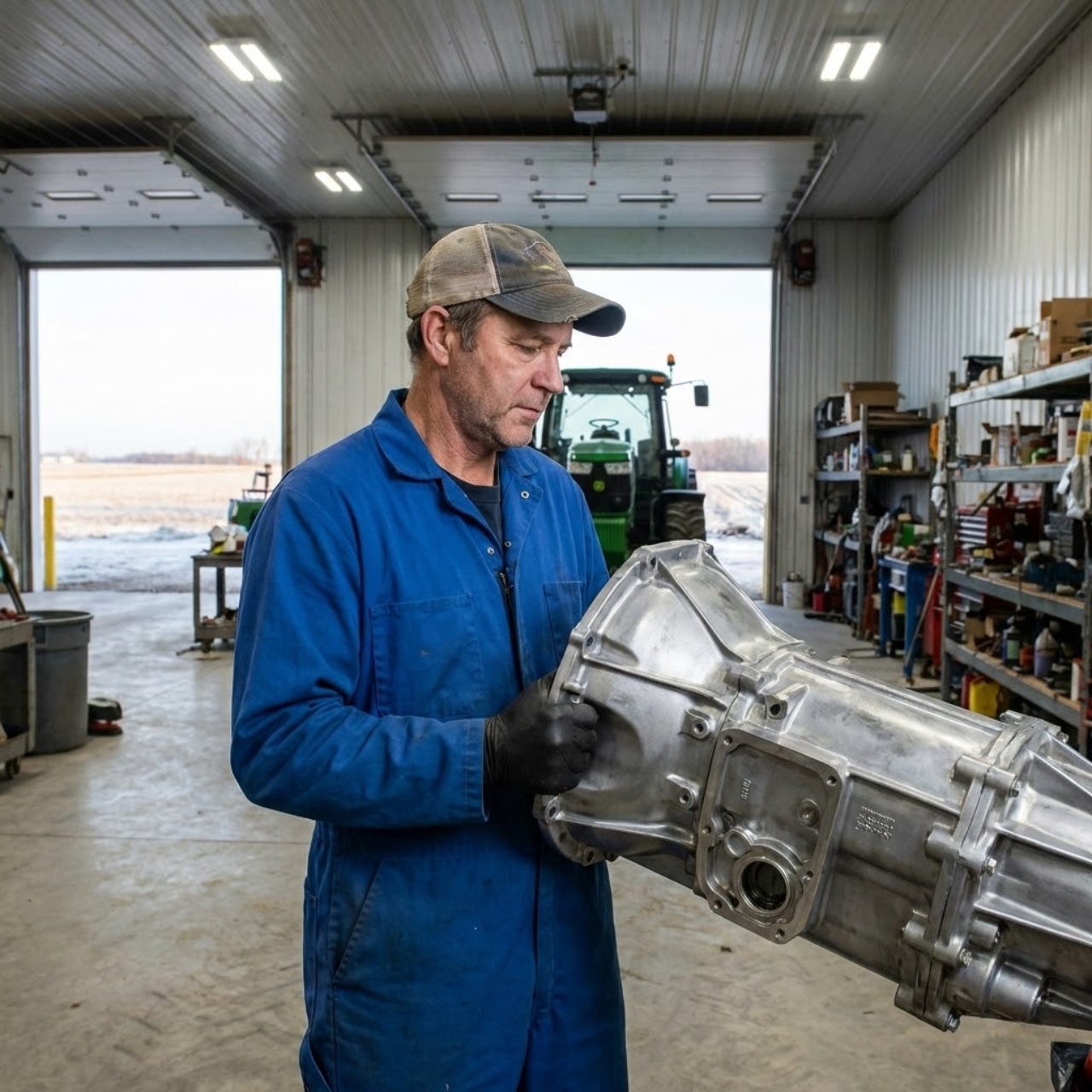
Harvest downtime costs Australian agricultural operations thousands of dollars per hour. When a tractor fails mid-harvest due to accumulated grime, dried mud, or seized components, the financial impact goes well beyond repair costs. It includes lost productivity during critical harvest windows, potential crop quality issues, and a cascade effect on downstream operations. The solution is not reactive repairs during peak season. It is systematic tractor component off-season maintenance that addresses contamination before equipment returns to the field.
Agricultural machinery operates in some of the harshest conditions imaginable. Tractors accumulate layers of soil, crop residue, fertiliser compounds, hydraulic fluid, and diesel contamination throughout planting and harvest cycles. During the off-season, this contamination does not simply sit dormant. It accelerates corrosion, hardens into deposits that impede mechanical function, and creates conditions for component failure when operations resume. Farm managers who implement thorough cleaning protocols during the off-season report up to 40% fewer breakdowns during harvest compared to operations that rely on basic hosing or degreasing alone.
Why Off-Season Component Cleaning Prevents Harvest Failures
How Contamination Leads to Mechanical Failure
The relationship between contamination and mechanical failure becomes clear when examining common tractor breakdown patterns. Hydraulic systems fail when particulate contamination damages seals and valves. Engine cooling systems lose efficiency when mineral deposits restrict coolant flow. Transmission components seize when dried mud and crop residue prevent proper lubrication. Each of these failures traces back to contamination that accumulated during the previous season and was not adequately removed.
Traditional cleaning methods – pressure washers, manual scrubbing with degreasers, or simple hosing – remove surface contamination. They fail to address deposits lodged in recessed areas, threaded connections, and complex component geometries. A transmission housing might appear clean externally whilst retaining hardened mud deposits in cooling fins. A hydraulic valve block may pass visual inspection despite contamination in internal passages that will cause failure under operational pressure.
Industrial parts washers are specifically designed to address these agricultural cleaning challenges. These systems combine heated cleaning solutions, high-pressure spray patterns, and extended cycle times to dissolve and remove contamination that manual methods cannot reach. The result is components that return to service in genuinely clean condition – ensuring harvest equipment reliability, not just a visually acceptable result.
The Cost of Harvest Downtime
Equipment downtime is expensive in agriculture. A mid-size grain operation running three large tractors during harvest faces approximately $2,400 per hour in combined costs when a machine fails. That includes direct repair costs, lost productivity, potential grain quality issues if harvest timing extends beyond optimal windows, and labour inefficiency as crews wait for repairs.
A single harvest breakdown requiring eight hours of downtime costs $19,200 in lost productivity alone. Operations that experience two or three significant breakdowns per harvest season face $40,000-60,000 in downtime costs. Systematic tractor component off-season maintenance is not overhead. It is downtime prevention.
Critical Tractor Components That Demand Thorough Off-Season Cleaning
Hydraulic System Components
Hydraulic system components accumulate both external contamination (mud, crop residue) and internal contamination (degraded hydraulic fluid, wear particles, moisture). During the off-season, moisture trapped in hydraulic cylinders, valve blocks, and pump housings accelerates corrosion. Cleaning these components thoroughly before storage or rebuild prevents corrosion damage. It also ensures hydraulic systems deliver full performance when harvest operations resume.
Heavy duty parts washers remove external contamination whilst flushing internal passages, preparing components for inspection, seal replacement, or storage as part of agricultural equipment servicing. This step alone prevents the sluggish valve response and pump failures that sideline tractors during critical harvest windows.
Transmission and Drivetrain Components
Transmission and drivetrain components present similar challenges. Differential housings, transmission cases, and PTO assemblies accumulate layers of oil-saturated dirt that harden during storage. This contamination traps moisture against metal surfaces, creating ideal conditions for rust formation. When reassembled without proper seasonal machinery cleaning, these deposits contaminate fresh lubricants and accelerate wear. Systematic cleaning during the off-season extends component life and prevents premature failure during peak-demand periods.
Engine and Fuel System Components
Engine components require particular attention during tractor component off-season maintenance. Turbochargers accumulate carbon deposits and oil residue that restrict airflow and reduce boost pressure. Exhaust gas recirculation (EGR) systems develop deposits that cause emissions issues and power loss. Cooling system components accumulate scale and corrosion products that reduce heat transfer efficiency. Cleaning these components during scheduled maintenance intervals maintains engine performance and supports farm equipment longevity.
Fuel system components – injectors, fuel pumps, and filtration assemblies – also benefit from thorough off-season cleaning. Modern diesel injection systems operate at extreme pressures where microscopic contamination causes component damage. Cleaning fuel system components during maintenance intervals removes deposits and prepares systems for inspection or rebuild.
How Industrial Parts Washers Outperform Manual Cleaning Methods
The limitations of manual cleaning become clear when examining component cleanliness under magnification or measuring cleaning time. A mechanic might spend 45 minutes manually scrubbing a hydraulic valve block. They achieve visually acceptable results whilst leaving contamination in internal passages and threaded ports. The same component processed through an automated washing system achieves superior cleanliness in a 20-minute cycle. No manual labour is required beyond loading and unloading.
Heated Cleaning Solutions
Heated cleaning solutions dissolve oil, grease, and organic contamination more effectively than cold degreasers. Most agricultural contamination contains a mixture of mineral oils (hydraulic fluid, engine oil, gear oil) and organic materials (crop residue, soil). Heated solutions in the 60-80 degrees Celsius range break down these contaminants far more effectively than ambient-temperature cleaning. The thermal energy accelerates chemical reactions between cleaning solutions and contaminants whilst reducing solution viscosity. This allows better penetration into recessed areas – a critical advantage for thorough seasonal machinery cleaning.
High-Pressure Spray Systems and Consistent Results
High-pressure spray systems deliver mechanical energy that dislodges hardened deposits and flushes contamination from complex geometries. Rotating spray arms in automated washers ensure complete coverage, reaching areas that manual spray wands miss. Spray pressures in the 40-60 bar range provide sufficient force to remove stubborn deposits without damaging component surfaces or seals.
Consistent results represent perhaps the most significant advantage of automated systems for seasonal machinery cleaning. Manual cleaning quality varies based on technician skill, fatigue, and time pressure. An automated system delivers identical results in every cycle. Operations managing large tractor fleets benefit from predictable, consistent cleaning quality across every component processed.
Implementing Off-Season Cleaning Protocols for Maximum Harvest Readiness
Effective tractor component off-season maintenance begins with systematic disassembly and inspection protocols. Rather than cleaning assembled components, operations achieve better results by disassembling systems to component level, cleaning individual parts thoroughly, inspecting for wear or damage, and reassembling with fresh lubricants and new seals. This approach transforms off-season maintenance from basic cleaning into comprehensive rebuild operations that address both contamination and wear.
Hydraulic System Overhaul
Hydraulic system overhaul during the off-season includes draining contaminated fluid, disassembling cylinders and valve blocks, cleaning all components, replacing seals and wear items, and reassembling with fresh fluid. Hot tanks provide ideal cleaning for large hydraulic components, using heated immersion cleaning to remove contamination from complex internal passages. Components emerge genuinely clean, ready for inspection and rebuild.
This systematic approach prevents the hydraulic failures that cause harvest downtime – leaking cylinders, sluggish valve response, and pump failures traced to contaminated fluid. It is the cornerstone of maintaining harvest equipment reliability across multiple seasons.
Transmission, Drivetrain, and Engine Maintenance
Transmission and drivetrain maintenance follows similar protocols. Draining lubricants, disassembling housings, cleaning components thoroughly, inspecting for wear, and reassembling with fresh lubricants prevents the failures that sideline tractors during harvest. The cleaning phase proves critical. Reassembling components without removing accumulated contamination introduces abrasive particles into fresh lubricant, accelerating wear and reducing the service interval before the next failure.
Engine maintenance schedules should include thorough cleaning of turbochargers, EGR systems, and cooling system components. Carbon deposits in turbochargers reduce efficiency and increase exhaust gas temperatures. Scale in cooling systems reduces heat transfer, forcing engines to run hotter and accelerating wear. Systematic cleaning during scheduled maintenance intervals maintains performance as part of a complete tractor component off-season maintenance programme.
Selecting Parts Washing Equipment for Agricultural Maintenance Operations
Agricultural operations face unique equipment selection considerations. Seasonal maintenance creates concentrated workload periods where cleaning capacity must handle high throughput. Component sizes range from small hydraulic fittings to large transmission housings and differential assemblies. The right cleaning equipment must accommodate this variety whilst delivering consistent results across the entire range.
Chamber Capacity and Heating Requirements
Chamber capacity determines the largest components the system can accommodate. Operations maintaining large agricultural tractors require washing machines with chambers measuring at least 1200mm wide by 1000mm deep by 1000mm high. This handles transmission cases, differential housings, and engine blocks. Smaller operations focused on compact tractors might function adequately with 800mm chambers, but the capacity limitation restricts flexibility as equipment fleets evolve.
Heating capacity influences both cleaning effectiveness and throughput. Systems with robust heating elements (24-36 kW) maintain solution temperature during extended cleaning cycles and recover quickly between cycles. Agricultural contamination – particularly combinations of dried mud, crop residue, and heavy oils – demands sustained thermal energy to achieve thorough cleaning results.
Spray Pressure, Flow Rate, and Construction Durability
Spray pressure and flow rate determine the mechanical energy available for contamination removal. Agricultural components with hardened deposits require higher pressures (50-60 bar) than components with light oil contamination. Flow rate affects coverage. Systems with higher flow rates (200+ litres per minute) provide better rinsing and faster contamination removal.
Construction durability matters significantly for agricultural maintenance environments. Workshop spaces often lack climate control, exposing equipment to temperature extremes and humidity. Extra heavy duty parts washers built with heavy-gauge steel construction and powder-coated finishes withstand these conditions better than lighter-duty equipment. Australian-built systems designed for mining and heavy industry applications provide the durability that agricultural operations require.
ROI Analysis: Off-Season Cleaning Investment Versus Harvest Downtime Costs
The financial justification for industrial parts washing equipment becomes clear when comparing investment costs against harvest downtime expenses. A mid-size grain operation running three large tractors during harvest faces approximately $2,400 per hour in combined costs when a machine fails.
Downtime Cost Versus Equipment Investment
A single harvest breakdown requiring eight hours of downtime costs $19,200 in lost productivity alone, before accounting for repair parts or emergency service calls. Operations that experience two or three significant breakdowns per harvest season face $40,000-60,000 in downtime costs. If systematic off-season cleaning reduces breakdown frequency by 40% – a conservative estimate based on maintenance data from operations implementing thorough agricultural equipment servicing protocols – the annual savings reach $16,000-24,000.
Industrial parts washing systems suitable for agricultural maintenance operations represent investments in the $25,000-45,000 range depending on capacity and features. The payback period ranges from 18-36 months based solely on reduced harvest downtime, before accounting for additional benefits – reduced manual cleaning labour, improved component life, better maintenance quality, and enhanced ability to perform rebuild work in-house.
Hotwash Australia has deployed over 1,200 automatic washers across Australia, trusted by major industrial operations including BHP, Rio Tinto, and Fortescue Metals Group. Agricultural operations benefit from the same proven machine performance.
Labour Efficiency Gains
Labour efficiency provides additional ROI. A mechanic manually cleaning a transmission housing might invest three hours in scrubbing, degreasing, and rinsing to achieve acceptable results. The same component processed through an automated washer requires 15 minutes of labour – five minutes loading, a 30-minute automated cycle (during which the mechanic works on other tasks), and five minutes unloading and inspection. Across a typical off-season maintenance schedule involving dozens of major components, the labour savings reach hundreds of hours. That time is redirected toward skilled rebuild work rather than manual scrubbing.
Maintaining Cleaning System Performance for Long-Term Reliability
Parts washing systems require basic maintenance to deliver consistent performance across years of service, supporting ongoing farm equipment longevity.
Solution Management and Heating Element Care
Solution management proves most critical. Cleaning solutions accumulate contamination – oil, grease, and suspended solids – that reduces effectiveness over time. Operations should monitor solution condition and replace or supplement cleaning chemistry according to contamination levels. Systems with built-in filtration extend solution life by removing suspended solids, but eventually all solutions require replacement as dissolved contaminants accumulate.
Heating element inspection should occur annually. Scale buildup on heating elements reduces heat transfer efficiency, extending heat-up times and increasing energy consumption. Descaling procedures or element replacement maintains heating performance. Operations in areas with hard water face more frequent scaling issues and benefit from water treatment systems or more frequent descaling maintenance.
Spray Arm, Pump, and Seal Maintenance
Spray arm maintenance includes inspecting nozzles for blockage or wear, verifying rotation mechanisms function smoothly, and checking spray patterns. Blocked nozzles create dead zones where components do not receive adequate spray coverage. Annual inspection and nozzle replacement as needed maintains consistent seasonal machinery cleaning performance.
Pump and seal condition requires periodic attention. Pumps operating at high pressure and temperature experience seal wear over time. Monitoring for leaks and addressing seal replacement before minor leaks become major failures prevents downtime and contamination issues. Quality industrial pumps in properly maintained systems typically deliver 5-8 years of service before requiring rebuild or replacement. This long service life contributes directly to farm equipment longevity and a strong return on your equipment investment.
Agricultural operations benefit from scheduling parts washer maintenance during peak season when the equipment sits idle. Annual service intervals align naturally with farming cycles – perform washer maintenance during planting season when off-season tractor maintenance concludes.
Integrating Parts Washing into Comprehensive Off-Season Maintenance Programmes
Effective off-season maintenance extends beyond cleaning to encompass systematic inspection, measurement, and documentation protocols. Cleaning serves as the foundation that enables thorough inspection. Genuinely clean components reveal wear patterns, crack formation, and damage that contamination obscures.
Component Measurement and Documentation
Component measurement during off-season maintenance tracks wear progression and enables predictive replacement strategies. Hydraulic cylinder bore measurements reveal wear rates that predict when cylinders will require reboring or replacement. Transmission shaft measurements identify wear that has not yet caused operational issues but will lead to failure during the coming season. This data-driven approach transforms maintenance from reactive repairs to predictive component management.
Documentation systems that record component condition, measurements, and maintenance actions create institutional knowledge that survives personnel changes. Digital maintenance management systems capture this information efficiently. Operations managing multiple tractors benefit from understanding which machines experience higher wear rates, which components fail most frequently, and how maintenance interventions affect long-term harvest equipment reliability.
Parts Inventory Management
Parts inventory management improves when off-season maintenance follows systematic schedules. Rather than discovering required parts during disassembly and facing delays whilst ordering, operations that maintain consistent maintenance schedules stock commonly required items in advance. This preparation reduces maintenance duration and ensures tractors return to service promptly when planting or harvest operations begin.
Stainless steel parts washers offer an additional advantage for operations cleaning components with corrosive residues or food-grade lubricants. Their corrosion-resistant construction withstands aggressive cleaning chemicals and prolongs machine service life in demanding agricultural environments.
Conclusion
Harvest reliability begins with off-season maintenance decisions. Agricultural operations that implement systematic tractor component cleaning protocols during maintenance intervals report fewer breakdowns, reduced downtime costs, and improved equipment longevity compared to operations relying on basic cleaning methods. The investment in industrial cleaning equipment delivers measurable returns through reduced harvest downtime, improved maintenance efficiency, and enhanced component life.
The difference between adequate cleaning and thorough seasonal machinery cleaning becomes apparent during peak-season operations. Components that received genuine cleaning during off-season maintenance perform reliably under harvest demands. Components that received only visual cleaning carry contamination back into service, where it accelerates wear and increases failure risk during critical operational periods.
Australian agricultural operations face unique challenges – vast distances from service providers, compressed harvest windows where timing determines profitability, and harsh operating conditions that stress equipment severely. These factors make harvest equipment reliability paramount and justify investments in maintenance capabilities that prevent failures rather than merely responding to them. The right parts washers, properly maintained and used as part of a systematic off-season programme, support farm equipment longevity and keep your operation running when it matters most.
For expert advice on parts washing solutions designed for agricultural maintenance requirements, contact our parts washer specialists or email us at sales@hotwash.com.au.

Leave A Comment