
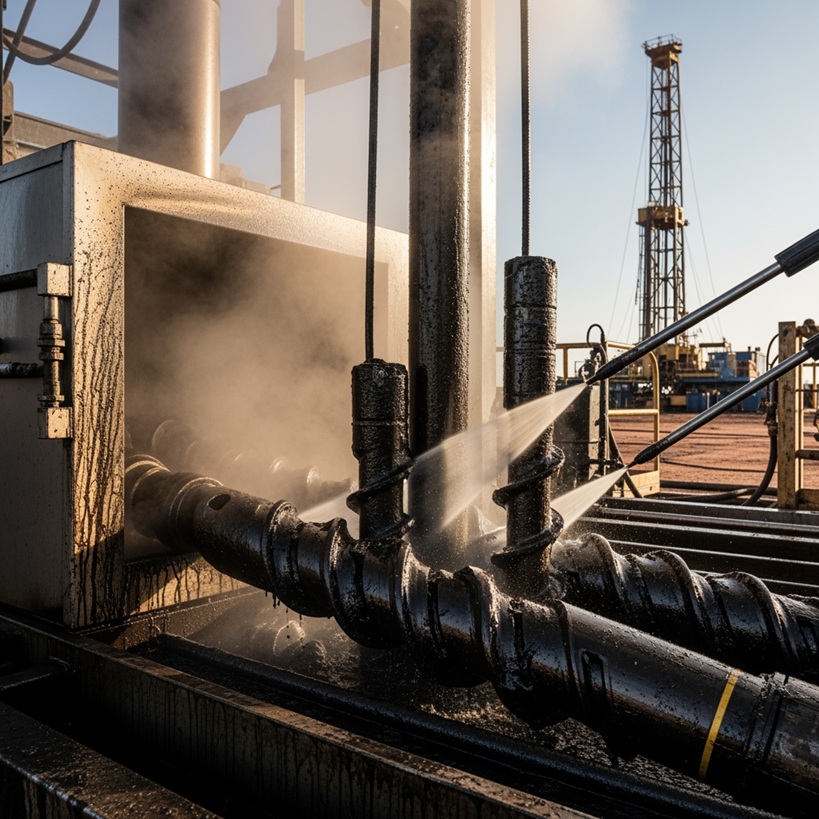
Hydraulic fracturing operations generate some of the most challenging contamination scenarios in industrial settings. Drill bits, downhole tools, wellhead components, and surface equipment accumulate layers of crude oil, drilling mud, proppants, chemical additives, and formation solids under extreme pressure and temperature conditions. When a fracking crew needs equipment back in service within hours rather than days, the cleaning process becomes a critical bottleneck that directly impacts operational efficiency and project timelines.
The challenge extends beyond simple contamination removal. Oil and gas operations demand cleaning methods that meet stringent environmental regulations, protect worker safety, and maintain equipment integrity while delivering rapid turnaround times. A single delayed component can idle an entire fracking operation, costing operators tens of thousands of dollars per hour in lost production. Yet rushing the cleaning process risks incomplete decontamination, environmental violations, or equipment damage that creates even costlier problems downstream.
Hotwash Australia has engineered industrial cleaning systems specifically designed for the extreme demands of oil and gas operations, where speed, thoroughness, and environmental compliance must coexist rather than compete.
The Contamination Challenge in Fracking Operations
Fracking equipment cleaning faces contamination levels that exceed typical industrial scenarios by orders of magnitude. Downhole tools return to surface covered in drilling fluids containing bentonite clay, barite weighting agents, and polymeric viscosifiers mixed with formation hydrocarbons. Wellhead equipment accumulates crude oil, condensate, and produced water containing dissolved salts, scale-forming minerals, and residual hydraulic fracturing chemicals.
This contamination matrix creates three distinct cleaning challenges. First, the layered nature of fracking contamination requires progressive removal – attempting to blast through all layers simultaneously often drives contaminants deeper into surface irregularities rather than removing them. Second, many fracking chemicals form emulsions with formation fluids that resist simple water-based cleaning. Third, the high-value nature of downhole tools demands cleaning methods that remove contamination without damaging precision-machined surfaces, specialised coatings, or elastomeric seals.
Traditional manual cleaning methods fail to meet these requirements at operational scale. A single drill string can require 8-12 hours of manual scrubbing to achieve acceptable cleanliness levels, consuming significant labour hours while exposing workers to hydrocarbon vapours, chemical residues, and repetitive strain injuries. Manual methods also produce inconsistent results – the same component cleaned by different workers yields different contamination levels, creating quality control problems for operations where equipment cleanliness directly affects downhole performance and safety.
The environmental dimension adds further complexity. Manual cleaning typically generates large volumes of contaminated wash water containing hydrocarbons, drilling fluids, and chemical additives that require costly treatment before disposal. Pressure washing with cold water alone often requires chemical degreasers to achieve acceptable results, increasing both environmental impact and operational costs.
How Temperature Transforms Fracking Equipment Cleaning
Thermal energy fundamentally changes the physics of contamination removal in ways that directly address fracking equipment challenges. Heated water cleaning reduces the viscosity of crude oil and drilling fluids by 50-70%, transforming thick, adherent contaminants into mobile liquids that flow away from equipment surfaces rather than clinging stubbornly. This viscosity reduction occurs progressively as temperature increases – water heated to 60°C provides moderate improvement, while temperatures approaching 80-90°C deliver dramatic contamination mobility changes.
The thermal effect extends beyond simple viscosity reduction. Many drilling fluid additives and hydraulic fracturing chemicals contain surfactants and polymers that become more soluble at elevated temperatures. Formation waxes and paraffins that solidify at ambient temperatures melt and flow at 70-80°C, allowing complete removal without mechanical scraping that risks surface damage. Scale deposits containing calcium carbonate and barium sulphate soften at elevated temperatures, becoming more susceptible to mechanical removal through high-pressure spray action.
Hot tank systems leverage this thermal advantage through immersion cleaning that maintains consistent temperature throughout the cleaning cycle. Large fracking components submerged in heated cleaning solution experience uniform heat penetration that softens contamination layers from the surface inward. The immersion approach proves particularly effective for complex geometries – threaded connections, internal passages, and recessed areas that resist spray cleaning receive the same thermal treatment as exposed surfaces.
For fracking operations requiring maximum cleaning speed, hot blaster systems combine thermal energy with high-pressure spray action to deliver cleaning times measured in minutes rather than hours. Water heated to 80-90°C and delivered at 1,000-1,500 PSI provides mechanical energy that dislodges softened contamination while the elevated temperature prevents re-deposition. A drill bit that requires 2-3 hours of manual scrubbing achieves complete cleanliness in 15-20 minutes of hot blaster treatment.
The temperature advantage creates measurable environmental benefits. Heated water cleaning typically achieves thorough decontamination without chemical degreasers, eliminating both the environmental impact of chemical additives and the disposal costs for chemically contaminated wash water. The reduced cleaning time also decreases total water consumption – a 15-minute hot blaster cycle uses less water than a 2-hour cold water pressure washing session, even accounting for the energy required for heating.
Pressure Requirements for Oil and Gas Contamination
Hydraulic fracturing contamination requires pressure levels that exceed standard industrial cleaning applications. Formation solids compacted into surface irregularities under downhole pressures exceeding 10,000 PSI resist removal by low-pressure spray. Drilling mud that has dried and hardened during equipment transport forms adherent layers that require significant mechanical energy to dislodge. Scale deposits containing barium sulphate and calcium carbonate develop crystalline structures that resist chemical dissolution but fracture under high-pressure mechanical impact.
Super heavy duty parts washers designed for oil and gas operations deliver spray pressures of 1,000-1,500 PSI – sufficient to remove compacted contamination without damaging equipment surfaces. This pressure range represents a critical balance point: pressures below 800 PSI often fail to remove hardened drilling mud and scale deposits, requiring multiple cleaning cycles or manual intervention. Pressures exceeding 2,000 PSI risk damaging specialised coatings, eroding soft metal components, or driving contamination deeper into threaded connections.
The relationship between pressure and temperature proves multiplicative rather than additive. Water at 20°C and 1,500 PSI removes surface contamination but struggles with adherent layers. Water at 80°C and 800 PSI softens contamination but may lack sufficient mechanical energy for complete removal. Water at 80°C and 1,500 PSI combines thermal softening with mechanical dislodgement to achieve thorough cleaning in a single cycle.
Pressure distribution patterns significantly affect cleaning effectiveness for complex fracking equipment geometries. Rotating spray arms that deliver consistent pressure to all equipment surfaces prevent the shadowing effects common in fixed-spray systems. Drill bits with multiple cutting surfaces, stabilisers with complex blade geometries, and wellhead components with internal passages require spray patterns that reach all contaminated surfaces rather than focusing energy on easily accessible areas.
The pressure requirement creates practical implications for fracking site operations. Portable pressure washers operating at 2,000-3,000 PSI may appear to offer superior cleaning performance, but the narrow spray pattern and limited temperature capability often necessitate chemical additives and extended cleaning times. Purpose-built industrial cleaning systems deliver lower peak pressure across larger surface areas with heated water, achieving more thorough contamination removal in less time while using fewer chemicals.
Environmental Compliance in Fracking Equipment Cleaning
Oil and gas operations face increasingly stringent environmental regulations governing contaminated wash water disposal, chemical usage, and hydrocarbon emissions. Equipment cleaning processes that generate large volumes of wash water containing crude oil, drilling fluids, and chemical additives create significant disposal costs and environmental liability. A single fracking operation cleaning 50-100 downhole tools per week can generate 5,000-10,000 litres of contaminated wash water requiring treatment before disposal.
Closed-loop environmental compliant equipment washing systems address this challenge by capturing, filtering, and recycling wash water throughout multiple cleaning cycles. Modern extra heavy duty parts washers incorporate multi-stage filtration that removes suspended solids, oil separation systems that extract free hydrocarbons, and heating elements that maintain water temperature despite continuous circulation. This closed-loop approach reduces fresh water consumption by 70-85% compared to once-through pressure washing systems while concentrating contaminants for more efficient disposal.
The environmental benefit extends beyond water conservation. Closed-loop systems operating at elevated temperatures achieve thorough cleaning without chemical degreasers, eliminating both the environmental impact of chemical additives and the complexity of treating chemically contaminated wash water. The concentrated contamination removed through filtration and oil separation occupies significantly less volume than dilute contaminated wash water, reducing disposal costs by 60-75% while simplifying regulatory compliance.
Vapour management represents another critical environmental consideration for fracking equipment cleaning. Crude oil and condensate contamination generates hydrocarbon vapours during cleaning, creating both worker exposure risks and fugitive emissions that violate air quality regulations. Industrial cleaning systems designed for oil and gas applications incorporate vapour containment systems that capture hydrocarbon emissions during cleaning cycles, preventing atmospheric release while protecting worker health.
The Australian regulatory environment demands particular attention to environmental performance. Operations using environmental compliant equipment washing systems must demonstrate compliance with state-based environmental protection regulations, workplace health and safety requirements, and industry-specific guidelines for oil and gas operations. Equipment manufactured to Australian standards provides documentation and performance specifications that simplify compliance verification while reducing regulatory risk.
Operational Speed Requirements in Fracking Operations
Hydraulic fracturing operations run on compressed timelines where equipment availability directly determines project completion dates and operational costs. A fracking crew mobilised to a well site represents a daily cost of $50,000-$150,000 including personnel, equipment, and site services. When downhole tools require cleaning between stages, every hour of equipment unavailability translates directly to project delays and cost overruns.
This operational reality demands cleaning processes measured in minutes rather than hours. A drill bit that requires 3 hours of manual cleaning creates a bottleneck that idles the entire fracking operation. The same drill bit cleaned in 20 minutes through automated hot water spray washing eliminates the bottleneck while freeing workers for higher-value tasks like equipment inspection and maintenance.
The speed advantage compounds across multiple equipment items. A fracking operation cleaning 10 drill bits, 20 drill collars, and 30 stabilisers between stages faces 150-200 hours of manual cleaning time – effectively requiring a dedicated cleaning crew working around the clock. Automated industrial cleaning systems reduce this to 15-25 hours of machine time while a single operator loads equipment, initiates cleaning cycles, and unloads cleaned components.
Automated cleaning also delivers consistency that manual methods cannot match. The same equipment item cleaned by different workers yields different contamination levels depending on individual technique, fatigue, and attention to detail. Automated systems deliver identical cleaning performance cycle after cycle, ensuring that equipment returning to downhole service meets consistent cleanliness standards regardless of when cleaning occurs or which operator manages the process.
The throughput capability of parts washers scales to match operational demand. Heavy duty parts washers designed for smaller operations accommodate individual components or small batches, suitable for maintenance facilities supporting 2-3 fracking crews. Extra heavy duty and super heavy duty systems handle multiple large components simultaneously, matching the cleaning demands of major fracking operations running 5-10 crews across multiple well sites.
System Selection for Oil and Gas Operations
Fracking equipment cleaning requirements vary significantly based on operational scale, equipment types, and site logistics. A maintenance facility supporting regional fracking operations requires different cleaning capabilities than a mobile operation serving remote well sites. Understanding these operational variables guides appropriate system selection that balances cleaning performance, throughput capacity, and practical site constraints.
Component size represents the primary selection criterion. Downhole tools including drill bits, stabilisers, and drill collars range from 200mm to 600mm in diameter and 1-3 metres in length. Wellhead components and surface equipment span even wider size ranges. Parts washers must accommodate the largest components regularly requiring cleaning while providing sufficient chamber volume for batch processing of smaller items.
Contamination severity determines required pressure and temperature capabilities. Light contamination consisting primarily of drilling mud and water-based fluids responds well to moderate temperatures (60-70°C) and pressures (800-1,000 PSI). Heavy contamination including crude oil, scale deposits, and hardened drilling fluids demands higher temperatures (80-90°C) and pressures (1,200-1,500 PSI) for single-cycle cleaning. Operations handling both contamination levels benefit from systems offering adjustable parameters that match cleaning intensity to actual requirements.
Operational tempo influences automation requirements and throughput capacity. Maintenance facilities cleaning equipment during scheduled downtime can utilise manual loading systems and longer cleaning cycles. Active fracking operations requiring rapid equipment turnaround between stages demand automated door systems, programmable cleaning cycles, and sufficient chamber capacity to clean multiple components simultaneously.
Site infrastructure affects system selection in practical ways. Permanent maintenance facilities can install large-capacity systems with substantial electrical requirements and plumbed water connections. Remote or temporary fracking sites may require more compact systems with flexible power options and self-contained water management. Australian-built equipment designed for resource sector applications addresses these infrastructure variables through modular designs that adapt to diverse site conditions.
The investment decision extends beyond initial equipment cost to total operational economics. A super heavy duty parts washer representing higher capital expenditure delivers lower per-component cleaning costs, reduced labour requirements, and faster equipment turnaround compared to manual cleaning methods or undersized automated systems. Operations cleaning 50+ components weekly typically achieve payback periods of 12-18 months through combined labour savings, reduced water and chemical costs, and improved equipment availability.
Maintenance and Longevity in Harsh Environments
Oil and gas operations subject industrial cleaning systems to demanding conditions that test durability and reliability. Fracking sites experience temperature extremes, dust exposure, and continuous operation schedules that accelerate wear on mechanical components and control systems. Equipment failures during critical cleaning operations create costly delays and force reversion to inefficient manual cleaning methods.
Construction quality directly determines equipment longevity in these harsh environments. Parts washers built with heavy-gauge steel frames, stainless steel tanks, and corrosion-resistant components withstand years of continuous operation in challenging conditions. Powder-coated steel construction provides adequate durability for climate-controlled maintenance facilities, while stainless steel construction proves essential for outdoor installations or operations involving corrosive cleaning solutions.
Heating system design affects both operational performance and maintenance requirements. Immersion heating elements positioned in protected locations resist scale buildup and mechanical damage while delivering efficient heat transfer. Undersized or poorly positioned heating elements struggle to maintain target temperatures under continuous operation, reducing cleaning effectiveness while consuming excessive energy. Properly specified heating systems maintain stable temperatures throughout extended cleaning cycles while minimising maintenance interventions.
Pump and spray system durability determines long-term reliability. High-pressure pumps operating continuously at 1,000-1,500 PSI require robust construction with readily available replacement components. Spray nozzles must resist erosion from abrasive contamination in recirculated wash water while maintaining consistent spray patterns. Systems designed for oil and gas applications incorporate heavy-duty pumps, hardened spray nozzles, and accessible service points that simplify routine maintenance.
Australian-manufactured equipment offers practical advantages for resource sector operations. Local engineering ensures compliance with Australian electrical and pressure vessel standards while incorporating design features suited to local operating conditions. Local manufacturing provides access to replacement components, technical support, and service expertise without international shipping delays or foreign exchange complications. Operations in remote locations particularly value the service accessibility that Australian manufacturing provides.
Preventive maintenance requirements scale with operational intensity. Systems operating 8-10 hours daily require weekly inspections of spray nozzles, filters, and heating elements. Continuous operations demand more frequent monitoring but benefit from predictable maintenance schedules that prevent unexpected failures. Well-designed parts washers incorporate accessible service points and clear maintenance procedures that minimise downtime while maximising equipment longevity.
Conclusion
Fracking equipment cleaning represents a critical operational requirement where speed, thoroughness, and environmental responsibility must coexist rather than compromise. The extreme contamination levels, rapid turnaround requirements, and stringent regulatory environment demand cleaning solutions that exceed standard industrial capabilities. Manual cleaning methods fail to meet these requirements at operational scale, consuming excessive labour hours while delivering inconsistent results and creating environmental compliance challenges.
Industrial cleaning systems engineered specifically for oil and gas operations solve this operational challenge through the strategic combination of thermal energy, high-pressure spray action, and closed-loop water management. Heated water cleaning transforms viscous crude oil and drilling fluids into mobile contaminants that flow away from equipment surfaces. Pressures of 1,000-1,500 PSI provide mechanical energy that dislodges compacted formation solids and scale deposits. Closed-loop environmental compliant equipment washing systems capture and recycle wash water, reducing consumption by 70-85% while concentrating contaminants for efficient disposal.
The operational benefits extend beyond cleaning performance to measurable improvements in equipment availability, labour efficiency, and total operational costs. Automated cleaning cycles measured in minutes rather than hours eliminate bottlenecks that idle expensive fracking operations. Consistent cleaning performance ensures equipment returning to downhole service meets uniform cleanliness standards. Reduced water consumption, eliminated chemical usage, and concentrated waste streams simplify environmental compliance while lowering disposal costs.
For oil and gas operations seeking cleaning solutions that match the demanding requirements of hydraulic fracturing equipment, Australian-engineered systems deliver the durability, performance, and regulatory compliance that resource sector applications demand. Contact us to discuss specific fracking equipment cleaning requirements and identify the system configuration that optimises speed, thoroughness, and environmental responsibility for operational conditions.

Leave A Comment