
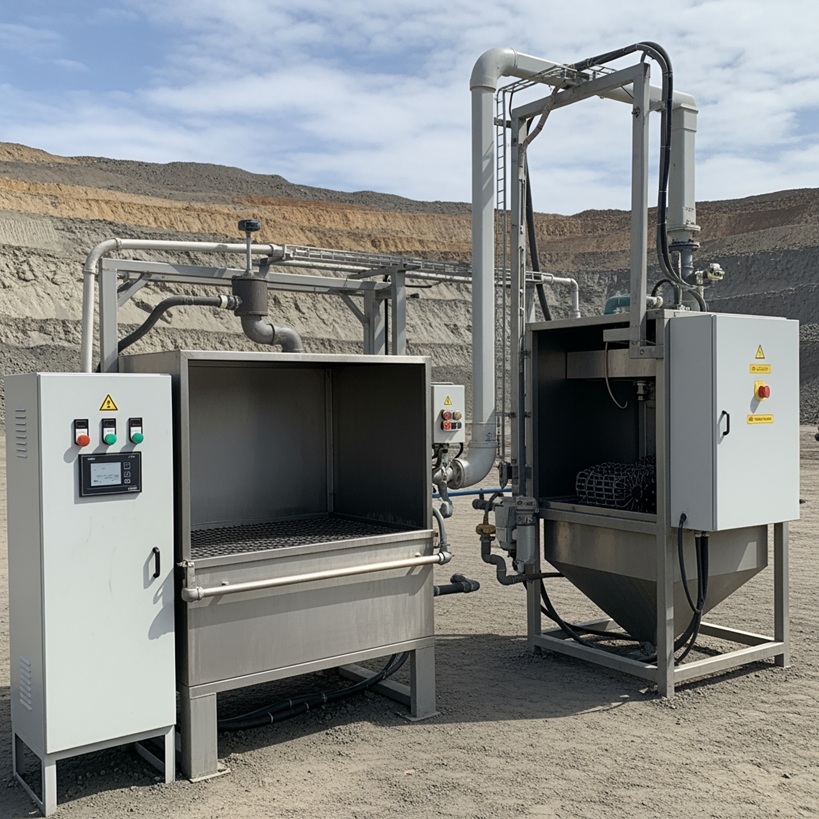
Drilling operations generate some of the most persistent industrial contamination – heavy crude residues, drilling mud compounds, formation debris, and hydraulic fluids that bond to metal surfaces under extreme pressure and temperature. Removing these contaminants without introducing secondary environmental risks requires precision in both methodology and equipment selection. The wrong drilling equipment cleaning approach can transform a contamination problem into an environmental liability.
Traditional drilling equipment cleaning methods often create larger environmental footprints than the contamination they address. Solvent baths release volatile organic compounds, manual pressure washing generates uncontrolled wastewater runoff, and inadequate containment systems allow petroleum products to enter stormwater systems. Operations that process dozens of drill bits, downhole tools, and surface equipment components weekly need cleaning solutions that eliminate contamination while maintaining strict environmental compliance.
Hotwash Australia has engineered closed-loop industrial cleaning systems specifically for drilling operations, where environmental containment isn’t optional – it’s operational necessity. These systems process heavily contaminated drilling equipment while capturing, filtering, and recycling all cleaning agents and contaminants within sealed chambers.
Environmental Risks Created by Conventional Drilling Equipment Cleaning
Open-air pressure washing remains common at drilling sites despite generating immediate environmental hazards. High-pressure water dislodges crude oil, drilling fluids, and formation cuttings, but provides no containment for the resulting slurry. This contaminated runoff flows across concrete pads, enters drainage systems, and carries petroleum hydrocarbons, heavy metals from formation materials, and chemical additives from drilling fluids directly into surrounding soil and waterways.
Solvent-based cleaning introduces different but equally serious risks. Petroleum distillates, chlorinated solvents, and hydrocarbon degreasers effectively dissolve drilling mud and crude residues but create volatile organic compound emissions that contribute to ground-level ozone formation. Workers face direct exposure through skin contact and inhalation, while improper disposal of spent solvents creates long-term soil and groundwater contamination. Many drilling operations continue using these methods because they’re familiar, not because they’re effective environmental stewardship.
Manual cleaning with chemical degreasers compounds these issues. Workers apply aggressive chemical formulations to contaminated components, scrub surfaces manually, then rinse with uncontrolled water streams. The process generates mixed waste containing both chemical residues and petroleum products – a disposal challenge that many sites address by allowing the mixture to evaporate or drain into unlined collection areas. The environmental persistence of these combined contaminants far exceeds that of the original drilling fluids.
Closed-Loop Systems That Contain All Contaminants
Industrial parts washers designed for drilling rig maintenance cleaning operate as sealed environments where contamination never escapes the cleaning chamber. Super heavy duty parts washers process drill bits, stabilisers, drill collars, and other downhole tools inside enclosed cabinets with integrated containment sumps that capture every drop of cleaning solution and dislodged contamination.
The containment architecture starts with welded steel construction that creates a sealed cleaning environment. Rotating spray arms deliver high-pressure heated water to all component surfaces while contaminated solution drains through perforated floors into collection sumps. These sumps feed directly to filtration systems that remove solid particles and separate petroleum products before returning cleaned solution to the heating and pumping system. No cleaning solution, no contaminated water, and no petroleum products exit the system during normal operation.
Temperature control enhances cleaning effectiveness while reducing chemical requirements. Heating systems maintain water temperatures between 60-80°C, which liquefies grease, crude oil, and drilling fluid residues without requiring harsh chemical solvents. The combination of heat, mechanical spray pressure, and extended cycle times removes contamination that would otherwise require petroleum-based degreasers or chlorinated solvents.
Filtration systems provide the critical environmental protection that open cleaning methods lack. Multi-stage filtration removes formation cuttings, metal particles, and drilling mud solids down to 25 microns, while oil skimmers continuously remove separated petroleum products from the cleaning solution surface. This captured contamination collects in removable containers for proper disposal through licensed waste management contractors – eliminating the uncontrolled release that characterises pressure washing operations.
Eliminating Chemical Exposure Risks to Personnel and Environment
Drilling equipment cleaning exposes workers to multiple chemical hazards – petroleum hydrocarbons from crude oil, chemical additives from drilling fluids, solvents from cleaning agents, and heavy metals from formation materials. Automated enclosed cleaning systems remove personnel from direct contact with these substances during the entire cleaning cycle.
Hot tank systems provide immersion cleaning for heavily contaminated components while maintaining complete operator separation from the cleaning process. Workers load contaminated equipment into the tank, close the lid, and initiate the automated cycle. The system heats the cleaning solution, circulates it through the tank, and maintains temperature throughout the soak period – all while operators remain outside the sealed environment. When the cycle completes, components emerge clean without requiring manual scrubbing or solvent application.
This separation delivers measurable safety improvements. Workers avoid skin contact with petroleum products, eliminate inhalation exposure to solvent vapours, and remove the ergonomic strain of manual scrubbing with chemical degreasers. The enclosed environment also prevents aerosol generation – the fine mist of contaminated water that pressure washing creates and workers inevitably inhale.
Chemical reduction represents another environmental advantage. High-temperature water cleaning with mechanical agitation removes most drilling rig maintenance cleaning contamination without requiring chemical additives. When particularly stubborn residues demand chemical assistance, the closed-loop system allows precise dosing of biodegradable surfactants at concentrations far lower than manual cleaning requires. The cleaning solution remains in the system for weeks, providing continuous cleaning action without the repeated chemical purchases and disposal costs that open cleaning methods generate.
Water Management That Prevents Contaminated Discharge
Drilling operations in remote locations often lack connection to municipal wastewater systems, making uncontrolled discharge of contaminated wash water particularly problematic. Enclosed industrial cleaning systems eliminate this discharge entirely through continuous solution recycling.
A typical heavy duty parts washer operates with 200-400 litres of cleaning solution that remains in the system for 4-8 weeks of continuous operation. During this period, the system cleans hundreds of contaminated components while the same solution circulates through heating, pumping, spraying, filtration, and collection cycles. Water losses occur only through evaporation and the moisture retained on cleaned components – typically 2-5 litres per day depending on cycle frequency and component size.
This recycling approach reduces water consumption by 90-95% compared to pressure washing, which consumes 40-80 litres per minute during operation. More importantly, it eliminates the 2,000-5,000 litres of contaminated wastewater that pressure washing a single day’s worth of drilling equipment generates. That wastewater contains suspended formation solids, emulsified petroleum products, and dissolved drilling fluid chemicals – a mixture that requires expensive treatment before environmental discharge.
When cleaning solution eventually requires replacement due to contamination saturation, the spent solution undergoes proper disposal through licensed liquid waste contractors. This controlled disposal ensures compliance with environmental regulations and provides documentation of proper waste handling – protection against environmental liability that open cleaning methods cannot provide.
Compliance With Environmental Regulations and Site Standards
Australian environmental regulations governing petroleum operations have tightened considerably, with state environmental protection authorities enforcing strict controls on wastewater discharge, chemical storage, and contaminated runoff management. Mining and petroleum operations face regular environmental audits where drilling rig maintenance cleaning practices receive scrutiny alongside primary operational activities.
Enclosed parts washing systems provide documentable environmental compliance that satisfies regulatory requirements and corporate environmental management systems. The sealed containment design prevents uncontrolled discharge, the filtration systems provide measurable contaminant removal, and the waste disposal documentation demonstrates proper environmental stewardship.
Many major resource companies across Australia now mandate enclosed cleaning systems in their drilling operations as part of broader environmental performance targets. These requirements recognise that contamination control extends beyond wellhead operations to include all support activities – including drilling equipment cleaning. Operations that continue using open pressure washing or solvent baths face increasing difficulty meeting environmental performance standards and may encounter restrictions on operational permits.
The regulatory trend favours closed-loop systems because they eliminate the monitoring and treatment complexity that discharge-based cleaning requires. Rather than sampling, testing, and treating contaminated wastewater to achieve discharge standards, enclosed systems simply contain all contamination for proper disposal. This approach reduces both environmental risk and administrative burden.
Practical Implementation for Drilling Operations
Integrating enclosed cleaning systems into drilling operations requires consideration of equipment sizing, cycle timing, and contamination levels. Extra heavy duty parts washers accommodate the dimensional requirements of downhole tools while providing the spray pressure and temperature needed to remove drilling fluid residues and crude oil deposits.
Chamber sizing determines which components the system can process. Drill bits, stabilisers, and smaller downhole tools fit readily into standard industrial washers with 600-900mm chamber widths. Larger components like drill collars and surface equipment may require custom chamber configurations. Operations cleaning multiple component types typically benefit from dual-system installations – one sized for high-volume smaller items, another configured for occasional large components.
Cycle timing affects operational workflow. Most drilling rig maintenance cleaning cycles run 20-45 minutes depending on contamination severity and component geometry. Operations can sequence cleaning during shift changes, equipment maintenance periods, or between drilling runs to avoid workflow disruption. The automated operation means workers can load equipment, start the cycle, and return to other tasks while cleaning progresses – eliminating the continuous labour attention that manual cleaning demands.
Contamination severity influences system selection. Light contamination from water-based drilling fluids responds well to standard spray washing with heated water. Heavy crude oil deposits, synthetic-based drilling fluid residues, and baked-on formation materials may require hot blaster systems that combine higher spray pressure with elevated temperatures for maximum cleaning intensity.
Long-Term Cost Advantages of Environmental Compliance
The economic case for enclosed cleaning systems extends beyond environmental compliance to include measurable operational savings. Water consumption reduction alone generates significant cost savings in remote drilling locations where water transport represents substantial expense. Operations that previously trucked water for pressure washing reduce both water purchase and wastewater disposal costs.
Labour efficiency improvements provide additional return on investment. Automated cleaning eliminates the manual scrubbing labour that contaminated drilling equipment otherwise requires, freeing workers for higher-value maintenance and operational tasks. A single worker can manage multiple cleaning cycles simultaneously, processing more equipment with less labour input than manual methods allow.
Equipment longevity benefits from consistent, thorough cleaning that removes corrosive drilling fluid residues and prevents the surface degradation that incomplete cleaning causes. Drill bits, downhole tools, and surface equipment maintain performance specifications longer when properly cleaned after each use, reducing replacement frequency and capital equipment costs.
Environmental liability reduction represents the most significant long-term financial benefit. Operations with documented environmental compliance through enclosed cleaning systems avoid the remediation costs, regulatory penalties, and operational restrictions that contaminated soil, groundwater pollution, or repeated discharge violations generate. The cost of addressing a single environmental incident typically exceeds the capital investment in proper cleaning systems by orders of magnitude.
Conclusion
Drilling equipment cleaning creates environmental hazards when contamination escapes containment during the cleaning process itself. Pressure washing generates contaminated runoff, solvent cleaning releases volatile organic compounds, and manual methods expose workers to petroleum products and chemical degreasers. These approaches transform equipment contamination into soil pollution, water contamination, and workplace exposure incidents.
Enclosed industrial parts washers eliminate these secondary environmental risks through complete containment of cleaning solutions and dislodged contaminants. The closed-loop design captures petroleum products, filters solid contaminants, and recycles cleaning solution without environmental discharge. Automated operation removes workers from chemical exposure while delivering consistent cleaning results that manual methods cannot match.
Australian drilling operations face increasing environmental scrutiny and tightening discharge regulations that make uncontrolled cleaning methods progressively less viable. The operational and financial advantages of enclosed systems – reduced water consumption, eliminated wastewater disposal, decreased labour requirements, and documented environmental compliance – provide compelling justification beyond regulatory necessity.
Hotwash Australia manufactures industrial cleaning systems engineered specifically for the contamination levels and environmental requirements that drilling operations demand. These Australian-built systems deliver the spray pressure, temperature control, and containment architecture needed to process heavily contaminated drilling equipment while maintaining zero environmental discharge. Contact us to discuss cleaning system configurations that match specific drilling equipment types, contamination levels, and operational workflow requirements.

Leave A Comment