
Commercial fishing operations face relentless pressure on fuel costs, with diesel consumption representing 30-50% of total operational expenses for most trawlers and long-line vessels. When diesel injectors accumulate carbon deposits, combustion efficiency drops by 8-15%, translating to thousands of dollars in wasted fuel across a fishing season. For fleet operators managing multiple vessels across Australia’s northern prawn grounds or southern rock lobster fisheries, contaminated injectors create a compounding efficiency problem that directly impacts profitability.
Marine diesel engines operate under extreme conditions – constant vibration, salt-laden air, temperature fluctuations, and extended periods at high load. These factors accelerate injector fouling beyond what land-based diesel equipment experiences. Carbon buildup restricts spray patterns, reduces atomisation quality, and creates uneven fuel delivery across cylinders. The result extends beyond fuel waste to include increased exhaust emissions, reduced engine power, and accelerated wear on turbochargers and exhaust valves. Addressing injector contamination through systematic diesel injector cleaning boat maintenance protocols delivers measurable returns in fuel economy, engine longevity, and operational reliability.
The Technical Impact of Contaminated Marine Diesel Injectors
Diesel injector nozzles operate with tolerances measured in microns, delivering precisely atomised fuel at pressures exceeding 2,000 bar in modern common-rail systems. When carbon deposits accumulate on nozzle tips and within spray holes, this precision deteriorates rapidly. A restriction of just 10% in a single spray hole alters the entire combustion event, creating incomplete fuel burn, elevated exhaust gas temperatures, and increased particulate emissions.
Marine Fuel Quality Challenges
Marine fuel quality compounds this challenge. Even high-grade marine diesel contains higher sulphur content than road diesel in many regions, contributing to deposit formation. Water contamination from condensation in fuel tanks introduces corrosion and biological growth that further degrades injector performance. Commercial vessels operating on extended trips cannot simply replace injectors at the first sign of efficiency loss – the cost and downtime make preventive maintenance through effective diesel injector cleaning boat procedures essential.
Measurable Performance Degradation
Performance degradation manifests in specific, measurable ways. Fuel consumption increases by 0.5-1.5% for every 5% reduction in injector flow capacity. Engine power output drops proportionally, forcing operators to run at higher RPM to maintain vessel speed, which further increases fuel burn. Exhaust smoke becomes visible – black smoke indicating incomplete combustion, blue smoke suggesting oil contamination from poor cylinder sealing caused by uneven combustion pressures. Cylinder head temperatures become unbalanced, with fouled injectors creating hot spots that accelerate gasket failure and valve wear.
Hot Tank Immersion Systems for Marine Injector Cleaning
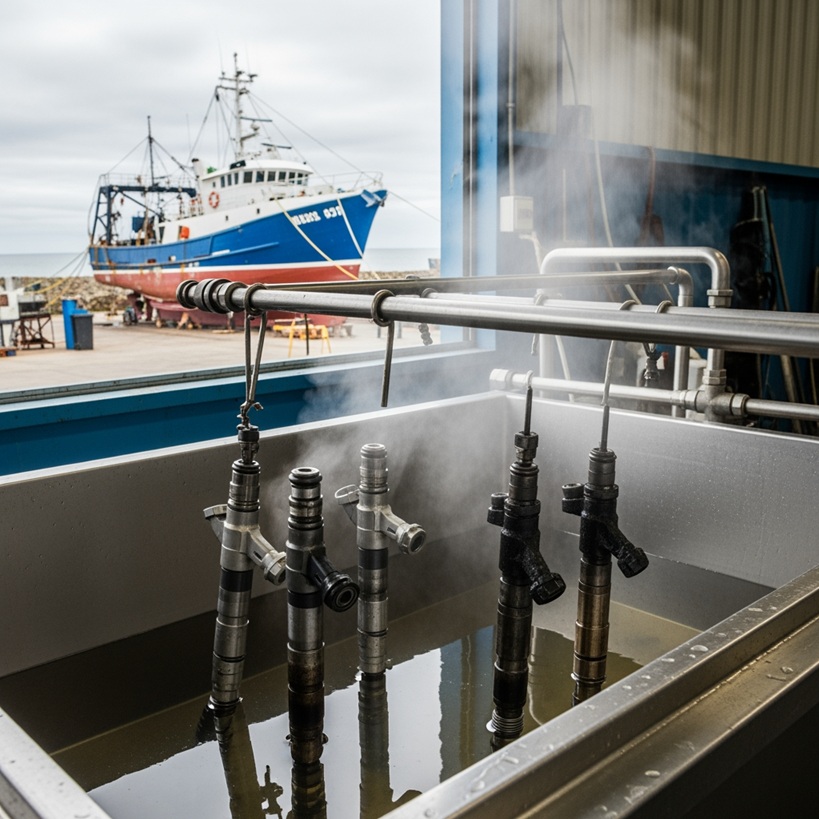
Hot tank systems provide the thermal and chemical action required to remove stubborn carbon deposits and varnish from marine diesel injectors without mechanical abrasion that risks damaging precision surfaces. These immersion cleaning systems maintain heated alkaline solutions at 80-95°C, creating the conditions necessary to break down carbonised fuel residues and oxidised oil films that accumulate on injector bodies and nozzles.
Thermal and Chemical Cleaning Process
The cleaning process relies on sustained thermal exposure combined with chemical saponification. Heated cleaning solutions penetrate carbon layers, breaking molecular bonds that mechanical scrubbing cannot reach. For marine applications, this approach addresses the unique contamination profile of salt-exposed components – the heated alkaline environment neutralises acidic combustion byproducts while dissolving salt deposits that accumulate in injector recesses and cooling passages.
Professional diesel injector cleaning boat maintenance through hot tank immersion typically requires 30-90 minutes, depending on contamination severity. The process removes deposits from external surfaces, internal passages, and nozzle spray holes without disassembling precision components that require specialised tooling. This non-invasive approach reduces the risk of damage to needle valves, springs, and sealing surfaces that can occur during aggressive mechanical cleaning attempts.
Temperature Control Requirements
Temperature control proves critical for effective marine diesel maintenance cleaning operations. Solutions maintained below 75°C lack the thermal energy to soften hardened carbon deposits efficiently. Temperatures exceeding 100°C risk damaging seals and coatings on modern common-rail injectors. Industrial hot tank systems designed for marine maintenance applications provide precise temperature regulation and circulation systems that maintain consistent conditions throughout the cleaning cycle, ensuring uniform deposit removal across multiple injectors processed simultaneously.
Spray Washing Systems for High-Volume Marine Maintenance
Fleet operators maintaining multiple commercial vessels require cleaning throughput that manual processes cannot deliver. Heavy duty parts washers equipped with rotating spray arms and heated high-pressure water provide the automated cleaning capacity necessary for systematic injector maintenance across fishing fleets operating on tight turnaround schedules between trips.
Automated Cleaning Advantages
These spray washing systems combine mechanical impact from pressurised water jets with thermal cleaning action and chemical detergency. Rotating spray arms deliver 360-degree coverage, ensuring the cleaning solution reaches all external surfaces and accessible passages. For marine diesel injectors, this approach excels at removing external carbon buildup, salt corrosion, and oil contamination that accumulates on injector bodies, electrical connectors, and mounting threads.
Automated spray washing reduces labour requirements dramatically compared to manual cleaning methods. A maintenance technician can load 12-24 injectors into a washing chamber, initiate a programmed cycle, and return to find components cleaned to consistent standards without manual scrubbing. This consistency matters for marine diesel maintenance cleaning where injector performance directly affects vessel safety and operational efficiency. Automated systems eliminate the variability inherent in manual cleaning, where technician fatigue and time pressure create inconsistent results.
Salt and Oil Contamination Removal
The heated water and detergent combination used in industrial spray washers addresses the specific contamination challenges of marine environments. Salt deposits dissolve readily in heated water, while alkaline detergents saponify oil films and emulsify fuel residues. High-pressure jets (typically 40-80 bar) provide mechanical energy to dislodge loosened deposits, flushing them from component surfaces and internal passages. For fishing vessel maintenance facilities processing injectors from multiple engines, this automated approach transforms a labour-intensive task into a systematic, repeatable process.
Fuel Efficiency Returns from Systematic Injector Maintenance
The financial case for regular diesel injector cleaning boat programmes becomes compelling when calculated across a fishing season. A mid-sized trawler consuming 500 litres of diesel per day at $1.80 per litre spends $900 daily on fuel. A 10% efficiency loss from fouled injectors wastes $90 per day, accumulating to $2,700 over a 30-day trip. Across a six-month season with 150 days at sea, this inefficiency costs $13,500 in excess fuel consumption for a single vessel.
Return on Investment Calculations
Professional injector cleaning typically costs $150-300 per engine when performed as part of scheduled maintenance, depending on engine size and injector count. The return on investment becomes immediate – a single cleaning session that restores 8-10% fuel efficiency pays for itself within 3-5 days of operation. For fleet operators managing 5-10 vessels, the cumulative fuel savings from systematic injector maintenance programmes reach six figures annually.
Extended Component Life Benefits
Beyond direct fuel savings, restored injector performance extends engine component life. Clean, properly atomising injectors create complete combustion that reduces soot formation, lowering wear on piston rings, cylinder liners, and turbocharger bearings. Exhaust gas temperatures decrease by 15-30°C when injectors deliver optimal spray patterns, reducing thermal stress on exhaust valves and manifolds. These secondary benefits translate to reduced maintenance costs and fewer unplanned repairs during critical fishing seasons.
Emissions Compliance Advantages
Emissions compliance provides additional motivation for maintaining clean injectors. Marine diesel engines operating in Australian waters must meet increasingly stringent environmental standards. Fouled injectors increase particulate emissions and nitrogen oxide formation, potentially triggering compliance issues during inspections. Systematic marine diesel maintenance cleaning maintains engines within regulatory limits while avoiding the substantial costs associated with environmental penalties or operational restrictions.
Integrating Injector Cleaning Into Marine Maintenance Schedules
Effective diesel injector cleaning boat procedures require integration into broader engine maintenance protocols rather than reactive responses to performance problems. Commercial fishing vessels operating on seasonal patterns benefit from scheduled injector service during off-season maintenance periods, ensuring engines enter fishing seasons at peak efficiency.
Recommended Cleaning Intervals
Recommended cleaning intervals depend on operational intensity and fuel quality. Vessels operating continuously in tropical waters with moderate fuel quality should schedule injector cleaning every 1,000-1,500 engine hours. Operations using lower-grade fuel or experiencing frequent water contamination issues may require cleaning at 500-750-hour intervals. Extended-range vessels making multi-week trips benefit from pre-season injector service to maximise fuel efficiency during extended periods away from port facilities.
Two-Stage Cleaning Protocols
Maintenance facilities supporting commercial fishing fleets can establish systematic cleaning protocols using industrial cleaning equipment designed for marine applications. Automated spray washing systems handle external cleaning and initial deposit removal, while hot tank immersion systems address heavily contaminated injectors requiring intensive treatment. This two-stage approach optimises cleaning effectiveness while managing labour costs and processing time.
Performance Documentation Systems
Documentation of injector cleaning history provides valuable operational data. Recording cleaning dates, contamination severity, and post-cleaning performance measurements creates a maintenance baseline that identifies problematic engines, fuel quality issues, or operational patterns contributing to accelerated fouling. Fleet operators using this data-driven approach can adjust maintenance intervals, modify fuel handling procedures, or address specific engine problems before they escalate into major failures.
Australian-Made Cleaning Solutions for Marine Applications
Marine maintenance facilities require cleaning equipment engineered to withstand harsh coastal environments and deliver consistent results under demanding operational schedules. Australian-manufactured industrial parts washers provide construction quality and performance specifications suited to the unique requirements of commercial fishing support operations.
Corrosion-Resistant Construction
Stainless steel construction offers superior corrosion resistance in salt-laden workshop environments. Marine maintenance facilities located in coastal areas face accelerated equipment deterioration from airborne salt exposure. Industrial cleaning systems built with marine-grade materials maintain structural integrity and operational reliability despite constant exposure to corrosive conditions that rapidly degrade standard powder-coated equipment.
Electrical Safety and Reliability
Australian engineering standards ensure electrical safety compliance for equipment operating in wet marine workshop environments. Proper grounding, sealed electrical components, and appropriate ingress protection ratings prevent safety hazards while maintaining reliable operation. Commercial fishing support facilities cannot afford equipment failures during critical pre-season maintenance periods – robust construction and quality components deliver the operational uptime essential for meeting tight maintenance schedules.
Local Support Infrastructure
Local manufacturing provides responsive technical support and parts availability. Marine maintenance operations encountering equipment issues require immediate assistance to avoid delays that cascade through vessel maintenance schedules. Australian-based manufacturers offer direct access to technical expertise and replacement components without the extended lead times associated with imported equipment. This support infrastructure proves particularly valuable for facilities located in regional fishing ports distant from major metropolitan service centres.
Maximising Marine Diesel Performance Through Professional Cleaning
Commercial fishing operations compete in markets where fuel efficiency directly determines profitability. Contaminated diesel injectors silently erode operational margins through increased fuel consumption, reduced engine performance, and accelerated component wear. Systematic marine diesel maintenance cleaning using industrial-grade equipment transforms this hidden cost centre into a quantifiable maintenance activity with measurable returns.
Professional Cleaning Technology Advantages
Professional cleaning systems deliver results that manual methods cannot match. Hot tank immersion removes deposits from internal passages and precision surfaces without mechanical damage. Automated spray washing provides consistent cleaning quality while reducing labour requirements. Together, these technologies enable marine maintenance facilities to process injectors efficiently, supporting fleet-wide maintenance programmes that keep vessels operating at peak fuel efficiency.
Financial Justification for Equipment Investment
The financial returns justify equipment investment for facilities supporting commercial fishing operations. Fuel savings from restored injector performance accumulate rapidly, particularly for vessels operating extended trips or managing large fleets. Reduced engine wear and emissions compliance benefits compound these direct savings, creating comprehensive operational improvements that extend beyond simple fuel economy.
Conclusion
Australian-manufactured cleaning equipment provides the durability, performance, and support infrastructure required for demanding marine maintenance applications. Facilities serving the commercial fishing industry need equipment engineered to withstand coastal environments while delivering consistent results under tight maintenance schedules. Investing in professional-grade cleaning systems positions marine maintenance operations to deliver the efficiency improvements their customers require in increasingly competitive fishing markets.
Hotwash Australia specialises in industrial cleaning solutions designed for marine applications, with systems engineered to handle the unique challenges of diesel injector cleaning boat maintenance and comprehensive marine diesel maintenance cleaning operations. For commercial fishing operators and marine maintenance facilities seeking to reduce fuel costs and improve engine reliability through systematic diesel injector cleaning, contact us to discuss equipment specifications and application requirements suited to marine diesel maintenance operations.

Leave A Comment