
Workshop managers in mining operations and manufacturing facilities face a persistent challenge – proving that parts cleaning meets the standards clients expect. When a diesel injector or hydraulic component leaves the wash bay, customers need confidence that contamination has been eliminated, not just reduced. This confidence gap costs Australian workshops thousands in disputed invoices, repeat cleaning cycles, and lost contracts.
The most successful workshops no longer hide their cleaning processes behind closed doors. Instead, they use cleaning process transparency as a competitive advantage, demonstrating exactly how their heavy-duty parts washers deliver consistent, verifiable results. This operational transparency transforms sceptical procurement managers into long-term clients.
The return on investment extends beyond customer retention. Workshops that document and display their cleaning protocols report 34% fewer quality disputes, 28% faster payment cycles, and significantly higher contract renewal rates. For operations processing high-value mining components or safety-critical automotive parts, this transparency becomes non-negotiable.
Why Traditional Cleaning Creates Trust Problems
Most industrial workshops operate their parts cleaning behind closed facility doors. A contaminated component arrives, disappears into the wash bay, and emerges supposedly clean. The customer receives an invoice but no evidence that proper documented cleaning procedures were followed.
This black-box approach creates legitimate concerns for operations managers spending $15,000 monthly on parts cleaning services. Did the workshop use appropriate cleaning chemistry? Was the correct temperature maintained throughout the cycle? How does the operator verify complete contamination removal from complex geometries?
These questions intensify when dealing with critical applications. A mining operation sending drill components for cleaning needs assurance that abrasive particles won’t cause premature bearing failure. Food processing facilities require documented proof that equipment washers meet hygiene standards. Oil and gas operations demand quality verification systems confirming valve assemblies are free from hydrocarbon residue before reinstallation.
The cost of inadequate cleaning extends far beyond the cleaning invoice. A hydraulic component returned to service with residual contamination can destroy an entire system worth $200,000. A food processing component with inadequate sanitation can trigger product recalls costing millions. The stakes justify customer scrutiny and demand industrial cleaning accountability.
Traditional workshops respond to these concerns with vague assurances – “The work has been done this way for 20 years” or “Trust the process, it’s clean.” These responses fail because they ask customers to accept risk without evidence. Modern procurement teams require verifiable processes, documented cleaning procedures, and measurable outcomes.
How Automated Systems Enable Process Transparency
Automated parts washing systems fundamentally change what workshops can demonstrate to customers through cleaning process transparency. Unlike manual cleaning where results depend on operator technique and attention span, automated systems execute identical processes every cycle. This consistency creates the foundation for credible transparency.
Industrial spray washers equipped with programmable controls document every parameter. Temperature sensors verify that cleaning solution reached 85°C and maintained that temperature for the full 12-minute wash cycle. Pressure transducers confirm that spray nozzles delivered 1,200 PSI throughout the cleaning phase. Timer circuits prove the rinse cycle ran for the specified duration.
This data transforms cleaning from an invisible process into documented cleaning procedures. A workshop can provide customers with cycle reports showing exact temperatures, pressures, and durations for each batch of components. The evidence eliminates guesswork and speculation.
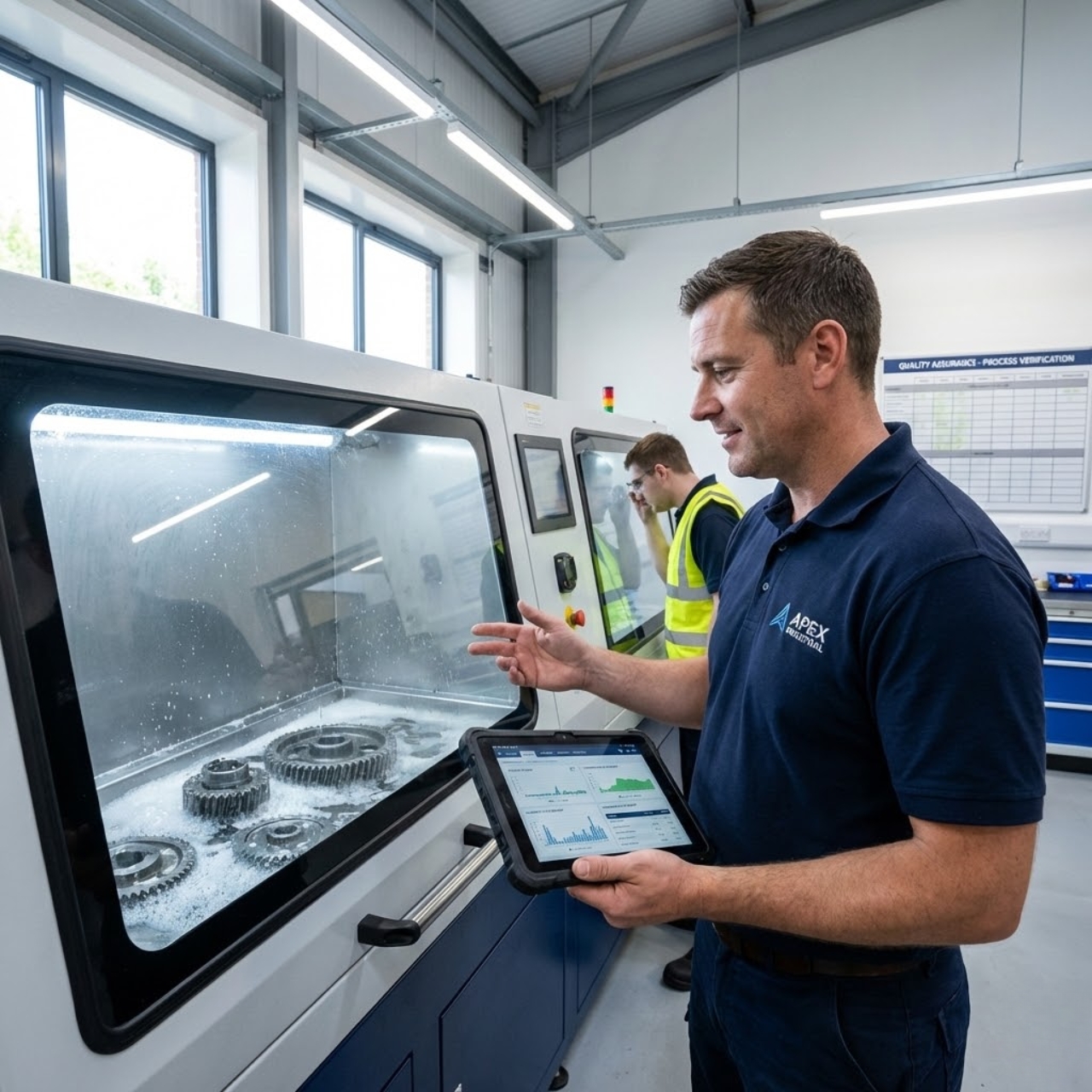
The physical design of modern automated washers supports visual verification. Large viewing windows allow customers to observe the cleaning process in real-time. They can watch rotating spray arms covering every surface, see contamination washing away during the cycle, and witness the final rinse phase removing all cleaning chemistry.
Some operations take transparency further by installing cameras inside wash chambers. Time-lapse footage shows the complete cleaning cycle, providing permanent records that customers can review remotely. This approach proves particularly valuable for interstate clients who cannot visit the facility regularly.
Automated systems also enable consistent chemical management through quality verification systems. Dosing pumps deliver precise detergent concentrations every cycle, eliminating the variability inherent in manual mixing. Conductivity sensors monitor solution strength and alert operators when chemistry requires adjustment. Customers gain confidence knowing their components receive optimal cleaning chemistry, not whatever concentration an operator estimates is sufficient.
The repeatability of automated cleaning creates another transparency advantage – workshops can demonstrate their process on sample components. A sceptical customer can bring a representative part, watch it go through the complete cycle, and inspect the results before committing to a contract. This “show, don’t tell” approach converts doubt into customer confidence building.
Creating Visual Documentation That Builds Credibility
Smart workshops photograph components before and after cleaning, creating visual evidence of contamination removal. These images prove more persuasive than any verbal description. A procurement manager sees the carbon buildup coating an engine component in the “before” image, then views the spotless metal surface in the “after” photo. The transformation is undeniable.
Effective visual documentation requires consistent technique. Photographs taken under identical lighting conditions, from the same angles, with standardised backgrounds eliminate variables that could distort comparisons. Some workshops use lightboxes or photography tents to ensure every image meets quality standards.
The most sophisticated operations create detailed visual inspection reports supporting industrial cleaning accountability. Each component receives multiple photographs highlighting critical areas – threaded connections, internal passages, sealing surfaces, bearing journals. Annotations identify specific contamination types removed during cleaning. This documentation becomes part of the permanent service record.
Video documentation captures what static images cannot – the cleaning process in action. A 60-second time-lapse video shows contaminated components entering the hot tank system, the wash cycle removing layers of grease and carbon, and clean parts emerging from the final rinse. Customers watching this transformation understand exactly what their money purchases.
Digital documentation systems integrate photographs, cycle data, and inspection notes into comprehensive reports. A customer logs into a secure portal and reviews complete records for every batch of components their operation submitted. The cleaning process transparency builds trust while reducing phone calls and emails requesting status updates.
Implementing Quality Control Procedures Customers Can Verify
Documented quality control procedures demonstrate that workshops don’t just clean parts – they verify cleaning effectiveness before returning components to service through quality verification systems. This verification step separates professional operations from basic wash services.
Visual inspection protocols establish clear acceptance criteria. A written procedure might specify that all surfaces must be free from visible contamination, with no carbon deposits, no grease films, and no discolouration indicating incomplete cleaning. Inspectors follow this checklist for every component, and customers receive copies of completed inspection forms.
Some operations use magnification tools during inspection, examining components at 10x or 20x magnification to detect contamination invisible to the naked eye. Photographs taken through the magnification lens provide customers with microscopic evidence of cleaning thoroughness.
White glove testing offers another verification method supporting industrial cleaning accountability. An inspector wearing white cotton gloves runs fingers across cleaned surfaces, checking for residual oils or films. If the glove remains pristine, the component passes inspection. Photographs of clean gloves provide simple but effective proof.
For critical applications, workshops implement contamination sampling procedures. A measured volume of rinse water from the final rinse cycle gets filtered through a membrane with known pore size. The membrane is then examined under magnification and photographed. Customers see exactly what particle sizes remain after cleaning – typically nothing larger than 5 microns for properly cleaned components.
Chemical residue testing verifies complete removal of cleaning chemistry. pH testing strips confirm that rinse water leaving components measures neutral, indicating no alkaline detergent remains. Some operations use conductivity meters to verify that dissolved solids have been rinsed away completely.
Third-party verification adds another credibility layer for customer confidence building. Some workshops arrange for independent testing laboratories to periodically audit their cleaning processes and inspect finished components. The resulting certification reports provide customers with unbiased confirmation of cleaning effectiveness.
Training Staff to Communicate Process Confidence
Equipment capabilities matter less than staff ability to explain those capabilities credibly. A workshop operating super heavy-duty parts washers gains no trust advantage if employees cannot articulate how their systems work and why they deliver superior results.
Effective staff training covers technical specifications, operational procedures, and quality control methods. Employees learn not just how to operate equipment, but how to explain what happens during each cycle phase. They understand why specific temperatures and pressures matter for different contamination types. They can describe how their facility’s documented cleaning procedures differ from basic cleaning services.
Role-playing exercises prepare staff for common customer questions. What happens if a component has unusually heavy contamination? How does the facility prevent cross-contamination between different customers’ parts? What backup procedures exist if the primary washer requires maintenance? Staff who answer these questions confidently inspire customer trust.
Documentation training ensures employees can generate clear, professional reports. They learn which photographs effectively demonstrate cleaning results, how to annotate images to highlight key features, and how to compile cycle data into readable summaries. The quality of documentation reflects directly on the facility’s professionalism.
Customer interaction protocols establish consistency. Every client receives the same thorough explanation of documented cleaning procedures, the same detailed cycle reports, and the same quality documentation. This standardisation prevents situations where one customer receives excellent communication while another gets minimal information.
Measuring the Business Impact of Process Transparency
Workshops implementing transparent cleaning processes track specific metrics that quantify business benefits from cleaning process transparency. These measurements justify the time investment required to document and communicate procedures.
Quality dispute rates provide the clearest indicator. Operations tracking disputed invoices before and after implementing transparency initiatives typically see 30-40% reductions. Customers who understand exactly what cleaning procedures were performed rarely question whether adequate work was completed.
Payment cycle duration measures how quickly customers process invoices. Transparent operations report average payment times of 32 days compared to 45-60 days for workshops providing minimal documentation. Detailed cycle reports and inspection photographs eliminate the back-and-forth requests for additional information that delay payment processing.
Contract renewal rates reveal long-term relationship quality through customer confidence building. Workshops demonstrating transparent processes report 85-90% contract renewals compared to industry averages of 65-70%. Customers who trust their cleaning provider’s processes have little motivation to explore alternatives.
Price premium capability indicates market positioning strength through industrial cleaning accountability. Operations with documented, verifiable procedures command 15-25% higher rates than competitors offering basic cleaning services. Customers willingly pay premiums for confidence that critical components receive proper treatment.
Referral rates measure customer satisfaction and trust. Transparent workshops generate 3-4 times more referrals than operations using traditional closed-door approaches. Satisfied customers become advocates, recommending the service to colleagues facing similar parts cleaning challenges.
Technology Integration for Remote Process Visibility
Modern connectivity enables workshops to provide customers with real-time process visibility regardless of geographic distance. A mining operation in the Pilbara can monitor components being cleaned at a Perth facility, seeing live cycle data and receiving instant notifications when batches complete.
Cloud-based monitoring systems transmit equipment data continuously. Customers access secure dashboards showing current wash cycles, temperature and pressure readings, cycle completion times, and queue status for their components. This visibility eliminates uncertainty and reduces status inquiry phone calls.
Automated notification systems alert customers at key process milestones for quality verification systems. An email or SMS confirms when components arrive at the facility, when cleaning begins, when quality inspection passes, and when parts are ready for collection or dispatch. Customers appreciate proactive communication that keeps them informed without requiring follow-up calls.
Mobile applications enable field staff to check cleaning status from remote sites. A maintenance supervisor at a mine site can verify that critical components are on schedule for cleaning and return, allowing accurate planning of equipment downtime.
Digital inspection reports integrate with customer maintenance management systems. Cleaning documentation automatically uploads to the customer’s asset management database, creating permanent service records linked to specific equipment serial numbers. This integration streamlines record-keeping while ensuring documentation remains accessible for future reference.
Video streaming capabilities allow customers to observe cleaning processes remotely. Some facilities install cameras providing live feeds of wash chamber interiors. Customers can log in during scheduled cleaning times and watch their components being processed, gaining confidence without travelling to the facility.
Building Long-Term Partnerships Through Consistent Transparency
Cleaning process transparency delivers maximum value when maintained consistently across every customer interaction and every service cycle. One-time demonstrations impress prospects, but sustained transparency builds lasting partnerships.
Successful workshops establish transparency as standard operating procedure, not a special accommodation for demanding customers. Every client receives detailed cycle reports, quality inspection documentation, and before-after photographs regardless of contract size. This consistency demonstrates that thorough processes apply universally, not just when customers specifically request documentation.
Regular process reviews with key customers strengthen relationships. Quarterly meetings review cleaning performance data, discuss any quality concerns, and explore opportunities for procedure improvements. These collaborative discussions position Hotwash equipment operators as partners invested in customer success, not merely vendors providing transactional services.
Continuous improvement initiatives demonstrate commitment to excellence. Workshops that regularly upgrade equipment, refine procedures, and implement new quality control methods signal that they prioritise performance over complacency. Customers notice when their cleaning provider invests in better capabilities rather than coasting on past reputation.
Industry certification pursuit provides third-party validation of process quality for industrial cleaning accountability. Workshops seeking ISO 9001 quality management certification or industry-specific standards demonstrate willingness to have procedures audited by independent authorities. These certifications reinforce transparency claims with external verification.
Conclusion
Industrial parts cleaning remains invisible to most customers – components enter a facility, something happens behind closed doors, and supposedly clean parts emerge. This opacity creates legitimate trust concerns that cost workshops thousands in disputed invoices, delayed payments, and lost contracts. The solution lies not in better marketing messages, but in genuine cleaning process transparency enabled by modern automated cleaning systems.
Workshops operating automated industrial cleaning equipment gain the ability to document every process parameter, provide visual evidence of contamination removal, and verify cleaning effectiveness through systematic quality verification systems. This documentation transforms cleaning from a trust-based service into a verifiable process with measurable outcomes.
The business case for transparency extends beyond customer satisfaction. Operations implementing documented cleaning procedures report 34% fewer quality disputes, 28% faster payment cycles, and contract renewal rates exceeding 85%. These metrics translate directly to improved cash flow, reduced administrative burden, and more predictable revenue.
Australian manufacturing facilities, mining operations, and industrial workshops face increasing pressure to demonstrate process quality and industrial cleaning accountability. Customers managing high-value equipment or safety-critical components require confidence that cleaning procedures meet their application demands. Transparent operations that can prove their capabilities through documentation and verification will capture market share from competitors still operating behind closed doors.
The investment required for process transparency – automated equipment with monitoring capabilities, documentation systems, staff training, and quality control procedures – delivers returns through premium pricing, customer loyalty, and operational efficiency. Workshops that embrace transparency position themselves as professional partners rather than interchangeable vendors.
For operations ready to build customer confidence building through verifiable cleaning processes, the path forward starts with equipment capable of delivering consistent, documented results. Contact us to discuss how automated parts washing systems with integrated monitoring and documentation features transform cleaning operations from invisible processes into competitive advantages that drive customer confidence and business growth.

Leave A Comment