
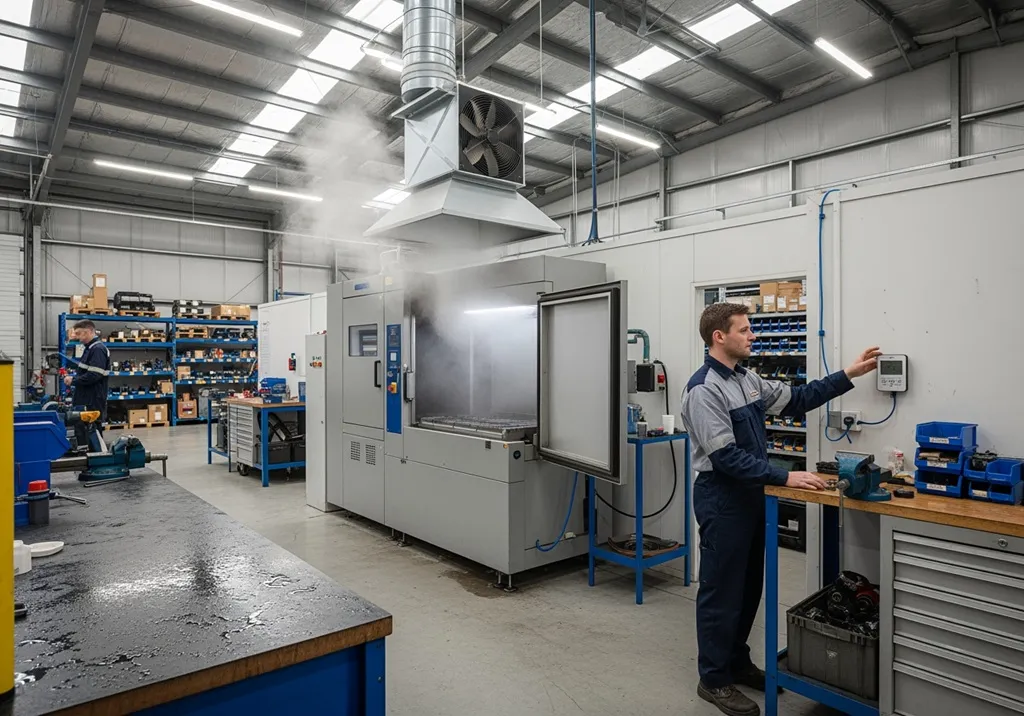
Running parts washers through winter creates a problem that many workshop managers do not notice until the damage is already done. Hot water spray systems release moisture into workshop air. Cold ambient temperatures push that air past its saturation point. The result is condensation – water forming on tools, equipment, roof sheeting, and electrical panels.
Left unchecked, workshop condensation causes rust on precision tools, mould in ceiling insulation, slippery floors, and damaged electrical systems. The fix is not complicated, but it requires understanding why condensation forms and what controls it. This guide covers practical strategies for managing parts washer condensation – from ventilation and operational adjustments to equipment choices that keep workshops dry through even the heaviest winter washing schedules.
Why Hot Washers Create Winter Condensation
The Physics of Steam in a Cold Workshop
The condensation problem starts with basic physics. Parts washers heat water to 60-85°C to remove grease, oil, and carbon. When a hot tank or spray washer opens at the end of a cycle, hot moisture-saturated air escapes into the workshop environment.
Air at warmer temperatures holds significantly more water vapour than cold air. When hot moisture from parts washing enters cold workshop air, the air cannot hold the excess water. That water deposits on every cold surface it contacts – metal roofs, concrete walls, steel equipment, and stored tools.
This is winter workshop humidity in action. The colder the workshop, the less moisture the air can carry, and the faster condensation forms on surfaces. Parts washer condensation becomes a serious workshop management issue when this process repeats across multiple cycles every working day.
How Much Moisture Parts Washers Release
A single large spray washer running multiple cycles per day releases a significant volume of water vapour. In winter, this moisture stays trapped in cold workshop air. Three machines running simultaneously multiply that moisture load considerably. In a closed winter workshop, all that moisture seeks cold surfaces to condense on.
Managing winter workshop humidity starts with knowing how much moisture your machines release. From there, you can assess whether your ventilation can handle it.
Heavy duty parts washers running continuous cycles in mining maintenance workshops represent the highest condensation risk. Understanding the moisture output of your specific equipment helps size the ventilation response correctly.
The Real Cost of Workshop Condensation
Condensation damage is easy to underestimate because it builds gradually. Most workshops only calculate the true cost after a significant damage event forces the issue.
Rust, Mould, and Structural Damage
Surface rust appears first. Precision measuring tools, machined parts awaiting assembly, and stored inventory develop oxidation within days of sustained condensation exposure. The financial impact of ruined tooling and inventory can reach thousands of dollars in a single winter season.
Mould grows in ceiling insulation, wall cavities, and storage areas where moisture accumulates. Mould remediation requires professional treatment. Insurance often will not cover mould damage from condensation because it is considered a preventable maintenance failure.
Structural damage develops over years. Repeated condensation cycles rust roof sheeting from the inside, corrode steel framing, and deteriorate building components. The compounding cost of unmanaged workshop moisture control failures is significant – and entirely avoidable.
Electrical Hazards and Workplace Injuries
Water pooling near switchboards, power tools, and equipment creates shock hazards. A condensation event near a main electrical panel can require professional inspection. Operations may need to shut down fully before work can safely resume.
Slippery floors from condensation dripping onto polished concrete create genuine injury risks for workers carrying parts or operating forklifts. Hot tank steam management is not just about protecting equipment. It is a workplace safety obligation that affects your team every day the heating systems run.
Workshop Ventilation: Your Primary Defence
Proper airflow removes moisture-laden air before it condenses on cold surfaces. This is the single most effective control for parts washer condensation. Workshop ventilation must address both extraction – removing humid air – and replacement – bringing in fresh air. Without balanced flow, you create pressure problems that push moisture into wall cavities or building gaps.
Calculating Extraction Requirements
Calculate required ventilation based on your parts washer output and operating schedule. Roof-mounted extraction fans work best for steam extraction. Hot moisture rises naturally – capture it at ceiling level before it condenses on cold roof sheeting.
Position extraction fans directly above parts washing areas. Do not place them at the opposite end of the workshop, where moisture travels across cold surfaces first.
Extra heavy duty parts washers used in mining maintenance workshops are among the highest moisture-output machines in any workshop environment. Ventilation systems in these facilities must be sized for peak simultaneous operation – not average conditions.
Intake Air and Cross-Flow Design
Fresh air intake requires equal attention. Install louvred vents or powered intake fans at floor level on opposite walls from extraction fans. This creates cross-flow ventilation that sweeps moisture through the workshop without letting it settle on surfaces.
Temperature matters for intake air. Drawing cold air directly onto hot parts washing areas creates localised condensation. Install intake vents away from washing stations. Allow incoming air to mix with workshop air before it reaches hot moisture sources. This prevents the sharp temperature differential that triggers immediate condensation near the machines.
Operational Strategies That Reduce Moisture
Workshop ventilation handles what gets released. Smart operations reduce how much gets released in the first place. These changes cost nothing to implement and deliver immediate results.
Washing Schedule and Timing
Running all washing cycles consecutively keeps moisture levels constantly elevated with no recovery time. Spreading cycles across the day – with gaps between sessions – allows ventilation to clear accumulated moisture before the next burst.
Workshops that stagger washing across the day see significantly lower workshop condensation on tools and equipment. Workshop moisture control through scheduling is the most cost-effective first step any operation can take.
Lid Management and Cool-Down Cycles
Manual parts washers and hot tanks release maximum steam when opened immediately after cycle completion. Waiting a few minutes after cycle end allows internal temperature to drop, reducing steam release substantially.
Hot tank steam management starts with this simple habit. Combined with proper workshop ventilation, controlled lid timing reduces daily moisture output without any equipment cost. Modern automated washers with programmed cool-down cycles use progressively cooler water in the final rinse. This drops chamber temperature before the door opens.
Good hot tank steam management is a combination of equipment design and operator discipline.
Equipment Selection for Lower Steam Output
Equipment design significantly affects how much moisture a parts washer releases into your workshop. This applies to spray washers, hot tanks, and wet abrasive blaster machines alike. When selecting or upgrading machines, these specifications directly impact condensation risk.
Sealed Design and Insulated Chambers
Stainless steel parts washers often include tighter door seals and better chamber insulation than standard models. Tighter seals reduce steam escape during operation. Insulated chambers maintain cleaning temperature with less energy whilst releasing less heat to workshop air.
Built-in extraction ports connect directly to workshop ventilation systems. Rather than releasing steam into general workshop air, these systems duct moisture directly outside. This eliminates a large portion of parts washer condensation risk where ducting is practical.
Programmable Temperature Cycles
Programmable cycle options allow temperature matching to contamination level. Light cleaning at lower temperatures releases significantly less moisture than heavy-duty high-temperature cycles. Most modern Hotwash Australia models include multi-temperature programming that lets operators match cycle temperature to actual cleaning requirements.
Building Modifications for Condensation Control
Some workshops need structural improvements to bring workshop condensation under control. These investments are well-justified when condensation is causing ongoing damage to tools, inventory, and equipment.
Roof Insulation and Vapour Barriers
Insulating roof sheeting eliminates the primary condensation surface in most workshops. Retrofit insulation above the parts washing bay addresses the problem where it matters most. Without vapour barriers, condensation soaks insulation, reduces its effectiveness, and creates mould growth conditions. Proper installation requires professional roofing contractors.
Radiant Heating and Dehumidifiers
Radiant heaters installed above parts washing areas keep local air temperature above the dew point. They do this without the cost of heating the entire workshop. Industrial dehumidifiers remove moisture from workshop air when ventilation alone cannot keep pace. They are particularly useful in enclosed workshops where external steam extraction is not practical.
Monitoring and Seasonal Maintenance
Understanding when workshop condensation risk is highest allows proactive management rather than reactive repair.
Hygrometers and Early Warning Systems
Hygrometers measure relative humidity – the key indicator of condensation risk. Digital hygrometers with alarms warn operators when humidity reaches dangerous levels. Install monitoring points near parts washing areas, at ceiling level, and near stored inventory or precision tools.
A three-point monitoring system provides early warning before condensation damage occurs. The cost is negligible compared to the damage a single undetected condensation event can cause.
Pre-Winter Maintenance Checklist
Seasonal preparation prevents winter condensation before it starts. In April-May, run through this checklist. Clean extraction fans and check vent louvres for blockages. Test hygrometers and inspect roof insulation for damage. Seal building gaps and verify parts washer door seals.
Two hours of preparation prevents months of condensation problems.
Regular extraction fan maintenance ensures consistent performance throughout winter. Dirty fan blades reduce airflow substantially. Monthly cleaning and quarterly checks maintain rated extraction capacity – the foundation of effective workshop ventilation for high-volume washing operations.
Industry-Specific Condensation Challenges
Different industries face condensation challenges shaped by their specific operating conditions. The right solution varies based on temperature differentials, regulatory requirements, and operational patterns.
Mining Operations in Remote Areas
Mining operations face extreme temperature differentials. Parts washers operating during evening shifts release moisture into rapidly cooling air – condensation can appear within minutes. The solution is increasing extraction capacity above standard calculations and installing radiant heating above washing bays.
Super heavy duty parts washers used in remote mining applications run in conditions with severe day-to-night temperature swings. Ventilation systems must be designed for worst-case evening conditions, not average daytime temperatures.
Food Processing and Automotive Workshops
Food processing facilities cannot tolerate condensation near production areas. Health regulations prohibit water dripping onto food contact surfaces. These operations require sealed parts washing rooms with dedicated HVAC systems – an investment that also meets food safety compliance requirements.
Automotive workshops storing customer vehicles face liability for condensation damage to paint and upholstery. Separating parts washing areas from vehicle storage with physical barriers and independent ventilation zones prevents this risk.
Wet abrasive blasters used for surface preparation add another moisture source to any workshop. Factor a wet abrasive blaster machine into your ventilation calculations alongside parts washing output.
The Business Case for Condensation Control
Measuring the True Annual Cost
Calculate condensation costs honestly. Track rust damage to tools and inventory. Add cleaning time for water removal and maintenance for condensation-related equipment corrosion. Include any injury costs from slippery floors.
Most workshops that measure properly find annual condensation costs significantly exceed the cost of prevention.
ROI of Prevention Investment
Workshop moisture control investments in ventilation, insulation, monitoring, and daily operations deliver long-term savings. They eliminate ongoing damage, safety risk, and insurance exposure.
Comprehensive condensation control combines effective ventilation, building insulation, monitoring equipment, and daily operational habits. No single fix solves it alone. Effective workshop moisture control requires all components working together.
Workshops that invest in the complete solution protect their assets for every winter that follows. They also avoid the compounding structural and equipment costs that unmanaged condensation creates over time.
Conclusion
Winter condensation from parts washing operations costs Australian workshops significantly in damage, downtime, and risk. But it is entirely preventable. Proper workshop ventilation removes moisture before it condenses. Smart operational scheduling reduces steam release. Building insulation eliminates cold condensation surfaces.
Start with ventilation. Calculate required steam extraction capacity based on your parts washer specifications and operating schedule. Install roof-mounted extraction with balanced fresh air intake. Add monitoring equipment to verify humidity levels. Implement scheduling adjustments that reduce moisture release during the coldest periods.
To discuss parts washer specifications for your workshop, contact our equipment specialists or email us at sales@hotwash.com.au.

Leave A Comment