
Industrial parts washers handle some of the toughest cleaning jobs in Australian workshops. They remove grease, oil, carbon, and heavy contamination from engine blocks, mining equipment, and fabrication components. Many maintenance managers overlook a critical risk: the wrong chemical-metal combination can destroy expensive equipment faster than years of heavy use.
A workshop using an acidic degreaser in a mild steel tank can develop pinhole leaks in under eight months. That machine needs a complete tank replacement because no one checked chemical compatibility before filling it. Correct parts washer chemical selection is essential protection for your capital equipment investment.
Why Chemical Compatibility Matters in Parts Washing Equipment
How Operating Conditions Accelerate Chemical Reactions
Parts washers operate under conditions that accelerate chemical reactions. High temperatures up to 85 degrees Celsius, constant immersion, and mechanical agitation all play a role. What is harmless at room temperature can become highly corrosive at operating temperature.
The combination of heat and chemical action creates three main risks. Material degradation occurs when chemicals attack specific metals. Aluminium components exposed to high-pH caustic solutions can dissolve. Mild steel tanks exposed to acidic cleaners develop rust and perforation. Seal and gasket failure occurs when the wrong chemical selection causes rubber or synthetic seals to swell, crack, or dissolve. Performance loss occurs when chemical reactions create deposits and scale that clog spray jets and reduce heating efficiency.
The Financial Cost of Getting It Wrong
The financial impact adds up quickly. Replacing a corroded tank costs thousands of dollars depending on size. Pump replacement adds further cost. Downtime whilst waiting for parts means manual scrubbing or components piling up waiting for service.
Verifying compatibility before introducing any new cleaning chemistry is the only way to avoid these costs. Chemical compatibility testing is not an optional extra. It is basic equipment protection.
Understanding Tank and Component Materials
Stainless Steel vs Powder-Coated Mild Steel
Stainless steel parts washers offer the broadest chemical compatibility. Grade 304 resists most alkaline degreasers, many acidic cleaners, and biodegradable detergents at operating temperature. Grade 316 adds molybdenum for enhanced resistance in marine and caustic environments.
Most heavy duty parts washers use powder-coated mild steel for the tank and cabinet. This construction delivers excellent durability at lower cost when matched with compatible chemicals. Biodegradable alkaline degreasers at pH 8-11 and water-based cleaning solutions at standard operating temperatures are safe choices. The powder coating creates a protective barrier between the chemical solution and the steel substrate.
Coating chips or scratches expose bare steel. Highly alkaline solutions above pH 12 attack the coating. Acidic cleaners below pH 6 penetrate and corrode the steel beneath.
Pump Seals and Gaskets
Pump seals and gaskets are typically Viton, Buna-N, or EPDM rubber. Viton handles most chemicals and high temperatures. Buna-N works with petroleum products but degrades in biodegradable detergents. EPDM suits water-based alkaline solutions but fails with petroleum products.
Knowing your seal material is essential for parts washer chemical selection. Check your machine’s documentation before introducing any new cleaning product.
Parts Washer Chemical Selection by Material Type
Alkaline Degreasers and pH Compatibility
Most industrial parts washing uses alkaline degreasers with pH between 9 and 13. These chemicals break down oils, greases, and carbon deposits by converting them into water-soluble compounds.
Moderate alkaline degreasers at pH 9-11 are safe for stainless steel, powder-coated steel, aluminium, and most seals. Alkaline degreaser compatibility at this pH range is broad. These products clean effectively whilst minimising material compatibility concerns. This is where your degreaser selection guide should start for most applications.
Strong alkaline degreasers at pH 12-13 tackle extreme contamination but require stainless steel tanks or specially coated equipment. Alkaline degreaser compatibility narrows significantly above pH 12. These solutions attack aluminium, zinc plating, and some paints. Degreaser selection guide principles for high-pH chemistry are straightforward: match pH to your tank material before anything else.
Hot tanks using sodium hydroxide operate at pH 13-14 and temperatures up to 95 degrees Celsius. Only stainless steel construction handles this combination. Even small caustic concentrations in mild steel tanks cause rapid corrosion. This is the most common cause of premature hot tank failure in Australian workshops.
Acidic Cleaners and Specialised Chemistry
Acidic cleaning chemicals at pH 2-6 remove rust, scale, mineral deposits, and oxidation. They are less common in general parts washing but essential for specific applications.
Mild acids at pH 4-6 remove light rust and scale without aggressive corrosion. Compatible with stainless steel and intact powder-coated steel. Not suitable for bare steel, aluminium, or zinc-plated components.
Strong acids at pH 2-4 remove heavy rust and scale but require stainless steel construction and acid-resistant seals. Never use in powder-coated or mild steel equipment. Parts washer chemical selection for acidic chemistry must begin with construction material verification.
Never mix acidic cleaners with alkaline degreasers. Mixing creates violent neutralisation reactions that generate heat and can crack tanks or damage seals. Even empty-looking tanks contain residual chemicals in pumps and plumbing.
How to Conduct Chemical Compatibility Testing
Material Sample Testing Protocol
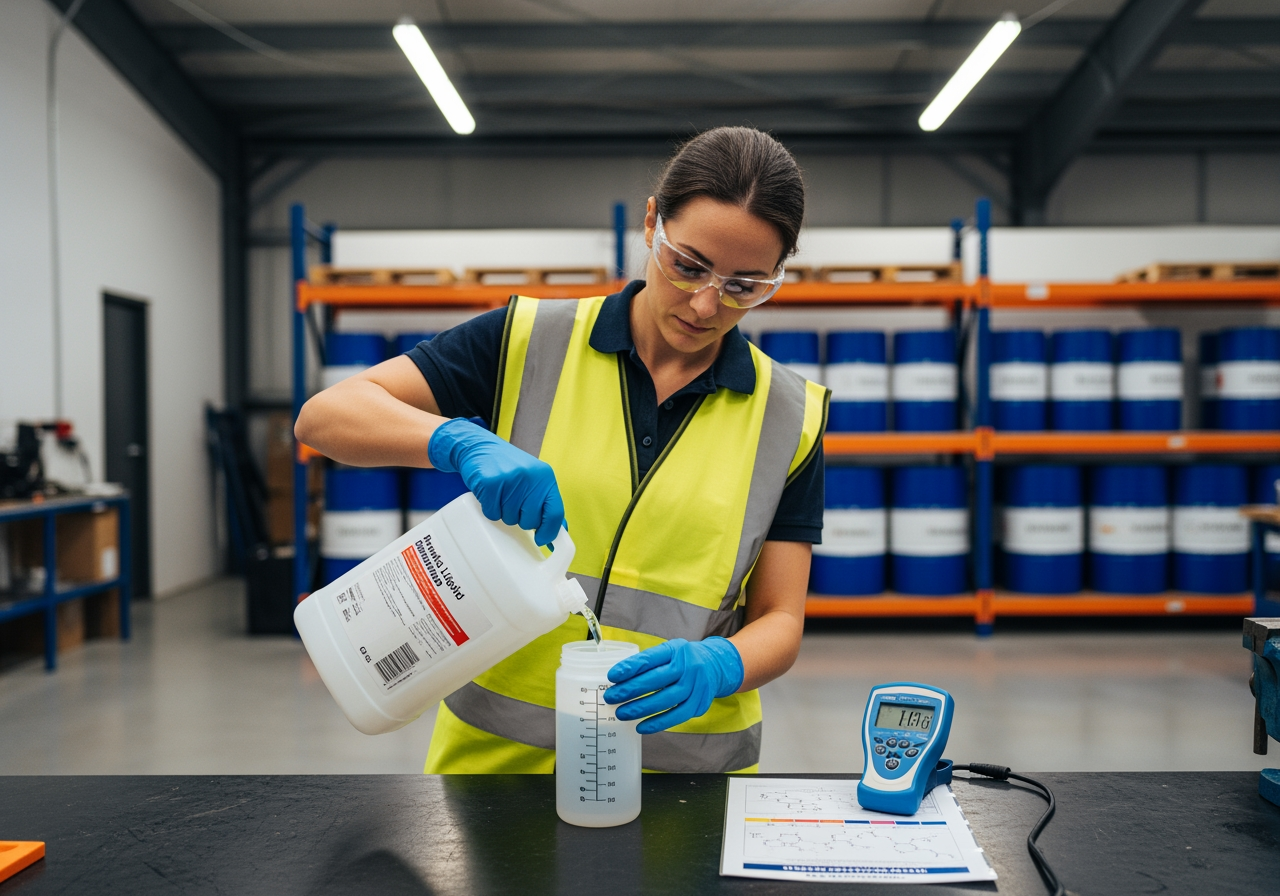
Before introducing any new chemical into your parts washers, conduct chemical compatibility testing. Obtain small samples of materials used in your equipment. This means tank material, seal material, and any metals you are cleaning.
Label containers for each material sample. Mix the cleaning chemical at working concentration. Heat the solution to operating temperature between 60 and 85 degrees Celsius. Immerse material samples fully. Maintain temperature for a minimum of 72 hours.
Inspect samples for discolouration, surface pitting or etching, swelling or softening in seals, and weight loss. Manufacturer compatibility charts use ratings from A to D. Rating A means no effect – safe for continuous use. Rating D means severe effect – do not use. If any material rates C or D, choose a different chemical or upgrade your equipment materials.
Small-Scale Trial Procedure
After material sample testing looks promising, run a small-scale trial in your actual equipment. Fill the washer to minimum operating level. Add the chemical at recommended concentration. Run through several heating and cooling cycles. Clean typical parts to verify performance. Inspect tank, seals, and components after 40 hours of operation.
This trial reveals real-world compatibility issues before you commit to large chemical purchases or risk damaging expensive equipment.
Preventing Chemical Compatibility Problems
Matching Chemicals to Equipment Specifications and Concentration Monitoring
Every parts washer comes with specifications listing compatible chemical types and pH ranges. These specifications are equipment protection requirements – not optional guidelines. A machine specified for pH 8-12 will fail if you use pH 13 caustic solution regularly.
Monitor chemical concentration weekly using refractometers or test strips. Evaporation, drag-out on cleaned parts, and contamination all change concentration over time. Weekly checks and water top-ups keep powder-coated washers running safely and extend bath life significantly.
Managing the industrial cleaning pH range precisely extends tank and pump service life. It is one of the most practical and cost-effective operational habits available to any workshop.
Chemical Change Procedures and Regular Inspection
Switching between different cleaning chemicals requires proper procedures. Remove all parts from the washer. Drain the old solution completely. Rinse the tank and all components with fresh water three times minimum. Check pH of rinse water until neutral. Inspect tank and seals for any damage. Fill with new solution at proper concentration.
Monthly inspections are a core part of any chemical management programme. Check the tank interior for discolouration, pitting, or coating damage. Inspect welds and joints for rust or leaks. Check seals for swelling or hardening. Document findings and watch for trends. Gradually increasing coating damage signals a compatibility issue before catastrophic failure occurs.
Hotwash Australia has over 40 years of experience in industrial cleaning equipment and supports workshops across Perth, Melbourne, Sydney, and Brisbane with equipment selection, chemical guidance, and ongoing maintenance.
Selecting the Right Cleaning Chemistry
Matching Chemistry to Contamination Type and Equipment
Unless specific contamination requires specialised chemistry, start with biodegradable alkaline detergents at pH 8-10. These chemicals handle the majority of industrial cleaning applications whilst offering the broadest equipment compatibility. They clean engine oils, hydraulic fluids, greases, light carbon deposits, and general workshop contamination safely in stainless steel, powder-coated steel, and aluminium equipment.
This is the practical starting point for any degreaser selection guide. The right parts washer chemical selection for each application depends on contamination type first, then equipment construction material.
Heavy carbon deposits require stronger alkaline solutions at pH 11-12 or longer soak times with moderate chemistry. Extra heavy duty parts washers with extended cycle times and higher temperatures tackle carbon effectively with moderate chemicals. Rust and oxidation require acidic cleaning or specialised rust converters – use only in stainless steel equipment with acid-resistant seals.
Hot blasters operating at higher temperatures handle extreme oil contamination effectively with moderate chemistry. The elevated temperature compensates for lower pH, reducing equipment stress whilst maintaining cleaning performance.
Total Cost of Ownership for Chemical Selection
Chemical selection affects equipment life, maintenance costs, and replacement frequency. The hot water parts washer detergents that appear cheapest per litre are often most expensive when measured against equipment wear and bath life.
Calculate the true cost per operating hour. Take purchase price per litre, divide by dilution ratio for working solution cost, then divide by bath life in hours. Add the proportional equipment wear cost from using chemistry above pH specifications. That last factor is frequently ignored and frequently expensive.
Choosing chemistry based on operating cost rather than purchase price almost always points to quality biodegradable formulations. They extend bath life, reduce equipment wear, and lower the industrial cleaning pH range risk to your tanks and seals.
Heavy duty parts washers and manual parts washers each have different chemistry requirements based on their construction and operating temperatures. Always verify specifications before switching products.
When Chemical Compatibility Goes Wrong
Early Warning Signs and Immediate Response
Unusual odours from alkaline solutions indicate tank corrosion. Metallic smells from what should be neutral chemistry are an immediate warning sign. Cleaning performance decline despite correct concentration means corrosion products or material degradation are contaminating the solution. Seal leaks signal seal degradation from chemical attack. Solution discolouration – green or blue tints indicate copper or brass corrosion, brown or orange suggests steel corrosion.
When you suspect chemical compatibility problems: stop operation immediately. Continued use accelerates damage. Drain the solution and remove the aggressive chemical from contact with equipment. Rinse thoroughly – flush tank and components with clean water. Inspect for damage. Document findings with photos and notes. Contact equipment specialists before restarting.
Repair vs Replacement Decision Criteria
Minor chemical damage sometimes allows repair. Small areas of coating failure can be touched up. Single failed seals or gaskets can be replaced. Corroded spray nozzles and scale on heating elements are manageable.
Widespread tank corrosion or pitting, structural cracks, multiple concurrent seal failures, and severe coating delamination require full replacement. Thorough documentation of chemical compatibility failures supports warranty and insurance claims. Photos, maintenance logs, and chemical usage records establish the cause and timeline.
When replacement is the right decision, choose parts washers specified for the chemistry your workshop actually uses. Matching machine construction to your cleaning requirements from the start avoids this situation entirely.
Conclusion
Chemical compatibility testing protects your capital equipment investment. Correct parts washer chemical selection – matched to your equipment’s construction material and pH specifications – prevents tank failures, pump damage, and seal failures that cost workshops thousands.
The degreaser selection guide principle is simple. Start with biodegradable alkaline detergents at pH 8-10. Verify compatibility before introducing any new chemical. Monitor concentration weekly. When you follow this process, your parts washers run longer, perform better, and cost less to maintain over time.
For expert advice on hot water parts washer detergents, chemical compatibility, and degreaser selection for your specific equipment, contact our cleaning equipment specialists or email us at sales@hotwash.com.au.

Leave A Comment