
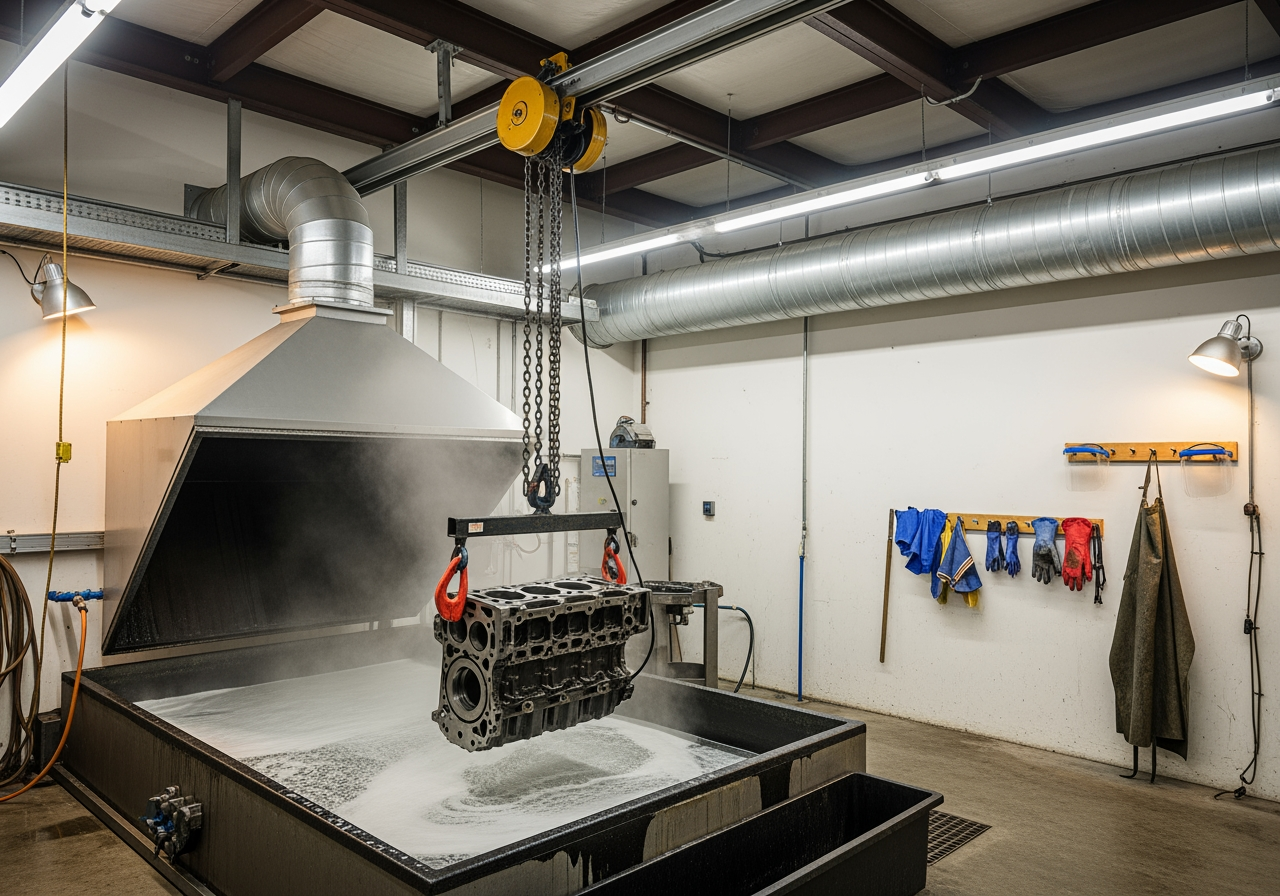
Installing a hot tank in your workshop is not a plug-and-play exercise. Get the specifications wrong, and you are looking at costly downtime, safety hazards, and failed compliance audits.
The difference between a properly specified hot tank installation and a rushed one shows up fast. Workshops that skip the planning stage end up with overloaded floors, inadequate ventilation causing chemical exposure, or electrical systems that cannot handle the heating load. These are not minor inconveniences – they are operational shutdowns waiting to happen.
This guide covers the hot tank installation specifications that engine reconditioning workshop managers need before the first bolt gets tightened.
Understanding Hot Tank System Requirements
What Makes Hot Tank Installation Different
Hot tanks for engine reconditioning operate at temperatures between 85-95 degrees Celsius. They use heated alkaline solutions to strip carbon deposits, grease, and oil from engine blocks, cylinder heads, and transmission components.
The installation demands exceed standard workshop equipment. These systems combine heavy structural loads, high electrical consumption, chemical handling, and continuous water circulation. Each of these factors needs proper planning before your reconditioning equipment setup begins.
Like other parts washers in a professional workshop, hot tanks require proper site preparation. But they go further than most equipment. Understanding the full scope before purchasing prevents expensive surprises during installation.
Weight, Load, and Structural Demands
A typical hot tank system for an engine reconditioning workshop weighs 800-1,500kg when empty. Filled with solution, that rises to 2,500-4,000kg. Add a loaded engine block, and you are pushing 5,000kg concentrated on a 2-3 square metre footprint.
That is why floor specifications come first in any reconditioning equipment setup. Everything else builds from there.
Floor Loading and Structural Specifications
Concrete Specifications and Floor Condition
Workshop floors must support minimum point loads of 2,500kg per square metre for standard hot tank installation. Larger systems handling excavator components or mining equipment parts require 3,500kg per square metre or reinforced concrete pads.
Most workshops built after 1990 meet this specification. Older facilities with standard 200mm concrete slabs need structural assessment before installation begins. Do not assume your floor is adequate – check it first.
The installation area requires level concrete within 5mm over the tank footprint. Uneven floors cause tank distortion under load, leading to lid seal failures and solution leaks.
Floor drains positioned within 2 metres of the tank simplify emergency drainage and routine maintenance. The drain must handle 400-600 litres per hour and connect to appropriate wastewater treatment. Hot tank alkaline solutions cannot discharge directly to stormwater.
Positioning for Access and Workflow
Positioning the tank near workshop walls saves floor space but creates access problems for maintenance. Allow minimum 800mm clearance on the service side for pump access, heating element replacement, and solution changes.
The loading side needs 1,200mm minimum for overhead crane clearance or forklift operation when handling large engine blocks. Hot tank installation specifications for engine reconditioning workshops always account for the size of components being cleaned – cylinder heads and engine blocks need proper crane or forklift access.
Locate tanks near engine disassembly areas to minimise transport distance for dirty components. Separate them from clean assembly areas to prevent contamination. Components dripping alkaline solution do not belong near freshly machined parts or new gaskets.
Hot Tank Electrical Specifications and Power Requirements
Three-Phase Supply and Circuit Protection
Hot tank electrical specifications start with three-phase supply. A 32-40 amp dedicated circuit handles most engine reconditioning hot tanks. No shared circuits with other workshop equipment.
Heating elements cycling on and off create voltage fluctuations. These interfere with sensitive equipment like diagnostic computers or CNC machines on the same circuit. This is why dedicated circuit protection is non-negotiable when planning your hot tank installation.
Cable sizing follows AS/NZS 3000 wiring rules based on circuit length and load. A 25kW heater at 20 metres from the distribution board needs 10mm2 cable minimum. Runs exceeding 30 metres need 16mm2 cable. Undersized cables overheat under continuous load, triggering circuit breakers and creating fire risks.
Heavy duty parts washers and other industrial cleaning equipment share similar electrical demands. But hot tanks run at higher temperatures for longer periods – making correct sizing even more critical.
Control Panel and Temperature Safety Systems
Control panels need weatherproof enclosures rated IP65 minimum when mounted near the tank. Alkaline solution vapours corrode standard electrical enclosures within months.
Temperature controllers require calibration to Australian standards with high-limit cutouts. These prevent solution temperatures exceeding 100 degrees Celsius. Runaway heating turns alkaline solutions into caustic steam clouds. The high-limit cutout operates independently from the main thermostat – it is the last line of defence against heating system failures.
Hot tank electrical specifications also require RCD (residual current device) protection rated at 30mA maximum. Hot tanks combine water, electricity, and metal components – RCD protection prevents electrocution if heating elements fail or control circuits develop faults.
Hot Tank Ventilation Requirements and Fume Extraction
Extraction Hood Design and Airflow Rates
Hot tank ventilation requirements are non-negotiable. Heated alkaline solutions generate vapours that irritate respiratory systems and corrode workshop equipment. Adequate ventilation removes these vapours before they reach harmful concentrations.
The ventilation system must move air at minimum 10 air changes per hour in the hot tank zone. Enclosed spaces require 15 air changes per hour.
Extraction hoods position 300-400mm above tank level to capture rising vapours at the source. Hood dimensions must exceed the tank opening by 150mm on all sides. Undersized hoods let vapours escape into the general workshop atmosphere. Ductwork from the hood to outside discharge requires 250-300mm diameter for adequate flow with minimal resistance. Corrosion-resistant materials are essential throughout.
Makeup Air and Discharge Point Requirements
Extraction fans need corrosion-resistant construction. Standard mild steel fans fail within 12 months in alkaline vapour environments. Stainless steel or plastic construction handles the chemistry without degradation.
Makeup air systems prevent negative pressure in the workshop when extraction fans operate. Negative pressure pulls exhaust fumes from vehicles, welding smoke, and dust through the building instead of out the ventilation system. Install makeup air vents sized at 80% of extraction capacity.
Discharge points for extracted air must clear building openings, air conditioning intakes, and neighbouring properties by minimum 3 metres horizontal distance and 1 metre vertical rise. Alkaline vapours discharged near windows or doors re-enter the building and defeat the extraction system.
Meeting hot tank ventilation requirements from the start prevents ongoing costs in corroded equipment, worker compensation claims, and WorkSafe improvement notices.
Water Supply, Drainage, and Chemical Handling
Water Supply and Quality for Engine Reconditioning
Hot tanks require dedicated cold water supply delivering 25-30 litres per minute at 300kPa minimum pressure. Standard 20mm workshop water lines provide adequate flow. 15mm domestic lines do not.
Extra heavy duty parts washers and hot tanks share a common water quality concern: hard water with high mineral content creates scale deposits on heating elements, reducing efficiency and causing premature failure. An inline water softener adds modest upfront cost but prevents expensive heating element replacements.
Emergency eyewash stations must install within 10 metres of the hot tank. Workers splashed with hot alkaline solution need immediate irrigation. Walking 20 metres to a bathroom tap turns minor exposure into serious chemical burns. The eyewash delivers 12 litres per minute minimum for 15 minutes continuous flow.
Drainage Infrastructure and Alkaline Solution Compliance
Drainage systems for hot tanks handle three distinct requirements: routine solution changes, emergency spills, and final decommissioning.
The floor drain connects to appropriate wastewater treatment – trade waste approval from Water Corporation or relevant local body covers alkaline solution disposal in most Australian workshops. Regional workshops may need neutralisation tanks before discharge.
Alkaline solution compliance workshop requirements are enforced. Trade waste agreements specify discharge limits for pH, temperature, and chemical oxygen demand. Workshops discharging without approval face penalties up to $125,000 plus cleanup costs for environmental damage.
Super heavy duty parts washers and hot tank systems both require spill containment systems. A bunded area or containment tray under the tank should hold 110% of tank capacity. A 400-litre tank needs 440-litre containment minimum.
Chemical storage areas need weatherproof conditions, separation from acids and oxidisers, and spill containment meeting dangerous goods regulations. Safety data sheets for all chemicals must be accessible near the tank – not filed away in the office.
Alkaline solution compliance workshop procedures should be posted at the mixing station. Workers mixing concentrated alkaline cleaners must wear chemical-resistant gloves, face shields, and aprons. The concentrated product causes severe burns on skin contact.
Safety Systems, Compliance, and Installation Costs
Safety Equipment and Emergency Systems
Wet abrasive blasters and other workshop equipment share basic safety requirements. Hot tanks have additional ones due to the combination of heat, chemicals, and electricity.
Automated lid systems prevent workers opening tanks during heating cycles when solution temperatures cause severe burns. The interlock system cuts heating power when the lid opens and prevents lid operation whilst heating elements are energised.
Emergency stop buttons position at tank controls and workshop exits for immediate system shutdown during accidents. Test emergency stops monthly to verify function. Personal protective equipment storage locates near the hot tank – workers need immediate access before approaching the operating tank.
Hot blasters used in the same workshop as hot tanks require coordinated emergency procedures. Both systems use heat and require clear evacuation paths and properly marked emergency stops.
Regulatory Compliance and Total Cost Planning
WorkSafe inspections focus on hot tank installations because they combine multiple hazards: chemicals, heat, electricity, and manual handling. Non-compliant installations attract improvement notices, fines, and potential shutdown orders.
Electrical work requires licensed electricians – workshop staff cannot install hot tank power supplies regardless of their general skills. The licensed electrician provides compliance certificates proving the installation meets Australian wiring rules. These certificates matter during WorkSafe inspections and insurance claims.
Hotwash Australia provides installation support and specification guidance based on decades of workshop installations across Australia. The team provides site assessments identifying electrical, structural, and hot tank ventilation requirements before equipment delivery.
Total hot tank installation cost: the project typically exceeds the equipment purchase price by 40-60%. A $25,000 hot tank becomes a $40,000 installed system after electrical upgrades, proper ventilation, drainage, and compliance work.
Budget breakdown for reconditioning equipment setup:
- Electrical infrastructure (three-phase upgrades): $8,000-$15,000
- Ventilation systems with extraction hoods and ductwork: $5,000-$8,000
- Floor preparation and drainage: $2,000-$6,000
- Compliance costs (trade waste, electrical certificates, plumbing): $1,500-$2,500
Workshops that budget only for equipment purchase face project delays whilst sourcing additional funding. Plan the full installed cost from the start.
Conclusion
Hot tank installation specifications determine whether engine reconditioning workshops gain a productive asset or an expensive problem. Floor loading capacity, electrical specifications, hot tank ventilation requirements, and water supply all need proper sizing before installation begins.
Reconditioning equipment setup done correctly delivers safe, compliant, and productive cleaning capacity for 15-20 years. Workshops that cut corners spend more on fixes, downtime, and compliance catch-up than they saved initially.
Parts washers of all types – from standard hot tanks through to super heavy duty automated washers – all benefit from the same principle: plan the installation properly before equipment arrives on-site.
For hot tank installation specifications specific to your workshop layout and engine reconditioning requirements, contact our hot tank specialists or email us at sales@hotwash.com.au.

Leave A Comment