
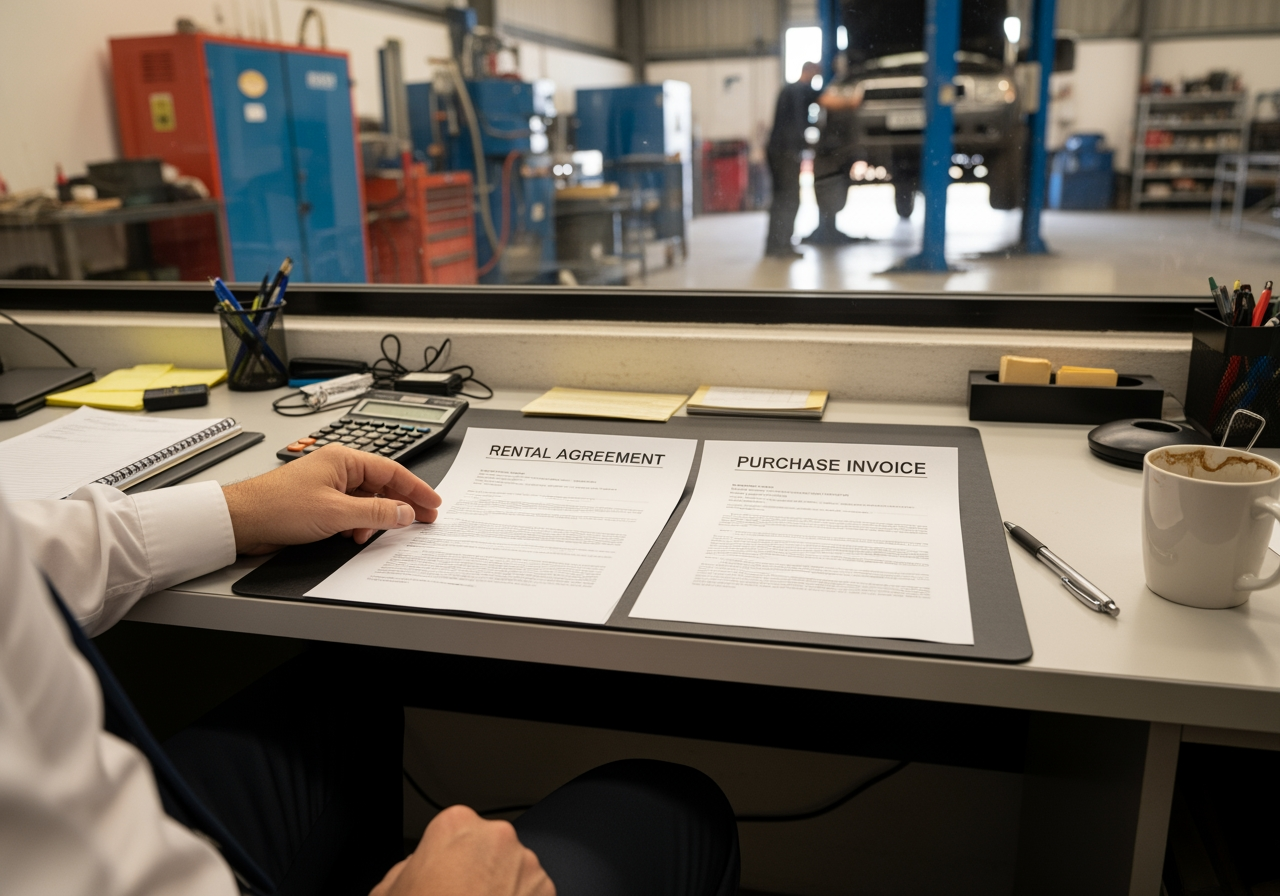
Workshop managers across Australia face the same question when manual cleaning can no longer keep up: rent or buy a parts washer? The answer depends on your cash flow, how often you clean parts, and how long you plan to keep using the equipment.
A mechanic earning $40 per hour who spends four hours scrubbing engine blocks costs $160 in labour per batch. Renting or buying parts washers both eliminate this expense – but each option affects your long-term finances differently. This comparison breaks down exactly which choice suits your operation.
How Parts Washer Rental Works
Typical Rental Costs and Agreement Terms
Most Australian industrial equipment suppliers offer weekly or monthly rental agreements for cleaning machines. Payments are fixed for the rental term. You use the machine and return it when the contract ends.
Typical parts washer rental costs range from $150-400 per week depending on machine size and features. A standard automated spray washer for an automotive workshop costs around $200 per week. Equipment rental options usually require a minimum term of 12-24 months. Break the contract early and you pay penalty fees.
What Rental Agreements Cover
Renting gives you immediate access to quality parts cleaning equipment without a large upfront outlay. You start saving labour costs from day one without touching your capital reserves.
Some agreements include scheduled maintenance and breakdown cover. Others charge extra for service calls. Read the contract carefully. Approved detergent requirements, insurance obligations, and return condition standards all add to your true rental cost.
Equipment rental options typically require a 10-20% deposit in some cases. Others require no deposit at all for established businesses with good credit history.
Parts Washer Purchase: Costs and Ownership
Purchase Price and Installation Costs
Parts washers vary widely in price depending on capacity and construction. Manual parts washers for smaller or lower-volume operations start around $3,000-5,000. Automated heavy-duty spray washers for busy workshops cost $15,000-30,000. Heavy industrial systems for mining and transport operations reach $50,000-80,000.
Installation adds $500-2,000 depending on machine size and site requirements. Three-phase electrical work for larger machines adds $800-2,500 if your workshop is not already set up. Factor these into your total upfront investment before deciding.
Long-Term Ownership Value
Purchasing means you own the asset. After two to four years, the machine is paid off and your only costs are maintenance and consumables.
Biodegradable detergent costs $50-150 per month depending on usage volume. Annual professional servicing runs $400-600. Replacement parts averaged across the machine’s lifespan add roughly $150-250 per year. Total annual running costs: $1,200-2,000 after purchase.
Quality machines last 15-20 years with proper maintenance. Ownership delivers excellent long-term value for operations with consistent parts cleaning needs.
Five-Year Cost Comparison
Rental vs Purchase: Real Numbers
This comparison uses a mid-range automated spray washer suitable for a busy Australian automotive workshop. Purchase price: $22,000. Rental cost: $220 per week.
Rental over five years: $57,200. Purchase over five years (price + delivery + five years of maintenance and consumables): $34,200. Difference: $23,000 in favour of purchasing.
That gap grows beyond five years. By year eight, rental costs exceed $91,000. By year ten, rental costs exceed $114,000 – more than five times the original purchase price.
The rent vs buy equipment decision shifts clearly toward purchasing beyond 18 months. Every additional week of rental reduces the advantage of having avoided upfront cost.
Cash Flow and Tax Considerations
Hotwash Australia has helped thousands of Australian workshops compare equipment rental options and purchase costs. Cash flow is the most common reason businesses choose renting over outright purchase.
Rental spreads costs across weekly or monthly payments. Equipment finance for purchasing typically runs 5-8% interest annually. A $22,000 loan at 6.5% over five years costs approximately $430 per month – roughly half the weekly rental rate expressed monthly. Always review rental agreement terms carefully alongside finance costs before deciding.
Australian tax treatment also differs. Rental payments are fully deductible as operating expenses. Purchased equipment qualifies for depreciation deductions or potentially the instant asset write-off depending on current ATO thresholds. Talk to your accountant to determine which structure provides better tax outcomes for your specific situation.
When Parts Washer Rental Makes Financial Sense
Short-Term and Seasonal Operations
Parts washer rental suits specific situations where flexibility outweighs total cost.
Short-term contracts: Mining contractors on a 12-month site need equipment they can return at the end of the contract. Seasonal businesses with busy peak periods and quiet off-seasons avoid paying for idle equipment year-round.
Businesses evaluating equipment rental options before committing can rent for three to six months to prove time savings. If automated parts cleaning delivers the expected productivity gains, you then buy with confidence.
Businesses Testing Automated Cleaning
Stainless steel parts washers for food processing applications often suit rental for businesses trialling compliance with food hygiene cleaning standards. Food processing operations changing equipment to meet updated regulations can rent while confirming the machine meets their requirements before purchasing.
Uncertain business futures also favour rental. If you are considering relocating, selling the workshop, or significantly changing your service offering within two years, rental avoids the hassle of selling used equipment.
The equipment ownership comparison shifts towards purchase the moment you can confirm consistent long-term use.
When Parts Washer Purchase Delivers Better ROI
Established High-Volume Workshops
Purchase makes financial sense when you plan to use the machine for three years or longer. The rent vs buy equipment decision tips towards purchase at around the 18-30 month mark depending on rental rates and purchase price.
High-volume operations using the washer daily accelerate payback through labour savings. A workshop cleaning three batches daily saves over $400 in labour per day versus manual methods. That rate recovers a $22,000 investment in under two months.
Established operations also benefit from ownership for flexibility. You choose your own service schedule, consumables, and maintenance providers. Rental agreements often restrict which detergents you use and which service providers you can call.
Long-Term and Mining Operations
Long-term mining maintenance operations should purchase. Extra heavy duty parts washers for major mining sites last 15-20 years with proper maintenance. The equipment ownership comparison is stark over that period – rental at $500 per week for 15 years costs $390,000. That is enough to purchase six or seven machines outright.
Operations that also need surface preparation equipment should run a similar rent vs buy equipment analysis for those assets. Wet abrasive blasters used for rust removal and surface prep are another category where purchase outperforms rental for long-term operations running consistent workflows.
The equipment ownership comparison consistently favours purchase for any operation confident of three or more years of regular use.
Rent-to-Own: The Middle Ground Option
Some suppliers offer rent-to-own arrangements where payments contribute toward ownership after 12-24 months. You get the low upfront cost of renting with a path to ownership.
The catch: rent-to-own typically costs 20-40% more than direct purchase over the contract term. A $20,000 parts washer on rent-to-own at $250 per week for 24 months costs $26,000 – $6,000 more than buying outright.
Rental agreement terms in rent-to-own contracts often allow early buyout at a discounted residual. Some programs also allow upgrades to larger capacity equipment by rolling remaining payments into a new agreement.
Rent-to-own suits businesses genuinely uncertain whether they need the equipment long-term but wanting the option to keep it. If you are confident you will use it for years, buy directly or arrange equipment finance. If you only need it short-term, straight rental costs less.
Conclusion
The equipment ownership comparison delivers a clear answer: rental costs less upfront but significantly more over time. Purchasing automated cleaning equipment requires capital but delivers substantially better value beyond two years.
For established Australian workshops with ongoing parts cleaning needs, purchasing quality equipment makes strong financial sense. The payback period through labour savings is typically three to six months – after which the machine generates pure savings for 10-15 years.
For short-term projects, seasonal businesses, or workshops trialling automated cleaning, rental provides flexibility without the capital commitment.
To compare specific rental and purchase options for your operation, contact our parts washer specialists or email us at sales@hotwash.com.au.

Leave A Comment