
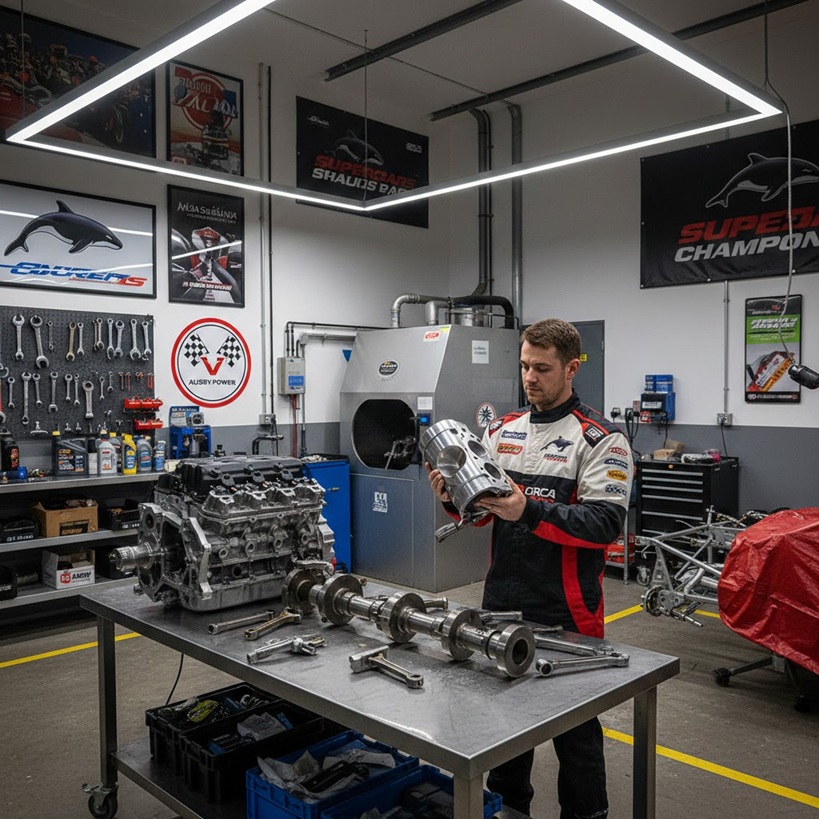
Racing teams lose championships in the workshop just as often as they do on the track. A V8 Supercar team might need to rebuild an engine between qualifying and race day. Every minute counts in that high-pressure environment. Contaminated parts can cost tenths of a second per lap. In motorsport, that margin represents the difference between a podium finish and the back of the pack.
Australian motorsport workshops operate under pressure that makes standard automotive maintenance look leisurely. A Supercars team at Bathurst faces intense deadlines. A rally squad preparing for Finke deals with extreme contamination. A Formula 4 operation runs on tight budgets but high expectations. Parts cleaning directly impacts performance and reliability across all these disciplines.
The problem lies in manual methods. Hand cleaning cannot deliver the speed or consistency required. A mechanic scrubbing a cylinder head for three hours introduces variables. Fatigue sets in. Pressure becomes inconsistent. Carbon deposits get missed. Automated washing eliminates that variability whilst cutting cleaning time to 20 minutes.
Why Racing Workshops Demand Different Standards
Motorsport parts cleaning is not about making components look good. It is about removing every trace of contamination. Residue affects performance, causes premature wear, or triggers a DNF (Did Not Finish).
Motorsport workshop standards far exceed those of production car servicing. Consider a gearbox rebuild between sessions. Any remaining metal particles or old gear oil can contaminate fresh lubricant. That contamination accelerates wear on precisely machined gears. In a road car, this might reduce service life slightly. In a race car running at 8,000 RPM, it causes catastrophic failure within laps.
Temperature cycling creates unique challenges. Racing engines experience extreme heat cycles. They go from ambient temperature to over 100°C repeatedly. This cycling causes carbon deposits to harden. They bond to aluminium and steel surfaces. Manual scrubbing with brushes often leaves microscopic residue in ports. Professional parts washers use high-pressure hot water spray to reach every surface. They dissolve hardened deposits that hand cleaning misses.
Precision tolerances also matter. Racing components operate at tolerances measured in thousandths of a millimetre. A tiny particle left in an oil gallery can score a bearing surface. A carbon flake in a valve port affects airflow. Production workshops can tolerate shortcuts. Racing workshops cannot.
Parts Cleaning Challenges Specific to Motorsport Operations
Racing workshops face specific contamination types. Standard automotive facilities rarely encounter these extreme demands.
Carbon Buildup from High-RPM Operation
Racing engines run at sustained high RPM with aggressive ignition timing. This creates extreme carbon deposits in combustion chambers. Deposits also form on piston crowns and in exhaust ports. These deposits bake on at temperatures exceeding 800°C.
Standard degreasers struggle to remove them. Immersion cleaning in hot tanks or spray washing at 85°C works better. The thermal shock and chemical action break down deposits effectively. This removes what would take hours of manual scrubbing.
Fuel Contamination from Race-Spec Fuels
E85 ethanol fuel, methanol, and race-grade petrol leave specific residues. E85 creates sticky deposits when it evaporates. These residues contaminate fuel system components. Throttle bodies and injectors become clogged.
Stainless steel parts washers handle this challenge well. They resist corrosion from ethanol-based contamination. This makes them ideal for cleaning sensitive fuel system components without damage.
Gearbox and Differential Oil Residue
Racing gearboxes use oils with heavy Extreme Pressure (EP) additives. These contain sulphur and phosphorus compounds. When these oils break down under racing loads, they leave tenacious residues. They stick to gears, bearings, and housings.
Manual cleaning with solvents often leaves a film. Automated spray washing removes this fully. Heated biodegradable detergent cuts through the additive residue. This prevents contamination of fresh lubricant upon reassembly.
How Automated Parts Washers Improve Racing Workshop Efficiency
Racing teams that switch to automated systems report measurable improvements. Productivity increases and component reliability improves.
Consistent Cleaning Results Every Cycle
A mechanic cleaning a cylinder head at 2 PM after six hours of work differs from one at 9 AM. Fatigue and distraction introduce variability. An automated washer delivers identical results every time. It applies the same temperature and pressure whether it is the first cycle or the tenth. This consistency supports high motorsport workshop standards.
Faster Turnaround Between Sessions
Turnaround time determines competitiveness. A touring car team might have 90 minutes between practice and qualifying. They need to diagnose an issue, strip the engine, clean components, and reassemble.
Cleaning speed becomes critical. Manual cleaning takes hours. Automated washing takes 15-20 minutes. That time difference means making the session versus missing it. While the main machine runs, mechanics can clean smaller fasteners in manual parts washers. This keeps the workflow moving efficiently.
Cleaner Workshop Environment
Manual parts cleaning creates mess. Solvent drips on benches. Dirty rags accumulate. This contamination spreads to tools and clean parts. Enclosed automated washers contain all the mess. Parts come out clean and dry. The workshop stays professional, which is vital for team presentation and sponsor relations.
Selecting the Right Parts Washer for Racing Workshop Applications
Not all washers suit motorsport operations. You need specific features to handle racing requirements. At Hotwash Australia, we help racing teams choose equipment that matches their specific needs.
Chamber Size Matching Component Dimensions
A Formula 4 team works with small engines. A V8 Supercar team handles large blocks. You must measure the largest components you clean. The washer chamber needs to accommodate engine blocks, cylinder heads, and gearbox housings.
Heavy duty parts washers often provide the right balance of size and power for general racing applications. They fit standard workshop footprints whilst handling substantial components.
Durability for Intensive Use
Racing workshops run harder than standard facilities. During race weekends, equipment might run 12 cycles per day. Construction quality matters. Extra heavy duty parts washers offer robust construction. They feature heavy-gauge steel and industrial pumps. Australian-made systems built for mining applications handle these demands reliably.
Stainless Steel for Fuel System Work
Teams cleaning fuel system components benefit from stainless steel. Ethanol residues can corrode mild steel over time. Stainless steel models resist this corrosion. They meet the cleanliness standards required for high-performance injectors and rails.
Applications in Australian Racing Operations
Australian racing teams use automated washing to maintain competitive advantages.
V8 Supercar Teams at Bathurst
The Bathurst 1000 is Australia’s most demanding race. Teams rebuild engines and gearboxes multiple times during the event. Automated parts washing cuts cleaning time by 75%. This lets mechanics focus on assembly and setup.
Super heavy duty parts washers are common in these major team workshops. They handle the volume of parts generated by a two-car operation during a race weekend.
Rally Teams and Off-Road Preparation
Rally cars endure punishment circuit cars never see. They face rocks, mud, dust, and water crossings. Teams need to strip and inspect components between stages. They must identify damage before it causes failure.
Automated washing removes mud and oil quickly. This makes inspection faster and more accurate. Teams catch cracked components before they fail mid-stage. Professional parts washers are built to handle this heavy sediment load.
Historic and Restoration Racing
Historic racing requires maintaining engines with older metallurgy. Tighter tolerances and soft alloys need care. Manual scrubbing can damage delicate surfaces. Automated spray washing cleans effectively without harsh abrasion.
For restoration projects, surface preparation is key. Wet abrasive blasters remove rust and old paint without damaging the substrate. This prepares the part perfectly for inspection and re-coating. When restoring vintage aluminium castings, wet abrasive blasters provide gentle but thorough cleaning that preserves the original metal.
Maintenance and Operating Considerations for Racing Applications
Racing environments demand reliable racing team equipment. Understanding maintenance prevents downtime during critical weekends.
Daily and Weekly Maintenance
Daily checks take five minutes. Operators check detergent levels and clear the filter basket. Weekly cleaning of the filter basket prevents debris recirculation. Racing components shed metal particles and carbon. Keeping the solution clean ensures every part comes out spotless.
Biodegradable Detergent Selection
You must use detergents formulated for automation. Racing contamination requires industrial chemistry. Products like ARDROX handle carbon and EP oils effectively. They are safer than solvents and do not foam excessively in the machine.
Water Quality Management
Hard water creates mineral deposits on heating elements. This reduces efficiency. If your workshop has hard water, use a softener. This extends the life of your heating elements and pumps.
Cost Analysis: Automated vs. Manual Cleaning
Racing teams operate on budgets. Understanding the real cost justifies the investment.
Labour Cost Comparison
A qualified racing mechanic earns significant wages. Cleaning a V8 cylinder head manually takes three hours. That costs hundreds in labour. An automated washer does it in 20 minutes for a fraction of the cost. The savings accumulate rapidly over a season.
Better Resource Allocation
Racing mechanics have specialised skills. They build engines and analyse data. Using them to scrub parts wastes their expertise. Automated cleaning frees them for performance work. This is better resource allocation.
Reduced Solvent Costs
Manual cleaning consumes solvents and brake cleaner. A busy workshop spends hundreds monthly on chemicals. Automated washing uses efficient biodegradable detergent. The annual savings often exceed $2,000.
Safety Improvements in Racing Workshop Operations
Racing workshops face unique safety challenges. Automated washing addresses several risks.
Reduced Solvent Exposure
Traditional cleaning uses aggressive solvents. Mechanics breathe vapours in enclosed spaces. Biodegradable detergents eliminate most of this exposure. This protects crew health and maintains performance focus.
Less Manual Handling
Scrubbing heavy components causes repetitive strain. Mechanics develop chronic pain from manual cleaning. Automated washing eliminates this strain. Crew members load components and remove them clean.
Contained Cleaning Process
Manual cleaning splashes oil and solvent. This creates slip hazards. Enclosed automated washers contain all mess. Parts come out dry. The workshop floor remains safe and clean. For heavily contaminated rally components, wet abrasive blasters can remove caked mud and corrosion safely whilst keeping the workshop environment clean.
Conclusion
Motorsport success depends on marginal gains. You find small advantages that compound into competitive edges. Parts cleaning represents one of these margins. The difference between spotlessly clean components and “good enough” manual cleaning shows up in reliability.
Australian racing teams face intense competition. Equipment failures cost championships. Slow workshop processes waste practice time. Automated parts washing addresses these issues. It delivers faster cleaning and reliable results.
Investing in racing team equipment like automated washers pays back through labour savings. It improves reliability and resource allocation. Mechanics should build engines, not scrub parts. Let the machine handle cleaning whilst your crew focuses on winning.
Ready to upgrade your workshop to championship standards? Contact our technical team to discuss your specific requirements. Email us on sales@hotwash.com.au to arrange a demonstration or request specifications.

Leave A Comment