
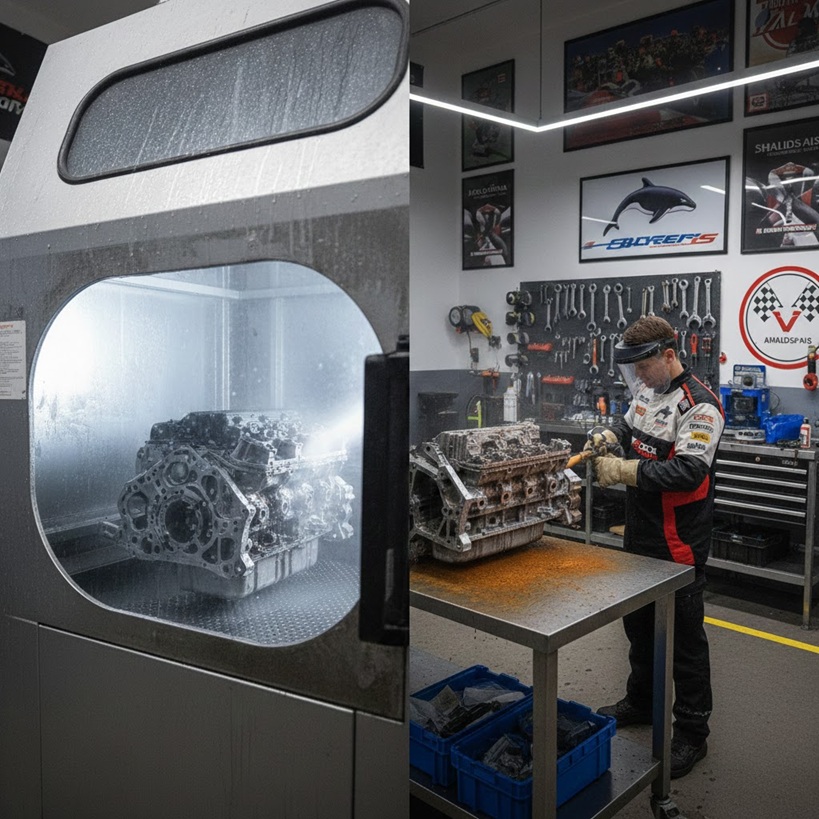
Most industrial cleaning falls into two separate camps. You are either washing away surface contamination or you are preparing a surface for a new coating. Wet abrasive blasting sits right in the middle of these two needs. It does both jobs in one pass whilst eliminating the dust and heat that ruin traditional methods.
For workshops dealing with aviation parts or mining equipment, surface integrity matters as much as cleanliness. This process delivers results that pure washing cannot match. It is also safer than dry blasting because it reduces chemical exposure for your team. The process combines high-pressure water with abrasive media to clean and profile surfaces at the same time. This removes everything from light rust to heavy coatings. It leaves behind the ideal texture for new finishes to stick to.
Hotwash’s wet abrasive blasters handle jobs that fall between standard washing and aggressive stripping. This is the “sweet spot” for modern workshops. You get more than just a clean part without the risks of traditional surface preparation methods like dry sandblasting.
What Wet Abrasive Blasting Actually Does
This method mixes water and abrasive media in a pressurised stream. Common media choices include crushed glass, garnet, or aluminium oxide. The water surrounds each abrasive particle as it travels through the nozzle. This controls the impact and stops dust by 95% compared to dry methods.
The result is a cleaning method that removes dirt and creates a surface profile in one operation. You are not just washing away oil and grease. You are also removing rust, old paint, and carbon deposits. The water creates a microscopic texture that new coatings need to bond properly.
Traditional surface preparation methods often require multiple steps. You might have to degrease the part first and then use a grinder or a dry blaster. This takes twice as long and creates more mess. Wet abrasive blasters clean and prepare in one pass. This saves time and keeps your workshop floor cleaner.
The Technical Advantages of Wet Systems
Choosing the right equipment depends on understanding the technical benefits. Wet systems offer several advantages over dry or chemical alternatives.
Improved Dust Suppression and Safety
Dry abrasive blasting creates silica dust. This dust is dangerous to breathe and requires full containment booths. It also needs expensive air extraction systems to keep the air safe. Wet abrasive blasters capture these particles in water droplets. The waste falls to the ground instead of floating in the air.
This dust control is a major benefit for Australian workshops. It helps you comply with Safe Work Australia rules. You can often use these machines in open areas without needing a massive containment room. This makes the equipment more flexible for busy facilities.
Heat Control and Material Integrity
Friction creates heat during dry blasting. This heat can warp thin metal parts or change the properties of heat-treated steel. Water cools the surface instantly during the blasting process. This keeps the part at a safe temperature throughout the cycle.
Precision components stay within their allowed size limits. This is vital for engine blocks, turbine blades, and hydraulic cylinders. You can remove heavy carbon without worrying about damaging the underlying metal. This level of control is why many managers choose stainless steel parts washers and wet abrasive blasters for their high-end work.
Aviation Parts Cleaning Standards and Requirements
Aviation maintenance has some of the strictest rules in the world. Cleaning methods must remove all contamination without changing the part’s dimensions. Wet abrasive blasters meet these high standards where traditional washing falls short.
Meeting Strict Industry Specifications
Turbine parts and structural components often have tiny cracks that hide under grease. Pure washing might leave some dirt behind. Dry blasting might hammer the metal and hide the crack. At Hotwash Australia, we provide wet abrasive blasters that clean these surfaces gently but thoroughly.
The water component prevents the material from getting too hot. This is critical for magnesium and aluminium parts used in planes. Wet abrasive blasters remove corrosion from aluminium without embedding abrasive particles into the soft metal. This preserves the part’s strength and safety.
Enhancing Non-Destructive Testing (NDT)
Before a part is certified as safe, it often goes through NDT inspection. This involves using dyes or magnets to find hidden flaws. The surface must be perfectly clean for these tests to work.
Wet abrasive blasters remove oxidation and carbon without masking defects. They create the smooth, satin finish that inspectors need to see. One process replaces three separate steps: chemical cleaning, rinsing, and mechanical preparation. This speeds up the overhaul cycle for busy aviation workshops.
Media Selection and Its Impact on Results
The type of media you put in your machine changes the outcome. You can switch between gentle cleaning and aggressive stripping just by changing the abrasive.
Choosing Between Fine and Coarse Abrasives
Fine glass beads are perfect for delicate finishes. They remove light oxidation without taking away any of the actual metal. This is ideal for precision parts or medical equipment. It leaves a beautiful satin finish that looks professional and clean.
Coarse garnet is better for heavy-duty jobs. Use this when you need to remove thick rust or old industrial paint. It creates a deeper anchor pattern for heavy coatings. Many workshops keep two or three types of media on hand to handle different jobs.
Managing Media Costs and Life Cycles
Buying media is an ongoing cost for any workshop. However, water acts as a lubricant for the abrasive particles. This means the media breaks down much slower than it does in a dry system. You can often use the same media for 30% to 40% longer.
This lowers your overall operating costs. It also means you produce less waste that needs to be hauled away. For high-volume operations, these savings add up to thousands of dollars every year. Efficiency is about more than just speed; it is about reducing waste too.
The Dust Suppression Advantage in Workshop Environments
In Australia, workplace safety is a top priority for every manager. Dust from dry blasting is a major health risk. It can lead to long-term lung problems for your staff. Wet abrasive blasters solve this by keeping the dust wet.
Visible dust is reduced by up to 95%. This means your operators can see what they are doing much better. They don’t have to work “blind” inside a cloud of dust. This leads to better quality work and fewer mistakes. It also means you don’t have to spend hours cleaning dust off other machines in your workshop.
Applications Across Key Australian Industries
Different sectors have unique cleaning challenges. This equipment is versatile enough to handle them all.
Mining and Heavy Equipment Maintenance
Mining gear lives in the dirt and mud. When it comes in for repair, it is often covered in layers of grease and rust. Hot tanks are great for soaking these parts first. Then, wet abrasive blasters can be used to prepare the welding areas.
You need a clean, textured surface for repair welds to hold. Wet abrasive blasters remove the scale and rust from bucket teeth and chassis parts. This ensures the weld penetrates deep into the metal. This makes the repair last longer in the harsh conditions of an Australian mine site.
Marine and Automotive Restoration
Saltwater causes terrible corrosion on boats and trailers. Wet abrasive blasters are the best way to remove barnacles and rust from aluminium hulls. They strip away the old antifouling paint without damaging the gelcoat underneath.
For car restorers, this method is perfect for chassis and suspension parts. It removes years of road grime and rust. It leaves the metal ready for primer and paint. Because there is no heat, there is no risk of warping the thin panels of a classic car.
Food Processing and Sanitary Equipment
Hygiene is everything in the food industry. Stainless steel tanks and mixing gear must be perfectly clean. Standard parts washers are good for small items, but large vessels need more power.
Wet abrasive blasters clean stainless steel to a high standard. They remove burnt-on food product and labels. They leave the surface smooth so bacteria have nowhere to hide. This helps food businesses meet their safety audits with less manual labour.
Operating Costs and Efficiency Comparisons
When you look at the budget, wet abrasive blasters are very competitive. They cost more to run than a simple pressure washer but less than a dry blast room.
The main costs are compressed air, media, and water. A typical system uses about 40 to 60 litres of water, which can be recycled. You don’t need expensive dust extraction fans running all day. You also don’t need a second person to help with dust control or cleanup.
In many cases, heavy duty parts washers are faster for oily parts. But if you have rust or paint, wet abrasive blasters are the winner. They can clean a hydraulic cylinder in 15 minutes. Doing the same job by hand with scrapers and chemicals could take two hours. The time savings alone pay for the machine very quickly.
System Integration and Workflow Optimization
Smart workshops don’t rely on just one machine. They build a cleaning “cell” that uses different tools for different stages.
You might start by putting a greasy engine part into an automated spray washer. This removes the bulk of the oil and grime. If the part needs inspection or painting, it then goes to the wet abrasive blasters. This removes any remaining carbon or rust and adds the surface texture.
Managing the waste is also simpler with an integrated system. Settling tanks catch the used media and heavy dirt. The water can then be filtered and reused. This closed-loop approach is better for the environment and reduces your water bills. For the biggest jobs, you might even use extra heavy duty parts washers before the final blasting stage.
Choosing Between Wet Blasting and Other Methods
How do you know if you need a blaster or a washer? Ask yourself what you want the surface to look like when you are finished.
If you just want the oil gone so you can put the part back in a machine, a washer is best. If you need to paint, weld, or inspect the part for cracks, you need wet abrasive blasters. Surface preparation methods are about more than just removing dirt. They are about preparing the metal for its next life.
Wet abrasive blasters are the best choice when:
- You have rust or scale that soap won’t touch.
- You are applying a new coating or paint.
- You need to work in a clean, open workshop.
- The parts are sensitive to heat or warping.
If you are cleaning high volumes of small, greasy bolts, stick with an automated washer. It will be more efficient for that specific task.
Conclusion
The middle ground between cleaning and surface preparation is a powerful place to be. Wet abrasive blasters remove the compromise of choosing one over the other. They give you a clean, profiled surface without the dust, heat, or chemicals of older methods. They are the optimal solution for Australian workshops that value quality and safety.
By combining these steps into one pass, you save time and money. Your team stays safer, and your customers get a better finished product. Whether you are in aviation, mining, or car restoration, this technology helps you work smarter.
If you want to improve your workshop results, speak with our industrial cleaning experts to find the best system for your needs. Email our team at sales@hotwash.com.au today for a quote or technical advice.

Leave A Comment