
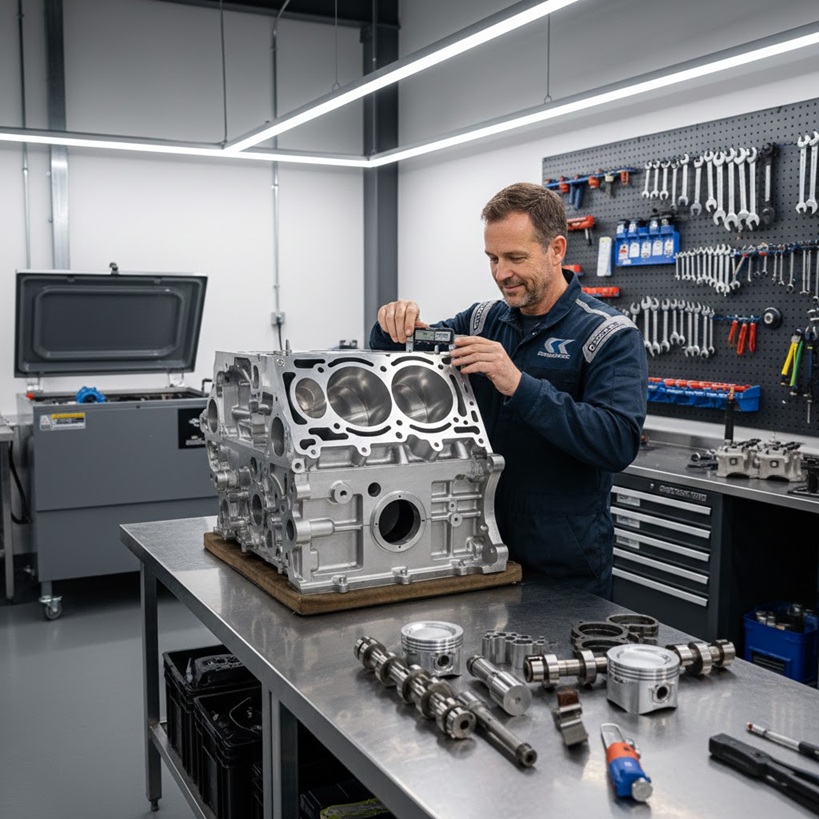
Custom performance builders face a challenge most workshops never encounter. When an engine costs $80,000 to build and a customer expects 1,200 horsepower reliably, contamination is not just inconvenient. It destroys reputations and engines. A single metal particle left in an oil gallery can score a bearing. Carbon residue in a port reduces flow by 8%. Performance builders know this well. The difference between a 10-second quarter-mile pass and a catastrophic failure often comes down to parts cleanliness.
Manual cleaning with brushes and solvent does not cut it for high-end builds. It is inconsistent and time-consuming. It also exposes technicians to harsh chemicals for hours each day. Automated performance engine equipment solves this problem. It uses hot water spray technology to deliver spotless results in 15 minutes. This is the same job that takes 4 hours by hand.
This guide explores the specific cleaning needs of performance shops. It explains how to meet strict custom builder requirements whilst improving workshop efficiency. Whether you are building drag racing engines or high-end marine units, the right cleaning process is essential.
Why Performance Builds Require Superior Parts Cleaning
Standard automotive workshops clean parts to remove visible oil and grease. Performance builders operate at a different standard entirely. A turbocharged LS engine making 1,000 horsepower runs bearing speeds much higher than stock. Oil clearances measured in thousandths of an inch leave no room for contamination.
Managing Precision Tolerances
One machine shop in Melbourne lost a $45,000 build due to a tiny metal particle. The particle scored a crankshaft journal during break-in. This was traced back to inadequate parts cleaning before assembly. When you work with tight tolerances, “mostly clean” is actually dirty.
High-end builds involve many machining steps. Boring, honing, and decking all create metal swarf. These particles hide in the most difficult places to reach. A professional parts washer uses high-pressure jets to blast these hidden areas. This ensures that every oil passage is clear before the first start.
Removing Stubborn Contaminants
It is not just about metal chips. Carbon deposits from combustion chambers affect compression ratios. Cutting fluid residue from CNC work can contaminate new engine oil. Even assembly lube from previous test fits can trap dirt.
Solvent-based cleaning often leaves a thin chemical film. This film can stop assembly lube from sticking to the metal properly. Hotwash Australia provides systems that use biodegradable detergents. These rinse away completely with hot water. This leaves the metal surface ready for a perfect bond with your high-performance lubricants.
What Performance Shops Actually Clean
Performance builders do more than just wash cylinder heads. A high-end build requires cleaning dozens of components to exacting standards. Each part has its own set of challenges.
Engine Block Preparation
Engine block preparation involves multiple cleaning stages. After machining, blocks contain metal particles in every oil passage and coolant jacket. Manual cleaning with brushes reaches maybe 60% of internal passages. Heavy duty parts washers circulate hot water through all galleries at once. This removes 100% of contamination in 20 minutes.
Cylinder Heads and Precision Drivetrain
Cylinder heads present even greater challenges. Performance heads feature CNC-ported runners with complex shapes. These are impossible to brush clean by hand. Carbon buildup in combustion chambers must be removed to ensure consistent performance. Automated spray washing reaches every surface, including ports, chambers, and valve guides.
Crankshafts and connecting rods require absolute cleanliness. Oil holes drilled through journals collect metal particles during manufacturing. These particles cause bearing failure within hours if they stay inside. Rotating spray arms in automated washers blast contamination from every drilled passage. This ensures complete cleaning while the part rotates.
The Economics of Custom Builder Requirements
Performance shops often bill high rates for skilled technicians. Every hour spent scrubbing parts is an hour not spent on precision assembly. This is where manual parts washers are replaced by faster automation.
Calculate the real cost of manual cleaning on a typical performance engine:
- Cylinder block: 3 hours
- Cylinder heads (pair): 2.5 hours
- Crankshaft: 1.5 hours
- Miscellaneous components: 3 hours
- Total labour: 10 hours at $150 per hour = $1,500.
An automated system handles the same load in about 72 minutes of machine time. The technician only spends a few minutes loading and unloading. The total labour cost drops to under $200. This massive saving helps shops meet their custom builder requirements without blowing the budget.
Equipment for High-End Engine Assembly
Choosing the right performance engine equipment involves looking at the technology inside the cabinet. Not all parts washers are the same. Performance builders need heat and pressure to get the job done right.
The Power of Hot Water Spray Technology
Mechanical action and heat are the keys to a clean part. Water heated to 80°C softens carbon and heavy grease. High-pressure jets (at 80 PSI) then blast the contamination away. This reaches into blind holes and complex passages that a brush could never touch.
Hot tanks provide another option for immersion cleaning (soaking parts in heated solution). These are excellent for removing heavy carbon from used engine blocks. The heated solution penetrates deep into every cavity. This makes it a favourite for shops doing high-volume restoration work.
Material Compatibility and Protection
Performance builders work with diverse materials. Billet aluminium components clean differently than cast iron blocks. Stainless steel parts washers are often chosen for their corrosion resistance and professional look.
Aluminium components respond well to alkaline detergents and hot water. This removes oil and light oxidation without damaging the metal. For cast iron, you can use more aggressive cleaning cycles. Some exotic materials like titanium rods need neutral detergents and lower temperatures. Modern systems offer programmable controls to protect these sensitive parts.
Drivetrain Components and Unique Challenges
Performance transmissions and differentials present unique challenges. These components are often heavy and covered in thick gear oil. This residue mixed with metal particles creates a stubborn paste.
Transmission cases can be large and heavy. They require parts washers with a high load capacity. A standard washer might struggle with the weight of a full drivetrain assembly. Extra heavy duty parts washers can handle several hundred kilograms easily.
Differential housings have complex internal shapes. Gear oil is notoriously hard to wash away with cold water. The 80°C water in a professional washer melts the oil in minutes. This leaves the housing clean and ready for a new gear set. It also makes it much easier to inspect for cracks or wear.
For heavily corroded or painted housings that need complete surface preparation, wet abrasive blasters can remove rust and old coatings whilst creating the ideal surface for new paint. This is particularly valuable for restoration builds where appearance matters as much as performance.
Integration into the Performance Shop Workflow
A parts washer must fit your existing processes. Performance builds usually happen in stages. The machine should keep up with the pace of your workshop.
The typical workflow looks like this:
- Machining: Parts come off the CNC mill or lathe.
- Initial Inspection: Check dimensions and surface finish.
- Automated Washing: A 20-minute cycle removes all machining fluids.
- Drying: Parts dry quickly due to the high water temperature.
- Final Inspection: Verify cleanliness before assembly.
This workflow keeps the build moving. Whilst one part is in the washer, the technician can work on other tasks. This eliminates bottlenecks and keeps the assembly area clean. A clean workshop reflects the quality of your builds to your customers.
Hotwash Australia: Built for Demanding Applications
Performance builders cannot afford equipment failures. When a customer’s expensive engine is waiting for assembly, downtime is costly. Locally made equipment offers several advantages over cheap imports.
Hotwash Australia builds machines in Perth using heavy-gauge steel. They use industrial pumps and heating elements that are designed to last for decades. If something does go wrong, parts are available immediately. You do not have to wait weeks for a container from overseas.
These machines feature 3mm steel walls and sealed bearings. They are designed for daily use in demanding workshop environments. This reliability is why the best shops across the country choose these systems. It ensures their performance engine equipment is always ready when they are.
For surface preparation on rare or delicate materials, wet abrasive blasters provide gentle but thorough cleaning. They remove corrosion without damaging soft alloys used in vintage racing engines. This capability makes them valuable for restoration specialists working on historic performance builds.
Conclusion
Performance engine building is about precision and reliability. Automated parts washing delivers the cleanliness standards required for high-horsepower builds. It reduces labour costs and improves overall workshop efficiency. By choosing the right equipment, you protect both the engine and your professional reputation.
The transition from manual scrubbing to automated washing is a smart business move. It pays for itself through labour savings and better quality control. Your customers will appreciate the attention to detail, and your technicians will enjoy a safer work environment.
For expert guidance on choosing the right performance engine equipment, contact our performance engine specialists or email us on sales@hotwash.com.au today. We can help you select the best system to meet your specific workshop needs.

Leave A Comment