
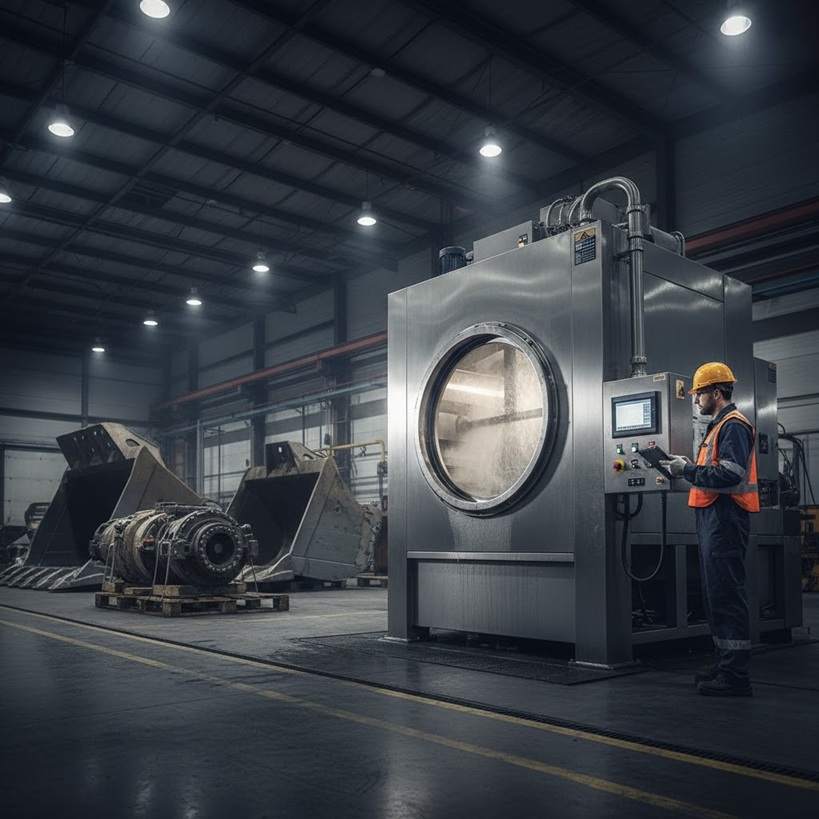
A parts washer breaks down at 2am in a FIFO mining operation. The cost is not just a service call. It is a mechanic standing idle whilst a haul truck sits in the bay. It is a production delay that cascades through the shift. A $15,000 per hour excavator waits for clean hydraulic components before it can return to the pit.
Reliability is not just about convenience. It protects uptime when every hour counts. Operations running continuous shifts face high stakes. A single breakdown can cost more than the equipment’s entire purchase price.
The Hidden Mathematics of Downtime
Most workshops calculate equipment costs based on purchase price and running expenses. They miss the larger number. This is the cost of what does not happen when equipment fails.
A maintenance facility might process 40-60 component batches per week. Each batch represents parts from equipment worth millions of dollars. When the washer fails, those components sit dirty. The equipment stays offline. The production machinery generates zero revenue.
The maths is simple. A haul truck generates about $15,000 per hour in a typical iron ore operation. Transmission components need cleaning before reassembly. If the parts washer breaks down, that truck sits idle. A four-hour washer repair does not cost $400 in service fees. It costs $60,000 in lost haulage capacity.
You must multiply that across multiple pieces of equipment. Add the overtime costs for mechanics waiting on repairs. Factor in rush freight charges for emergency parts. A single event involving equipment breakdown costs can exceed $100,000.
Why Industrial Washers Fail in Continuous Operations
Parts washers fail for predictable reasons. Most trace back to three factors. These are design limitations, maintenance gaps, and demands that exceed specifications.
Pump failures lead the list. Pumps in parts washers run continuously during cleaning cycles. They often run 12 hours per day. Low-quality pumps fail within 18-24 months. Industrial-grade pumps built for continuous duty last 5-7 years with proper maintenance.
Heating element burnout follows closely. Elements rated for intermittent use fail quickly in continuous operations. They are designed for workshops where the washer runs twice daily. They are not built for mining facilities where it operates around the clock. When elements fail, water temperature drops. Cleaning effectiveness plummets. Cycle times double or triple.
Control system failures shut down operations completely. Contactors and relays fail without warning when exposed to heat and vibration. In remote operations, replacement parts might be days away. The washer becomes an expensive storage tank whilst waiting for a simple control board.
The Australian Mining Context
Australian mining operations present unique reliability challenges. Remote locations mean parts are not available on demand. Extreme temperatures stress equipment beyond design specifications. Dust and vibration accelerate wear.
A washer breakdown in a Perth workshop means a service call arrives within hours. The same breakdown at a Pilbara mine site is different. It means flying in technicians and parts. The repair that costs $800 in the metro area costs $4,000 in the remote operation. This is before you account for the operational downtime impact.
At Hotwash Australia, we understand these challenges. Equipment that works in controlled workshops often fails in harsh mining conditions. Temperature swings between 5°C nights and 45°C days stress components. Fine dust infiltrates control panels. Vibration from nearby machinery loosens connections. These conditions demand extra heavy duty parts washers. You need equipment built for extreme duty, not just marketed as “heavy-duty.”
What Reliability Actually Means in Equipment Design
Reliability is not luck. It is engineering. Equipment that runs continuously for years uses specific design features. Cheaper alternatives often omit these.
Component oversizing provides a reliability advantage. Pumps rated 50% above requirements run cooler. Heating elements with excess capacity cycle less frequently. Oversized wiring handles current surges without degradation. This costs more upfront but delivers years of additional life.
Industrial-grade components make a difference. Industrial contactors cost three times more than commercial versions. However, they handle millions more cycles. Industrial pumps use metal housings instead of plastic. The price difference is 40%, but the service life difference is 300%.
Material selection also matters. Stainless steel parts washers resist corrosion indefinitely. Powder-coated steel develops rust within 3-5 years. Rust leads to leaks and structural failure. It contaminates cleaned parts. Stainless steel ensures the machine structure outlasts its internal components.
The Maintenance Gap That Kills Equipment
Even well-built equipment fails without proper maintenance. The gap between required maintenance and actual practices destroys washers.
Mining operations run 24/7. Maintenance windows are scarce. Washers operate continuously until they fail. Preventive maintenance gets deferred because “it is still working.” Major damage occurs before symptoms appear.
This happens frequently with manual parts washers pushed into continuous roles. They are designed for intermittent use. When used constantly, their pumps wear out rapidly.
A pump bearing costs $120 and takes 30 minutes to replace. It gets ignored until it seizes. The seized bearing destroys the pump shaft. The failed pump allows the heating element to run dry. The dry element burns out. A $120 bearing becomes a $3,000 repair job. It also causes four days of downtime.
Calculating True Reliability Costs
Equipment purchase decisions often focus on initial cost. A $15,000 washer seems cheaper than a $28,000 alternative. But reliability changes the mathematics.
The cheaper washer requires major repairs every 18 months. Pump replacements and heating elements add up. The repairs average $3,000 per event. Add four days of downtime per failure at $2,000 per day in lost productivity. Over five years, that “cheaper” washer costs over $85,000 total.
The expensive washer runs five years between major services. It costs $32,000 total over the same period. The “expensive” option costs significantly less when you factor in equipment breakdown costs.
Design Features That Predict Reliability
Certain design features predict longevity. Three-phase power systems provide more reliable heating and pumping than single-phase alternatives. Three-phase elements heat evenly. They last longer. Three-phase pumps run cooler and handle higher capacities.
Programmable control systems identify problems early. Temperature sensors detect heating issues. Pressure sensors identify pump problems. These systems prevent catastrophic failure.
Robust designs are visible in hot tanks used for immersion cleaning. These units handle heavy, greasy components. They rely on simple, durable heating systems and thick insulation. This keeps the chemistry hot without overworking the elements.
The Service and Support Reality
Equipment reliability extends beyond the machine. It includes the support infrastructure. A washer becomes unreliable if parts take three weeks to arrive.
We manufacture equipment in Perth with parts that ship locally, not overseas. Service technicians understand Australian conditions. Warranty support does not involve international shipping.
When a control board fails on imported equipment, replacement takes weeks. International freight adds delays. Customs clearance adds uncertainty. The washer sits idle.
The same failure on Australian-made equipment is different. It means same-day parts dispatch. Overnight freight reaches most mining regions. The washer is back in service within 48 hours. That time difference saves tens of thousands of dollars.
Specifying Equipment for Continuous Operations
You must match specifications to actual demands. Marketing claims often mislead buyers.
Duty cycle ratings reveal the truth. Equipment rated for eight hours daily fails in 24-hour environments. Look for “continuous duty” ratings. Super heavy duty parts washers specify this capability. They have documented component ratings to back it up.
Warranty terms reflect confidence. A 12-month warranty suggests the equipment is built to survive just that long. A 36-month warranty indicates components built for extended life. Check the exclusions. If pumps are not covered, they are likely weak points.
Surface Preparation Reliability
Reliability matters in all cleaning stages. This includes surface preparation. A breakdown here stops painting or coating processes.
Hot blasters combine water and abrasive media. They must resist internal wear. High-quality units use wear-resistant pumps and nozzles. They handle the abrasive slurry without failing. Reliable blasting equipment ensures that surface prep does not become a bottleneck. Wet abrasive blasters built for continuous duty provide consistent surface preparation results without unexpected downtime.
Making the Reliability Investment
Equipment reliability requires upfront investment. This investment returns multiples over the equipment lifespan. You should calculate equipment breakdown costs and compare them to the reliability premium.
A mining facility might generate $750,000 in productivity weekly. A single day of downtime costs $150,000. Reliable equipment might cost $15,000 more upfront. However, if it prevents three breakdown days over five years, the return is massive.
The reliability premium is insurance. It protects against catastrophic costs. It is the difference between controlled maintenance and emergency chaos. In 24/7 operations, reliability is the foundation of continuity.
Conclusion
Equipment breakdowns in continuous operations carry huge costs. They extend far beyond repair bills. They disrupt production schedules and strand expensive machinery. The real cost is the lost productivity whilst waiting for repairs.
Reliability starts with equipment design. Industrial-grade components and continuous-duty ratings are essential. Australian-made systems built for mining conditions deliver advantages that imported alternatives cannot match. The mathematics clearly favour reliability.
The operational downtime impact makes the choice clear. Equipment that costs more upfront but runs continuously is the smarter investment.
We manufacture industrial parts washers engineered for continuous duty. We build them in Perth with industrial-grade components. We design them for operations where reliability is not optional. Contact our technical team to discuss equipment specifications for your continuous operation. Email us on sales@hotwash.com.au for a reliability assessment.

Leave A Comment