
Local councils maintain fleets that keep communities running. Garbage trucks collect waste, road crews repair potholes, and park rangers maintain public spaces. When a loader breaks down during roadworks or a waste truck fails mid-route, ratepayers notice.
Fast repairs depend on proper workshop equipment. Mechanics cannot fix heavy machinery with makeshift solutions. Australian councils face unique challenges when buying this equipment. Public accountability demands transparent specifications. Tight budgets require proof of value.
Equipment must handle everything from light vehicle servicing to heavy earthmoving repairs. It must also meet strict workplace safety standards while delivering efficiency. This guide outlines the specifications and practical requirements for council workshop equipment that meets public sector standards.
Public Sector Procurement Requirements
Council purchasing differs from private sector decisions. Every dollar spent faces scrutiny from ratepayers, auditors, and elected officials. You cannot simply buy a machine because you like the brand. Public procurement specifications must justify the investment.
You need to demonstrate efficiency gains, safety improvements, and long-term value. This requires detailed documentation and a clear understanding of what you are buying.
Tender Documentation Standards
Council tenders require detailed technical specifications. Private workshops rarely demand this level of detail. A tender for a parts washer needs to be specific to allow for a fair comparison.
You should specify chamber dimensions with minimum internal clearance. Define the load capacity in kilograms. State the heating capacity in kilowatts and the pump pressure. Specify construction materials, such as stainless steel grade.
Generic descriptions like “heavy-duty construction” fail during tender evaluation. One supplier’s “heavy duty” might be another’s “standard.” Councils need measurable specifications. This ensures you compare apples with apples.
Australian Standards Compliance
Council workshop equipment must meet specific Australian Standards. Non-compliant equipment creates liability exposure that councils cannot accept.
For parts washers, key standards include AS/NZS 3000 for electrical installations. Heated tank systems must meet AS 1210 for pressure vessels. Machinery safety falls under AS/NZS 60204. Tender responses must document compliance with these standards. Evidence of certification is often required.
Whole-of-Life Cost Analysis
Smart councils evaluate purchase price against operating costs. This is known as whole-of-life cost analysis. A heavy duty parts washer might cost $45,000 upfront. If it lasts 15 years with low operating costs, it offers excellent value.
Compare this to a $35,000 unit that lasts only five years. The cheaper unit might also require expensive maintenance every year. Over a decade, the “cheaper” machine costs the ratepayer much more.
Calculating Operational Expenses
You must calculate the total cost of ownership. Include the initial capital cost, installation, and commissioning. Then add annual operating costs like power, water, and detergent.
Don’t forget scheduled maintenance and repair costs. Also, consider the cost of downtime. If a machine fails and delays fleet repairs, that costs the council money. The lowest tender price rarely delivers the best value when you look at the full picture.
Workplace Health and Safety Specifications
Council workshops fall under intense scrutiny. WorkSafe inspections and union oversight are common. Public sector duty of care obligations demand equipment that actively reduces risks.
Chemical Exposure Reduction
Manual parts cleaning exposes workers to solvents and caustic chemicals. This creates health risks like dermatitis or respiratory issues. Councils face workers’ compensation claims and rehabilitation costs if safety is ignored.
Automated council workshop equipment eliminates direct chemical contact. Workers load dirty parts, close the door, and start the cycle. The machine handles the heated water and detergent. Workers remain safely separated from the cleaning chemistry. Prevention costs far less than managing injuries.
Manual Handling Risk Elimination
Scrubbing heavy parts causes repetitive strain injuries. Lifting components in and out of cleaning tanks strains backs. These injuries drain council budgets through lost productivity.
Proper specifications address these risks. Look for rotating baskets that eliminate reaching into chambers. Hydraulic door lifts remove the need for manual operation. Adjustable work platforms help with loading heavy parts.
Councils that specify these features reduce injury rates. One council reported a 60% drop in strain injuries after installing automated washers with proper ergonomic features.
Temperature and Pressure Safety
Heated water systems operate at high temperatures. Pumps create significant pressure. This creates burn and injury risks if not managed correctly.
Specifications must mandate safety features. Automatic door interlocks prevent the machine from opening while running. Pressure relief valves must meet standards. Emergency stop controls should be easy to reach. These are mandatory safety features for public sector installations, not optional extras.
Fleet Maintenance Application Requirements
Council fleets vary enormously. The same workshop that services sedans and utes also maintains garbage trucks and excavators. Equipment specifications must address this diversity.
Hotwash Australia has supplied council workshops across Western Australia and the Eastern states for over two decades. We understand the diverse needs of public sector fleet maintenance.
Light Fleet Components
Standard council vehicles generate steady parts cleaning needs. Mechanics clean engine components like cylinder heads and valve covers. They also work on brake assemblies, suspension parts, and transmissions.
A manual parts washer handles light fleet maintenance efficiently. These systems suit councils with smaller fleets. They are also good for workshops where manual control helps with training apprentices.
Heavy Fleet Requirements
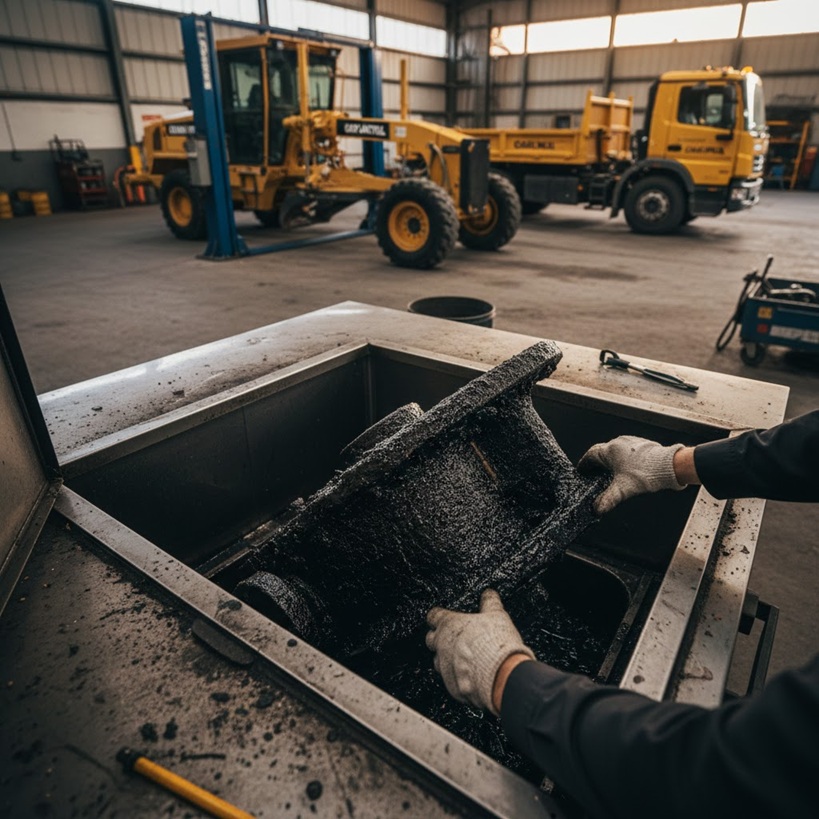
Garbage trucks and road maintenance equipment demand more capacity. You need to clean loader buckets, truck differentials, and hydraulic cylinders. Large excavator track components are heavy and bulky.
This work requires extra heavy duty parts washers. You need chambers longer than 1500mm and load capacities above 500kg. Councils operating major earthmoving fleets must match specifications to their largest components.
Specialised Equipment Cleaning
Some councils maintain specialised fleets. Coastal councils need salt-resistant construction for marine equipment. Food waste processing trucks require stainless steel washers to meet hygiene standards.
Road construction equipment needs systems that can handle bitumen and tar. For surface preparation and restoration work, wet abrasive blasters provide an effective solution. Wet abrasive blasters remove rust, paint, and corrosion without creating dust clouds that traditional dry blasting generates.
Parks departments require gentle cleaning for precision mower parts. Tender specifications should identify these needs upfront. Discovering a capacity gap after installation is a costly mistake.
Capacity Planning and Specifications
Undersized equipment creates bottlenecks. Mechanics stand around waiting for parts to be cleaned. Oversized systems waste ratepayer money on capacity you don’t use. You need specifications that match your actual throughput.
Chamber Dimension Requirements
Measure the largest components you clean regularly. A garbage truck differential housing is large. A loader bucket is even bigger. An excavator track frame can be over two metres long.
Your chamber specifications must accommodate these dimensions. You also need clearance for spray coverage. If a component barely fits, the water cannot reach all surfaces. This results in poor cleaning performance.
For the largest jobs, consider super heavy duty systems. These are built to handle the extreme size and weight of major infrastructure machinery.
Heating and Pump Capacity
Cleaning performance depends on heat and pressure. Light contamination like road dust removes easily at 60-70°C. Heavy grease and carbon buildup need 75-85°C. Bitumen and thick grease require even higher temperatures and pressure.
Council specifications should mandate minimum heating capacity. The heater must maintain temperature under continuous use. A small element might reach temperature initially but fail to keep up during a busy day. This slows down workshop operations.
Australian-Made Quality Requirements
Public sector procurement increasingly values Australian manufacturing. Local production supports domestic employment. It also ensures parts availability and responsive service.
Build Quality Specifications
Australian manufacturing standards often exceed imported alternatives. Councils should specify steel gauge thickness. A minimum of 3mm ensures the chamber won’t warp or dent.
Specify stainless steel grades like 304 or 316 for corrosion resistance. Demand full penetration welds, not just tack welds. Quality paint coatings prevent rust. These specifications separate quality Australian manufacturing from cheaper units that fail under continuous use.
Service and Parts Support
Equipment longevity depends on maintenance. Council specifications should mandate service response times. If a machine breaks, you need a technician within 24 to 48 hours.
Parts availability is crucial. Common wear items should be in stock locally. A hot tank from a local manufacturer with Perth-based service beats an imported unit. You don’t want to wait weeks for parts to ship from overseas while your workshop stands still.
Energy Efficiency and Operating Cost Specifications
Councils face pressure to reduce energy consumption. Workshop equipment specifications should address operating efficiency directly.
Water Usage Efficiency
Recirculating systems reduce water consumption dramatically. Flow-through designs waste water constantly. A recirculating system fills the tank once and filters the water for reuse.
A council cleaning 20 batches weekly can save thousands of litres of water a year with a recirculating system. This matters in water-restricted areas. It also reduces costs for councils paying commercial water rates.
Heat Retention Design
Insulated tanks retain heat between cycles. Uninsulated tanks lose heat rapidly and require constant energy to stay hot.
Insulated designs drop temperature much slower. This reduces the electricity needed to reheat the water. Councils running multiple cycles daily should specify minimum insulation values. This ensures the machine meets efficiency targets.
Installation and Commissioning Requirements
Proper installation ensures equipment performs to specification. Council tenders should detail installation requirements. This prevents disputes and budget overruns.
Electrical Infrastructure
Three-phase power requirements need clear specification. Most industrial equipment runs on 415V three-phase power. You must specify circuit breaker sizing and cable requirements.
Clarify whether electrical installation is included in the tender price. Ambiguity here creates variation claims. Ensure safety switches and RCDs meet current standards.
Floor Loading and Drainage
Heavy equipment requires adequate floor support. A filled machine loaded with parts can weigh over 2,000kg. Check your workshop floor capacity.
Specify drainage connection sizes and locations. You also need to consider floor sealing. Older council workshop floors may require reinforcement before installation.
Ventilation Requirements
Heated washing systems produce steam and humidity. You need proper ventilation to maintain a safe workspace. Specify exhaust fan capacity and ducting requirements.
Inadequate ventilation creates uncomfortable working conditions. It can also lead to mould problems in the workshop building. Address this in the specifications to avoid issues later.
Training and Documentation Standards
Equipment effectiveness depends on proper operator training. The best machine is useless if staff don’t know how to use it.
Operator Training Requirements
Tender specifications should require on-site operator training. This should cover 3-5 staff members for at least four hours. Training must be hands-on, not just reading a manual.
Operators need to understand safety procedures. They should know how to load parts correctly and select the right cycle. They also need to know basic troubleshooting for common issues.
Maintenance Documentation
Councils need clear maintenance requirements for budgeting. You need schedules for daily checks and weekly maintenance. This includes filter checks and detergent levels.
Documentation should include parts lists with supplier numbers. This enables councils to budget for replacement costs accurately. It also ensures you order the right parts when needed.
Warranty and Support Specifications
Public sector equipment operates under demanding conditions. Warranty terms must reflect realistic service expectations.
Preventive Maintenance Programs
Standard 12-month warranties are often inadequate. Specifications should mandate a minimum 24-month warranty on parts and labour. Look for extended options on major components like pumps and heaters.
Annual service contracts ensure equipment longevity. These should include inspection, cleaning, and replacement of wear items. Councils should evaluate tenders that include 5-year service contracts. Predictable maintenance costs simplify budget planning.
Conclusion
Council workshop equipment specifications require rigour. You are spending public money, so accountability is key. You must balance capacity against cost. You need to prioritise safety features that reduce injury risk.
Australian manufacturing quality delivers better value in the long run. Local service support ensures your equipment stays operational. The lowest tender price rarely delivers the best value when you factor in operating costs and reliability.
Councils operating diverse fleets need systems that match their largest components. Wet abrasive blasters can also be a valuable addition for surface preparation needs, particularly for road maintenance equipment and infrastructure repairs. Proper capacity planning prevents bottlenecks that delay fleet repairs.
For detailed specifications matching your council’s requirements, contact our public sector equipment specialists or email us on sales@hotwash.com.au. We can assist with system capacity, compliance documentation, and whole-of-life cost analysis.

Leave A Comment