
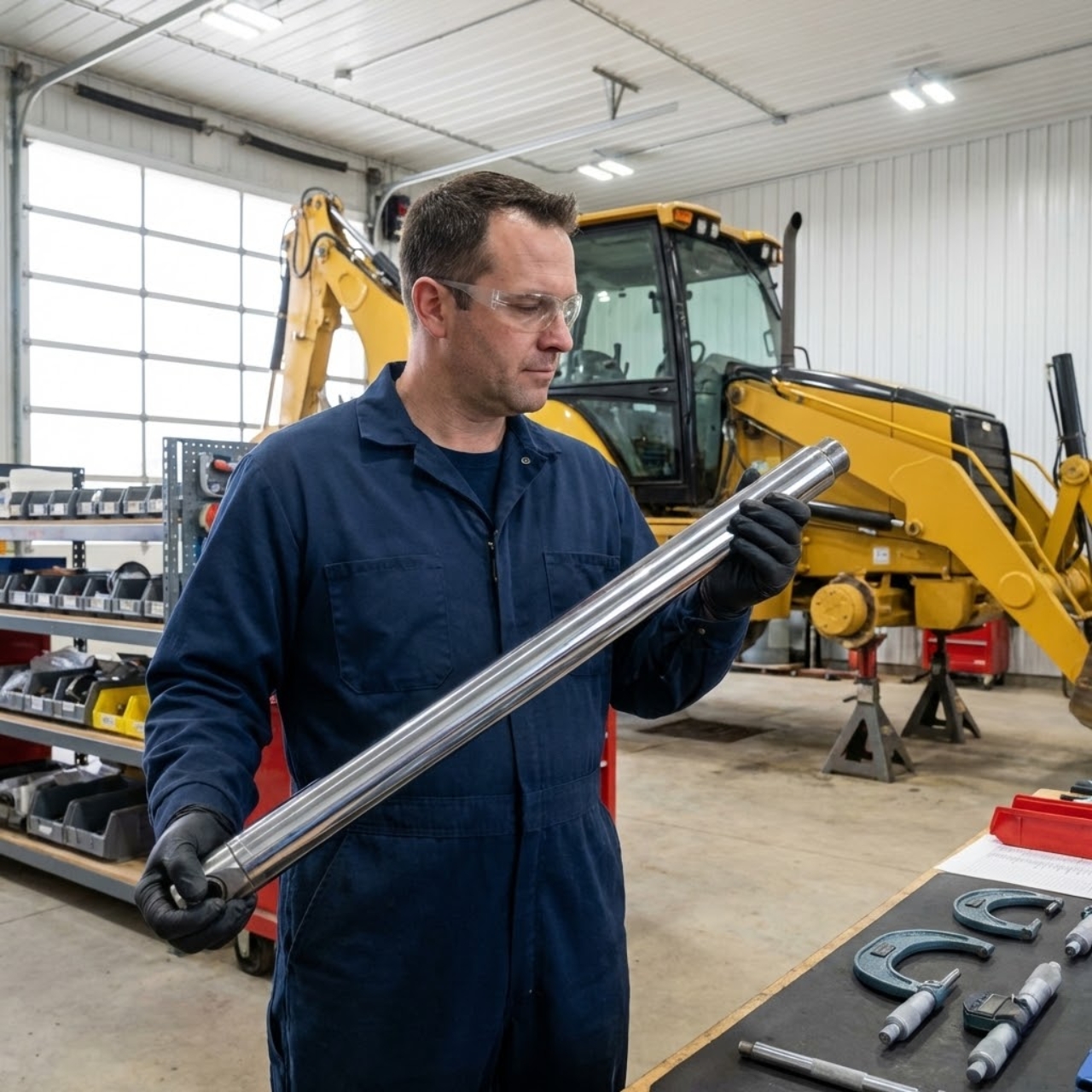
Loader backhoes operate in some of Australia’s harshest environments – construction sites, mining operations, and agricultural properties where dust, mud, and debris accumulate relentlessly. A single shift can coat hydraulic cylinders, pins, bushings, and articulation points with layers of contamination that accelerate wear exponentially. What begins as a thin film of abrasive material transforms into a grinding paste that destroys precision-engineered components, turning routine maintenance into costly overhauls.
The economics are stark. A hydraulic cylinder replacement on a loader backhoe can exceed $8,000 in parts alone, with labour pushing total costs beyond $12,000. Pin and bushing assemblies at articulation points deteriorate from 10,000-hour service intervals to 3,000 hours when contamination remains unchecked. Yet most operators focus exclusively on fluid changes and filter replacements, overlooking the abrasive particles embedded in every joint and cylinder that do far more damage than degraded oil ever could.
Cleanliness is not an aesthetic concern in heavy equipment maintenance – it is a precision engineering requirement. The clearances between moving parts in modern loader backhoes measure in thousandths of millimetres. Introduce abrasive contamination into these spaces, and wear rates multiply by factors of ten or more. Understanding how contamination accelerates component failure reveals why systematic cleaning must rank alongside lubrication and inspection in any effective maintenance programme.
How Contamination Accelerates Component Wear
Loader backhoes feature dozens of wear points where metal surfaces slide or rotate against each other under tremendous loads. Bucket pins support 3-4 tonnes of material during digging operations. Hydraulic cylinders extend and retract hundreds of times per shift, with rod seals maintaining pressure while sliding through contaminated environments. Boom and stick pivot points articulate constantly, relying on thin lubricant films to prevent metal-to-metal contact.
When abrasive particles – silica dust, metal filings, or soil contaminants – infiltrate these interfaces, they embed in softer materials like bronze bushings and score harder surfaces like chrome-plated cylinder rods. A single grain of silica measuring 50 microns (smaller than a human hair) can gouge a hydraulic rod, creating a pathway for seal failure. Once seals fail, hydraulic fluid escapes while external contamination enters the system, cascading into pump damage, valve failures, and complete hydraulic system contamination.
The wear mechanism follows predictable patterns. Initial contamination creates microscopic scoring on cylinder rods and pivot pins. These scores trap additional particles, accelerating abrasion. Clearances increase as material wears away, allowing greater movement and impact loading. What began as smooth articulation becomes loose, sloppy motion that hammers bushings and pins with each cycle. Eventually, components wear beyond service limits, requiring complete replacement rather than simple adjustment.
Temperature compounds the problem. Loader backhoes operating in Australian conditions generate significant heat in hydraulic systems, often exceeding 80°C during sustained digging operations. Contamination mixed with hot hydraulic fluid forms an abrasive slurry that circulates through the entire system, attacking pump internals, valve spools, and cylinder seals simultaneously. A contaminated machine does not just wear faster – it wears everywhere at once.
Critical Wear Points Requiring Systematic Cleaning
Certain components on loader backhoes suffer disproportionately from contamination, making them priority targets for systematic cleaning protocols.
Hydraulic Cylinder Rods and Seals
Chrome-plated cylinder rods extend and retract through rod seals dozens of times per minute during operation. Each stroke pulls the rod through whatever contamination coats the external surface – dust, mud, or abrasive slurry. Even minor scoring on the chrome plating compromises seal integrity, allowing hydraulic fluid to leak past the rod seal. Once leakage begins, external contamination follows the fluid path into the cylinder, attacking internal seals and barrel surfaces. A cylinder that should deliver 15,000 hours of service fails at 4,000 hours when contamination remains unchecked.
Bucket and Stick Pins and Bushings
Articulation points at the bucket, stick, and boom connections carry enormous loads through relatively small contact areas. A 1.2-cubic-metre bucket exerts over 40 kilonewtons of breakout force, concentrated through pins measuring 60-80mm in diameter. These pins rotate within bronze or composite bushings, separated only by grease films measuring micrometres thick. Contamination infiltrates grease fittings during lubrication, mixes with existing grease, and transforms protective lubricant into grinding compound. Pins designed for 8,000-hour intervals require replacement at 3,000 hours, while bushings wear oval rather than round, creating play that hammers adjacent components.
Boom and Stick Pivot Points
The main boom pivot and stick pivot points articulate constantly throughout operation, supporting the entire implement weight plus dynamic loading from digging forces. These joints rely on sealed bushings and regular greasing to maintain proper clearances. When external contamination breaches seals or enters through grease fittings, it concentrates at the highest-load zones where metal-to-metal contact pressure is greatest. Wear accelerates rapidly, creating looseness that allows impact loading and further accelerates deterioration.
Loader Arms and Bucket Linkage
Front loader arms on backhoe loaders experience similar contamination challenges, compounded by constant exposure to material being handled. Lifting soil, gravel, or demolition debris showers pivot points with abrasive particles. Bucket linkage pins cycle thousands of times per shift, working contamination into every articulation point. Regular cleaning of these assemblies before lubrication prevents abrasive particles from being forced into bearing surfaces.
The False Economy of Pressure Washing Alone
Most operators recognise the need to clean heavy equipment, but rely exclusively on pressure washers – a solution that addresses surface appearance while leaving critical contamination intact. Pressure washing delivers 2,000-3,000 PSI through a narrow nozzle, effective for removing loose mud and surface dirt but inadequate for the baked-on contamination, grease-embedded particles, and hardened deposits that cause actual wear.
A pressure washer directs a concentrated stream at whatever the operator aims toward. Coverage is inconsistent, depending entirely on operator thoroughness and access angles. Recessed areas around pivot pins, the undersides of cylinders, and spaces between frame members receive minimal cleaning. The contamination that matters most – abrasive particles embedded in grease at bearing surfaces and scoring on cylinder rods – remains largely undisturbed.
Temperature limitations further reduce effectiveness. Cold water pressure washing struggles with oil, grease, and hydraulic fluid contamination. These substances shed water, requiring mechanical scrubbing or chemical degreasers for removal. Hot water improves performance but portable pressure washers rarely maintain sufficient temperature under continuous use. By the time an operator finishes cleaning a loader backhoe’s undercarriage, water temperature has dropped to barely warm, offering minimal advantage over cold water.
The time investment reveals the inefficiency. Thoroughly pressure washing a loader backhoe requires 45-60 minutes of sustained effort, assuming good access and adequate water supply. In remote mining or construction sites, water availability limits cleaning frequency. The labour cost alone – $40-60 per cleaning at standard workshop rates – adds up quickly across a fleet. Yet despite this investment, critical contamination remains, continuing to accelerate wear.
Automated Parts Washing for Critical Components
Systematic cleaning of removed components during scheduled maintenance delivers exponentially better results than external pressure washing. When hydraulic cylinders, pins, bushings, and linkage assemblies come off for inspection or replacement, they carry months of accumulated contamination. Simply wiping them down or giving them a quick spray leaves embedded particles and residual contamination that will immediately re-enter service.
Heavy-duty parts washers designed for industrial applications deliver consistent, thorough cleaning through heated detergent solution and high-volume spray coverage. These systems maintain water temperature at 60-80°C throughout the wash cycle, breaking down grease and oil contamination that cold water cannot touch. Multiple spray arms provide 360-degree coverage, reaching recessed areas and complex geometries that manual cleaning misses.
The cleaning mechanism differs fundamentally from pressure washing. Rather than relying on impact force from a concentrated stream, automated spray washers use heated chemical action combined with moderate pressure (typically 40-60 PSI) distributed across the entire part surface. This approach removes contamination without the risk of forcing particles deeper into bearing surfaces or damaging seals and protective coatings.
For loader backhoe maintenance, the benefits are measurable. A hydraulic cylinder that required 30 minutes of manual scrubbing and solvent application achieves superior cleanliness in a 15-minute automated wash cycle. Pin and bushing assemblies emerge completely free of embedded contamination, ready for accurate measurement and proper lubrication. Components that appeared serviceable after pressure washing reveal actual wear patterns once truly clean, enabling accurate service decisions rather than premature replacement or extended use of worn parts.
Integrating Cleaning into Preventive Maintenance Schedules
Effective contamination control requires systematic integration into existing maintenance intervals rather than ad-hoc cleaning when equipment “looks dirty.” Loader backhoes typically follow 250-hour, 500-hour, and 1,000-hour service schedules covering fluid changes, filter replacements, and component inspections. Each of these intervals presents opportunities for targeted cleaning that prevents wear rather than responding to damage already done.
250-Hour Service: External Cleaning Focus
Quarter-interval services typically involve oil and filter changes without component removal. This presents the ideal opportunity for thorough external cleaning of hydraulic cylinders, pivot points, and undercarriage components. Rather than quick pressure washing, systematic cleaning removes contamination before it migrates into critical wear points. Clean external surfaces also enable accurate visual inspection of cylinder rods for scoring, seal weepage, and early wear indicators that contamination would otherwise obscure.
500-Hour Service: Articulation Point Cleaning
Mid-interval services often include greasing all pivot points and inspecting bucket and linkage wear. This is precisely when contamination does the most damage – forced into bearing surfaces by grease guns pumping fresh lubricant into contaminated joints. Cleaning pins and bushings before lubrication prevents this contamination transfer. For operations running multiple loader backhoes, removing pin assemblies from one machine for cleaning while servicing others maintains productivity without extending downtime.
1,000-Hour Service: Component Removal and Deep Cleaning
Major service intervals typically involve hydraulic cylinder inspection, pin and bushing measurement, and potential replacement of worn components. Every part removed for inspection should undergo thorough cleaning before measurement. Contamination masks actual wear, leading to incorrect service decisions. A pin measuring within tolerance while coated in abrasive contamination will fail rapidly once returned to service. The same pin, properly cleaned and measured, might reveal wear requiring immediate replacement, preventing unexpected failure.
Cleaning Specifications for Loader Backhoe Components
Different components require different cleaning approaches based on material, geometry, and contamination type. Understanding these requirements ensures effective cleaning without component damage.
Hydraulic Cylinders: Chrome-plated rods require careful cleaning to avoid scratching the protective plating. Automated spray washing with alkaline detergent at 60-70°C removes contamination without abrasive action that could compromise the chrome surface. After cleaning, rods should be inspected under proper lighting for scoring, pitting, or plating damage. Any defects visible after cleaning indicate replacement rather than continued service. Cylinder barrels benefit from similar cleaning, with particular attention to the rod seal area where contamination typically concentrates.
Pins and Bushings: Steel pins accumulate contamination in the grease grooves machined into their surfaces. These grooves, designed to distribute lubricant, instead trap abrasive particles that score bushing surfaces. Hot tank systems excel at cleaning pins because complete immersion reaches all surfaces simultaneously, including grease grooves and the pin ends where contamination concentrates. Bushings require gentler treatment – bronze bushings in particular can be damaged by excessively alkaline solutions or high temperatures. Proper cleaning removes contamination while preserving the bearing surface finish.
Bucket Teeth and Adapters: While not precision components, bucket teeth and adapters benefit from cleaning that reveals wear patterns and crack development. Contamination obscures cracks in adapter castings that could lead to tooth loss during operation. Clean teeth also allow accurate assessment of remaining wear life, supporting better inventory management and preventing unexpected failures.
ROI Analysis: Cleaning Investment Versus Component Replacement
The financial case for systematic component cleaning becomes clear when comparing cleaning costs against premature component replacement and associated downtime.
A typical loader backhoe hydraulic cylinder replacement costs $8,000-12,000 in parts and labour. If contamination-accelerated wear reduces service life from 15,000 hours to 5,000 hours, the operator incurs this expense three times over the equipment’s working life instead of once – an additional $16,000-24,000 in unnecessary costs for a single cylinder. Loader backhoes have 6-8 hydraulic cylinders, multiplying the impact across the machine.
Pin and bushing replacement at major articulation points costs $2,000-4,000 per location in parts and labour. A loader backhoe has 8-12 critical pin locations. If systematic cleaning extends service intervals from 3,000 hours to 8,000 hours, the operator avoids 2-3 additional replacement cycles over a 20,000-hour service life. Across all pin locations, this represents $40,000-80,000 in prevented expenses.
Against these figures, the investment in proper cleaning equipment and processes appears modest. Hotwash parts washing systems designed for heavy equipment maintenance represent capital investments of $15,000-35,000 depending on capacity and features. For a fleet of 3-5 loader backhoes, the system pays for itself through extended component life on a single machine, with ongoing savings accumulating across the fleet.
Labour efficiency adds to the return. Automated parts washing reduces cleaning time from 30-45 minutes of manual scrubbing per component to 15-20 minutes of automated washing, freeing technicians for higher-value diagnostic and repair work. For a workshop servicing multiple machines weekly, this time saving alone justifies the equipment investment within 18-24 months.
Cleaning System Selection for Loader Backhoe Maintenance
Workshop managers evaluating parts washing equipment for loader backhoe maintenance should consider several factors that determine long-term effectiveness and return on investment.
Chamber Capacity and Component Dimensions: Loader backhoe components vary significantly in size. Bucket pins may measure 600mm long by 80mm diameter, while hydraulic cylinders can exceed 1,200mm in length. The washing system must accommodate the largest components requiring regular cleaning. Extra heavy-duty parts washers with chamber dimensions of 1,400mm+ length handle full-length cylinders without disassembly, while smaller systems require cylinder separation into rod and barrel sections.
Temperature and Heating Capacity: Effective degreasing requires sustained temperatures of 60-80°C throughout the wash cycle. Systems with inadequate heating capacity lose temperature as cold components and makeup water enter the wash chamber, reducing cleaning effectiveness. Industrial-grade systems maintain temperature through high-capacity heating elements (12-18kW) and insulated construction that minimises heat loss.
Spray Coverage and Pressure Distribution: Component geometry determines spray requirements. Hydraulic cylinders need thorough coverage of the rod surface and cylinder bore, while pin assemblies require spray penetration into grease grooves and recessed areas. Multiple rotating spray arms provide better coverage than fixed nozzles, ensuring all surfaces receive adequate exposure to heated detergent solution.
Construction Durability: Parts washers in heavy equipment workshops face harsh conditions – contaminated components, abrasive particles in wash solution, continuous daily use, and potential impact from component handling. Systems built to Australian standards with heavy-gauge steel construction, stainless steel components in critical areas, and robust pumps deliver reliable long-term service. Powder-coated mild steel construction provides adequate durability for moderate-duty applications, while stainless steel construction suits operations requiring maximum corrosion resistance and longevity.
Implementing Component Cleaning Protocols
Equipment specifications matter less than consistent implementation. The best parts washer delivers no value if technicians bypass cleaning due to time pressure or inconvenience. Successful programmes integrate cleaning into standard procedures rather than treating it as optional.
Standard Operating Procedures: Document specific cleaning requirements for each component type removed during maintenance. Hydraulic cylinders undergo 15-minute wash cycles at 70°C with alkaline detergent. Pin assemblies receive 12-minute cycles with particular attention to grease groove cleaning. These specifications become standard work instructions, eliminating variation in cleaning thoroughness between technicians or shifts.
Component Tracking: Implement simple tracking systems linking component cleaning to service records. When a hydraulic cylinder is removed for inspection, the service record notes cleaning completion before measurement and reinstallation. This documentation provides accountability and ensures cleaning steps are not skipped under time pressure.
Quality Verification: Establish visual cleanliness standards with photographic references showing acceptable versus inadequate cleaning results. A hydraulic cylinder rod should show no residual contamination, grease, or discolouration after washing. Pin assemblies should have completely clean grease grooves with no embedded particles. These standards give technicians clear targets and enable supervisors to verify work quality.
Preventive Replacement Decisions: Clean components enable accurate wear measurement and informed replacement decisions. Establish measurement protocols and wear limits for critical components. A bucket pin showing 2mm diameter reduction requires replacement regardless of remaining surface appearance. Clean measurement prevents premature replacement of serviceable parts while catching actual wear before failure occurs.
Conclusion
Loader backhoe reliability depends less on component quality than on contamination control throughout the machine’s service life. Abrasive particles infiltrating hydraulic cylinders, pivot pins, and articulation points accelerate wear exponentially, transforming 15,000-hour components into 5,000-hour consumables. The cost impact compounds across fleets – hundreds of thousands in premature replacements, unplanned downtime, and reduced resale values.
Systematic component cleaning during scheduled maintenance interrupts this wear cycle. Removing contamination before it causes damage, rather than responding after failure occurs, extends service intervals to design specifications and beyond. The investment in proper cleaning equipment and procedures returns multiples through prevented component replacement, reduced downtime, and extended equipment life.
Australian-built Hotwash systems deliver the temperature control, spray coverage, and construction durability required for heavy equipment maintenance in demanding workshop environments. For operations running loader backhoes in mining, construction, or agricultural applications, systematic component cleaning represents one of the highest-return maintenance investments available.
Workshop managers ready to reduce component replacement costs and extend loader backhoe service life should evaluate how contamination currently impacts their maintenance expenses and component service intervals. The difference between pressure washing external surfaces and systematically cleaning removed components determines whether machines reach design life or require premature overhaul. Contact us to discuss parts washing solutions matched to specific fleet requirements and maintenance schedules, with systems designed and built in Australia for Australian operating conditions.

Leave A Comment