
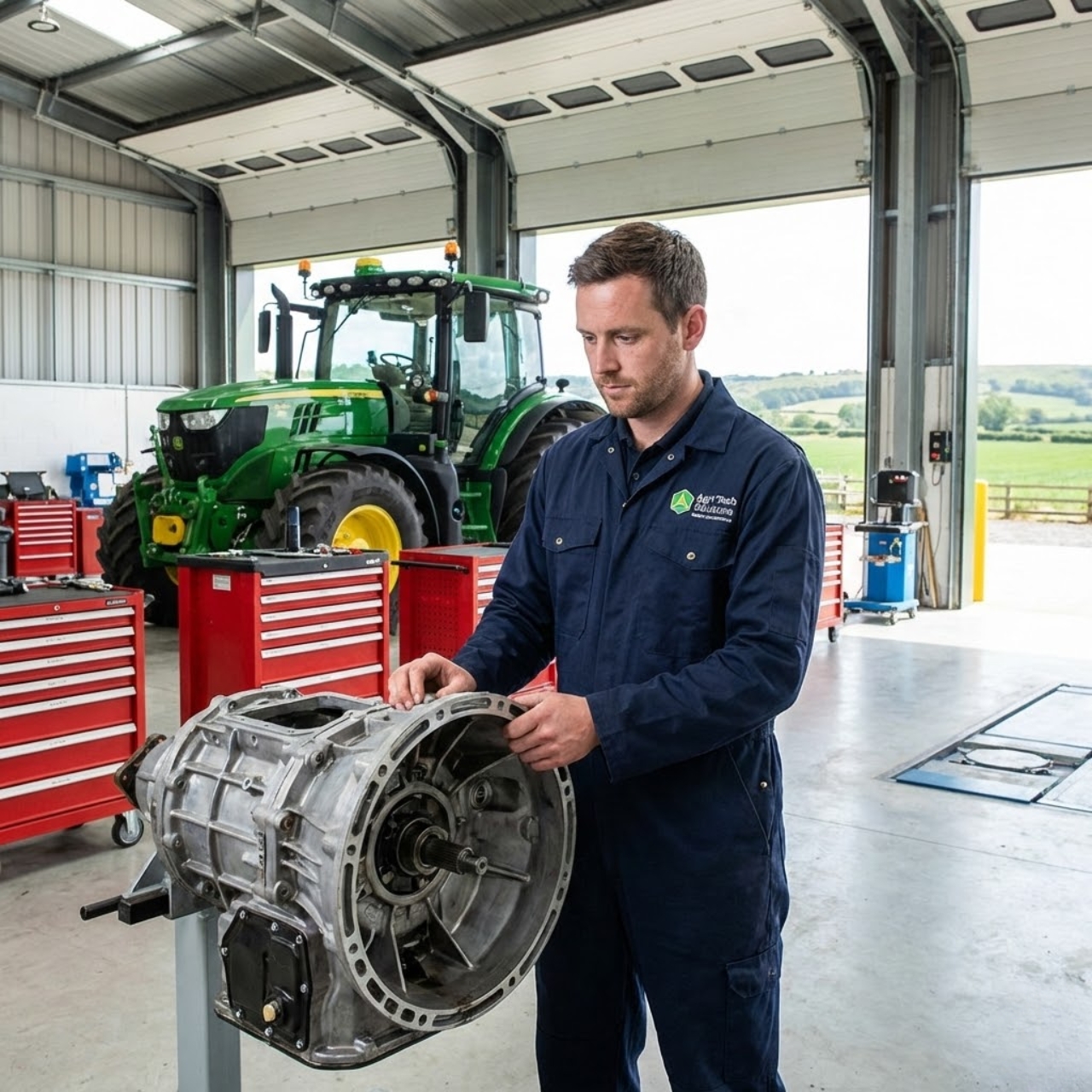
Rural machinery dealers face cleaning challenges that urban workshops never encounter. A combine harvester component arrives caked in harvest dust, hydraulic oil, and chaff. A tractor transmission housing carries mud mixed with fertiliser residue. These aren’t just dirty parts – they’re diagnostic obstacles that waste hours of billable labour before actual repair work begins.
The economics hit hard. A technician earning $45-55 per hour spends 90 minutes manually scrubbing a diesel engine block instead of diagnosing the failure. Multiply that across a busy harvest season, and the labour cost becomes a significant operational drain. Meanwhile, customers wait longer for repairs, and regional workshop efficiency suffers during peak demand periods.
Australian machinery dealers operating across regional centres from Wagga Wagga to Geraldton share these challenges. Workshop managers need cleaning systems that handle the contamination intensity of agricultural equipment whilst delivering consistent results without tying up skilled technicians. The solution lies in understanding how rural machinery workshop service solutions match the specific demands of agricultural dealer maintenance.
The Contamination Challenge in Agricultural Equipment Service
Agricultural machinery presents contamination profiles that differ fundamentally from standard automotive or industrial equipment. Harvest equipment components carry organic material mixed with mineral dust, creating abrasive compounds that embed in metal surfaces. Seeding machinery parts accumulate fertiliser residues that can be corrosive if not properly removed before inspection.
Tractors and harvesting equipment operate in environments where dust penetration is constant. Engine bays, transmission housings, and hydraulic systems collect layers of field soil mixed with leaked fluids. This combination creates cleaning challenges that manual washing struggles to address efficiently, requiring proper farm equipment servicing protocols.
The seasonal nature of agricultural work intensifies these issues. During harvest, equipment runs extended hours and failures happen under time pressure. A header breakdown during wheat harvest means thousands of dollars in lost productivity per day. Regional workshop efficiency directly impacts customer operations, making fast turnaround essential.
Parts washing systems designed for heavy-duty parts washers applications address these contamination levels through high-pressure spray systems and heated detergent solutions. The combination of mechanical action, chemical cleaning power, and thermal energy removes embedded contamination that manual methods leave behind.
Matching System Capacity to Workshop Operations
Rural machinery dealers operate workshops ranging from two-bay facilities serving local farms to regional service centres supporting multiple brands across extensive territories. System selection depends on understanding both current workload and seasonal demand peaks for effective rural machinery workshop service.
A typical two to four-bay workshop servicing 200-300 farm equipment units annually requires capacity to clean transmission components, engine parts, hydraulic assemblies, and smaller components like injectors and pumps. Chamber dimensions of 900-1200mm width accommodate most tractor transmission housings and medium-sized diesel engine blocks.
Larger regional dealers managing 500+ equipment units across multiple locations need systems that handle continuous workflow during peak seasons. Chamber sizes exceeding 1500mm allow cleaning of combine harvester feeder housings, large diesel engine assemblies, and multiple smaller components simultaneously.
The distinction matters because undersized systems create bottlenecks during harvest season when repair volume spikes. A workshop running at 60% capacity during winter might hit 140% during a six-week harvest period. System capacity must accommodate peak demand, not average workload.
Hotwash manufactures spray cabinet systems in configurations from 900mm entry-level units through to 2400mm chambers for major agricultural dealer maintenance operations. Capacity planning should account for the largest components requiring regular cleaning plus allowance for concurrent smaller parts.
Temperature and Pressure Requirements for Agricultural Contaminants
Agricultural contamination demands specific thermal and mechanical cleaning parameters for effective machinery dealer cleaning. Field soil contains silica and clay particles that bond to metal surfaces when mixed with petroleum products. Removing this requires water temperatures of 60-80°C combined with detergent chemistry and mechanical spray action.
Hydraulic oil contaminated with field dust creates a paste-like residue on transmission components and cylinder bores. Cold water washing leaves films that interfere with inspection and reassembly. Heated wash cycles at 70-75°C soften petroleum-based contamination whilst detergent surfactants lift particles from metal surfaces.
Pressure ratings between 20-40 bar (290-580 PSI) provide sufficient mechanical energy to dislodge embedded contamination without damaging machined surfaces or bearing races. Rotating spray arms distribute this pressure across component surfaces, reaching recessed areas that fixed spray patterns miss.
The combination of temperature, pressure, and detergent chemistry delivers cleaning results in 15-30 minute automated cycles. A technician loads contaminated components, selects the appropriate programme, and returns to find inspection-ready parts. This eliminates the 60-90 minutes typically spent on manual pre-cleaning before diagnostic work begins.
Systems equipped with hot blaster systems capability combine high-temperature water (up to 90°C) with increased pressure for the most stubborn agricultural contamination. Major regional dealers servicing large-scale broadacre farming operations often specify this configuration for handling equipment that operates in particularly dusty or muddy conditions.
Labour Efficiency and Workshop Throughput
The financial case for automated parts washing centres on labour cost recovery for regional workshop efficiency. A qualified agricultural machinery technician earning $50 per hour who spends 75 minutes manually cleaning a diesel engine block represents $62.50 in non-productive labour. If that same workshop processes 15 major components weekly requiring similar cleaning, the annual labour cost exceeds $48,000.
An automated spray cabinet reduces cleaning time to 20-30 minutes with zero technician involvement beyond loading and unloading. The technician loads the contaminated component, starts the cycle, and immediately returns to diagnostic or repair work on another job. The system completes cleaning whilst the technician generates billable hours.
This workflow improvement compounds during seasonal peaks. A workshop handling 8-12 major repairs weekly during harvest season can increase throughput by 15-20% simply by eliminating cleaning bottlenecks. Components move from arrival to diagnostic bench faster, reducing customer wait times and improving workshop reputation for effective agricultural dealer maintenance.
The consistency advantage matters equally. Automated systems deliver identical results regardless of operator fatigue, time pressure, or workload stress. Manual cleaning quality varies based on human factors – an apprentice rushing through pre-cleaning before lunch misses contamination that an experienced technician would remove. Automated cycles eliminate this variability.
Workshop managers report that freeing technicians from manual cleaning improves job satisfaction and reduces turnover. Skilled diesel mechanics trained in diagnostics and precision repair work prefer using their expertise rather than spending hours with degreaser and scrub brushes. This retention benefit carries long-term value in regional areas where recruiting qualified technicians presents ongoing challenges.
Chemical Handling and Environmental Compliance
Agricultural service workshops face increasing scrutiny regarding chemical handling and wastewater management. Manual parts washing using solvent tanks creates exposure risks and generates hazardous waste requiring proper disposal. Spray cabinet systems with closed-loop filtration reduce both concerns for improved farm equipment servicing.
Modern industrial spray washers use water-based detergent chemistry rather than petroleum solvents. This eliminates the fire risk and vapour exposure associated with traditional solvent tanks. Detergent solutions designed for agricultural contamination effectively remove petroleum products, organic material, and mineral dust without requiring flammable chemicals.
Closed-loop systems filter wash water through progressively finer media, removing suspended solids and extending solution life. A typical system operates for 2-4 weeks between solution changes depending on contamination load. This reduces water consumption compared to manual washing that uses fresh water for each component.
Waste disposal becomes simpler and more compliant. Instead of managing drums of contaminated solvent, workshops handle filtered solids and spent detergent solution through licensed waste contractors. The reduction in hazardous waste volume lowers disposal costs and simplifies regulatory compliance.
Some regional councils and agricultural industry bodies offer incentives or recognition for workshops implementing environmentally responsible practices. Automated parts washing systems with proper waste management align with these sustainability initiatives whilst delivering operational benefits for machinery dealer cleaning operations.
Space Planning for Regional Workshop Facilities
Rural workshop facilities often operate in buildings that weren’t purpose-built for modern service operations. A former machinery shed converted to a service centre might have excellent clearance for equipment access but limited space for dedicated cleaning areas. System selection must account for these spatial constraints.
Spray cabinet systems require floor space for the unit itself plus clearance for door operation and component loading. A 1200mm chamber unit typically needs a 2500mm x 2000mm footprint including operator access. Workshops with limited floor space can position units along walls or in corners, provided electrical and plumbing connections are accessible.
Ceiling height matters for facilities servicing large equipment. A workshop that handles combine harvester components or tractor engine blocks needs adequate clearance for overhead crane or forklift positioning during loading. Minimum 3-metre ceiling clearance accommodates most configurations, though facilities with 4+ metre clearance gain operational flexibility.
Electrical requirements typically include three-phase power for heating elements and pump motors. Most rural workshop facilities already have three-phase supply for welding equipment and larger machinery. Plumbing connections require both supply water and drainage for the system, ideally positioned near existing workshop services to minimise installation costs.
The advantage of cabinet-style systems over hot tank systems in space-constrained workshops lies in vertical rather than horizontal space utilisation. A spray cabinet occupies less floor area than an immersion tank of equivalent cleaning capacity. This matters in facilities where every square metre of floor space affects workflow efficiency.
Integration With Existing Workshop Processes
Successful implementation requires matching the parts washing system to established workshop procedures for effective rural machinery workshop service. A service centre that uses job boards and sequential bay assignments needs the cleaning system positioned to support this workflow rather than disrupting it.
Many workshops position automated parts washers between the disassembly area and the diagnostic/repair benches. Technicians remove contaminated components, place them directly into the washer, and retrieve cleaned parts when ready for inspection. This linear workflow minimises handling and keeps work progressing logically through the facility.
Larger regional dealers with multiple service bays often centralise parts washing in a dedicated area accessible to all technicians. This approach works well when different bays handle different equipment types (tractors, harvesters, implements) but all require access to cleaning capacity. A centrally located system serves the entire facility without requiring duplication.
The timing of wash cycles affects workflow integration. A 20-minute cycle allows a technician to start cleaning, work on another task, and return to retrieve components within a typical service procedure. Longer cycles (30-45 minutes for heavily contaminated parts) suit jobs where the technician has other work to complete whilst cleaning progresses.
Some workshops implement tag systems where technicians label components entering the washer with job numbers and return times. This prevents confusion when multiple jobs are in progress and ensures components move to the correct repair bay after cleaning. Simple operational protocols like this maximise the regional workshop efficiency gains from automated cleaning.
Maintenance Requirements and Operational Reliability
Agricultural service workshops operate under time pressure during peak seasons. A parts washer that breaks down during harvest creates immediate problems – contaminated components stack up, technicians revert to manual cleaning, and regional workshop efficiency drops precisely when demand peaks. System reliability matters critically.
Quality spray cabinet systems require minimal daily maintenance. Operators check detergent levels, inspect spray arms for blockages, and verify that filtration systems are functioning. These checks take 5-10 minutes and prevent most operational issues. Weekly tasks include filter cleaning or replacement, inspection of door seals, and verification of cycle timing accuracy, adding perhaps 15 minutes to routine maintenance.
Major service intervals typically occur quarterly or semi-annually depending on usage intensity. These involve inspecting heating elements, pump seals, and electrical connections. Most workshops handle these tasks internally using existing maintenance capabilities, though manufacturer support remains available for regional operations.
The construction quality of extra heavy-duty parts washers designed for industrial applications provides durability that matches agricultural workshop demands. Stainless steel or heavy-gauge powder-coated steel construction withstands the daily loading of contaminated components without degradation. Systems built to industrial standards deliver 10-15 years of service life with proper maintenance.
Spare parts availability matters for regional workshops located hours from capital cities. Australian-manufactured systems offer advantage here – replacement components ship from local facilities rather than requiring international freight. A heating element or pump seal arrives within days rather than weeks, minimising downtime if repairs become necessary for uninterrupted farm equipment servicing.
Return on Investment for Rural Dealers
Financial justification for capital equipment purchases requires clear ROI analysis. For agricultural machinery dealers, the calculation centres on labour cost recovery, throughput improvement, and customer service enhancement.
Consider a regional dealer with four service bays processing 400 major repairs annually. If automated parts washing saves 60 minutes of technician time per job at $50 per hour, the annual labour saving reaches $20,000. Additional throughput capacity during peak seasons adds another $10,000-15,000 in revenue from jobs that previously couldn’t be accommodated.
System costs for appropriate capacity typically range from $15,000-35,000 depending on size and specification. Using the conservative figures above, payback occurs within 18-24 months. Larger operations processing higher volumes achieve faster returns, whilst smaller workshops might extend payback to 30-36 months.
The calculation improves when factoring reduced chemical costs (elimination of solvent purchases), lower waste disposal expenses, and improved technician retention. These secondary benefits add 15-25% to the direct labour savings, accelerating payback timelines.
Customer satisfaction improvements resist precise quantification but affect long-term business value. Faster turnaround during critical periods builds dealer reputation and customer loyalty. A farmer whose harvester returns to operation 24 hours faster remembers that service quality when making future equipment purchases or recommending the dealer to neighbouring operations, building long-term value for agricultural dealer maintenance operations.
Conclusion
Rural machinery dealers operate in a demanding service environment where contamination intensity, seasonal workflow peaks, and skilled labour scarcity create unique operational challenges. Manual parts cleaning consumes technician time that could generate billable hours whilst delivering inconsistent results that affect diagnostic accuracy and repair quality.
Automated spray cabinet systems designed for agricultural applications address these challenges through heated high-pressure cleaning cycles that remove field contamination in 15-30 minutes without technician involvement. The labour efficiency gains translate directly to improved regional workshop efficiency, faster customer turnaround, and enhanced profitability during critical seasonal periods.
System selection requires matching chamber capacity to the largest components requiring regular cleaning, ensuring temperature and pressure specifications suit agricultural contamination types, and positioning equipment to support rather than disrupt existing workshop workflows. Australian-manufactured systems offer local support and spare parts availability that matters for regional operations where downtime carries immediate operational consequences.
The investment delivers measurable returns through labour cost recovery, increased service capacity, and improved customer satisfaction. For dealers committed to efficient workshop operations and competitive service delivery, automated parts washing represents essential infrastructure rather than optional equipment.
Contact us for technical consultation and capacity planning assistance. Systems are built specifically for Australian industrial and agricultural applications, engineered to withstand the contamination levels and operational demands of rural machinery workshop service whilst delivering consistent cleaning results that support efficient workshop operations.

Leave A Comment