
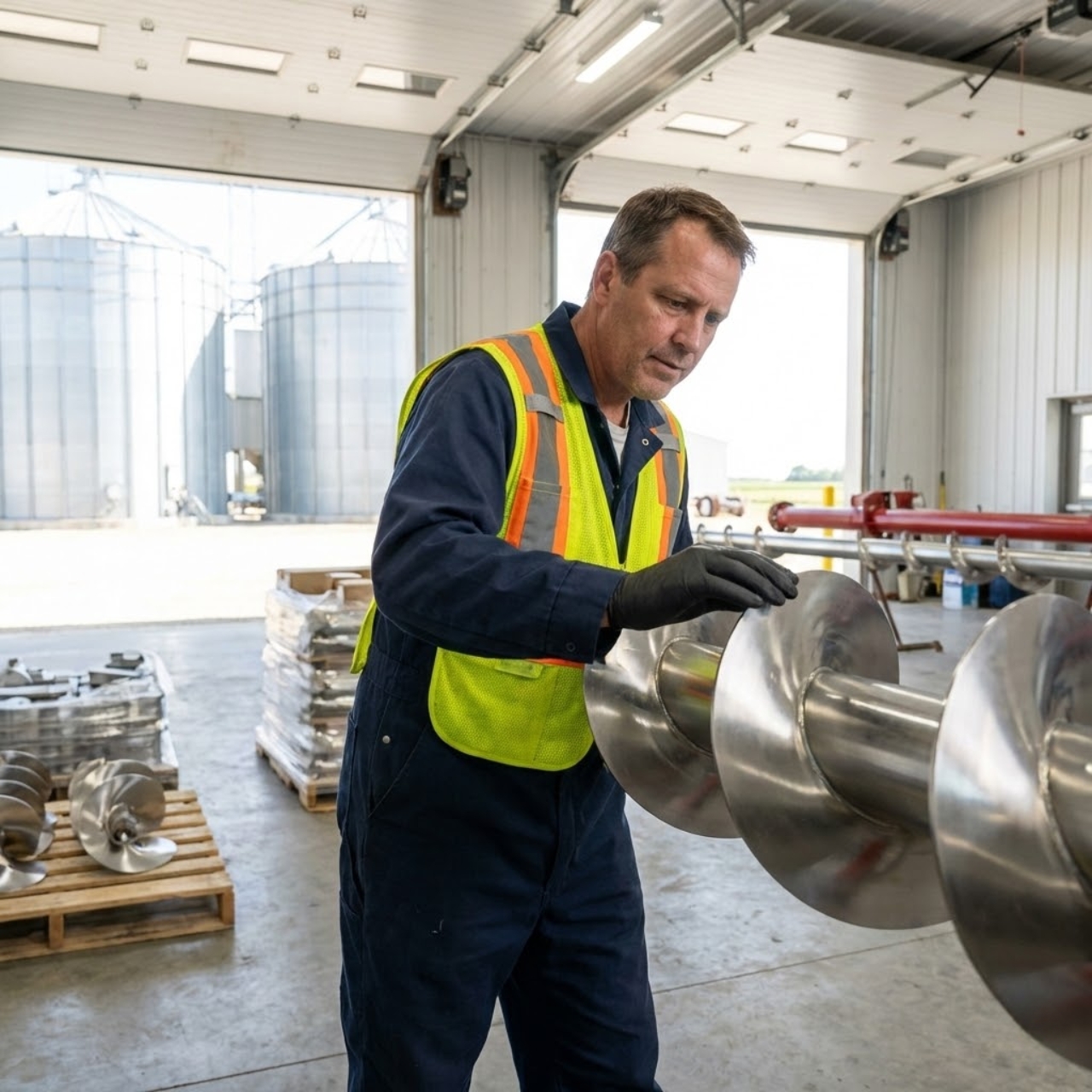
Grain residue left inside handling equipment doesn’t just sit idle – it deteriorates, harbours moisture, attracts pests, and creates cross-contamination risks that can compromise entire batches. For facilities processing wheat, barley, oats, or specialty grains, the difference between residue and contamination is often measured in hours, not days. What begins as leftover grain dust and fragments quickly becomes a food safety liability, quality control failure, and potential regulatory breach.
Australian grain handling operations face unique challenges. High ambient temperatures accelerate spoilage. Seasonal harvest surges mean equipment runs continuously with minimal downtime for cleaning. Switching between grain types – conventional to organic, feed grade to food grade – demands complete grain residue removal between batches. Manual cleaning methods can’t deliver the speed, thoroughness, or documentation that modern grain operations require.
Hotwash manufactures industrial parts washers designed specifically for the grain handling contamination control demands of grain handling facilities. These systems address the critical window between residue accumulation and contamination development, providing automated cleaning that protects product quality, meets food safety standards, and eliminates the labour-intensive manual processes that create bottlenecks during peak harvest periods.
Why Grain Residue Escalates Into Contamination Risk
Grain handling equipment – augers, conveyors, bucket elevators, spouts, and distribution systems – creates ideal conditions for residue accumulation. Product contact surfaces develop buildup in hard-to-reach areas. Dust settles in crevices and joints. Grain fragments lodge in screw flights and belt mechanisms.
This residue doesn’t remain stable. Moisture from humid conditions or condensation triggers mould growth within 24-48 hours. Insect pests colonise residue deposits, contaminating subsequent batches with fragments, frass, and allergens. Rancidity develops in grain oils, creating off-odours that transfer to fresh product. Cross-contamination prevention becomes impossible when residue from one grain type mixes with another – particularly problematic when organic grains follow conventional crops, or when allergen-containing grains precede allergen-free varieties.
The regulatory framework governing grain handling has tightened considerably. Food Standards Australia New Zealand (FSANZ) requirements for traceability and contamination prevention apply throughout the supply chain. Export facilities must meet importing country standards, many of which mandate documented cleaning procedures and verification. Insurance providers increasingly require demonstrable contamination control measures following several high-profile grain quality incidents.
The financial impact of contamination extends beyond the immediate batch. Rejected loads create disposal costs and lost revenue. Quality downgrades reduce sale value. Customer relationships suffer when contamination issues recur. In severe cases, facilities face regulatory action, suspended certifications, or supply chain exclusion, making harvest equipment cleaning essential.
Equipment Components That Harbour Residue
Different grain handling equipment types present distinct cleaning challenges. Understanding where residue accumulates helps facilities develop effective prevention strategies for grain handling contamination control.
Auger Systems and Screw Conveyors
Screw flights create continuous surfaces where grain fragments wedge between the flight edge and trough wall. Bearing housings collect dust that mixes with lubricants. Drive ends accumulate product that falls back during shutdown. The helical design makes manual cleaning time-consuming and incomplete – operators can’t effectively reach all surfaces without complete disassembly.
Bucket Elevators
Buckets develop residue buildup on interior surfaces and mounting bolts. Belt tracking mechanisms collect dust. The elevator boot – where buckets load – accumulates significant residue from spillage and product degradation. Head pulleys and discharge chutes harbour deposits that contaminate subsequent batches. Cleaning bucket elevators manually requires confined space entry, height access equipment, and extended downtime.
Pneumatic Conveying Systems
Cyclones and separators develop residue layers on interior walls. Rotary valves collect product in rotor pockets and housing clearances. Diverter gates accumulate deposits that prevent complete closure. Filter systems require regular cleaning to maintain airflow and prevent cross-contamination prevention failures. The enclosed nature of pneumatic systems makes visual inspection difficult and manual cleaning labour-intensive.
Distribution and Loadout Equipment
Spouts, chutes, and distribution gates develop residue buildup at connection points and adjustment mechanisms. Truck and rail loadout systems accumulate spillage in telescoping sections and dust control enclosures. Sampling equipment – critical for quality verification – must be completely clean to prevent sample contamination that misrepresents actual product quality.
Traditional Cleaning Methods and Their Limitations
Many grain facilities still rely on manual cleaning approaches developed decades ago. These methods struggle to meet modern grain handling contamination control requirements.
Compressed Air Blowing
Compressed air blowing moves residue rather than removing it. Dust becomes airborne, settling in new locations or creating explosion hazards in confined spaces. Workers face respiratory exposure. The method provides no verification that surfaces are actually clean and fails to achieve proper grain residue removal.
Vacuum Cleaning
Vacuum cleaning removes loose material but can’t address adhered residue or sanitise surfaces. Equipment requires frequent filter changes. The process remains labour-intensive, particularly for large components. Vacuum systems themselves require cleaning to prevent cross-contamination between grain types.
Manual Scrubbing
Manual scrubbing with brushes achieves better results but demands significant labour hours. Workers need height access equipment for large components. Confined space entry requirements apply for bucket elevator boots and storage structures. The physical demands create fatigue, reducing cleaning effectiveness. Documentation of manual cleaning remains subjective – “cleaned thoroughly” provides no measurable verification for harvest equipment cleaning standards.
Water Washing Without Proper Equipment
Water washing without proper equipment creates new problems. Inadequate drainage leaves moisture that accelerates mould growth. Unheated water doesn’t remove oils and adhered residue effectively. Facilities lack proper drying capacity, forcing equipment back into service while still damp. The approach works poorly in cold weather when water freezes in equipment overnight.
These limitations become critical during harvest when facilities operate continuously. Equipment downtime for cleaning creates bottlenecks that slow intake. Incomplete cleaning between grain types risks cross-contamination. Labour shortages mean cleaning gets deferred, allowing residue to accumulate and harden.
Automated Cleaning Systems for Grain Equipment Components
Industrial parts washers transform grain equipment cleaning from a labour-intensive bottleneck into a documented, repeatable process that supports continuous operations and effective cross-contamination prevention.
Heavy-duty parts washers designed for agricultural applications combine heated water, detergent injection, and high-pressure spray to remove grain residue completely. Systems accommodate auger sections, bucket elevator components, conveyor parts, and distribution equipment. Automated wash cycles deliver consistent results regardless of operator experience or fatigue levels.
The cleaning process addresses both loose residue and adhered deposits. Initial high-pressure rinse removes bulk material. Heated detergent solution dissolves oils and breaks down organic matter. Final rinse removes all detergent and suspended particles. Integrated drying cycles eliminate moisture that could trigger mould growth. The complete process typically requires 15-30 minutes depending on component size and contamination level.
Temperature Control for Effective Residue Removal
Grain oils and protein residues require elevated temperatures for complete grain residue removal. Hot blaster systems maintain water temperatures of 60-80°C throughout the wash cycle, ensuring oils remain in solution rather than re-depositing on surfaces. This temperature range also provides sanitisation benefits, reducing microbial loads that contribute to spoilage and contamination.
Temperature consistency matters as much as peak temperature. Systems with integrated heating maintain stable temperatures even during extended wash cycles. This prevents the cleaning effectiveness decline that occurs with tank-only heating systems where water temperature drops as cold components absorb heat.
Chamber Design for Large Agricultural Components
Grain handling equipment includes components too large for standard parts washers. Auger sections extend 3-6 metres. Bucket elevator buckets require batch cleaning of multiple units simultaneously. Distribution gates include complex geometries with internal passages.
Extra heavy-duty systems provide chamber dimensions and door openings sized for agricultural equipment. Rotating spray arms ensure complete coverage of complex geometries. Multiple spray zones address different component areas simultaneously. Load capacity ratings accommodate the weight of steel auger sections and cast iron housings.
Preventing Cross-Contamination Between Grain Types
Facilities handling multiple grain varieties face stringent cross-contamination prevention requirements. The challenge intensifies when processing organic grains, allergen-containing varieties, or specialty crops commanding premium prices.
Manual cleaning methods can’t provide the verification that customers and certifiers demand. “Cleaned until visibly free of residue” doesn’t address microscopic contamination that analytical testing can detect. Facilities need documented, repeatable cleaning processes that deliver measurable results for proper grain handling contamination control.
Automated parts washers create this documentation. Programmable cycles ensure identical cleaning parameters every time. Temperature monitoring verifies heat levels throughout the wash. Cycle timers confirm complete process execution. This documentation supports traceability requirements and provides evidence of due diligence in contamination control.
The cleaning effectiveness extends beyond visible residue removal. Hot water and detergent action removes allergen proteins that cause cross-contamination issues. Systems flush away microscopic grain fragments that escape visual inspection. The process delivers equipment surfaces that meet analytical cleanliness standards, not just visual appearance.
For organic grain handling, stainless steel parts washers provide additional assurance as food grade cleaning systems. Stainless construction prevents contamination from the washer itself. The material resists corrosion from cleaning chemicals and withstands the frequent sanitisation cycles organic certification may require. Food-grade construction addresses the reality that grain handling equipment cleaning must meet food safety standards equivalent to food processing operations.
Reducing Cleaning Labour During Peak Harvest
Harvest periods create intense pressure on grain handling facilities. Intake runs 16-20 hours daily. Every hour of equipment downtime represents lost intake capacity and grower delays. Labour focuses on operations, not maintenance. Traditional manual cleaning becomes a bottleneck that limits facility throughput.
Automated parts washing eliminates this bottleneck. Operators load components into the washer, start the cycle, and return to other tasks. The system completes harvest equipment cleaning without supervision. Multiple components clean simultaneously rather than sequentially. A single worker manages equipment cleaning that previously required a team.
The time savings compound across harvest. Consider a facility processing 50,000 tonnes annually. Manual cleaning of auger sections requires two workers and three hours per section. With 12 auger runs requiring weekly cleaning during the 16-week harvest, manual cleaning consumes 1,152 worker-hours. An automated system reduces this to 192 hours of load/unload time – a labour saving of 960 hours that can be redirected to value-adding activities.
The labour reduction extends beyond direct cleaning time. Workers avoid the physical demands of scrubbing large components, reducing fatigue and injury risk. Confined space entry requirements decrease when components come to the washer rather than workers entering equipment. Height access equipment needs decline. The safety improvements reduce workers’ compensation costs and support workplace health and safety compliance.
Water Management and Environmental Considerations
Industrial parts washing generates wastewater containing grain residues, oils, and cleaning chemicals that require management before discharge or reuse for proper grain handling contamination control.
Filtration and Water Recycling
Modern food grade cleaning systems incorporate filtration that removes suspended solids, extending water life and reducing discharge volumes. Coarse screens capture grain fragments. Fine filters remove smaller particles. Oil skimmers separate floating oils. These features reduce wastewater generation by 60-80% compared to single-pass systems.
Settled Solids Disposal
The captured grain residue requires proper disposal. Facilities typically incorporate this material into feed streams or compost operations. The volume remains manageable – a facility processing 50,000 tonnes annually generates approximately 500-800 kg of residue from parts washing operations.
Detergent Selection
Detergent selection balances cleaning effectiveness with environmental impact. Food-safe, biodegradable formulations meet grain industry requirements while supporting wastewater treatment. Facilities should avoid cleaners containing phosphates or harsh solvents that complicate disposal and create environmental concerns.
Energy Considerations
Water heating represents the primary energy input. Systems with insulated tanks and efficient heat exchangers minimise energy consumption. Facilities with access to waste heat from grain dryers can preheat makeup water, reducing operating costs. The energy investment remains modest compared to the labour savings and contamination prevention benefits.
Documentation Supporting Food Safety Compliance
Grain handling facilities increasingly face audit requirements from customers, certifiers, and regulators. Documentation of cleaning procedures and verification provides evidence of grain handling contamination control.
Automated parts washers generate this documentation inherently. Programmable cycles create records of cleaning parameters – water temperature, cycle duration, detergent concentration. Systems with data logging capability export records for inclusion in food safety management systems. This documentation demonstrates that cleaning procedures are followed consistently, addressing a common audit finding where manual cleaning lacks verification.
The records support traceability requirements. When facilities switch between grain types, cleaning documentation proves that equipment was properly prepared for cross-contamination prevention. If contamination issues arise, facilities can demonstrate their cleaning procedures and identify whether the issue originated elsewhere in the supply chain.
For organic certification, cleaning documentation addresses National Standard requirements for contamination prevention. Certifiers require evidence that equipment used for organic grains doesn’t introduce prohibited substances. Automated washing with documented parameters and food-grade detergents provides this evidence.
Export facilities benefit particularly from documented harvest equipment cleaning. Importing countries increasingly require evidence of contamination control throughout the supply chain. Facilities that can demonstrate systematic, verified cleaning procedures gain competitive advantage in quality-sensitive markets.
Conclusion
Grain residue transforms into contamination risk within hours of accumulation. The difference between maintaining product quality and facing rejected loads, regulatory action, or customer loss depends on systematic grain residue removal before deterioration begins. Manual cleaning methods developed for smaller-scale operations can’t deliver the speed, thoroughness, or documentation that modern grain handling demands.
Automated industrial parts washers provide the solution grain facilities require. These food grade cleaning systems remove residue completely, prevent cross-contamination between grain types, reduce cleaning labour by 80-85%, and generate the documentation that food safety compliance demands. The technology addresses both immediate contamination prevention and long-term asset management through systematic component inspection.
Australian grain handling operations face unique pressures – seasonal surge capacity requirements, high ambient temperatures accelerating spoilage, export market quality standards, and labour availability challenges. Equipment that transforms grain residue removal from a labour-intensive bottleneck into an automated, documented process directly supports facility profitability and market access.
Facilities considering automated cleaning systems should evaluate chamber sizing for their largest components, heating capacity for effective residue removal, and automation features that reduce labour requirements. The investment delivers returns through reduced cleaning labour, prevented contamination incidents, improved equipment reliability, and enhanced compliance documentation.
Contact us to discuss specific grain handling equipment cleaning requirements and system configurations that match facility capacity and operational demands. Australian-manufactured parts washing systems are built locally to withstand continuous use during harvest periods and deliver the cleaning effectiveness grain handling contamination control requires.

Leave A Comment