
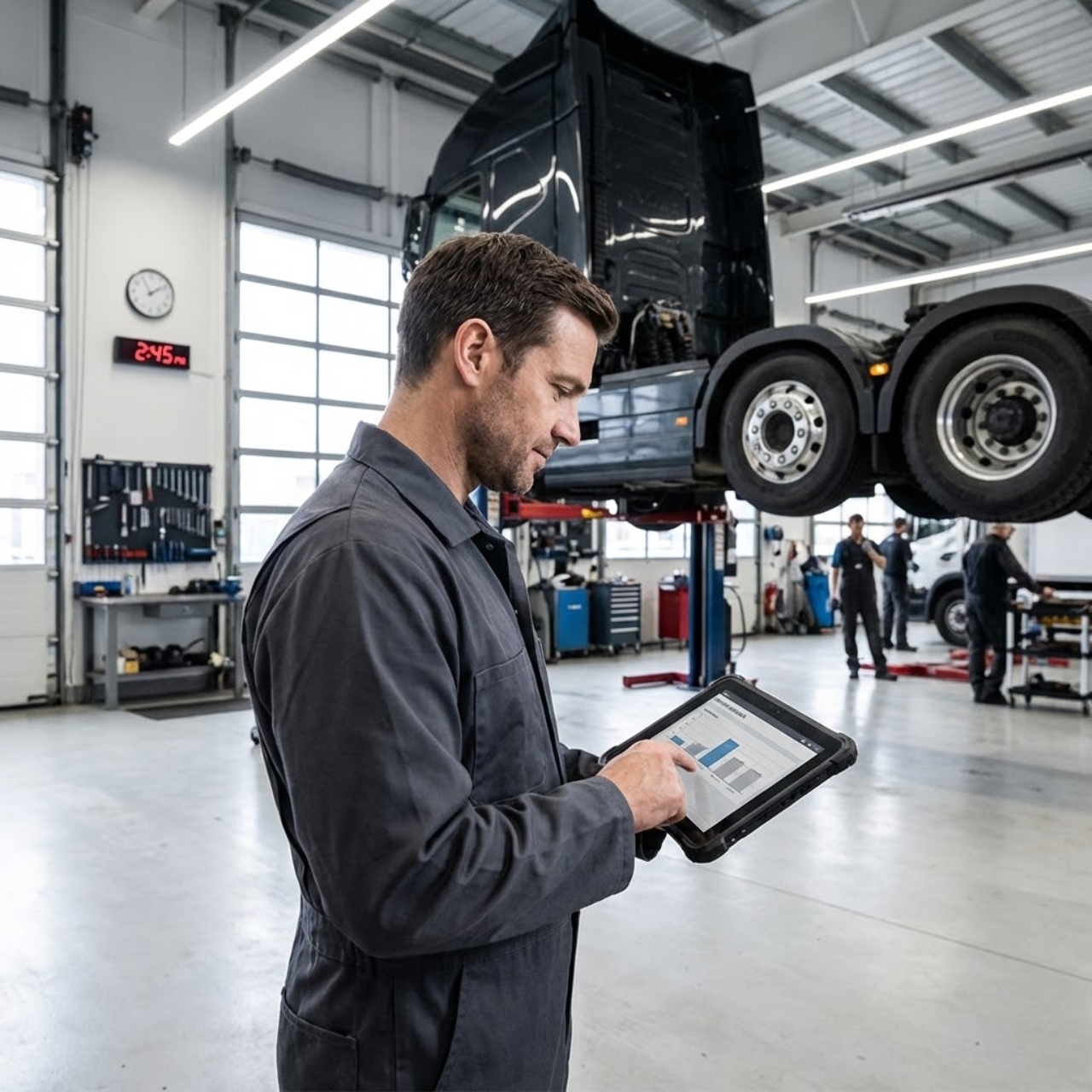
Every hour a commercial vehicle sits idle costs money. For fleet managers overseeing mining haul trucks, logistics operators managing delivery schedules, or workshop owners juggling customer commitments, the equation is simple: faster turnaround equals better business. Yet one bottleneck consistently extends repair timelines beyond necessary limits – the time required to clean parts properly before reassembly.
Traditional manual parts cleaning methods force technicians to spend 45-90 minutes scrubbing individual components, extending what could be a same-day repair into an overnight job. This delay cascades through operations: missed delivery windows, idle equipment, frustrated customers, and lost revenue. The solution lies not in rushing technicians or compromising cleaning quality, but in eliminating the bottleneck entirely through automated spray washing systems that reduce cleaning time from hours to minutes.
The Real Cost of Extended Vehicle Downtime
When a mining haul truck sits waiting for parts to be cleaned and reassembled, the financial impact extends far beyond the repair invoice. A single 200-tonne haul truck can move 400-500 loads per day in optimal conditions, generating substantial operational value. Every additional hour of downtime translates directly to lost productivity.
Fleet managers face similar pressures across industries. A refrigerated delivery truck awaiting brake component cleaning represents spoiled inventory, missed delivery commitments, and potential contract penalties. An excavator waiting for hydraulic component servicing delays an entire construction timeline. The pressure to achieve same day vehicle repair turnaround intensifies as operational margins tighten and customer expectations rise.
Traditional approaches to parts cleaning create predictable delays. Manual cleaning requires technicians to disassemble components completely for access to contaminated surfaces, apply degreasing chemicals and manually scrub each part, rinse components multiple times to remove chemical residue, wait for parts to air dry or manually dry each piece, and inspect for remaining contamination and repeat if necessary.
This process typically consumes 45-90 minutes per component set, depending on contamination levels and part complexity. For a brake system overhaul or transmission service requiring multiple component groups, manual cleaning alone can extend repair time by 3-4 hours.
How Automated Parts Washing Eliminates the Cleaning Bottleneck
Automated heavy-duty parts washers transform parts cleaning from a time-consuming manual task into a rapid, consistent process. These systems use high-pressure heated water and rotating spray arms to clean components thoroughly in 10-15 minute cycles, achieving significant repair cycle time reduction of 75-85% compared to manual methods.
The fleet cleaning efficiency gain comes from several technical advantages.
High-Pressure Spray Technology: Industrial spray washers operate at 1,000-1,500 PSI (70-100 bar), creating sufficient force to dislodge grease, oil, carbon deposits, and mud without manual scrubbing. Multiple rotating spray arms ensure complete coverage of complex component geometries.
Heated Water Performance: Water temperatures of 60-80°C dramatically improve cleaning effectiveness. Hot water breaks down oil and grease molecular bonds, allowing contaminants to be flushed away rather than smeared across surfaces. This thermal cleaning action achieves results in minutes that would require 30-45 minutes of manual scrubbing.
Consistent Cycle Times: Automated spray washing systems deliver predictable cleaning duration. A technician can load contaminated brake components, start a 12-minute cycle, and return to find spotlessly clean parts ready for inspection and reassembly. This predictability allows workshop schedulers to commit to same-day service with confidence.
Simultaneous Cleaning Capacity: Chamber-based parts washers accommodate multiple components simultaneously. An entire brake assembly, transmission case components, or hydraulic valve set can be cleaned in a single cycle, multiplying time savings.
Real-World Turnaround Time Improvements
Consider a typical heavy vehicle brake service scenario. The repair requires cleaning brake drums, backing plates, wheel hubs, and associated hardware before reassembly. Manual cleaning of these components typically requires 75-90 minutes of technician time.
With an automated parts washing system, the same components are loaded into the washer chamber, a 12-minute cycle is initiated, and the technician proceeds to other diagnostic or preparation tasks. When the cycle completes, all components emerge clean, hot, and ready for immediate reassembly. Total cleaning time: 12 minutes, with zero active technician labour required.
This time compression transforms service scheduling. A brake service that previously required an overnight stay becomes a same-day job. A transmission service scheduled for two days can be completed in one. Fleet vehicles return to service hours earlier, mining equipment rejoins production schedules, and customer satisfaction improves dramatically.
Workshop managers report consistent patterns after implementing automated parts cleaning and achieving workshop throughput optimisation:
- Average repair completion time reduced by 2-4 hours per job
- Same-day service percentage increased from 40-50% to 75-85%
- Technician productivity increased by 15-25% through elimination of manual cleaning time
- Customer satisfaction scores improved through faster vehicle returns
Scaling Same-Day Service Across Different Operations
The path to consistent same day vehicle repair turnaround varies by operation size and industry segment, but automated parts washing provides the foundation across all contexts.
Automotive Workshops and Independent Mechanics
Small to medium workshops serving passenger vehicles and light commercial fleets face intense competition. Customers increasingly expect same-day service for routine maintenance and common repairs. Manual parts washers provide cost-effective automation for operations handling 5-15 vehicles daily, offering heated cleaning capacity without requiring significant floor space.
These systems allow mechanics to clean brake components, engine parts, and transmission components in 10-15 minute cycles, enabling same-day completion of services that previously required overnight holds. The competitive advantage is substantial – workshops offering reliable same-day service capture market share from competitors still using manual cleaning methods.
Fleet Maintenance Facilities
Fleet operations managing 20-100 vehicles require higher throughput capacity. These facilities typically service multiple vehicles simultaneously, creating demand for parts washing systems that can handle continuous operation throughout the workday.
Heavy-duty parts washers designed for workshop environments provide the capacity and durability required for fleet applications. Chamber sizes accommodate larger components like differential housings and transmission cases, while robust construction withstands daily use across multiple shifts.
Fleet managers report that automated parts cleaning eliminates the most common reason for extending scheduled maintenance beyond single-day windows. Previously, vehicles would enter the shop for routine service but remain overnight waiting for parts cleaning. With automated systems, scheduled maintenance consistently completes within planned timeframes, improving vehicle availability and reducing backup in the maintenance queue.
Mining and Heavy Equipment Operations
Mining operations face the highest stakes for equipment downtime. A single haul truck or excavator can represent millions of dollars in annual operational value. Every hour of unplanned downtime cascades through production schedules, affecting multiple operational areas.
Extra heavy-duty parts washers and super heavy-duty systems provide the capacity and cleaning power required for large mining equipment components. Chamber dimensions accommodate substantial parts like hydraulic cylinders, final drive assemblies, and engine components weighing hundreds of kilograms.
The cleaning power of these systems addresses the extreme contamination levels common in mining applications. Heavy mud, grease, coal dust, and mineral deposits that would require hours of manual cleaning are removed in 15-20 minute automated cycles. This capability allows maintenance teams to complete major component overhauls within single shifts, returning critical equipment to production schedules without extended delays.
Technical Requirements for Same-Day Service Reliability
Achieving consistent same-day turnaround requires more than simply reducing cleaning time. Workshop operations must address several technical factors to translate faster parts cleaning into reliable service completion.
Heating Capacity and Recovery Time
The cleaning effectiveness of automated parts washers depends significantly on water temperature. Systems must maintain 60-80°C throughout cleaning cycles, even when processing heavily contaminated components that introduce cold metal mass and cool the wash water.
Adequate heating capacity and rapid temperature recovery ensure consistent cleaning performance across consecutive cycles. Systems with insufficient heating capacity may require extended cycle times or produce inconsistent results, undermining the time-saving benefits that enable same-day service.
Chamber Size and Component Fit
Parts washers must accommodate the specific components common to the operation’s service mix. Automotive workshops require chambers sized for brake assemblies and engine components. Fleet facilities need capacity for differential housings and transmission cases. Mining operations require chambers that accept large hydraulic components and final drive assemblies.
Undersized chambers force technicians to clean components in multiple batches, extending total cleaning time and reducing the operational advantage. Properly specified systems allow complete component sets to be cleaned in single cycles, maximising time savings.
Automation Features That Support Workflow
Features like programmable cycle timers, automated door mechanisms, and cycle completion alerts allow technicians to load parts washers and return to other tasks without monitoring the cleaning process. This workflow integration multiplies productivity gains – technicians complete diagnostic work, prepare reassembly areas, or begin work on other vehicles while parts cleaning proceeds automatically.
Systems requiring manual operation or constant supervision reduce the effective time savings and limit the operational improvements that enable same-day service commitments.
Comparing Cleaning Methods: Time and Quality Analysis
Understanding the performance differences between cleaning methods helps workshop managers make informed equipment decisions and set realistic service timelines.
Manual Cleaning with Solvent Tanks: Traditional approach using chemical degreasers and manual scrubbing. Typical time: 60-90 minutes for brake assembly or transmission components. Labour intensive, results vary by technician effort, chemical exposure concerns, inconsistent quality.
Manual Cleaning with Pressure Washers: Improvement over solvent tanks using water pressure to assist cleaning. Typical time: 30-45 minutes. Reduced chemical exposure, still requires significant technician time, water management challenges, limited effectiveness on heavy contamination.
Automated Spray Cabinet Systems: Entry-level automation using enclosed spray chambers. Typical time: 15-20 minutes. Consistent results, minimal technician labour, suitable for light to moderate contamination, limited capacity for heavily contaminated mining or agricultural components.
Heavy-Duty Automated Systems: Industrial-grade parts washers with high-pressure pumps, robust heating, and substantial chamber capacity. Typical time: 10-15 minutes. Handles extreme contamination, large component capacity, consistent performance across consecutive cycles, suitable for demanding commercial and industrial applications.
The performance gap between manual and automated methods directly determines whether workshops can reliably commit to same-day service. Operations using manual cleaning must build 2-4 hour buffers into service estimates to account for cleaning time variability. Facilities with automated spray washing systems schedule with confidence, knowing cleaning will complete within predictable 10-15 minute windows.
Calculating the Business Case for Same-Day Service Capability
The decision to invest in automated parts washing equipment requires evaluating both direct time savings and broader operational benefits.
Direct Labour Cost Reduction
When technicians spend 60-90 minutes manually cleaning parts, that labour cost is absorbed into every job. At $45-65 per hour for qualified technicians, manual cleaning adds $45-95 to each service requiring parts cleaning. Automated systems reduce this to 2-3 minutes of loading time, eliminating $40-90 in labour cost per job.
For workshops completing 20-30 jobs per week requiring parts cleaning, the annual labour savings range from $40,000-70,000. This calculation alone typically justifies equipment investment within 12-18 months.
Increased Service Throughput
Faster turnaround enables workshops to service more vehicles within existing capacity. A facility previously completing 4-5 major services per day may increase to 6-7 services by eliminating cleaning bottlenecks through workshop throughput optimisation. This throughput increase generates substantial revenue growth without requiring additional technicians or expanded facilities.
Competitive Advantage and Customer Retention
Same-day service capability provides differentiation in competitive markets. Fleet managers preferentially direct business to workshops that minimise vehicle downtime. Retail customers choose service providers offering faster turnaround. This competitive advantage translates to increased market share and improved customer retention rates.
Reduced Comebacks and Rework
Automated parts cleaning delivers consistent, thorough results that reduce contamination-related failures. Components cleaned properly the first time reduce comeback rates and associated warranty costs. This quality improvement enhances reputation and reduces operational costs.
Implementation Considerations for Workshop Operations
Successfully integrating automated parts washing into existing workflows requires attention to several practical factors.
Space Planning and Installation
Parts washers require floor space, electrical connections, and water supply/drainage. Planning installation locations that minimise technician travel distance between disassembly areas, parts washers, and reassembly stations optimises workflow efficiency. Hotwash systems are designed with compact footprints that fit within typical workshop layouts without requiring major facility modifications.
Technician Training and Adoption
Automated systems require minimal training – most technicians become proficient within 1-2 hours. However, changing established workflows requires deliberate change management. Demonstrating the time savings and ease of operation encourages adoption and ensures technicians utilise the equipment consistently.
Maintenance and Operating Costs
Regular maintenance includes cleaning filters, checking heating elements, and inspecting spray nozzles. These tasks typically require 15-30 minutes weekly. Operating costs include electricity for heating and pumps, water consumption, and periodic detergent additions. Total operating cost per cycle typically ranges from $2-4, substantially lower than the labour cost of manual cleaning.
Matching System Capacity to Operation Needs
Selecting appropriate equipment requires evaluating typical component sizes, contamination levels, and daily service volume. Undersized systems create bottlenecks. Oversized systems represent unnecessary capital investment. Consulting with industrial cleaning specialists helps operations specify systems that match their specific requirements and growth projections.
The Australian Manufacturing Advantage
Hotwash designs and manufactures parts washing systems in Australia, ensuring equipment meets local operational conditions and compliance requirements. Australian-built systems offer several advantages for domestic operations: robust construction suited to demanding Australian workshop environments, compliance with Australian electrical and safety standards, local parts availability and service support, reduced lead times for equipment delivery and installation, and engineering support from teams familiar with Australian industrial applications.
This local manufacturing foundation ensures workshops receive equipment designed for their specific operational context, backed by responsive technical support when needed.
Conclusion
Achieving consistent same day vehicle repair turnaround requires eliminating the time-consuming manual processes that extend service timelines beyond necessary limits. Automated parts washing addresses the most persistent bottleneck in workshop operations, delivering repair cycle time reduction of 75-85% while improving result consistency and quality.
The operational benefits extend beyond simple time savings. Workshops gain scheduling predictability, competitive differentiation, increased service throughput, and improved customer satisfaction. Technicians work more efficiently, focusing skilled labour on diagnostic and repair tasks rather than manual cleaning. Fleet managers experience reduced vehicle downtime and improved operational availability.
For operations seeking to transform service capabilities and capture the competitive advantages of same-day turnaround, automated parts washing provides the technical foundation. The investment delivers measurable returns through labour cost reduction, increased throughput, and enhanced market positioning.
Workshop managers ready to evaluate how automated parts cleaning can transform their service capabilities should contact us to discuss specific operational requirements and system specifications. The team provides detailed consultation on matching equipment capacity to workshop needs, ensuring operations select systems that deliver maximum operational impact and reliable same-day service performance.

Leave A Comment