
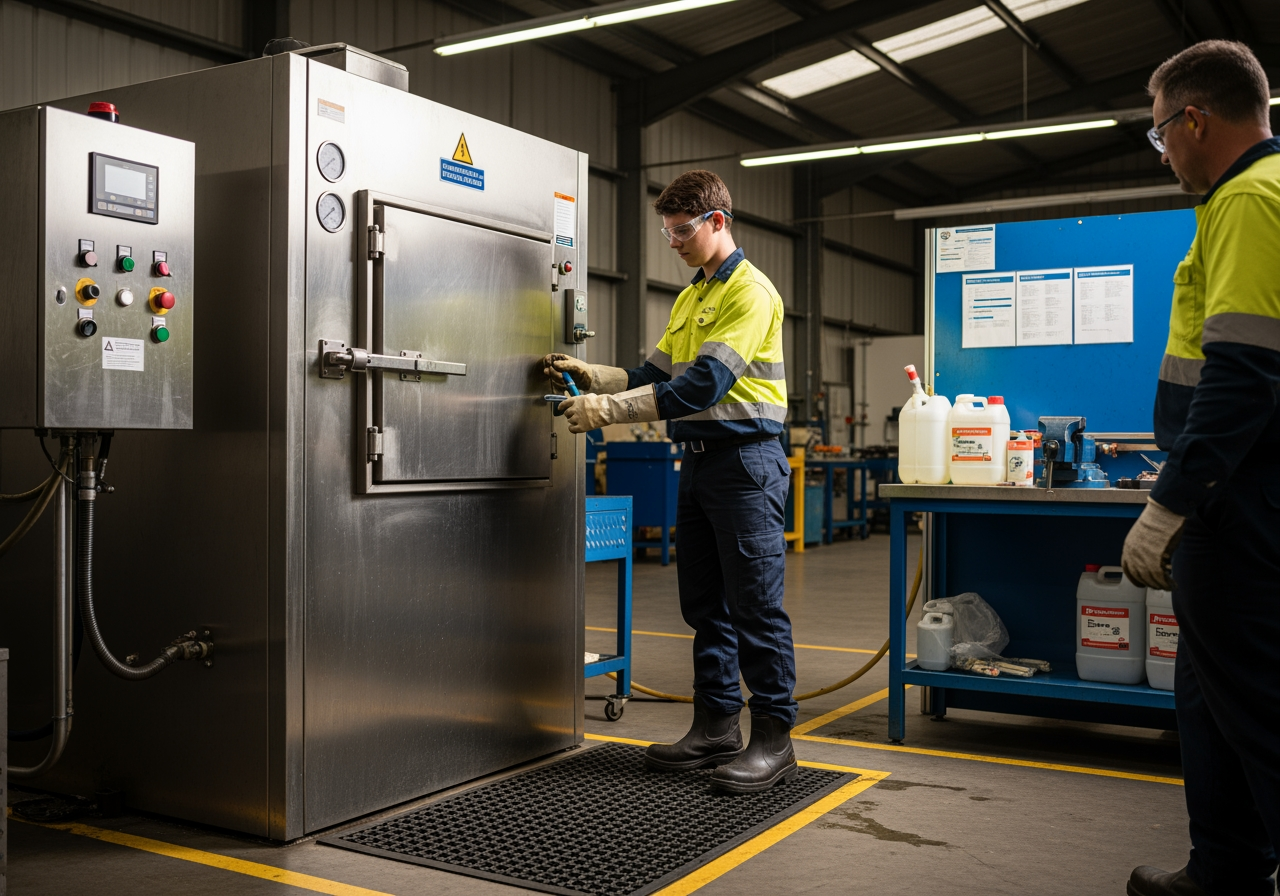
Young workers entering industrial workshops face hazards that experienced tradespeople navigate instinctively – but apprentices lack the pattern recognition that comes from years on the floor. In Australian manufacturing and mining facilities, where parts cleaning involves high-pressure spray, heated chemicals, and heavy machinery, the stakes for proper safety training become particularly acute.
Statistics from Safe Work Australia show workers aged 15-24 experience higher injury rates than any other age group, with manual handling incidents and machinery-related injuries leading the tally. When apprentices encounter industrial parts washers for the first time, they’re facing equipment that operates at temperatures exceeding 80°C, pressures reaching 1000 PSI, and chemical solutions designed to dissolve industrial contaminants. Without structured safety protocols, these cleaning systems present genuine risks to inexperienced operators.
The transition from classroom theory to workshop reality creates a vulnerability window. Apprentices arrive with technical knowledge but lack situational awareness – they haven’t yet developed the instinct to check spray arm rotation before opening a chamber door, or the habit of verifying temperature readings before reaching into a wash cabinet. This gap between knowing safety rules and practising them reflexively is where incidents occur.
Modern industrial parts washing equipment incorporates integrated safety features designed specifically to protect operators during the learning phase. However, even the most sophisticated safety engineering requires human reinforcement through proper training and supervision protocols focused on apprentice workplace safety.
The Unique Hazards Young Workers Face in Parts Cleaning Operations
Industrial parts washing presents a layered hazard profile that experienced operators manage through accumulated knowledge. Apprentices encounter these risks without the contextual understanding that makes them obvious to veterans.
Thermal Burns
Thermal burns represent the most immediate danger. Hot tank systems maintain cleaning solutions between 70-90°C, creating steam and heated metal surfaces that remain dangerous long after shutdown. Young workers often underestimate residual heat – they’ll shut down equipment and immediately attempt to access components, not recognising that a wash chamber retains dangerous temperatures for 30-40 minutes after the heating element disengages.
Chemical Exposure
Chemical exposure occurs through multiple pathways. Industrial cleaning detergents contain caustic compounds, degreasers, and surfactants that cause skin irritation, respiratory issues, and eye damage. Apprentices frequently make concentration errors when mixing chemicals, either creating ineffective solutions that waste time or dangerously strong mixtures that damage equipment and increase exposure risks. The assumption that “more is better” with cleaning agents leads to both safety incidents and operational problems.
High-Pressure Spray Injuries
High-pressure spray injuries happen when operators fail to understand the force behind heavy-duty parts washers. At 1000 PSI, water spray can penetrate skin and cause serious tissue damage. Young worker safety cleaning protocols must emphasise that apprentices never attempt to “test” spray patterns with their hands or fail to secure cabinet doors properly, as this results in unexpected spray release during operation cycles.
Manual Handling Injuries
Manual handling injuries plague apprentices who haven’t yet learned proper lifting techniques or developed the judgment to recognise when a component is too heavy for solo handling. Loading large parts into extra heavy-duty parts washers requires technique and often mechanical assistance, but inexperienced workers frequently attempt lifts beyond their capability to avoid appearing weak or asking for help.
Electrical Hazards
Electrical hazards emerge when water and electricity occupy the same workspace. Apprentices sometimes overlook the importance of keeping electrical connections dry, or they’ll attempt repairs and adjustments without proper lockout/tagout procedures. Industrial parts washers operate on 415V three-phase power in many Australian facilities – voltage levels that prove fatal in wet conditions.
Slip and Fall Incidents
Slip and fall incidents increase around parts washing stations where water, oil, and cleaning solutions create slick surfaces. Young workers moving quickly between tasks often skip the step of wiping down floors or placing absorbent matting, creating hazards for themselves and colleagues.
Building a Safety-First Culture for Apprentice Training
Effective apprentice workplace safety begins before the young worker’s first shift. The foundation lies in creating systems that make safe practices the default option rather than relying on constant vigilance from inexperienced operators.
Structured Induction Programs
Structured induction programs should dedicate substantial time to parts washing safety before apprentices touch equipment. This means hands-on demonstrations with powered-down systems, walk-throughs of emergency procedures, and explicit instruction on every safety feature. The induction must cover not just what to do, but why each step matters – connecting procedures to actual injury scenarios builds understanding that supports compliance.
Buddy Systems
Buddy systems pair apprentices with experienced operators for their first 30-90 days working with industrial cleaning equipment. This isn’t casual shadowing – it’s structured mentorship where the senior worker explains decision-making processes, points out non-obvious hazards, and models proper techniques. The buddy should remain present for every parts washing operation until the supervisor confirms the apprentice demonstrates consistent safe practices.
Progressive Responsibility Frameworks
Progressive responsibility frameworks prevent the dangerous practice of expecting apprentices to operate complex systems independently too quickly. Start with manual parts washers before progressing to automated systems. Assign simple cleaning tasks before moving to complex multi-stage processes. This graduated approach builds competence and confidence simultaneously.
Daily Pre-Start Briefings
Daily pre-start briefings create a routine where the team discusses the day’s cleaning tasks, identifies potential hazards, and confirms who’s operating which equipment. These five-minute conversations establish safety as an ongoing priority rather than a box-ticking exercise completed during induction.
Open Reporting Culture
Open reporting culture removes the stigma around admitting mistakes or asking questions. Apprentices need explicit permission to stop work when uncertain, to request clarification on procedures, and to report near-miss incidents without fear of criticism. Supervisors should actively solicit questions during the apprentice’s first months, normalising the learning process.
Essential Safety Equipment and Protective Measures
Personal protective equipment forms the first line of defence, but effectiveness depends on proper selection, fit, and consistent use – areas where apprentices often need ongoing guidance for young worker safety cleaning operations.
Personal Protective Equipment
Eye protection must be impact-rated and provide side shields. Standard prescription glasses don’t qualify. Chemical splash goggles should be available for tasks involving chemical mixing or system maintenance. Apprentices sometimes remove eye protection when it fogs or feels uncomfortable, requiring supervisors to address fit issues immediately rather than accepting non-compliance.
Heat-resistant gloves rated for the specific temperatures encountered protect against burns from heated components and hot water spray. However, gloves create their own hazards by reducing dexterity and grip. Training must specify when gloves are mandatory (handling heated parts, working with chemicals) versus when they create greater risks (operating machinery with rotating components).
Chemical-resistant aprons protect torso and legs from splash exposure. Apprentices often resist wearing aprons because they’re uncomfortable or feel unnecessary for “quick tasks” – precisely the scenarios where incidents occur. Making aprons convenient and readily accessible improves compliance.
Safety footwear with chemical-resistant soles and steel toe caps is non-negotiable in areas with industrial spray washers. Dropped parts and chemical spills are routine occurrences, and foot injuries create disproportionate downtime.
Hearing protection becomes necessary around high-pressure spray systems that generate noise levels exceeding 85 dB. Young workers with years of industrial work ahead need protection from cumulative hearing damage that experienced workers may already have sustained.
Engineered Safety Features
Beyond personal equipment, engineered safety features on the parts washing equipment itself provide critical protection. Modern stainless steel parts washers incorporate interlocked doors that prevent operation when open, emergency stop buttons positioned for quick access, and temperature controls with maximum limits to prevent dangerous overheating.
Developing Safe Operating Procedures for Common Cleaning Tasks
Generic safety rules fail to prepare apprentices for the specific decisions they’ll face during actual cleaning operations. Effective apprentice workplace safety training requires detailed procedures for each common task.
Pre-Operation Checks
Pre-operation checks should follow a written checklist that apprentices complete before every use until the sequence becomes automatic. This includes verifying that spray arms rotate freely, checking solution levels and temperatures, confirming door seals are intact, and ensuring emergency stops function properly. The checklist prevents the dangerous assumption that equipment is ready simply because it’s powered on.
Loading Procedures
Loading procedures must specify weight limits, proper positioning within the wash chamber, and securing requirements. Apprentices need explicit instruction on when to use lifting equipment and how to balance loads to prevent shifting during wash cycles. For super heavy-duty parts washers handling large mining components, loading becomes a two-person operation requiring coordination and communication protocols.
Chemical Handling Protocols
Chemical handling protocols should eliminate guesswork through pre-measured concentrations, clearly labelled containers, and dedicated mixing areas with ventilation. Apprentices must understand that chemical datasheets aren’t optional reading – they contain critical information about exposure risks, required PPE, and emergency response procedures.
Cycle Monitoring
Cycle monitoring requires apprentices to remain in the vicinity during operation, particularly during the first few cycles with a new part type or cleaning challenge. This allows intervention if unexpected issues arise – excessive foaming, unusual noises, or temperature spikes that indicate problems.
Unloading Procedures
Unloading procedures mandate waiting periods for temperature reduction and pressure release. Apprentices should verify temperature readings and visually confirm that steam has dissipated before opening chambers. Hot parts require designated cooling areas where they won’t create burn hazards for others.
Shutdown and Cleaning Routines
Shutdown and cleaning routines prevent the accumulation of hazards. Daily tasks include draining and wiping down chambers, checking filters for blockages, and removing oil and debris from surrounding floors. Weekly procedures might include deep cleaning of spray nozzles and inspection of heating elements. Monthly maintenance requires supervisor oversight but gives apprentices exposure to preventive maintenance practices.
Recognising and Responding to Emergency Situations
Apprentices need explicit training in emergency scenarios because their instinctive responses often worsen situations rather than resolving them. Effective young worker safety cleaning programmes must address these critical responses.
Chemical Splash Incidents
Chemical splash incidents require immediate action. Apprentices must know the location of eyewash stations and emergency showers before they need them. The natural instinct to rub affected eyes or wipe skin can drive chemicals deeper – training must override this response with the correct procedure: continuous flushing with water for 15 minutes minimum whilst someone else contacts emergency services.
Thermal Burn Response
Thermal burn response begins with removing the heat source and cooling the affected area with running water for 20 minutes. Apprentices often underestimate burn severity or apply inappropriate treatments like ice or ointments. Training should emphasise that all burns involving industrial equipment require medical assessment, even if they seem minor initially.
Equipment Malfunction
Equipment malfunction creates pressure to “fix it quickly” and resume production. Apprentices must understand that troubleshooting energised equipment is prohibited – proper lockout/tagout procedures and supervisor notification are mandatory. The temporary production loss from proper shutdown procedures is trivial compared to the cost of an injury.
High-Pressure Spray Release
High-pressure spray release injuries require immediate pressure application to control bleeding and emergency medical response. These injuries often appear minor externally whilst causing significant internal tissue damage, making professional medical assessment critical.
Electrical Incidents
Electrical incidents demand that rescuers never touch the victim until power is confirmed off. Apprentices should know the location of main power disconnects and understand that attempting rescue without de-energising equipment can create multiple casualties.
Measuring and Improving Apprentice Safety Performance
Effective safety programmes require metrics that identify problems before they result in injuries.
Near-Miss Reporting
Near-miss reporting provides early warning of hazardous practices. Supervisors should track near-miss incidents involving apprentices and look for patterns – repeated issues with the same task, time of day correlations, or specific equipment that causes confusion. A spike in near-misses isn’t a failure of the apprentice but a signal that training or procedures need adjustment.
Competency Assessments
Competency assessments at 30, 60, and 90 days verify that apprentices have internalised safe practices. These shouldn’t be theoretical tests but practical demonstrations where the apprentice explains their decision-making whilst performing actual cleaning operations. Assessment criteria should include hazard identification, proper PPE selection, correct equipment operation, and appropriate responses to simulated problems.
Safety Observation Programs
Safety observation programmes where supervisors or senior workers regularly watch apprentices work provide coaching opportunities. The focus should be on positive reinforcement of correct practices alongside correction of unsafe behaviours. Observations should be documented to track improvement over time and identify training gaps.
Incident Investigation
Incident investigation must include apprentice involvement when incidents occur. Walking through what happened, identifying the breakdown in procedures, and discussing alternative approaches turns incidents into learning opportunities. The goal isn’t blame but understanding – helping the apprentice develop the analytical skills to prevent future incidents.
Continuous Improvement Feedback
Continuous improvement feedback from apprentices themselves often reveals hazards that experienced workers have normalised. Creating formal channels for apprentices to suggest safety improvements leverages their fresh perspective and builds engagement with safety culture.
Conclusion: Building Long-Term Safety Habits Through Systematic Training
Apprentice workplace safety in industrial parts cleaning operations requires more than distributing PPE and conducting a one-time safety briefing. Young workers need structured, progressive training that builds competence alongside confidence, supervision that reinforces safe practices until they become automatic, and a workplace culture that prioritises long-term wellbeing over short-term productivity pressures.
The habits apprentices develop during their first year in the workshop often persist throughout their careers. Investing time in thorough safety training creates tradespeople who not only protect themselves but contribute to safer workplaces for everyone. Modern industrial cleaning equipment from Hotwash Australia incorporates engineered safety features that support this training, but technology alone cannot substitute for human judgment developed through proper mentorship and practice.
Australian workshops that implement comprehensive young worker safety cleaning programmes see measurable benefits – reduced injury rates, lower workers’ compensation costs, improved productivity as apprentices gain competence faster, and stronger retention as young workers feel valued and protected. The time supervisors dedicate to safety training returns multiples through reduced incidents and accelerated skill development.
For operations managers and maintenance supervisors looking to strengthen their apprentice training programmes or upgrade to parts washing equipment with enhanced safety features, contact us to discuss specific requirements and explore systems designed with operator protection as a core engineering priority.

Leave A Comment