
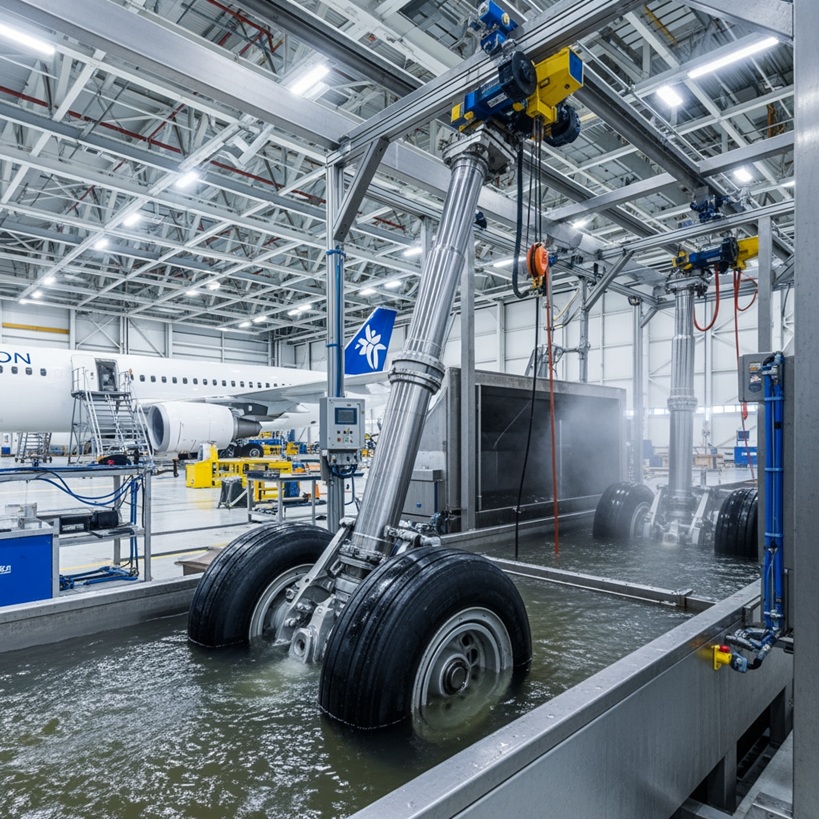
Aircraft maintenance organisations face a persistent challenge that directly impacts operational efficiency, regulatory compliance, and bottom-line profitability: the cleaning of critical aircraft components. When maintenance schedules are measured in hours and aircraft downtime costs operators thousands of dollars per hour, the speed and reliability of parts cleaning becomes a strategic operational consideration rather than a simple housekeeping task.
Many Australian AMOs currently outsource component cleaning or rely on manual methods that consume technician time and introduce quality variability. The business case for establishing in-house cleaning capability through purpose-built aircraft maintenance cleaning systems has strengthened considerably as operational pressures intensify and the performance gap between manual and automated cleaning widens.
The Hidden Cost of Manual Component Cleaning
Labour Cost Analysis and Productivity Impact
Manual cleaning of aircraft components creates costs that extend far beyond the immediate labour hours. A typical landing gear component requiring manual degreasing and cleaning might occupy a skilled technician for 90-120 minutes. That same component processed through an aviation parts washer requires 15-20 minutes of actual technician time – primarily for loading and inspection – while the automated system handles the cleaning cycle.
The mathematics become compelling when calculated across an AMO’s annual throughput. An organisation processing 200 landing gear assemblies annually spends approximately 300-400 technician hours on manual cleaning. At typical Australian aircraft maintenance technician rates of $75-95 per hour, this represents $22,500-38,000 in direct labour costs – before accounting for the opportunity cost of diverting skilled technicians from higher-value maintenance tasks.
Quality Variability and Inspection Challenges
Manual cleaning also introduces quality variability that automated systems eliminate. Human fatigue, technique differences between technicians, and time pressures create inconsistent cleaning outcomes. Components that appear clean may retain hydrocarbon residues in recessed areas or threaded connections – contamination that compromises inspection accuracy and potentially affects component performance.
Regulatory Compliance and Inspection Accuracy
CASA Requirements for Component Cleanliness
Civil Aviation Safety Authority regulations require aircraft components to be “clean and free from contamination” before inspection and installation. The standard is absolute, but the methods for achieving it vary considerably in effectiveness.
Residual hydraulic fluid, grease, or carbon deposits obscure surface defects during visual and penetrant inspections. A crack that would be immediately visible on a properly cleaned component becomes undetectable when contamination fills the defect. This creates two business risks: components with undetected defects that require premature replacement, and potential airworthiness issues if defective components return to service.
Automated System Benefits for Compliance
Industrial parts washers deliver consistent cleaning results that support accurate inspection. High-pressure spray systems operating at 800-1200 PSI combined with heated cleaning solutions at 60-80°C remove contamination from complex geometries, blind holes, and recessed areas that manual cleaning struggles to address. The consistency eliminates inspection variables and supports defensible maintenance records.
For AMOs operating under CASA Part 145 approval, documented cleaning processes form part of the organisation’s exposition and quality system. Aircraft maintenance cleaning systems provide process repeatability and documentation capability that manual methods cannot match. Each cleaning cycle follows identical parameters, creating audit-ready records that demonstrate compliance with approved procedures.
Operational Efficiency and Turnaround Time
Eliminating Manual Cleaning Bottlenecks
Aircraft maintenance operates under intense time pressure. Scheduled maintenance windows are carefully planned around aircraft utilisation, and delays cascade through operator schedules with significant financial consequences. Component cleaning sits on the critical path – nothing proceeds until components are clean enough for inspection.
Manual cleaning creates bottlenecks. A single technician can clean one landing gear assembly at a time, and the process cannot be interrupted once started. An AMO processing multiple aircraft simultaneously faces either queuing delays or the need to deploy multiple technicians to cleaning tasks.
Throughput Improvements with Automated Systems
Hotwash Australia heavy-duty parts washers designed for aviation applications eliminate these bottlenecks. Chamber capacities of 600-900 litres accommodate complete landing gear assemblies, multiple brake components, or batches of smaller parts. Automated cycles run independently, freeing technicians to perform higher-value tasks while cleaning proceeds. An organisation can load components in the morning, complete other maintenance tasks, and return to fully cleaned parts ready for inspection.
The throughput improvement is substantial. An AMO that previously cleaned components serially can now clean multiple assemblies simultaneously. Maintenance schedules compress, aircraft return to service faster, and the organisation can accept additional work without proportional increases in labour costs.
Space Efficiency and Workshop Organisation
Consolidated Cleaning Operations
Manual cleaning operations consume workshop space inefficiently. Cleaning stations require solvent tanks, parts washers, drainage facilities, and adequate ventilation. Components in various stages of cleaning occupy benches and floor space. The process is inherently messy, with cleaning solutions, removed contamination, and partially cleaned components creating housekeeping challenges.
Stainless steel parts washers consolidate the entire cleaning operation into a defined footprint. A typical aviation-grade system occupies 2-3 square metres of floor space and contains all cleaning processes within an enclosed chamber. Contaminated cleaning solution recirculates through filtration systems rather than requiring disposal after each use. The workshop remains organised, with components moving directly from the washer to inspection stations.
Environmental and Safety Considerations
The containment also addresses environmental and safety considerations. Manual cleaning with solvents or degreasers creates vapour exposure for technicians and requires extensive ventilation. Enclosed automated systems contain vapours and operate with aqueous cleaning solutions that reduce chemical exposure. For AMOs in urban locations or shared facilities, this containment simplifies environmental compliance and reduces impact on adjacent operations.
Cost Analysis: Capital Investment vs Operational Savings
Payback Period Calculations
The business case for in-house cleaning capability centres on the relationship between capital investment and ongoing operational savings. Aviation parts washer systems designed for aviation applications represent capital expenditures in the $25,000-65,000 range depending on capacity and specification. This investment must be evaluated against the ongoing costs of current cleaning methods.
For an AMO currently spending $30,000 annually on manual cleaning labour, the payback period for a $40,000 automated system is approximately 16-18 months when accounting for labour savings alone. The calculation becomes more favourable when including secondary benefits: reduced inspection rework, faster turnaround times, improved workshop organisation, and the capacity to accept additional work without proportional labour increases.
Outsourcing Cost Elimination
Organisations currently outsourcing component cleaning face even more compelling economics. External cleaning services for aviation components typically charge $150-400 per landing gear assembly depending on contamination level and turnaround requirements. An AMO outsourcing 200 assemblies annually spends $30,000-80,000 on external services – costs that recur indefinitely. The same organisation investing in aircraft maintenance cleaning systems eliminates these recurring costs while gaining control over cleaning schedules and quality.
Secondary Financial Benefits
The operational savings extend beyond direct cleaning costs. Faster component turnaround reduces the inventory of spare components required to support operations. An AMO that previously maintained three spare landing gear assemblies to cover cleaning and maintenance cycles might reduce this to two assemblies when cleaning time compresses from days to hours. For components valued at $50,000-150,000, this inventory reduction represents significant capital release.
Technical Considerations for Aviation Applications
Component-Specific Cleaning Challenges
Aircraft components present specific cleaning challenges that require appropriate equipment specification. Landing gear assemblies combine large overall dimensions with intricate internal passages. Hydraulic components contain close-tolerance surfaces that require contamination-free cleaning without surface damage. Brake assemblies combine heat-affected metal components with friction materials requiring different cleaning approaches.
Hot Tank Systems for Heavy Contamination
Hot tank systems provide effective cleaning for heavily contaminated components through immersion in heated cleaning solution. The combination of chemical action, heat, and time dissolves carbonised deposits and baked-on contamination that spray washing struggles to remove. For brake components and exhaust system parts, hot tank cleaning delivers results that manual methods cannot match.
Spray Wash Systems for Complex Geometries
Spray wash systems deliver high-pressure cleaning action suited to components with complex geometries. Rotating spray arms ensure coverage of all surfaces, while heated cleaning solution enhances cleaning effectiveness. For landing gear assemblies, flight control components, and structural parts, spray washing provides thorough cleaning in 20-30 minute cycles.
System Selection Based on Component Mix
The choice between systems depends on the AMO’s component mix and contamination types. Organisations maintaining turboprop aircraft with significant carbon deposits benefit from hot tank capability. Those focused on jet aircraft with primarily hydraulic and grease contamination achieve excellent results with spray wash systems. Many larger AMOs operate both system types to address the full range of component cleaning requirements.
Integration with Existing Maintenance Processes
Workflow Integration and Programmable Cycles
Successful implementation of in-house cleaning capability requires integration with existing maintenance workflows rather than creating parallel processes. The cleaning operation should support the maintenance schedule, not complicate it.
Industrial spray washers designed for aviation applications include programmable cycles that match maintenance workflow requirements. Technicians can initiate cleaning cycles with single-button operation, eliminating training complexity. Automated cycles include heating, washing, rinsing, and drying phases – the technician returns to completed, inspection-ready components.
Documentation and Quality System Support
The integration extends to documentation and quality systems. Modern cleaning equipment provides cycle logging and temperature verification that creates audit-ready records. For AMOs operating under quality management systems, this documentation demonstrates process control and supports continuous improvement initiatives.
Workshop Layout Considerations
Workshop layout considerations ensure cleaning equipment supports rather than disrupts workflow. Positioning washers near inspection stations minimises component movement and keeps cleaned parts in controlled conditions. Adequate drainage, electrical supply, and cleaning solution storage require planning during installation, but these requirements are straightforward for organisations with existing workshop facilities.
Building Competitive Advantage Through Capability
Market Positioning Benefits
Aircraft maintenance organisations operate in an increasingly competitive environment. Operators select AMOs based on turnaround time, quality, and cost – factors directly influenced by maintenance efficiency. Organisations that reduce maintenance time without compromising quality gain significant competitive advantages.
In-house cleaning capability contributes to this competitive positioning in multiple ways. Faster component turnaround supports compressed maintenance schedules. Consistent cleaning quality reduces inspection rework and component reprocessing. The ability to clean components on-demand eliminates delays waiting for external services or manual cleaning capacity.
Scalability and Growth Considerations
For AMOs pursuing growth, the scalability matters considerably. Manual cleaning capacity scales linearly with technician count – doubling throughput requires doubling cleaning labour. Automated cleaning capacity scales more efficiently – the same equipment handles increased throughput by running additional cycles. An organisation can grow revenue without proportional increases in cleaning-related labour costs.
Service Differentiation Opportunities
The capability also supports service differentiation. AMOs can offer faster turnaround guarantees, accept short-notice work, and provide cleaning services for components maintained by other organisations. These additional revenue streams utilise existing equipment capacity and contribute to investment payback.
Making the Investment Decision
Analysis Framework for Decision-Making
The decision to establish in-house cleaning capability requires evaluation of current costs, operational constraints, and strategic objectives. Organisations spending more than $20,000 annually on manual cleaning labour or external cleaning services should conduct detailed cost-benefit analysis. Those experiencing maintenance delays due to cleaning bottlenecks face operational imperatives beyond pure cost considerations.
Quantifiable Savings and Strategic Benefits
The analysis should include both quantifiable savings and strategic benefits. Labour cost reduction, elimination of external service costs, and inventory reduction provide measurable returns. Faster turnaround times, improved quality consistency, and competitive positioning deliver strategic value that may exceed direct cost savings.
Equipment Specification and Application Guidance
For organisations uncertain about equipment specification or application fit, consultation with cleaning equipment specialists provides valuable guidance. Manual parts washers offer entry-level solutions for smaller operations, while larger facilities benefit from automated systems with greater capacity and programmable features.
Conclusion: Strategic Investment in Operational Capability
The business case for in-house cleaning capability in aircraft maintenance organisations extends beyond simple cost reduction. While labour savings and elimination of external service costs provide clear financial returns, the strategic benefits of faster turnaround times, consistent quality, and operational flexibility often deliver greater long-term value.
Australian AMOs operating in a competitive maintenance environment cannot afford operational inefficiencies that compromise turnaround times or quality outcomes. Manual cleaning methods and external service dependencies create bottlenecks that limit operational capacity and competitive positioning. Purpose-built aviation parts washer systems eliminate these constraints while delivering measurable cost savings and quality improvements.
The capital investment required for aircraft maintenance cleaning systems represents a strategic commitment to operational excellence rather than a discretionary expense. For organisations processing significant component volumes, the payback period typically falls within 12-24 months, with ongoing operational benefits extending across the equipment’s 15-20 year service life.
Aircraft maintenance organisations evaluating their component cleaning processes should assess current costs, identify operational bottlenecks, and calculate the business case for in-house capability. The combination of labour savings, quality improvements, and operational flexibility creates compelling returns that strengthen competitive positioning and support long-term growth. Contact us to discuss how automated cleaning systems can enhance operational efficiency and support business objectives in aircraft maintenance operations.

Leave A Comment