
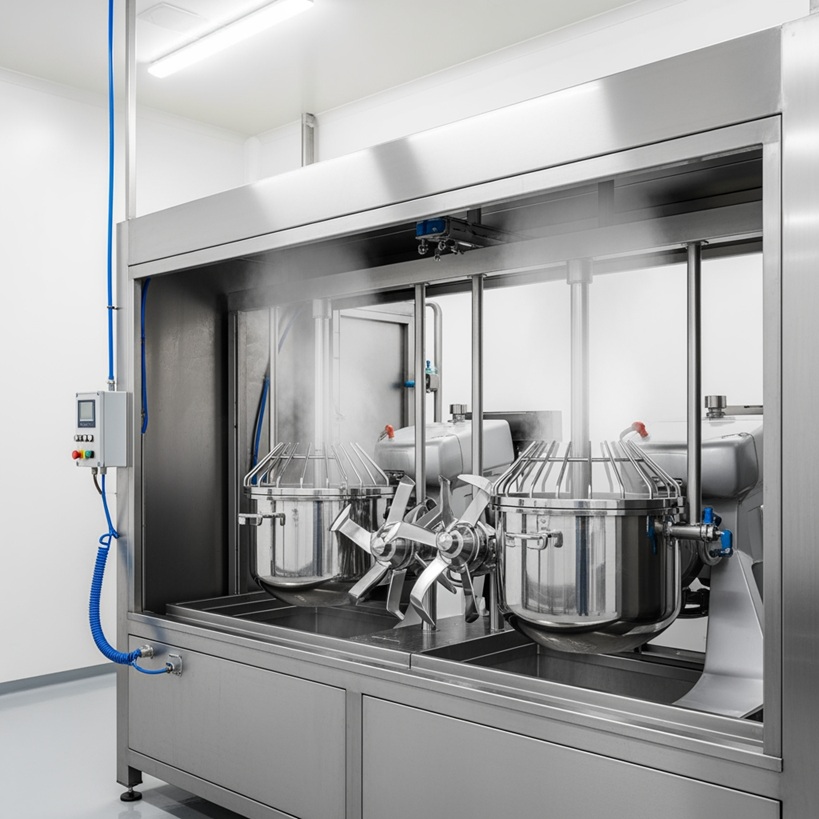
Food production facilities face cleaning challenges that would make most industrial operations look simple. A mining workshop dealing with oil and grease has straightforward contamination – but food processors battle everything from flour dust that becomes concrete when wet, to animal fats that congeal in equipment crevices, to sugar residues that caramelise under heat. Each food sector presents distinct cleaning obstacles that demand specialised approaches and equipment.
The consequences of inadequate food processing equipment cleaning extend beyond inefficiency. Cross-contamination can trigger product recalls costing millions. Bacterial growth can shut down entire facilities. Residue buildup degrades product quality and accelerates equipment wear. Understanding the specific cleaning challenges in bakeries, meat processing, dairy operations, and commercial kitchens determines whether facilities maintain compliance or face costly shutdowns.
Bakery Operations: When Flour Becomes Your Worst Enemy
Bakeries present a cleaning paradox – the primary ingredient appears harmless until water touches it. Flour dust settles on every surface, infiltrates equipment joints, and creates respiratory hazards. When cleaning begins, that dust transforms into a paste that clogs drains, adheres to surfaces, and requires aggressive removal methods.
Dough mixers accumulate layers of dried dough in areas where paddles meet bowls. Conveyor systems collect flour and dough residue in rollers and belt mechanisms. Proofing cabinets develop yeast buildup that affects subsequent batches if not thoroughly cleaned. Baking trays accumulate carbonised residue that manual scrubbing barely touches.
The temperature variations in bakeries complicate cleaning further. Equipment shifts between ambient temperatures and 200°C+ baking zones. Thermal expansion creates gaps where residue hides, then contracts to seal it in. Cleaning solutions must work effectively across these temperature ranges without damaging equipment surfaces or leaving chemical residues that affect product taste.
Stainless steel parts washers designed for food industry applications address these challenges through high-temperature spray cycles that dissolve baked-on residues and flush away flour paste. The heated water and detergent combination breaks down both fresh dough and carbonised buildup without the manual labour that exhausts bakery staff at shift end.
Sugar-based products introduce another layer of complexity. Caramelised sugar creates glass-hard deposits on baking equipment, glazing machines, and cooling racks. These deposits resist cold water cleaning and require sustained heat application to soften before removal. Commercial bakeries processing high volumes cannot afford the downtime that manual cleaning of sugar residues demands.
Meat Processing: Managing Blood, Fat, and Protein Residues
Butcheries and meat processing facilities confront contamination that poses immediate health risks. Blood proteins coagulate on cutting surfaces and equipment. Animal fats solidify in processing machinery and drain systems. Bone dust creates abrasive residues that damage equipment if not removed promptly. The combination demands cleaning protocols that achieve sanitation standards while maintaining equipment integrity.
Meat slicers, grinders, and band saws accumulate protein and fat residues in areas difficult to access during operation. Blade assemblies, feed mechanisms, and motor housings all require complete disassembly for proper cleaning. Manual cleaning of these components consumes hours of labour and creates repetitive strain injuries from scrubbing hardened residues.
Temperature control becomes critical in meat processing and cleaning. Cold water causes fats to solidify, spreading contamination rather than removing it. Excessively hot water can cook protein residues onto surfaces, making them harder to remove. The optimal temperature range for food processing equipment cleaning falls between 60-80°C, hot enough to liquify fats and break down proteins without causing coagulation.
Processing facilities handling different meat types face cross-contamination risks that cleaning must eliminate. Poultry processing creates fine particulate contamination that differs from red meat residues. Fish processing leaves oils and scales that require different cleaning approaches than land animal processing. Facilities processing multiple protein types need cleaning systems capable of thorough decontamination between product runs.
Hotwash Australia systems designed for meat processing applications deliver the high-temperature cleaning required to liquify fats and break down protein residues. The enclosed washing environment prevents aerosolisation of contaminants during cleaning, protecting workers from exposure to biological hazards that manual washing creates.
Dairy Processing: Combating Milk Stone and Bacterial Films
Dairy operations battle contamination invisible to the naked eye. Milk stone – a combination of calcium, magnesium, and protein deposits – builds up inside processing equipment, providing harbourage for bacteria. Biofilms develop in pipework and tank surfaces, creating persistent contamination sources that resist standard cleaning protocols. The challenge intensifies because dairy residues appear clean visually while remaining microbiologically contaminated.
Pasteurisation equipment, homogenisers, and filling machines all develop milk stone deposits that reduce heat transfer efficiency and create quality control issues. These deposits form rapidly – a single production run can leave residue that hardens overnight. Traditional cleaning-in-place (CIP) systems may not reach all equipment areas, particularly in complex assemblies with multiple flow paths.
Cheese production equipment faces additional challenges. Whey proteins create tenacious films on processing surfaces. Salt brines corrode equipment if not thoroughly rinsed. Mould-ripened cheese operations must balance cleaning thoroughness against preserving beneficial bacterial cultures. The cleaning approach must adapt to the specific dairy products being processed.
Industrial spray washers equipped with rotating spray arms and multiple wash zones ensure complete coverage of dairy processing components. The combination of heated water, alkaline detergents, and mechanical spray action removes milkstone deposits and biofilms that manual cleaning misses. Consistent cleaning cycles eliminate the variation in cleanliness that manual methods introduce.
Temperature cycling in dairy cleaning protocols maximises effectiveness. Initial rinses at moderate temperatures remove gross contamination without cooking proteins onto surfaces. Alkaline wash cycles at 70-80°C break down protein and fat residues. Acid rinses at controlled temperatures dissolve mineral deposits. Final sanitising rinses at elevated temperatures ensure microbiological cleanliness. Automated systems execute these temperature transitions precisely, which manual cleaning cannot replicate.
Commercial Kitchens: High-Volume Mixed Contamination
Commercial kitchens in restaurants, hotels, and catering operations face the broadest contamination spectrum in food production. A single shift generates equipment soiled with proteins, starches, sugars, oils, and acidic ingredients. Ovens accumulate carbonised residues. Fryers develop polymerised oil films. Grills collect protein and fat deposits. Mixing equipment retains traces of multiple ingredients that risk cross-contamination for allergen-sensitive customers.
The volume and variety of equipment requiring cleaning create workflow bottlenecks. Kitchen staff must clean multiple pieces of equipment between service periods, often under time pressure. Manual cleaning of oven racks, grill grates, fryer baskets, and mixing attachments consumes labour hours that could support food preparation. The physical demands of scrubbing carbonised and baked-on residues contribute to staff fatigue and turnover.
Grease management presents particular challenges in commercial kitchens. Cooking oils transition from liquid to solid as they cool, coating equipment surfaces and clogging drainage systems. Grease fires remain a constant risk when residues accumulate in cooking equipment. Regular, thorough cleaning of grease-contaminated items protects both food safety and facility safety.
Commercial food processing equipment cleaning systems designed for kitchen applications handle the mixed contamination that commercial operations generate. High-pressure spray action combined with alkaline detergents breaks down carbonised residues, emulsifies oils, and removes protein deposits in automated cycles that free kitchen staff for food preparation rather than equipment scrubbing.
Allergen management adds another dimension to commercial kitchen cleaning. Equipment used for products containing nuts, gluten, dairy, or shellfish must be thoroughly cleaned to prevent cross-contact. Visual cleanliness provides no assurance – protein residues persist at levels invisible to the eye but sufficient to trigger allergic reactions. Validated cleaning protocols using consistent mechanical action and chemical application ensure allergen removal that manual cleaning cannot guarantee.
Food Processing Lines: Continuous Production Demands
Large-scale food manufacturing operations running continuous or high-volume production face cleaning challenges that impact operational efficiency. Production line equipment operates for extended periods, accumulating residues that affect product quality and equipment performance. Scheduled cleaning intervals must balance production demands against contamination control requirements.
Conveyor systems in food processing collect residues from products being transported. Belt materials trap particles and liquids in surface textures. Roller assemblies accumulate buildup that affects belt tracking and creates contamination transfer points. Cleaning these systems often requires a complete shutdown and disassembly, creating significant production downtime.
Filling and packaging equipment develops residues specific to the products being processed. Liquid filling nozzles accumulate dried product, which affects fill accuracy. Powder handling systems collect fine particles that create explosion hazards if not regularly removed. Packaging machinery accumulates adhesive residues, label fragments, and product spillage that affect mechanical operation.
Processing equipment components removed for cleaning need systems capable of handling diverse part sizes and contamination types. Mixing paddles, cutting blades, pump impellers, and valve assemblies all require thorough cleaning between production runs or product changeovers. Heavy-duty parts washers provide the capacity and cleaning power to process these components efficiently, reducing the downtime that manual cleaning creates.
The regulatory environment for food production demands documented cleaning validation. Manual cleaning introduces variability – different operators achieve different results, cleaning times fluctuate, and chemical concentrations vary. Automated parts washing systems deliver consistent results that support validation protocols and regulatory compliance. Temperature monitoring, cycle timing, and chemical dosing occur precisely, creating the documentation that food safety audits require.
Material Compatibility and Equipment Selection
Food production facilities must select cleaning equipment constructed from materials that meet food safety standards. Stainless steel construction prevents corrosion, eliminates contamination sources, and withstands the aggressive chemicals and temperatures required for effective cleaning. Powder-coated or painted surfaces eventually degrade, creating particle contamination and harbourage points for bacteria.
The grade of stainless steel matters in food processing applications. 304-grade stainless steel provides adequate corrosion resistance for most food processing environments. Facilities using chloride-based sanitisers or processing acidic products benefit from 316-grade stainless steel’s superior corrosion resistance. Welds must be smooth and fully penetrated to eliminate crevices where contamination accumulates.
Equipment design impacts cleanability as much as construction materials. Sharp corners and dead-end cavities trap residues and resist cleaning. Smooth, radiused surfaces and self-draining designs facilitate complete cleaning. Access panels and removable components allow thorough cleaning of internal areas. These design features determine whether equipment can be maintained to food safety standards throughout its service life.
Balancing Cleaning Effectiveness with Operational Efficiency
Food production facilities face constant pressure to maximise production uptime while maintaining stringent hygiene standards. Extended cleaning procedures reduce productive capacity. Inadequate cleaning creates food safety risks and quality problems. The solution lies in bakery butchery cleaning solutions that deliver thorough results in compressed timeframes.
Automated parts washing systems reduce cleaning time from hours to minutes for many food processing components. A bakery tray that requires 15 minutes of manual scrubbing cleans in a 10-minute automated cycle. A meat slicer blade assembly demanding 30 minutes of disassembly, cleaning, and sanitising processes completed in 20 minutes. These time savings accumulate across multiple cleaning cycles daily, significantly impacting operational capacity.
Labour cost reduction represents another efficiency dimension. Manual cleaning of food processing equipment requires skilled workers who understand sanitation requirements and equipment construction. These workers command higher wages than general labourers. Automated cleaning systems allow less specialised staff to achieve consistent results, reducing labour costs while improving cleaning outcomes. The workers previously occupied with manual scrubbing can focus on food preparation, quality control, or equipment maintenance activities that add more value.
Water and chemical consumption decrease with properly designed automated systems. Spray washing uses water more efficiently than manual methods that often involve extended rinses. Automated chemical dosing delivers precise concentrations that clean effectively without waste. Heat recovery systems capture thermal energy from wash water to preheat incoming cold water, reducing energy costs. These efficiency gains compound over years of operation, delivering return on investment that justifies capital equipment purchases.
Safety Improvements in Food Production Cleaning
Manual cleaning of food processing equipment creates multiple safety hazards. Workers handle sharp blades and cutting surfaces during disassembly and cleaning. Chemical exposure occurs when mixing and applying cleaning solutions. Repetitive scrubbing motions cause musculoskeletal injuries. Hot water and steam create burn risks. Slippery floors from cleaning activities increase fall hazards.
Enclosed industrial cleaning systems eliminate many of these hazards. Workers load contaminated equipment into the washer and start the cycle without handling chemicals or hot water. Sharp components remain contained during the cleaning process. The enclosed environment prevents chemical vapours and hot water spray from contacting workers. Equipment emerges clean and sanitised without the manual scrubbing that causes repetitive strain injuries.
Ergonomic benefits extend beyond injury prevention. Workers freed from physically demanding cleaning tasks experience less fatigue, improving alertness and reducing errors in food preparation activities. Staff retention improves when jobs involve less physical strain. The ability to attract and retain quality employees becomes increasingly valuable as labour markets tighten across food production sectors.
Meeting Australian Food Safety Standards
Food production facilities across Australia operate under stringent regulatory requirements. The Australia New Zealand Food Standards Code establishes requirements for food safety management. State and territory health departments enforce additional regulations. Third-party certification schemes like HACCP, SQF, and BRC impose cleaning and sanitation standards that facilities must meet to maintain certification.
Cleaning validation forms a critical component of food safety compliance. Facilities must demonstrate that cleaning procedures effectively remove allergens, pathogens, and other contaminants. Visual inspection alone provides insufficient evidence. ATP testing, protein swabs, and microbiological sampling verify cleaning effectiveness. Automated cleaning systems deliver the consistency that supports validation protocols, creating defensible documentation for regulatory audits.
Australian-made cleaning equipment designed for food processing applications incorporates local standards compliance. Electrical systems meet AS/NZS 3000 wiring standards. Pressure vessels comply with AS 1210 requirements. Construction materials and design features align with food safety regulations. Local manufacturing ensures access to parts, service, and technical support that maintains equipment performance and compliance over its operational life.
Conclusion: Matching Cleaning Systems to Food Sector Requirements
Food production cleaning challenges vary dramatically across bakeries, meat processing, dairy operations, and commercial kitchens. Flour paste, animal fats, milk stone, and carbonised residues each demand different cleaning approaches. The common thread connecting all food sectors is the need for consistent, thorough food processing equipment cleaning that protects food safety while maximising operational efficiency.
Automated bakery butchery cleaning solutions deliver the temperature control, mechanical action, and chemical application required to address sector-specific contamination. Stainless steel construction ensures hygiene compliance and durability in demanding food production environments. The time savings, labour reduction, and safety improvements these systems provide create measurable return on investment for facilities processing any food product type.
Australian food producers benefit from locally engineered bakery butchery cleaning solutions designed for the specific challenges of food processing operations. The combination of food-grade materials, validated cleaning performance, and local support ensures facilities maintain the hygiene standards their operations demand. Contact us to discuss how industry-specific cleaning systems address the unique challenges of bakery, meat processing, dairy, or commercial kitchen operations.

Leave A Comment