
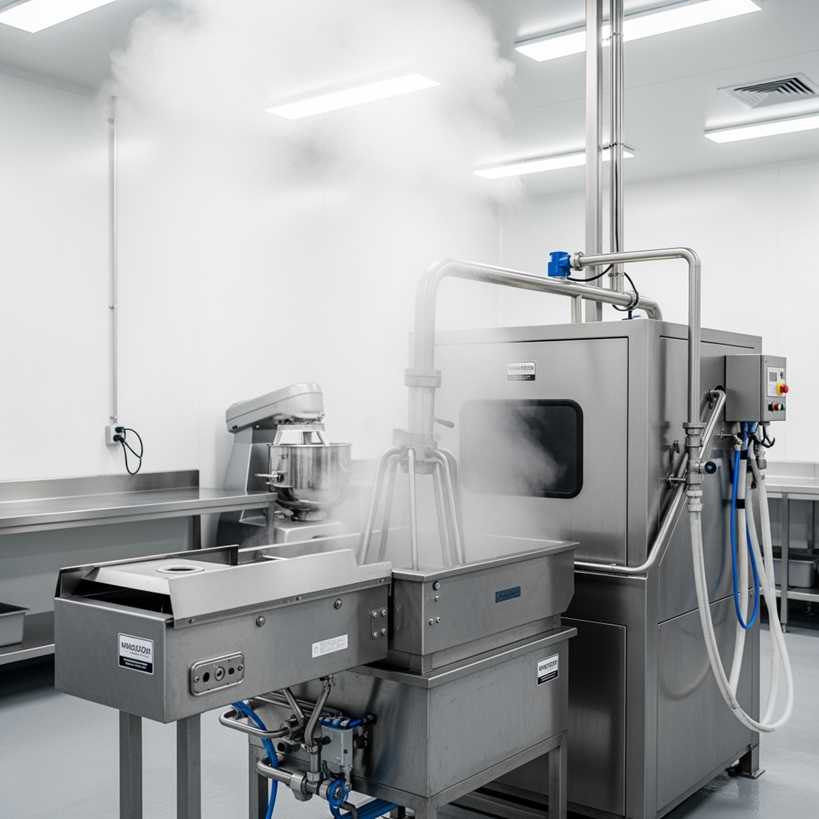
Food contamination incidents cost Australian manufacturers millions in recalls, legal liability, and brand damage. A single bacterial outbreak traced to inadequately cleaned equipment can shut down production lines, trigger regulatory investigations, and destroy years of reputation-building. For food processing facilities, equipment sanitisation isn’t just about cleanliness – it’s a critical control point that determines whether products reach consumers safely or become public health hazards.
The Hazard Analysis and Critical Control Points (HACCP) system establishes non-negotiable standards for food safety management. HACCP-compliant cleaning equipment must meet specific criteria to prevent cross-contamination, eliminate pathogen harbourage points, and maintain verifiable hygiene standards. Traditional manual cleaning methods introduce variables that compromise these requirements – inconsistent contact time, inadequate temperature control, human error in chemical concentration, and surfaces that trap contaminants.
Food manufacturers operating under HACCP protocols require cleaning systems that deliver repeatable, documentable results. Hotwash Australia produces industrial parts washers engineered specifically for food industry applications, where hygiene compliance and contamination prevention determine operational viability. These systems address the technical requirements that separate basic cleaning from HACCP-compliant sanitisation.
Understanding HACCP Requirements for Cleaning Equipment
Critical Equipment Criteria
HACCP compliance demands that every piece of equipment in the food processing environment either contributes to safety or poses no contamination risk. Cleaning systems fall into the first category – they actively remove biological, chemical, and physical hazards from food contact surfaces. This places specific requirements on their design, construction, and operational capabilities.
Critical HACCP Equipment Criteria:
- Non-porous surfaces that resist bacterial colonisation and prevent pathogen harbourage
- Smooth construction that eliminates crevices, joints, and rough areas where contaminants accumulate
- Corrosion resistance to prevent material degradation that creates contamination sources
- Temperature verification to maintain and document sanitising temperatures (typically 77-82°C)
- Chemical compatibility to withstand food-grade detergents and sanitising agents without degradation
- Drainage design that prevents standing water promoting bacterial growth
- Cleanability where the cleaning equipment itself must be easily sanitised
Stainless Steel Construction Benefits
Stainless steel parts washers meet these food manufacturer sanitisation standards through 304 or 316-grade construction. Unlike powder-coated or painted surfaces, stainless steel provides a non-reactive, non-porous surface that resists corrosion from repeated exposure to hot water, alkaline detergents, and acidic sanitisers. The material’s smooth finish eliminates microscopic surface irregularities where bacteria establish colonies.
Food manufacturers must document that cleaning equipment doesn’t introduce hazards. A parts washer with internal corners that trap residue, painted surfaces that chip into food contact areas, or materials that corrode and harbour pathogens creates HACCP violations. The cleaning system becomes a contamination source rather than a control point.
Temperature Control and Thermal Sanitisation Standards
HACCP Thermal Requirements
HACCP protocols recognise thermal sanitisation as the most reliable method for pathogen elimination. Unlike chemical sanitisers that require precise concentration and contact time, hot water sanitisation achieves predictable microbial reduction when temperature and exposure duration meet established parameters. Australian food manufacturer sanitisation standards typically require 77°C minimum for thermal sanitisation, with 82°C providing additional safety margin.
Manual washing cannot maintain these temperatures consistently. Water cools during application, varies across different surface areas, and depends on operator technique. Hot tank systems eliminate this variability through immersion cleaning at controlled temperatures. Components submerge completely in heated cleaning solution, ensuring every surface reaches sanitising temperature for the required duration.
Thermal Sanitisation Benefits
Thermal Sanitisation Benefits:
- Pathogen elimination – Destroys bacteria, viruses, and fungi at verified temperatures
- No chemical residue – Eliminates sanitiser residue concerns on food contact surfaces
- Verifiable process – Temperature sensors provide documentation for HACCP records
- Consistent results – Removes human variables from sanitisation effectiveness
- Grease liquefaction – Heat breaks down fats and oils more effectively than cold washing
Industrial hot tanks maintain temperature throughout cleaning cycles, compensating for heat loss as cold components enter the system. Heating elements respond to temperature drops, ensuring the cleaning solution never falls below sanitising thresholds. This automated temperature management provides the consistency HACCP compliance demands.
Documentation and Verification
Food processing facilities cleaning mixer blades, conveyor components, cutting equipment, and food contact surfaces require documented proof that sanitising temperatures were achieved. Automated systems with temperature logging create the verification records HACCP audits require.
Material Selection and Contamination Prevention
Stainless Steel Technical Advantages
Food industry equipment faces unique material challenges. HACCP-compliant cleaning equipment must resist corrosion from repeated chemical exposure while providing surfaces that don’t harbour bacteria or shed particles into the processing environment. Material selection determines whether equipment supports or undermines HACCP compliance.
Stainless steel dominates food industry applications for specific technical reasons. The chromium content creates a passive oxide layer that self-repairs when scratched, maintaining corrosion resistance throughout the equipment’s service life. This prevents rust particles, metal ions, and surface degradation products from contaminating cleaned components.
Stainless Steel Advantages for Food Safety:
- Non-porous surface prevents bacterial penetration and colonisation
- Chemical resistance withstands chlorine, quaternary ammonium compounds, acids, and alkalis
- Temperature stability maintains structural integrity through repeated thermal cycles
- Cleanability – smooth surface allows complete residue removal
- Durability resists physical damage that creates contamination harbourage points
- Compliance recognition – universally accepted by food safety auditors
Commercial kitchen operations, food processing plants, and beverage production facilities require stainless steel cleaning systems that meet Australian food manufacturer sanitisation standards. These systems provide the hygienic construction necessary for HACCP critical control points.
Alternative Material Risks
Alternative materials introduce contamination risks. Painted or powder-coated surfaces chip and peel, creating physical hazards and exposing substrate materials to corrosion. Plastic components may harbour bacteria in surface scratches and degrade under repeated chemical exposure. Mild steel rusts when exposed to water and cleaning chemicals, generating iron oxide particles that contaminate food contact surfaces.
Food manufacturers cannot afford equipment that becomes a contamination source. Material selection represents a fundamental HACCP decision that affects every subsequent cleaning operation.
Automated Cleaning Cycles and Process Consistency
Programmable Control Systems
HACCP compliance requires documented evidence that critical control points operate within established parameters. Manual cleaning introduces variables that undermine this requirement – different operators use different techniques, fatigue affects thoroughness, time pressure leads to shortcuts, and visual inspection cannot verify microbial elimination.
Automated parts washers eliminate these variables through programmable cleaning cycles that execute identically every time. The system controls water temperature, spray pressure, chemical concentration, cycle duration, and rinse parameters according to preset specifications. Each cleaning operation delivers the same mechanical action, thermal energy, and chemical exposure regardless of which operator initiates the cycle.
Automated Cycle Control:
- Preset wash duration ensures adequate contact time for soil removal and sanitisation
- Temperature maintenance – heating elements maintain sanitising temperatures throughout cycles
- Spray pressure regulation provides consistent mechanical action, removing adhered contaminants
- Chemical injection – automated dosing maintains effective detergent concentration
- Rinse verification – final rinse removes chemical residues from food contact surfaces
- Cycle documentation – digital controls log cycle parameters for HACCP records
HACCP Verification Support
Heavy duty parts washers with programmable controls transform equipment sanitisation from a variable manual process into a consistent automated operation. Food manufacturers programme cycles specific to different component types – longer cycles for heavily soiled items, higher temperatures for high-risk food contact surfaces, extended rinse times for residue-sensitive applications.
This consistency directly supports HACCP verification requirements. When auditors review cleaning procedures, automated systems provide documented evidence that sanitisation parameters were met. Temperature logs, cycle completion records, and programmed specifications demonstrate control over critical food safety factors.
Manual cleaning cannot provide this verification level. Operators may claim they maintained proper temperature and contact time, but documentation relies on subjective observation rather than objective measurement. Automated systems remove ambiguity from HACCP compliance.
Addressing Cross-Contamination Through Design
Design Features for Prevention
Cross-contamination represents one of the most significant HACCP hazards in food processing environments. Allergens, pathogens, and chemical residues transfer between products through inadequately cleaned equipment. A parts washer that doesn’t prevent contamination carryover undermines the entire food safety programme.
Design features that prevent cross-contamination include complete drainage systems that eliminate standing water, smooth internal surfaces without crevices where residues accumulate, and construction that allows thorough cleaning of the washer itself. The HACCP-compliant cleaning equipment must be as hygienic as the components it processes.
Hot blaster systems deliver high-temperature, high-pressure spray that removes contaminants completely rather than redistributing them. The combination of thermal energy and mechanical force dislodges adhered soils, while the spray pattern prevents redeposition on cleaned surfaces. Proper drainage evacuates contaminated water rather than allowing it to pool and create bacterial growth environments.
Multi-Product Line Considerations
Food manufacturers processing multiple product lines face particular cross-contamination risks. Equipment used for dairy products requires complete allergen removal before processing non-dairy items. Meat processing equipment demands thorough sanitisation before contact with ready-to-eat products. Raw ingredient processing areas must prevent pathogen transfer to cooked product zones.
Cleaning systems supporting these requirements need design features that eliminate contamination reservoirs. Sloped surfaces that drain completely, removable spray arms that allow inspection and cleaning, accessible interiors without hidden crevices, and construction materials that resist bacterial adhesion all contribute to cross-contamination prevention.
Australian food manufacturers operating under HACCP protocols cannot rely on cleaning equipment that introduces contamination risks. The parts washer must function as a contamination elimination point, not a transfer mechanism.
Documentation and Verification for HACCP Audits
Automated Documentation Systems
HACCP compliance demands verifiable documentation that critical control points operate within established limits. Equipment sanitisation represents a critical control point where inadequate documentation creates audit failures and regulatory non-compliance. Food manufacturers need cleaning systems that generate the records HACCP verification requires.
Modern industrial parts washers incorporate sensors and controls that document operational parameters automatically. Temperature probes verify that sanitising temperatures were achieved and maintained throughout the cycle. Cycle timers record actual wash duration. Chemical injection systems log detergent usage. These data points create objective evidence that cleaning procedures met specifications.
HACCP Documentation Requirements:
- Temperature verification – logged data proving sanitising temperatures were achieved
- Cycle completion – records confirming full wash and rinse cycles executed
- Chemical concentration – documentation of detergent and sanitiser usage
- Maintenance records – scheduled cleaning and calibration of the washing equipment
- Corrective actions – documented responses to cycle failures or parameter deviations
- Validation studies – periodic verification that cleaning procedures eliminate target contaminants
Maintenance and Calibration
Food safety auditors examine these records to verify that the HACCP plan functions as documented. Claims that equipment was “properly cleaned” require supporting evidence. Automated systems with data logging provide this evidence without relying on operator memory or subjective assessment.
The cleaning equipment itself requires scheduled maintenance and verification. Temperature sensors need calibration to ensure accurate readings. Spray nozzles require inspection to confirm proper coverage. Heating elements need testing to verify adequate capacity. These maintenance activities become part of the HACCP documentation system, demonstrating that the critical control point remains capable of performing its food safety function.
ROI Analysis: Compliance Costs vs Contamination Risks
Financial Risk Quantification
Food manufacturers evaluating HACCP-compliant cleaning equipment must consider the financial consequences of inadequate sanitisation. Product recalls cost Australian food companies an average of $1.8 million per incident, including product destruction, logistics, notification, and brand damage. Regulatory penalties for food safety violations range from production shutdowns to prosecution. Customer contracts often include contamination liability clauses that impose additional financial exposure.
Automated cleaning systems represent capital investment, but the cost comparison favours compliance when contamination risks are quantified. A stainless steel industrial parts washer operating for 10-15 years costs substantially less than a single serious contamination incident. The equipment pays for itself by preventing the recalls, regulatory actions, and reputation damage that manual cleaning inconsistency creates.
Quantifiable Benefits
Quantifiable Benefits:
- Labour reduction – automated cycles eliminate 2-4 hours daily of manual scrubbing labour
- Consistency improvement – removes human variables that create contamination risks
- Documentation efficiency – automated logging reduces HACCP record-keeping time
- Production continuity – prevents shutdowns from contamination incidents
- Audit confidence – verifiable processes reduce compliance risks and audit stress
- Equipment longevity – proper cleaning extends food processing equipment service life
Payback Period Analysis
Food processing facilities replacing manual cleaning with automated industrial washers typically achieve payback within 18-24 months through combined labour savings and contamination risk reduction. The systems then continue delivering value throughout their operational life, providing consistent HACCP compliance without ongoing labour costs.
Australian food manufacturers competing in domestic and export markets cannot afford the reputation damage that contamination incidents create. International customers and major retailers demand documented food safety programmes. HACCP-compliant cleaning equipment provides the verification these requirements demand while reducing the operational costs of maintaining hygiene standards.
Conclusion
HACCP compliance in food manufacturing depends on equipment sanitisation systems that deliver verifiable, repeatable results. Manual cleaning introduces variables that undermine food safety – inconsistent temperatures, inadequate contact time, human error, and documentation gaps that create audit failures. Automated parts washers eliminate these risks through controlled cycles, documented parameters, and hygienic construction that prevents contamination.
Stainless steel industrial cleaning systems provide the non-porous surfaces, corrosion resistance, and thermal capabilities HACCP protocols require. Temperature-controlled cycles ensure pathogen elimination through verified thermal sanitisation. Automated chemical dosing maintains effective detergent concentration without manual measurement. Digital controls generate the documentation that food safety audits demand.
Food processors, commercial kitchens, beverage manufacturers, and ingredient suppliers operating under Australian food manufacturer sanitisation standards require cleaning equipment that functions as a critical control point rather than a contamination source. The investment in HACCP-compliant cleaning equipment prevents the far greater costs of recalls, regulatory actions, and brand damage that inadequate sanitisation creates.
Hotwash Australia manufactures industrial parts washers engineered for food industry applications where hygiene compliance determines operational viability. Australian-made systems deliver the durability, performance specifications, and hygienic design food manufacturers require for long-term HACCP compliance. Contact us to discuss equipment sanitisation systems that meet food safety requirements while reducing labour costs and documentation burden.

Leave A Comment