
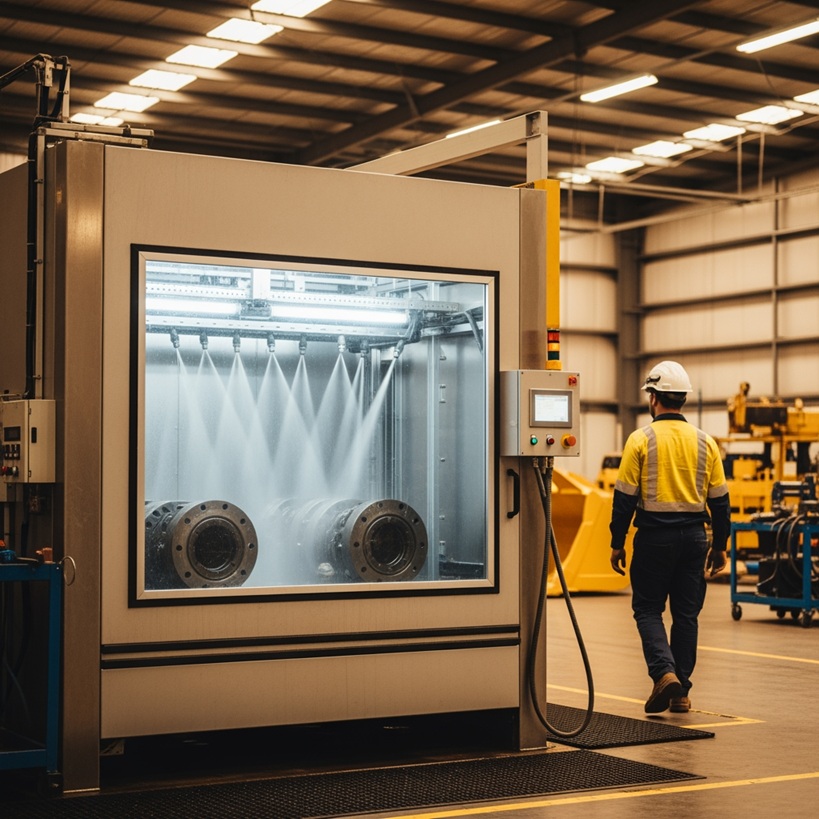
Manual parts washing represents one of the most significant hidden drains on industrial productivity. Across Australian mining operations, manufacturing facilities, and heavy equipment workshops, skilled workers spend an average of 2-3 hours per day scrubbing components by hand – time that could be redirected toward maintenance tasks, equipment repairs, and operational improvements that directly impact production output.
The labour cost calculation reveals a stark reality. A single maintenance technician earning $45 per hour who spends 2.5 hours daily on manual parts cleaning represents $28,125 in annual wages dedicated solely to scrubbing grease and grime. For operations employing multiple technicians, these costs multiply quickly. When factoring in the opportunity cost of skilled labour diverted from critical maintenance work, the true financial impact extends far beyond direct wage expenses.
Hotwash Australia automated systems eliminate this productivity drain by handling the entire cleaning process without manual intervention. Operations implementing automated parts washers consistently report labour recovery exceeding 500 hours annually per technician – time that returns directly to productive maintenance activities, equipment diagnostics, and preventive service schedules that keep production lines operational.
The True Cost of Manual Parts Cleaning in Industrial Operations
Manual parts washing extends beyond the visible time spent at wash stations. The complete labour impact includes preparation time, multiple cleaning attempts for heavily contaminated components, drying periods, and workspace cleanup. Mining operations report that cleaning a single heavily soiled engine component can require 45-60 minutes of sustained manual effort, with workers often needing to repeat the process when initial cleaning proves inadequate.
The physical demands create additional complications. Manual scrubbing with wire brushes and chemical degreasers leads to hand fatigue, repetitive strain injuries, and reduced work capacity throughout shifts. Workshop managers report increased sick leave and workers’ compensation claims directly linked to repetitive cleaning tasks. One mining operation documented a 23% increase in hand and wrist injury reports before implementing automated industrial cleaning solutions.
Chemical exposure presents another hidden cost. Manual cleaning requires direct contact with industrial degreasers, solvents, and contaminated parts. Despite protective equipment, workers experience skin irritation, respiratory issues, and long-term health concerns. Safety compliance requirements mandate additional training, protective equipment purchases, and medical monitoring – costs that compound the already significant labour investment.
The inconsistency factor impacts quality control. Manual cleaning effectiveness varies based on worker experience, fatigue levels, and time pressure. Components cleaned during rushed periods or end-of-shift work receive less thorough treatment, leading to premature equipment failures and unexpected maintenance requirements. Manufacturing facilities report that inconsistent parts cleaning contributes to 15-20% of preventable equipment breakdowns.
Quantifying Labour Recovery Through Automation
Automated parts washer systems transform the time equation. A typical cleaning cycle requires 15-30 minutes of machine operation with zero manual labour input. The technician loads contaminated components, selects the appropriate wash programme, and returns when the cycle completes. During this period, the worker tackles skilled maintenance tasks that directly support operational efficiency.
The mathematics demonstrate clear returns. Consider a workshop with three maintenance technicians, each spending 2.5 hours daily on manual parts cleaning:
- Daily labour time: 7.5 hours across three workers
- Annual labour time: 1,950 hours (260 working days)
- Labour cost at $45/hour: $87,750 annually
Implementing heavy-duty parts washers reduces active labour involvement to approximately 15 minutes per load for loading and unloading. With an average of 6-8 cleaning cycles daily across the workshop:
- Daily labour time: 2 hours total (loading/unloading only)
- Annual labour time: 520 hours
- Labour cost: $23,400 annually
- Annual labour recovery: 1,430 hours
- Annual cost savings: $64,350
This calculation addresses only direct labour costs. The recovered 1,430 hours return to productive maintenance activities that prevent equipment failures, reduce unplanned downtime, and extend machinery service life. Understanding automated parts washer ROI requires examining how operations typically report that redirecting this labour toward preventive maintenance programmes generates additional cost avoidance of $40,000-$60,000 annually through reduced emergency repairs and production interruptions.
Real-World Labour Recovery Across Industrial Sectors
Mining operations experience particularly dramatic labour recovery. A Western Australian iron ore mine implemented extra heavy-duty parts washers across its maintenance facility, eliminating manual cleaning for haul truck components, drill bits, and hydraulic assemblies. The operation documented 847 hours of recovered technician time in the first year, redirected toward predictive maintenance programmes that reduced unplanned equipment failures by 34%.
Oil and gas facilities report similar outcomes. A gas processing plant previously allocated two full-time positions to manual parts cleaning for valves, pipeline components, and drilling equipment. After installing hot tank systems for immersion cleaning, the facility reassigned both positions to instrument calibration and control system maintenance. The plant manager calculated 3,840 hours of annual labour recovery – equivalent to nearly two full-time positions returning to skilled technical work.
Food processing environments benefit from both labour recovery and hygiene improvements. A Victorian meat processing facility replaced manual cleaning of commercial kitchen equipment and processing machinery with stainless steel parts washers meeting food industry compliance standards. The operation recovered 612 hours annually while simultaneously improving sanitation outcomes and reducing chemical exposure risks for cleaning staff.
Automotive workshops and heavy vehicle maintenance facilities document substantial returns despite smaller operation scales. A truck maintenance workshop with four technicians implemented automated washing for engine components, transmission parts, and chassis assemblies. The workshop recovered 520 hours annually, allowing the business to increase service capacity by 18% without additional staff hiring. The owner reported that parts washer productivity benefits alone justified the equipment investment within 14 months.
Beyond Labour Hours – The Productivity Multiplier Effect
Labour recovery extends beyond simple time reclamation. Automated parts washing eliminates the most physically demanding and mentally unstimulating tasks from maintenance schedules. Technicians report higher job satisfaction when freed from repetitive scrubbing work, leading to improved retention rates and reduced recruitment costs. One mining contractor documented a 40% reduction in maintenance staff turnover after implementing comprehensive automated cleaning systems.
The consistency factor amplifies productivity gains. Automated systems deliver identical cleaning results regardless of time pressure, staffing levels, or operational demands. Components receive thorough cleaning during every cycle, eliminating the quality variations inherent in manual processes. This consistency prevents the cascading productivity losses that occur when inadequately cleaned parts cause premature equipment failures requiring emergency maintenance responses.
Workflow optimisation creates additional efficiency gains. Technicians can load contaminated components into industrial spray washers at the beginning of diagnostic work, allowing cleaning to occur simultaneously with other maintenance tasks. By the time diagnostics complete, cleaned components are ready for inspection and reinstallation. This parallel processing eliminates the sequential delays that characterise manual cleaning workflows.
Safety improvements reduce indirect labour costs. Automated systems eliminate repetitive strain injuries, chemical exposure incidents, and manual handling risks. Workers’ compensation claims decrease, safety training requirements simplify, and medical monitoring costs reduce. A manufacturing facility calculated that injury cost reductions contributed an additional $18,000 in annual savings beyond direct labour recovery – demonstrating comprehensive parts washer productivity benefits.
Calculating ROI and Payback Periods
The financial case for automated parts washing centres on labour cost recovery balanced against equipment investment. Understanding automated parts washer ROI calculations helps operations make informed equipment decisions. Entry-level manual parts washers suitable for smaller workshops represent modest capital investments with payback periods of 12-18 months based solely on labour savings. Mid-range automated systems typically achieve payback within 18-24 months, while heavy-duty industrial installations justify their investment within 24-36 months.
The calculation framework should include:
Direct Labour Recovery:
- Hours recovered annually × hourly labour rate
- Reduced overtime costs from improved workflow efficiency
- Decreased emergency maintenance labour from improved component cleanliness
- Lower workers’ compensation and injury costs
Operational Cost Reductions:
- Reduced chemical and solvent consumption
- Decreased protective equipment requirements
- Lower waste disposal costs for contaminated cleaning materials
Capacity and Efficiency Gains:
- Increased maintenance capacity without additional staffing
- Reduced equipment downtime from faster parts processing
- Improved equipment reliability from consistent cleaning quality
Equipment Lifecycle Benefits:
- Extended component service life from thorough contamination removal
- Prevented equipment failures from inadequate cleaning
- Reduced emergency repair expenses
- Lower replacement parts costs from extended component life
- Decreased production interruptions from maintenance delays
A typical mid-sized operation with 3-5 maintenance technicians can expect total annual benefits of $80,000-$120,000 when accounting for both direct labour recovery and indirect operational improvements. Equipment investments ranging from $25,000-$60,000 for appropriate automated parts washer capacity deliver clear positive returns within the first two years, with ongoing annual benefits continuing throughout the equipment’s 15-20 year service life.
Selecting Systems That Maximise Labour Recovery
System capacity directly impacts labour recovery potential. Undersized equipment creates processing bottlenecks that force workers back to manual cleaning methods during peak demand periods. Operations should calculate daily parts washing volume based on typical maintenance schedules, then select equipment with 25-30% excess capacity to accommodate workflow variations and operational surges.
Chamber dimensions determine which components can be processed automatically. Mining operations handling large engine blocks, transmission assemblies, and hydraulic components require super heavy-duty parts washers with chambers exceeding 1,200mm in width and depth. Smaller workshops focused on automotive components and light industrial parts achieve full labour recovery with more compact systems.
Automation features influence actual labour requirements. Basic systems require manual door operation and programme selection, while advanced models offer automated sliding doors, programmable wash cycles, and touchscreen controls that minimise operator interaction. The labour savings difference between basic and fully automated systems can exceed 100 hours annually in high-volume operations – directly affecting automated parts washer ROI outcomes.
Heating capacity affects cycle times and cleaning effectiveness. Hot blaster systems with high-output heating elements complete cycles faster and handle heavier contamination loads, reducing the total number of cleaning cycles required. This efficiency improvement translates directly to additional labour recovery through reduced loading and unloading frequency.
Implementation Strategies for Maximum Labour Impact
Successful labour recovery requires strategic implementation planning. Operations should begin by documenting current manual cleaning time across all maintenance activities, identifying which components consume the most labour hours. This analysis reveals where automated systems will deliver the greatest impact, guiding equipment selection and capacity planning to maximise parts washer productivity benefits.
Workflow redesign maximises automation benefits. Rather than simply replacing manual wash stations with automated equipment, leading operations restructure entire maintenance processes around automated cleaning capabilities. Technicians develop new routines that load components into washers at the start of maintenance procedures, allowing cleaning to occur during other diagnostic and repair activities.
Training investment ensures full system utilisation. Maintenance teams require education on optimal loading techniques, programme selection for different contamination types, and preventive maintenance for the washing equipment itself. Operations that invest in comprehensive training report 15-20% higher labour recovery rates compared to facilities that provide minimal operator instruction.
Performance tracking validates labour recovery projections. Successful implementations include time-tracking systems that document actual labour hours redirected to productive maintenance activities. This data demonstrates automated parts washer ROI to financial decision-makers while identifying opportunities for further workflow optimisation.
Conclusion
Automated parts washing technology delivers measurable labour recovery that transforms maintenance operations. The 500+ hours of annual productive labour recovered per technician represents more than cost savings – it enables operations to redirect skilled workers toward preventive maintenance, equipment diagnostics, and operational improvements that directly support production objectives.
The financial returns extend beyond direct labour cost recovery. Improved cleaning consistency prevents equipment failures, enhanced workplace safety reduces injury costs, and increased maintenance capacity eliminates the need for additional staffing as operations scale. For Australian industrial operations facing persistent skilled labour shortages and rising wage costs, automated parts washers represent one of the most effective productivity investments available.
Operations considering automated cleaning solutions should evaluate current manual cleaning labour costs, calculate potential recovery hours based on maintenance volumes, and assess which system capacity aligns with their processing requirements. The combination of Australian-manufactured durability, proven labour recovery outcomes, and comprehensive operational benefits makes automated parts washing technology a cornerstone of efficient maintenance operations.
Contact us to discuss how automated parts washing systems can recover productive labour hours in your operation. The team provides detailed labour recovery analysis, system capacity recommendations, and automated parts washer ROI calculations specific to your maintenance requirements and operational scale.

Leave A Comment