
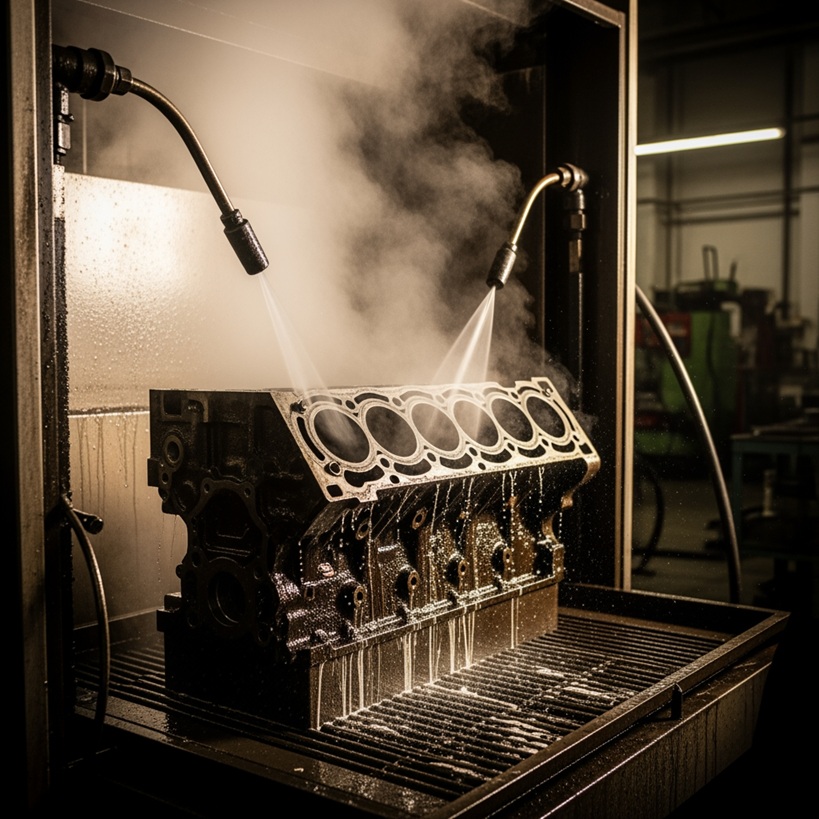
Workshop managers scrolling through industrial cleaning equipment specifications have seen the claims – “15-minute engine block cleaning” plastered across product pages and marketing materials. The promise sounds transformative: load a grease-caked engine block into a parts washer, press start, and retrieve spotless components ready for inspection in less time than a coffee break.
But does the reality match the marketing? The answer depends entirely on contamination levels, equipment specifications, and what “clean” actually means for the operation. A lightly soiled aluminium block from a passenger vehicle presents vastly different challenges than a cast iron mining equipment engine caked with years of carbon buildup, oil residue, and abrasive dust.
Understanding the genuine capabilities of automated parts washing systems – and the specific factors that determine engine block cleaning time – prevents costly purchasing mistakes and unrealistic operational expectations. Hotwash Australia manufactures industrial cleaning equipment across mining, automotive, and manufacturing sectors, where cleaning time directly impacts workshop productivity and equipment turnaround schedules.
What Actually Happens During Automated Engine Block Cleaning
Modern spray cabinet systems don’t simply spray hot water at dirty components. The cleaning process involves multiple simultaneous mechanisms working together: high-pressure heated water (typically 60-80°C), chemical detergent action breaking down hydrocarbon bonds, mechanical agitation from rotating spray arms, and sufficient dwell time for the cleaning solution to penetrate carbon deposits and emulsified oils.
A typical automated cleaning cycle progresses through distinct phases. The initial spray phase floods the chamber with heated detergent solution at pressures ranging from 40-100 PSI, depending on system specifications. Rotating spray arms – positioned at multiple angles within the cabinet – ensure coverage across complex engine block geometries, including cylinder bores, coolant passages, and oil galleries.
The wash phase typically runs 8-12 minutes for moderately contaminated components. Following the primary wash, most industrial systems execute a rinse cycle using clean, heated water to remove detergent residue and suspended contaminants. This rinse phase adds 2-4 minutes to total cycle time.
Heat plays a critical role beyond simply improving detergent performance. Elevated temperatures reduce oil viscosity, allowing contamination to flow from recessed areas rather than remaining trapped in blind holes and threaded passages. Temperature also accelerates chemical reactions between alkaline detergents and acidic petroleum residues.
The final variable – often overlooked in marketing specifications – involves drainage and dry-down time. Engine blocks retain significant quantities of cleaning solution in internal passages after spray cycles are complete. Adequate drainage time (typically 1-3 minutes) prevents water pooling that can cause rust formation on ferrous metals or complicate subsequent machining operations.
The Contamination Factor: Why One Engine Block Isn’t Like Another
Marketing claims about engine block cleaning time typically reference ideal conditions: relatively new components with light operational contamination. Reality presents far more variation. An automotive engine block from a passenger vehicle with 80,000 kilometres might carry moderate oil residue and carbon deposits – genuinely achievable cleaning targets within 15-20 minutes using appropriate heavy-duty parts washers.
Mining equipment engines present exponentially greater challenges. Consider a diesel engine block from an underground loader operating in coal dust environments. The component arrives covered in layers of burnt oil mixed with abrasive particulate, carbon deposits from incomplete combustion, and hardened grease from external surfaces. This contamination level requires extended cleaning cycles – often 25-40 minutes – even with high-performance industrial systems.
The metallurgy matters significantly. Cast iron engine blocks tolerate aggressive cleaning parameters including higher temperatures, stronger alkaline detergents, and extended exposure times. Aluminium blocks – increasingly common in modern engines – require more careful parameter selection to prevent surface etching or discolouration. This often means slightly longer cleaning cycles using milder chemistry, trading cleaning speed for material compatibility.
Component geometry creates additional variables. A simple engine block casting with large, accessible passages cleans faster than complex cylinder heads featuring intricate valve train passages, small oil galleries, and deep combustion chamber recesses. Marketing specifications rarely account for these geometric complications, yet they dramatically impact actual cleaning performance.
Previous maintenance history influences cleaning difficulty. An engine block maintained with regular cleaning throughout its service life responds quickly to automated washing. A neglected component with years of accumulated deposits may require multiple cleaning cycles or pre-treatment with soaking agents before achieving acceptable cleanliness standards.
Equipment Specifications That Actually Determine Cleaning Speed
Chamber size relative to component dimensions significantly impacts cleaning effectiveness. An engine block positioned tightly within a washer cabinet may block spray pattern coverage, creating shadow areas where contamination persists. Properly sized equipment provides adequate clearance for spray arms to access all surfaces – typically requiring chambers 30-40% larger than the component being cleaned.
Pump capacity and pressure ratings determine cleaning intensity. Entry-level systems operating at 40-50 PSI provide adequate performance for light contamination but struggle with hardened deposits. Industrial-grade super heavy-duty parts washers delivering 80-100 PSI generate sufficient mechanical force to dislodge stubborn contamination without extended cycle times.
Heating capacity – measured in kilowatts – determines how quickly systems reach operating temperature and maintain heat during cleaning cycles. Undersized heaters struggle to maintain 70-80°C water temperatures when cold components and ambient conditions draw heat from the system. This temperature drop directly extends engine block cleaning time as detergent performance declines.
Spray arm configuration and rotation speed affect coverage patterns. Fixed spray nozzles create consistent zones but may miss complex geometries. Rotating arms provide broader coverage but require sufficient rotation speed (typically 6-12 RPM) to ensure multiple passes across all surfaces during the wash cycle.
Filtration systems influence cleaning consistency across multiple cycles. Systems lacking adequate filtration gradually accumulate suspended contamination in the wash solution, reducing cleaning effectiveness and requiring more frequent solution changes. This operational reality extends practical cleaning times as solution performance degrades between changes.
The Chemistry Question: What Detergents Actually Accomplish
Alkaline detergents – the standard for industrial parts washing – work through saponification, converting oils and greases into water-soluble soaps. This chemical process requires time, typically 5-10 minutes of contact under heated conditions. Marketing claims promising spotless results in shorter timeframes often assume ideal contamination conditions or fail to account for chemical reaction kinetics.
Detergent concentration directly impacts cleaning speed. Higher concentrations (3-5% solution) accelerate saponification reactions but increase chemical costs and may require additional rinsing to prevent residue. Lower concentrations (1-2% solution) reduce operating costs but extend cleaning times, particularly with heavy contamination.
Specialised formulations address specific contamination types. Carbon deposit removers use different chemistry than general-purpose degreasers, targeting the polymerised hydrocarbon structures in combustion deposits. Engine blocks with significant carbon buildup benefit from these targeted formulations, though they typically cost more than standard industrial detergents.
Water quality influences detergent performance in ways rarely mentioned in equipment specifications. Hard water containing calcium and magnesium ions interferes with surfactant function, reducing cleaning effectiveness. Operations using hard water sources may experience longer cleaning times or require water softening systems to achieve specified performance.
Temperature and chemistry work synergistically. Alkaline detergents double their cleaning effectiveness with every 10°C temperature increase within the 50-80°C range. Systems maintaining consistent 75-80°C temperatures throughout the cycle achieve significantly faster cleaning than equipment with temperature fluctuations.
When 15 Minutes Is Genuinely Achievable
Automotive workshops cleaning passenger vehicle engine blocks under specific conditions can realistically achieve 15-minute cycle times. The scenario requires moderately contaminated aluminium or cast iron blocks from vehicles with under 150,000 kilometres, using properly sized manual parts washers or automated spray cabinets with adequate pressure and heating capacity.
Components receiving regular maintenance throughout their service life respond well to standard cleaning cycles. Mining operations implementing scheduled component cleaning – rather than waiting for complete overhauls – maintain contamination levels within the capabilities of 15-20 minute automated cycles.
Pre-treatment strategies compress cleaning times for heavily contaminated components. Soaking engine blocks in heated detergent solution for 30-60 minutes before automated washing loosens deposits, allowing subsequent spray cycles to achieve thorough cleaning in shorter timeframes. This approach suits operations with adequate space for soaking tanks and sufficient component inventory to absorb pre-treatment time. Quick engine cleaning methods like these pre-treatment techniques help workshops optimise throughput without compromising cleanliness standards.
The cleanliness standard matters critically. “Visually clean” surfaces suitable for general inspection achieve faster than components requiring “precision clean” standards for measurement or assembly. Operations must define acceptable cleanliness levels rather than assuming marketing claims reference their specific requirements.
When Marketing Claims Collapse Against Reality
Heavy equipment maintenance facilities regularly encounter contamination levels that render 15-minute claims meaningless. Mining equipment engine blocks operated in abrasive dust environments, marine diesel engines exposed to salt and carbon deposits, or industrial power generation equipment with years of accumulated contamination require 30-60 minute cleaning cycles even with high-performance systems.
Component size creates practical limitations. Large mining equipment engine blocks exceeding 500kg require extra heavy-duty parts washers with chambers measuring 1500-2000mm. These systems deliver excellent cleaning performance but require proportionally longer cycle times to ensure spray coverage across the increased surface area.
Blind holes and internal passages extend cleaning times regardless of equipment specifications. Engine blocks feature oil galleries, coolant passages, and bolt holes where contamination accumulates but spray patterns struggle to reach. Thorough cleaning of these features requires extended cycles or supplementary methods like ultrasonic cleaning or immersion in hot tank systems.
Rust and scale removal demands different approaches than oil and grease cleaning. Engine blocks stored outdoors or operated in marine environments develop corrosion that standard alkaline detergents cannot remove. These components require acidic rust removers or abrasive methods like wet abrasive blasters, fundamentally changing the cleaning timeline.
The Real Cost of Unrealistic Time Expectations
Purchasing decisions based on optimistic marketing claims create operational frustrations when actual performance falls short. A workshop manager expecting 15-minute cleaning cycles who discovers 30-minute reality faces doubled equipment requirements to maintain throughput targets – or accepts production delays that cascade through the maintenance schedule.
Undersized equipment selection compounds the problem. Operations purchasing entry-level systems based on advertised cleaning times often discover inadequate pressure, heating capacity, or chamber size for their actual contamination levels. The resulting performance gap forces either equipment upgrades or acceptance of compromised cleaning quality.
Unrealistic cycle time expectations pressure operators to reduce cleaning parameters – lowering temperatures, shortening cycles, or diluting detergents – to meet arbitrary throughput targets. This operational compromise produces inadequately cleaned components that fail inspection, require re-cleaning, or cause premature equipment failures from residual contamination.
What Questions Actually Matter When Evaluating Equipment
Rather than accepting marketing claims about cleaning times, operations should request demonstration cleaning using their actual components at representative contamination levels. This practical testing reveals genuine performance under real-world conditions rather than ideal laboratory scenarios.
Specifications should detail heating capacity in kilowatts, pump pressure in PSI or bar, chamber dimensions in millimetres, and spray arm configuration. These concrete parameters predict performance more accurately than vague claims about cleaning speed.
Operating cost calculations should include cycle time, energy consumption, water usage, and detergent consumption per component cleaned. A system claiming faster cleaning but consuming double the energy and chemistry may cost more per component than slower equipment with better efficiency.
Service requirements and parts availability affect long-term performance. Industrial cleaning equipment operates in harsh environments with exposure to heat, chemicals, and moisture. Systems requiring frequent maintenance or featuring long parts lead times create operational disruptions that dwarf any cleaning time advantages.
Matching Equipment Capabilities to Actual Requirements
Mining operations cleaning heavy equipment components benefit from high-capacity systems with extended cycle times, powerful heating, and robust construction. The 30-40 minute cleaning cycles required for thorough contamination removal suit the scale of mining component maintenance, where thoroughness matters more than speed.
Automotive workshops processing higher volumes of moderately contaminated components achieve better value from mid-range systems optimised for 15-20 minute cycles. This equipment balances cleaning performance with throughput requirements typical of automotive engine reconditioning operations. Understanding engine block cleaning time requirements specific to workshop throughput helps managers select appropriately sized equipment.
Food processing facilities cleaning stainless steel components prioritise different factors entirely. Stainless steel parts washers designed for hygiene compliance deliver the material compatibility and sanitation performance these operations require, with cleaning times appropriate for daily equipment maintenance schedules.
Manufacturing environments, cleaning precision components, focus on cleanliness standards rather than speed. These operations often accept longer cleaning cycles to ensure the removal of all contamination that could compromise subsequent machining operations or assembly processes. Quick engine cleaning methods must be balanced against quality requirements specific to each manufacturing application.
The Engineering Reality Behind Cleaning Performance
Automated parts washing represents applied chemistry, fluid dynamics, and thermodynamics – not marketing magic. The fundamental mechanisms of contamination removal require sufficient time for chemical reactions, adequate mechanical energy for deposit dislodgement, and proper temperature maintenance for optimal detergent performance.
Australian-manufactured industrial cleaning systems deliver predictable performance based on engineering principles rather than optimistic projections. Equipment specifications reflect genuine capabilities under typical operating conditions, acknowledging that contamination variability creates corresponding performance ranges.
The 15-minute engine block cleaning claim occupies a narrow band of reality – achievable under specific conditions with appropriate contamination levels and properly specified equipment, but far from universal. Operations benefit more from understanding the variables that determine actual cleaning performance than from accepting marketing timeframes as guaranteed outcomes.
Moving Forward With Realistic Expectations
Effective parts washing equipment selection requires honest assessment of contamination levels, component types, throughput requirements, and cleanliness standards specific to each operation. These practical factors determine appropriate equipment specifications far more accurately than marketing claims about cleaning speed.
Workshop managers evaluating industrial cleaning systems should prioritise equipment capacity, heating performance, pressure ratings, and construction quality – specifications that predict long-term reliability and consistent performance across varying contamination conditions. The difference between 15-minute and 25-minute cleaning cycles matters less than the confidence that components emerge properly cleaned regardless of contamination variability. Understanding realistic engine block cleaning time for specific applications prevents costly equipment mismatches and operational disappointments.
Operations seeking guidance on matching equipment capabilities to their specific requirements benefit from discussing actual component types, contamination levels, and throughput expectations with industrial cleaning specialists. This practical approach to equipment selection prevents costly mismatches between marketing promises and operational reality. Quick engine cleaning methods exist for appropriate contamination levels, but sustainable workshop productivity depends on equipment properly matched to actual requirements.
Contact us to discuss engine block cleaning requirements specific to mining, automotive, or manufacturing applications. The company’s industrial cleaning systems deliver measurable performance improvements based on engineering reality rather than marketing fiction – because workshop productivity depends on equipment that actually works as specified.

Leave A Comment