
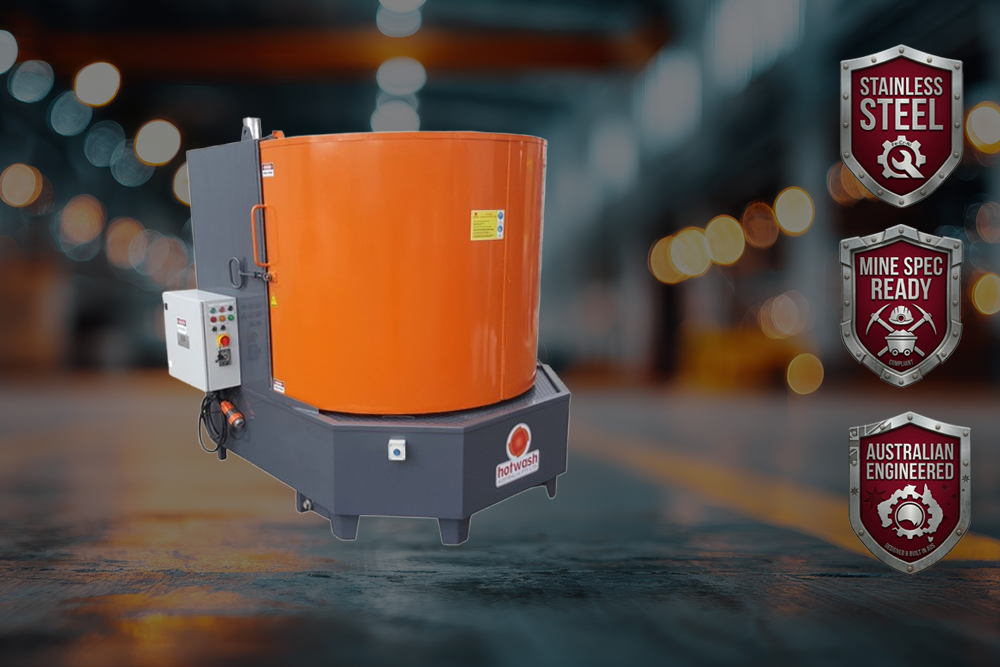
Large components, cleaning equipment, and busy work areas can make shutdown access harder to plan. Heavy equipment handling often changes where an operator stands around a machine.
This guide explains how dual safety buttons can support an emergency shutdown arrangement. It also explains their limits, selection context, and place within broader workshop procedures.
Why Shutdown Access Deserves Careful Planning
Think About Where Operators Actually Stand
Heavy equipment handling rarely happens from one fixed position. Workers may approach equipment from different sides during loading, unloading, inspection, or cleaning.
That movement matters when managers review heavy workshop equipment safety. An emergency control must be considered in relation to real operator positions.
The Super Heavy Duty product page lists optional dual, knee-operated safety buttons. It describes them as easy to reach and activate for emergency shutdown.
The feature should be assessed as part of the machine configuration. It should not replace site procedures, training, supervision, or other controls.
A useful review starts with the normal cleaning sequence. Note where operators stand before, during, and after each cleaning cycle.
Then consider temporary items around the machine. Trolleys, containers, hoses, and removed components can change access during a busy job.
This practical view is more useful than assessing the control in an empty workshop. It reflects the environment operators actually use.
Separate Emergency Access From Normal Operation
Emergency shutdown controls serve a different purpose from normal start and stop functions. They are intended for situations requiring an immediate machine stop.
The extra buttons provide another accessible control option on the configured machine. Their value depends on placement, familiarity, and surrounding workspace.
Managers should review access before commissioning equipment. That review should include how people move around the machine during routine work.
The same review can support heavy workshop equipment safety planning. It helps teams consider controls as part of the whole work process.
The super heavy duty washers page lists the knee-operated button option within its safety extras.
Clear control identification also matters. Operators should understand which control stops the machine and which controls manage normal operation.
Site procedures should match the actual equipment configuration. Generic instructions can create confusion when machines have different optional features.
A pre-start discussion can confirm those differences. It can also highlight any changes after servicing, relocation, or equipment modification.
How Knee-Operated Controls Fit The Hotwash Range
Understand The Optional Feature
The Super Heavy Duty product page presents knee-operated emergency controls as an optional safety extra. They are not described as standard across every washer category.
That distinction matters for procurement. Buyers should confirm the selected machine includes the required option before relying on it.
The broader parts washer range includes different machine types for different cleaning needs. Product selection should start with the cleaning task and required configuration.
Dual safety buttons should therefore be treated as one equipment feature. They should not drive the entire purchasing decision by themselves.
Optional equipment should be recorded clearly in the purchase specification. This gives workshop managers a better basis for installation and training plans.
It also prevents assumptions when several similar machines operate on one site. Two units can look similar but have different control arrangements.
Buyers should ask for confirmation before finalising procedures. The selected configuration should be understood before workers are trained around it.
Keep Safety Controls In Context
Operator safety controls work best when they match the machine, task, and operator position. A convenient control location can support clear shutdown procedures.
Knee-operated emergency controls may suit a setup where a hands-free activation point is useful. The product page specifically describes these buttons for emergency shutdown.
The feature does not lift components or guide loads. It also does not directly improve material-handling technique.
The supplier publishes industrial parts cleaning equipment across several washer categories. Buyers should confirm available options for the machine being considered.
The distinction between machine controls and handling controls is important. Cranes, hoists, forklifts, and lifting practices have separate operating requirements.
A washer control should never be presented as a substitute for those systems. Its published purpose should remain limited to the washer.
That clear definition helps procurement teams compare like with like. It also reduces the chance of overstating an optional feature.
Match The Washer To The Workshop Task
Start With Cleaning Demand
A workshop should first define component size, contamination type, cleaning frequency, and available space. These factors help narrow suitable equipment categories.
Heavy duty washers are presented for demanding workshop cleaning. Their page describes robust mild-steel construction and automatic spray cleaning.
Larger cleaning requirements may lead buyers toward higher-capacity equipment. That range is presented for demanding industrial applications with additional construction features.
These category differences matter more than any single optional control. The machine must first suit the parts and cleaning process.
Hotwash Australia publishes several parts cleaning equipment categories for Australian industrial workshops.
Managers should also consider loading access. A large component can change how close workers need to stand beside the machine.
Floor space should include the work needed around the washer. Do not assess only the machine footprint.
The cleaning process should also fit existing workshop flow. Components need a practical path into and away from the cleaning area.
Review Access Around Larger Equipment
Heavy equipment handling can affect the space needed around a washer. Large components may also change loading approaches and operator movement.
That is where knee-operated emergency controls should be reviewed practically. Managers should consider whether proposed control positions remain accessible during normal tasks.
For larger cleaning requirements, high-capacity parts washers form another published equipment category.
Clear walkways also support heavy workshop equipment safety. Storage, hoses, bins, and temporary work should not obstruct planned access points.
Equipment layout should follow manufacturer instructions and applicable workplace requirements. Site-specific risk controls remain the responsibility of the workplace.
Teams can test the planned layout before routine operation begins. Walk through loading, closing, cleaning, opening, and unloading activities.
Include the people who will use the equipment. Their normal working positions can reveal access issues missed during desk-based planning.
Any layout change should trigger another review. A moved bench or storage rack can alter access without changing the washer itself.
Build A Practical Safety Review Before Purchase
Ask Configuration Questions Early
Procurement teams should ask which operator safety controls are standard and which are optional. Written confirmation helps prevent assumptions during specification.
They should also ask how emergency shutdown controls are arranged on the selected machine. A drawing or equipment discussion can clarify intended positions.
For a published Super Heavy Duty example, the HW1600SHD Spray Washer sits within that product category. Buyers should confirm the exact optional configuration directly.
A clear equipment specification also supports heavy equipment handling planning. Workshop teams can review access before installation rather than after commissioning.
Questions should focus on the selected model, not a general range description. Product categories can contain different machines and available options.
Procurement records should identify agreed safety extras. Installation teams can then compare delivered equipment against the approved specification.
If the configuration changes, training material should change too. Operators need instructions that reflect the machine actually installed.
Include Procedures And Training
The extra buttons are only one part of a shutdown approach. Workers still need clear instructions for normal operation and emergency situations.
Training should cover control purpose, machine-specific operation, and site procedures. It should also explain when equipment must remain out of service.
Operator safety controls should be kept visible and accessible. Workplaces should also follow relevant inspection, maintenance, and electrical safety requirements.
Good heavy workshop equipment safety depends on equipment and work practices working together. No optional feature removes the need for site risk management.
Workers should know how to report damaged or obstructed controls. They should also know who can authorise the equipment’s return to service.
Supervisors can reinforce this through routine checks. The goal is consistent understanding, not reliance on memory or informal instructions.
Workplace procedures should reflect applicable WHS duties. They should also follow manufacturer information for the specific machine and configuration.
Frequently Asked Questions
Are Dual Safety Buttons Standard On Every Hotwash Washer?
No. Hotwash lists dual safety buttons as an optional safety extra on the Super Heavy Duty range.
The feature is described for emergency shutdown access. Buyers should confirm availability and configuration for the specific machine under consideration.
The wording should not be extended to other product categories without confirmation. Different washer ranges have different published features and intended applications.
A product page can describe a range without confirming every option on every machine. Procurement should therefore verify the final specification.
That approach avoids false assumptions in safety documentation. It also keeps training aligned with the equipment delivered to the workshop.
Do The Buttons Improve Component Handling?
Not directly. The buttons do not move, lift, stabilise, or position components during handling tasks.
Their stated role is emergency shutdown access. They should not be described as a material-handling feature or lifting safety device.
This distinction keeps the equipment description accurate. It also separates cleaning-machine controls from component-handling procedures.
Workshops should assess lifting and movement tasks through their own systems. Those systems may involve separate plant, procedures, and competent operators.
The washer feature can support its defined shutdown function. It should not be credited with outcomes beyond that published purpose.
Conclusion
Keep The Feature In Its Proper Role
The optional buttons can provide an additional emergency shutdown access point when included in the machine configuration. Their purpose should remain clearly defined.
They are not a substitute for safe operating procedures. They are also not a substitute for competent supervision or site-specific risk controls.
A sound purchasing decision starts with the cleaning task. Optional controls can then be reviewed against the actual workshop layout.
Managers should confirm feature availability, control placement, and installation requirements before developing final procedures. This keeps expectations tied to the selected machine.
Clear definitions also support better communication between procurement, supervisors, maintenance staff, and operators. Everyone can work from the same equipment information.
Discuss The Required Machine Configuration
Hotwash publishes several automatic washer categories for different industrial cleaning requirements. Feature availability can vary between categories and individual configurations.
Before ordering, describe the parts, cleaning task, workshop layout, and required optional features. Ask the supplier to confirm the proposed configuration.
For help confirming a suitable washer and available options, contact our equipment specialists or sales@hotwash.com.au.

Leave A Comment