
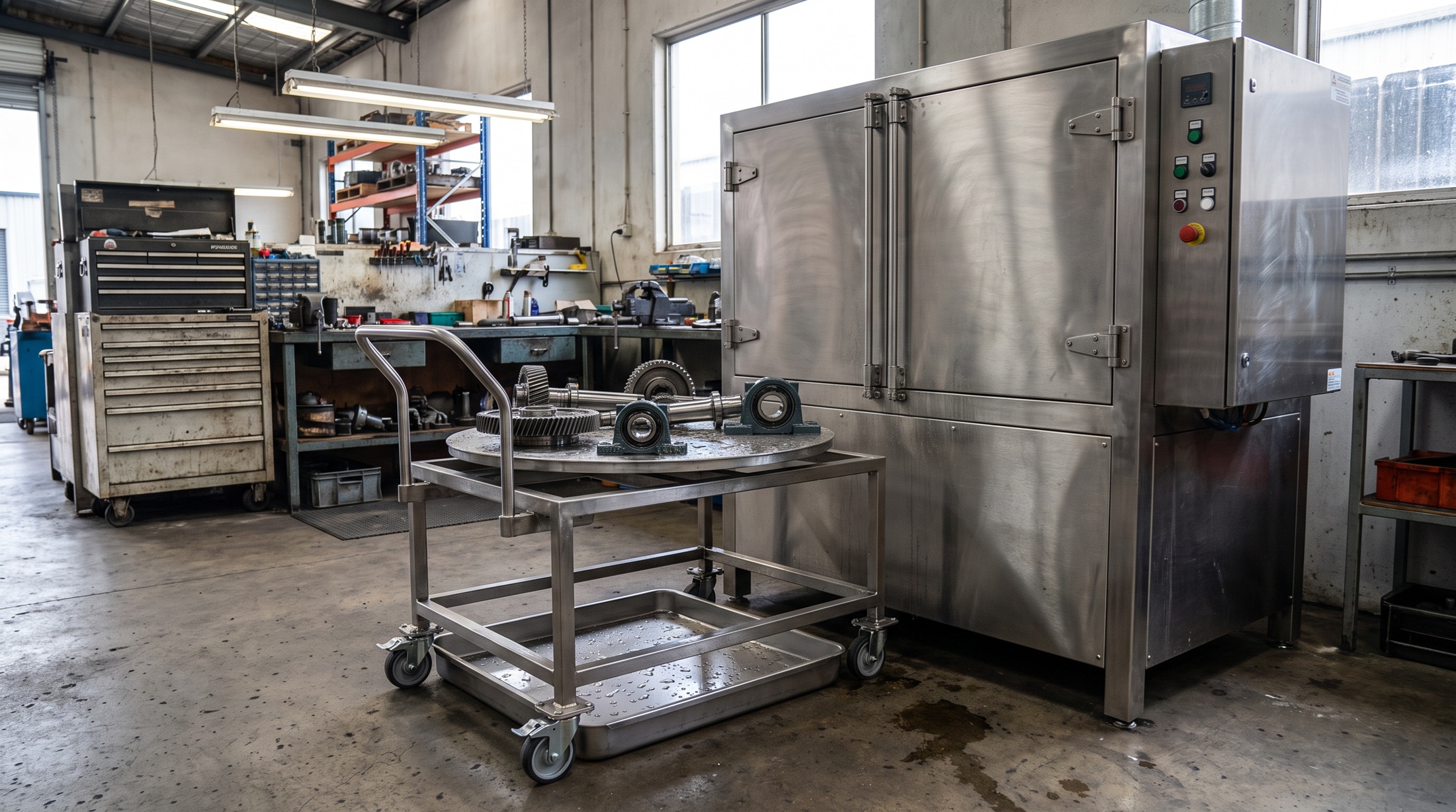
Parts washing can leave a clean component carrying water or cleaning solution after the cycle. That liquid may drip during unloading, inspection, or movement back to the work bay. If it reaches a busy walking route, it can create an avoidable floor condition around the cleaning area.
A good setup manages the liquid where handling occurs. It also keeps the movement path clear and easy to inspect. This article explains how trolley-based drip control can support safer, cleaner workshop routines. Normal housekeeping and site safety procedures still matter.
Why Drips Form Around Parts Washers
Loading and Unloading Wet Components
A cleaned component does not always leave the washer completely dry. Recesses, housings, threads, and uneven surfaces can retain liquid. That liquid may release as the part is lifted or moved.
This is where wet floor hazards often start. The issue may be small at first, especially beside the machine. Repeated loading can spread moisture through the parts washer loading area and nearby travel paths.
Hotwash lists pull-out turntable arrangements on selected stainless steel parts washers. These arrangements allow parts to be loaded away from the main cabinet before returning to the machine.
A trolley drip tray can support this type of movement by placing a collection surface below the loaded turntable. The aim is simple: keep drips with the load instead of letting them fall directly onto the floor.
Why the Loading Area Needs Its Own Controls
The cleaning machine is only one part of the workflow. Workers still need space to approach, load, unload, inspect, and move components safely.
The parts washer loading area should therefore be treated as a defined work zone. Keep unnecessary foot traffic away from it. Avoid storing hoses, tools, packaging, or loose parts in the same path.
Floor condition also matters. A dry route can become slippery when oil residue mixes with water. Prompt cleaning remains important even when drip containment is present.
The SS1600 sliding-door washer is one Hotwash model that specifically lists a pull-out turntable and trolley drip tray. That pairing shows how the tray is intended to work with component movement rather than as a separate cleaning process.
How Drip Trays Fit the Workflow
Supporting Pull-Out Turntable Loading
A pull-out turntable changes where loading happens. The operator can bring the loading surface into a more accessible position. This can simplify loading outside the cabinet opening.
That arrangement can make component handling more organised. It also means liquid can travel with the trolley after the wash cycle.
A trolley drip tray sits below that movement area. It provides local drip containment while the turntable is outside the washer and while components are being handled.
Hotwash also lists this tray feature for the SS1100-T washer. The client describes it as a feature intended to help keep the workplace floor clean and safe.
That wording should not be read as a guarantee that the surrounding floor will always remain dry. Spills, leaks, handling errors, and cleaning practices still need separate controls.
Keeping Containment With the Load
The practical advantage of a trolley-mounted tray is its location. The tray moves with the loading platform instead of staying at one fixed point beside the machine.
That can be useful when the turntable is moved to another part of the workshop for loading or unloading. Any residual liquid has a closer collection point during the movement.
This type of drip containment is most useful when the tray is kept clean and correctly positioned. A tray already holding contamination may create a new handling problem if it is moved carelessly.
Hotwash presents the parts washer range as a group of automatic and specialised cleaning systems for industrial and mechanical applications. The appropriate loading method depends on the machine and the components being cleaned.
At this stage, Hotwash Australia is an equipment source. It does not replace a workplace risk assessment. Machine selection should fit the actual handling process used on site.
Practical Controls Around the Wash Zone
Combine Drip Control With Housekeeping
A drip tray works best as one layer within broader workshop floor safety. It does not replace inspection, spill response, or routine cleaning.
Check the tray before use. Remove accumulated liquid according to the workshop’s approved waste and cleaning procedures. Keep the trolley wheels and surrounding floor free from grease or residue.
Wet floor hazards should be addressed when they appear. Waiting until the end of a shift can allow moisture to spread through repeated foot or trolley traffic.
The same principle applies around manual parts washers. Manual cleaning has a different workflow, but the floor still needs sensible control around splashes, drips, and component transfer.
Plan the Route Between Dirty and Clean Work
Workshop floor safety improves when dirty and clean movements are predictable. A trolley should have a clear route between cleaning, inspection, and the next work stage.
Avoid routing wet components through busy pedestrian areas where possible. Keep the parts washer loading area clear enough for the trolley to move without sharp turns or sudden stops.
Place inspection benches where workers can set parts down without crossing unnecessary traffic. This helps keep dripping components within a controlled zone.
Larger components may require a different handling method. Hotwash’s heavy duty washers are intended for more demanding workshop applications. Plan loading access around the component and handling equipment.
Choosing a Washer and Loading Method
Match the Machine to Component Handling
A stainless steel parts washer may suit workshops that want automatic spray cleaning with a corrosion-resistant cabinet. However, individual models have different door and loading arrangements.
The trolley drip tray is relevant only where the machine design supports that workflow. It should not be assumed to be standard across every Hotwash washer.
Before choosing equipment, review how parts arrive at the cleaning station. Consider whether components are hand-carried, moved by trolley, or handled mechanically.
Also consider where the part goes after cleaning. Good loading design should reduce unnecessary movement and keep residual liquid within a manageable zone.
Consider Larger or Different Cleaning Processes
Some workshops clean components that do not suit trolley-based handling. Large assemblies may require forklifts, cranes, or other lifting equipment.
Other cleaning processes can also change the containment approach. Hot tanks use immersion cleaning, so component lifting and post-soak drainage need different planning from a spray washer trolley.
The correct approach depends on the component, contamination, cleaning method, and workshop layout. A local tray can be useful, but it is only one part of the complete handling system.
FAQs
What Does a Drip Tray Do on a Parts Washer?
A trolley drip tray is a collection surface positioned beneath a movable loading or turntable arrangement. It helps catch liquid released while cleaned parts are handled or moved.
Hotwash lists this feature on selected stainless steel models with pull-out loading arrangements. It is not presented as a separate washer or universal accessory for every machine.
Can a Drip Tray Eliminate Wet Floor Hazards?
No single tray can remove every source of liquid around a mechanical workshop. Wet floor hazards can also come from spills, leaks, hoses, manual washing, and component transfer.
A tray can support local control. Normal housekeeping, inspections, suitable flooring, and site procedures remain necessary.
Which Hotwash Machines Mention This Feature?
Hotwash’s live product information identifies the SS1600 sliding-door model and SS1100-T information in connection with this tray feature. Product configuration should be confirmed directly before purchase.
Hotwash also lists other stainless steel models with different loading arrangements. The relevant product page should always be checked before assuming a feature is included.
What Else Should a Workshop Check Around a Parts Washer?
Check the loading route, trolley condition, floor surface, housekeeping process, and access around the machine. Make sure workers can move components without blocking normal workshop traffic.
For a machine-specific discussion, contact our parts washer specialists or email sales@hotwash.com.au.

Leave A Comment