
Matching parts washer capacity to your actual cleaning workload prevents two costly mistakes. Too small a machine creates bottlenecks that slow repairs and generate overtime. Too large a machine wastes capital on unused capacity that never pays for itself.
The relationship between tank capacity and wash cycle duration determines how many parts batches your workshop can process per shift. Getting this right means cleaning keeps pace with your workload. Getting it wrong means either expensive delays or an oversized machine sitting half-empty.
This guide provides practical throughput planning numbers for Australian workshops. You will learn how to calculate cycles per shift, match equipment capacity to actual parts flow, and build in the margin needed for peak demand periods.
How Tank Capacity Determines Parts Volume Per Cycle
Tank Volume vs Usable Chamber Dimensions
Tank capacity directly limits the physical volume of parts cleaned in a single cycle. However, the critical measurement is not tank volume alone – it is usable chamber dimensions. A industrial parts washer solutions machine with a 600-litre tank might have a working chamber of 800mm x 600mm x 500mm. That physical space determines what actually fits, regardless of how many litres of water the tank holds.
Start by identifying the largest component requiring regular cleaning. Select a tank with 20-30% additional chamber dimension margin beyond that component. This prevents forcing oversized parts into undersized chambers, which creates incomplete cleaning and wasted cycles.
Automotive workshops servicing passenger vehicles and light commercial work efficiently with 400-600 litre systems. Food processing facilities cleaning mixer components and conveyor parts need chamber dimensions matched to their specific equipment geometry – volume alone does not tell the full story.
Industry Capacity Requirements
Different industries have very different capacity baselines. Mining operations typically require 1,200 litre minimum capacity for earthmoving equipment maintenance. Haul truck brake drums and excavator arm components need sufficient width and height clearance inside the chamber.
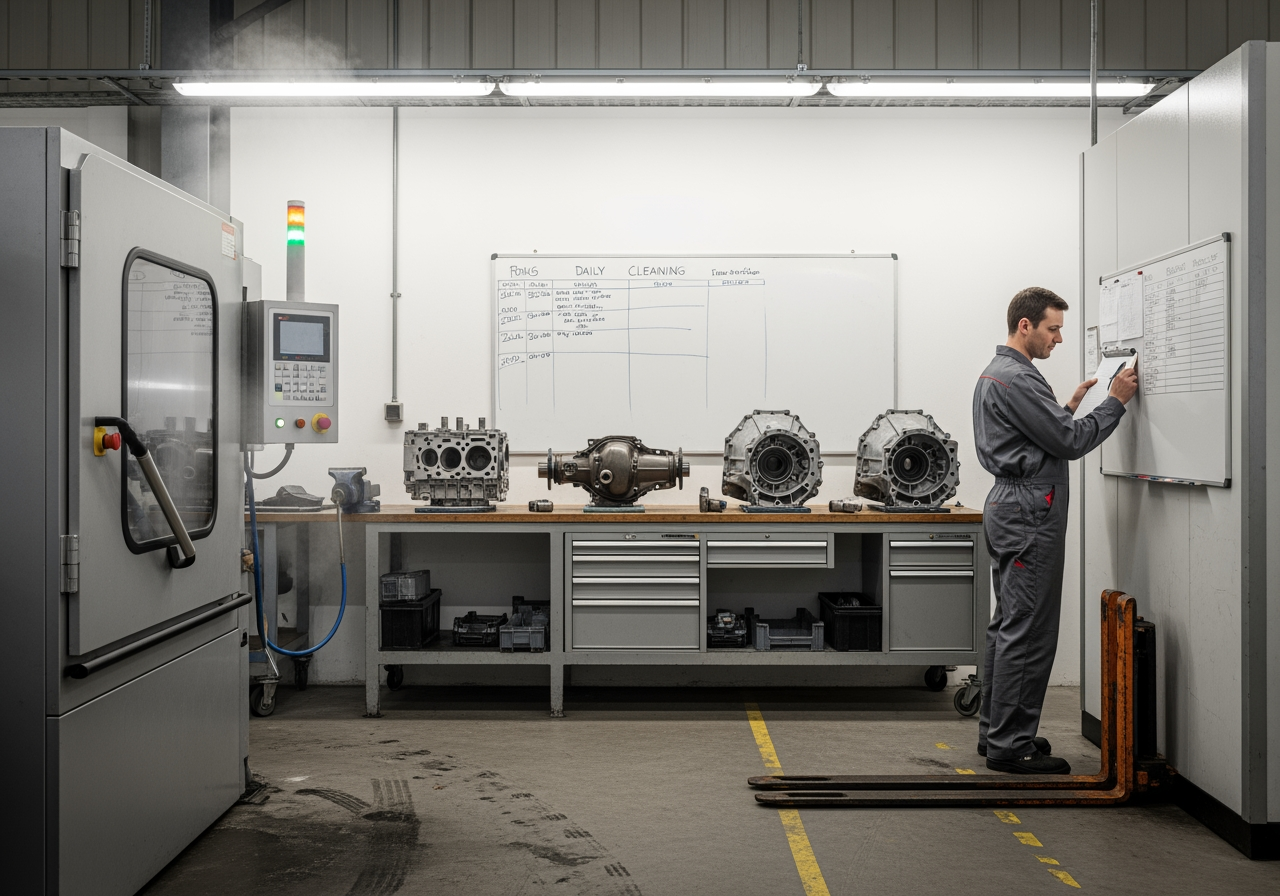
Heavy duty washers suited to automotive and light industrial work handle engine blocks, cylinder heads, and transmission housings effectively in the 400-800 litre range. Scaling up to mining and civil construction applications means moving to larger capacity machines with chambers designed for oversized components.
Standard Wash Cycle Duration by Contamination Type
Understanding wash cycle duration helps calculate how many batches your machine processes per shift. Accurate parts washer throughput calculation requires real cycle times – not optimistic estimates.
Spray Washer Cycle Times
Standard cycles for moderate contamination (oil, grease, carbon buildup) run 15-25 minutes in heated spray washers. This covers most automotive workshop cleaning needs – engine blocks, transmission cases, cylinder heads, and differential housings.
Heavy contamination from mining sites, construction equipment, and diesel-intensive operations extends cycles to 30-45 minutes. Packed mud, baked carbon, and multiple contamination layers require longer exposure to heated detergent and spray pressure. Mixing light and heavy contamination in the same daily schedule creates inefficiency – either over-cleaning light parts or under-cleaning heavy ones.
Extra heavy duty washers handle larger volumes of heavily contaminated components without cycle times blowing out. Their increased spray pressure and heating capacity maintain cleaning performance even when contamination loads vary between batches.
Hot Tank and Manual Washer Timing
Hot tank immersion cleaning typically requires 45-90 minute soak times for heavy contamination removal. The longer duration compensates for gentler chemical action compared to high-pressure spray. Workshops using hot tanks for heavily contaminated mining or oil and gas components must factor these extended times into their throughput calculations.
Manual cleaning equipment operates on continuous flow rather than timed cycles. Cleaning duration is controlled by the operator and suits low-volume workshops where parts arrive sporadically throughout the day rather than in batches requiring scheduled processing.
Calculating Daily Throughput Capacity
Cycles Per Shift and Loading Time
Daily throughput equals cycles per shift multiplied by parts volume per cycle. An 8-hour shift (480 minutes) with 25-minute cycles allows 19 complete cycles maximum. Accounting for loading and unloading time (5 minutes per cycle) reduces this to approximately 16 practical cycles.
Hotwash Australia supplies industrial parts washers from 400-litre workshop systems through 1,600-litre mining-grade capacity – built for Australian industrial conditions across Perth, Melbourne, Sydney, and Brisbane. Their equipment specialists can help calculate accurate throughput estimates for your specific parts mix and contamination types.
A 600-litre system running 16 cycles per day processes significant volume, but physical chamber dimensions matter more than the number alone. If each cycle cleans four cylinder heads, daily capacity equals 64 cylinder heads. If cleaning complete engine blocks one at a time, capacity drops to 16 blocks per shift. Plan for your specific parts mix.
Variable Contamination and Scheduling
Contamination variation between batches directly affects practical daily throughput. Heavily contaminated excavator components requiring 40-minute cycles drops daily capacity to 12 cycles per shift. Scheduling light and heavy contamination separately – light batches in morning, heavy batches in afternoon – maintains consistent throughput across the day.
Parts washer batch capacity planning works best when you group similar contamination levels together. This eliminates the temptation to cut cycles short on heavy contamination or run unnecessarily long cycles on light parts.
Matching System Capacity to Workshop Parts Flow
Measuring Actual Parts Flow Before Selecting Equipment
Do not estimate parts flow. Measure it. Track how many parts batches require cleaning per day over a typical two-week period. Record the physical size of each batch and contamination level. This data reveals actual capacity requirements rather than guessed projections.
A workshop averaging eight parts batches daily with moderate contamination needs a system capable of 10-12 cycles per shift. This 25% capacity margin prevents the washer from becoming a bottleneck when workload spikes above average. Workshop cleaning cycle planning that only sizes for average demand will create overtime costs during busy periods.
Scheduling Strategies for Inconsistent Demand
Operations with inconsistent parts flow – busy periods followed by quiet ones – benefit from strategic scheduling. Running major cleaning work during predictable slow periods allows a smaller machine to handle peak workloads spread across multiple shifts.
Stainless steel cleaning machines for food processing facilities face predictable scheduled demand. A commercial facility needing six cleaning cycles daily at specific times between production runs can size equipment for three to four cycles per service period. This prevents production delays whilst meeting hygiene requirements without over-capitalising on capacity.
Multiple Systems vs Single Large-Capacity Machine
Benefits of Multiple Smaller Systems
Two smaller systems provide operational redundancy. If one unit requires maintenance, cleaning operations continue without shutting down the workshop. This redundancy suits operations where downtime creates immediate production losses.
Multiple systems also allow segregation of contamination types. Oil and grease cleaning in one washer, heavy mud and aggregate in another, food-grade cleaning in a dedicated unit. Contamination segregation extends system life by matching equipment to specific contamination challenges and avoids cross-contamination between different cleaning applications.
When a Single Large System Makes Sense
Super heavy duty washers suit operations with consistent contamination types and high-volume throughput. A mining maintenance facility cleaning excavator components exclusively benefits from maximum chamber size in one high-capacity system rather than splitting throughput across multiple smaller units.
Single large systems cost less than two equivalent-capacity smaller machines combined. The capital savings justify this approach when operational redundancy is less critical and contamination types remain consistent.
Heating, Loading, and Cycle Optimisation
Heating Capacity and Cycle Efficiency
Heating capacity affects total cycle time. A 15kW element brings 600 litres to 80°C faster than a 9kW element, reducing total cycle time by 10-15 minutes when starting from cold. Insulated tanks retain heat between cycles, eliminating the warm-up delay for second and subsequent cycles.
An insulated 800-litre system can consume 30% less energy across 12 daily cycles compared to an uninsulated equivalent. This energy saving also reduces wait time between cycles. For workshops running multiple back-to-back cleaning batches, tank insulation pays for itself quickly in both energy costs and improved throughput.
Optimal Parts Loading for Shorter Cycles
Parts loading technique significantly affects wash cycle duration. Proper orientation ensures spray jets reach all surfaces. Cylinder heads placed with ports facing the spray direction clean faster than those placed randomly. Poor loading creates shadowed areas where contamination survives the cycle, requiring repeat cleaning.
Overloading reduces cleaning effectiveness and extends required cycle time. A 600-litre tank might physically hold eight transmission housings, but spray penetration works better with five or six units properly spaced. The extra capacity allows water and detergent to flow around all surfaces rather than creating blocked zones. Training your team on optimal loading patterns reduces average cycle time by 20-30%.
Peak Demand Planning and ROI
Calculating for Peak Demand Periods
Workshop throughput planning must account for peak demand. Automotive workshops face Monday morning backlogs from weekend breakdowns. Mining operations experience increased maintenance demand during scheduled shutdown periods.
A parts washer sized for average daily demand becomes a bottleneck when peak demand spikes. If peak periods generate four hours of overtime weekly at $45 per hour, that equals $9,360 annually. A larger capacity system that eliminates this overtime often pays for the capacity difference within two to three years whilst improving service delivery.
Labour Savings and Workshop ROI
The ROI calculation for adequate capacity centres on labour time saved. A mechanic spending 3.5 hours manually cleaning parts generates $147 in direct labour cost (at $42 per hour). A parts washer completing the same cleaning in 20 minutes reduces that cost to $14 per job.
A workshop processing 12 parts batches weekly saves over $80,000 annually by eliminating manual cleaning labour. Even accounting for equipment cost, detergent, water, and energy, the cleaning cycle planning labour savings deliver ROI within 12-18 months for most operations. Skilled mechanics freed from manual cleaning complete additional billable work that generates direct workshop revenue.
Conclusion
Tank capacity and wash cycle duration determine whether parts cleaning supports workshop productivity or creates bottlenecks. Match physical chamber dimensions and cycle times to actual parts flow patterns, contamination types, and peak demand periods.
Practical throughput numbers for Australian workshops: 15-25 minutes for standard contamination, 30-45 minutes for heavy deposits, with 12-16 practical cycles per 8-hour shift accounting for loading time. Parts washer throughput calculation based on real parts flow data – not estimates – prevents both undersizing and oversizing.
For throughput planning advice specific to your workshop, reach out to our equipment specialists or email us at sales@hotwash.com.au.

Leave A Comment