
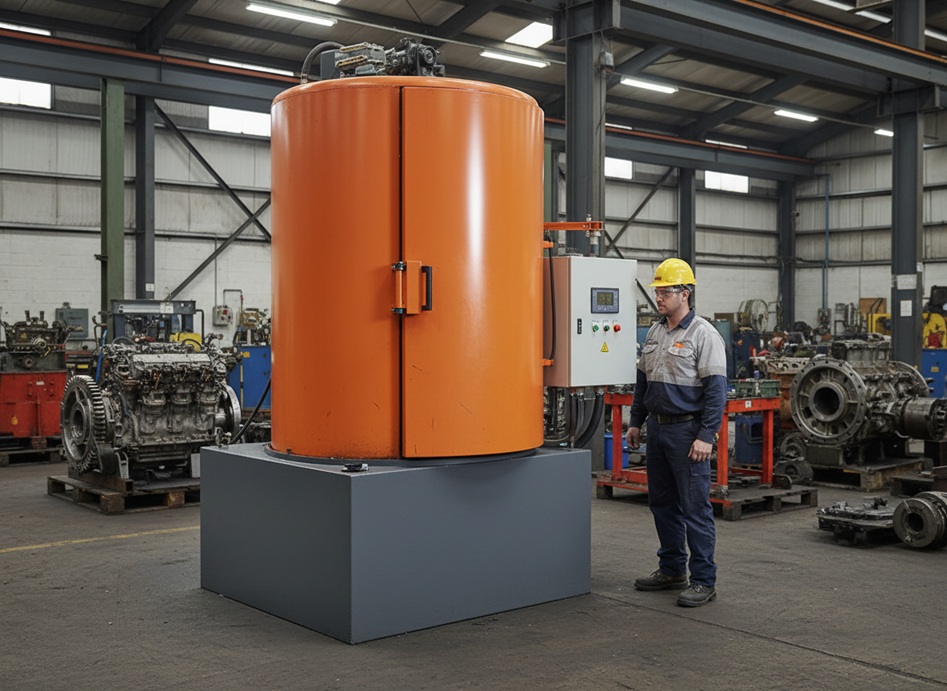
Automatic parts washers can reduce direct handling during component cleaning. However, the wash chamber still needs controlled access during operation.
A mechanical interlock can support safer access management. This guide explains its purpose, limits, and place within a practical workshop process.
Why Wash Chamber Access Needs Control
The Main Risk Point
An automatic spray washer performs cleaning inside an enclosed chamber. The door separates the operator from the active cleaning area.
Access becomes a concern when spraying, movement, or heated cleaning processes are underway. The chamber should remain secured throughout the operating cycle.
Hotwash lists a mechanical interlocked door as an optional safety extra for its super heavy duty washers. The page states that this option increases operator safety.
This wording is important. The feature supports risk reduction, but it does not remove every workshop hazard.
Workshops often contain noise, interruptions, and changing personnel. A physical safeguard provides support when attention is divided.
The safeguard also creates a visible operating boundary. Operators can recognise that chamber access belongs outside the active cycle.
However, safe access still depends on the machine reaching its normal stopped condition. The operator must follow the supplied instructions.
The machine still requires correct loading, suitable operating procedures, and planned maintenance. Workers also need clear instructions for normal and abnormal conditions.
What a Door Interlock Adds
An interlock connects chamber access with the machine’s operating condition. In practical terms, the door should remain locked during operation.
This controlled relationship reduces reliance on memory alone. The machine provides a physical barrier against unintended chamber access during an active cycle.
An interlocked wash chamber can make the operating sequence clearer. Load the parts, secure the door, start the cycle, and wait for completion.
That sequence supports consistent behaviour across shifts. It can also help new operators understand when chamber access is appropriate.
A consistent sequence is useful during inductions and handovers. Supervisors can teach one clear process and observe each step.
It also supports accountability. A worker can explain whether the door secured normally before the cycle began.
The safeguard should still be checked before use. A damaged latch, misaligned door, or unreliable lock needs attention before operation continues.
Workshops comparing equipment can review the broader parts washer range before discussing specific safety options.
How Mechanical Interlocking Supports Safer Operation
Linking Door Position to Operation
A mechanical door interlock is designed around a simple safety principle. The chamber door must be secured for normal operation.
Hotwash maintenance guidance also states that safety interlocks should be tested. It says the door should lock during operation.
This relationship helps separate the operator from the active wash area. It also creates a clear condition before the cycle proceeds.
The exact mechanism can vary by machine configuration. Buyers should confirm the supplied arrangement rather than assume every model uses identical components.
Procurement teams should request a written description of the option. That description should match the selected model and intended application.
They should also ask how the lock responds after cycle completion. Clear operating information helps avoid assumptions during commissioning.
An interlocked wash chamber should be considered part of the machine’s access-control system. It is not a complete safety programme by itself.
Supporting a Predictable Workflow
Safe equipment is easier to use when the operating steps are clear. A door interlock supports that predictable sequence.
The operator loads suitable components and checks their position. The door is then closed and secured before the cycle starts.
Part placement matters because movement can affect the wash process. Components must stay within the machine’s intended loading limits.
Nothing should contact the door or prevent full closure. If the door needs force, the load should be checked again.
During operation, the operator should not force, defeat, or adjust the locking arrangement. Any unusual movement requires a stop and inspection.
After the cycle finishes, the operator follows the machine instructions before opening the chamber. This allows the equipment to reach its normal access condition.
The HW1600SHD spray washer is part of Hotwash’s Super Heavy Duty range. Specific options should be confirmed for the intended configuration.
This measured approach avoids a common procurement mistake. A general range feature should never be treated as standard on every individual machine.
The quotation should identify optional safety items separately. That makes the supplied scope easier to review before approval.
Site teams can then compare the machine configuration with local procedures. Any gap can be discussed before delivery or installation.
Where the Feature Fits in Hotwash Equipment
Super Heavy Duty Applications
Hotwash presents the mechanical interlocked door within the optional safety extras for its Super Heavy Duty range. It is not described as standard equipment.
That distinction matters for specifications, quotations, and purchase approvals. The option should be requested and confirmed during equipment selection.
A useful equipment discussion should cover the operating environment. It should also cover component size, loading access, and expected cleaning tasks.
The door arrangement must suit normal loading and unloading. It should not create uncertainty around when access is permitted.
The same range page identifies safety features for mining applications and other optional controls. These items can form part of a wider site-specific safety discussion.
Hotwash Australia supplies automatic cleaning equipment for different workshop demands. Its heavy duty washers suit robust industrial cleaning applications.
The business should still review the intended parts, loading method, operating environment, and site requirements. One safeguard cannot answer every application question.
Operator safety improves when equipment design and work procedures support each other. Neither should be considered in isolation.
Comparing Washer Categories
Different washer categories serve different component sizes, cleaning loads, and workshop conditions. Their door arrangements and available options may also differ.
Extra heavy duty washers are presented for demanding mining applications. Their specific safety configuration should be checked before purchase.
Stainless steel washers form another automatic cleaning category. These machines have their own designs, capacities, and access arrangements.
The correct question is not whether every washer has the same interlock. The better question concerns the actual model and supplied configuration.
A buyer should ask how the door secures during operation. The buyer should also ask how the interlock is tested and maintained.
The discussion should include normal access after the cycle. It should also cover fault indicators and the expected response.
For replacement planning, ask whether service parts are available for the supplied arrangement. This avoids vague assumptions about future support.
This approach keeps the discussion accurate. It also prevents a feature listed for one range from being assumed across the complete catalogue.
Buyers can also ask whether safety documentation accompanies the machine. Operating and maintenance guidance should reflect the delivered configuration.
They should confirm who will inspect the system after installation. Responsibilities become clearer when agreed before the machine enters service.
Using the Interlock Within a Complete Safety Process
Pre-Start and Operating Checks
Before use, inspect the door, latch, seals, and visible interlock components. Look for damage, looseness, or poor alignment.
Close the door according to the operating instructions. Confirm that it secures normally without forcing the mechanism.
Do not start the machine when the locking action feels different. A changed feel can indicate wear, obstruction, or misalignment.
The interlocked wash chamber must also remain free from overloaded or badly positioned components. Parts should not obstruct normal door closure.
During the cycle, watch for unusual noise, movement, leakage, or warning indications. Stop the process according to site procedures when something appears wrong.
These steps support operator safety without making unsupported promises. They are practical checks, not a guarantee against every possible incident.
A short pre-start checklist can make these actions repeatable. It should use the machine’s actual controls and access points.
Supervisors should review the checklist after equipment changes. A modified process may introduce new loading or access considerations.
Workers should also know who can authorise a restart. Faults involving access controls should never become informal workshop fixes.
Maintenance and Fault Response
Safety interlocks need routine inspection and functional testing. Hotwash’s maintenance guidance specifically includes testing all safety interlocks.
A door that does not lock during operation needs investigation. The equipment should not return to normal service until the fault is addressed.
Never bypass, wedge, or defeat the interlock to keep production moving. That action removes the intended access-control function.
Maintenance work also requires proper isolation. The operating interlock should not be treated as the only protection during servicing.
Only suitable personnel should inspect or repair the locking system. They should follow the machine instructions and relevant site controls.
Clear fault reporting is also important. Record what happened, when it occurred, and how the equipment responded.
Maintenance records help identify repeated faults or gradual wear. They also show when testing and corrective work occurred.
Cleaning residue can affect moving parts and closing surfaces. Routine housekeeping helps the door and latch operate as intended.
Inspection frequency should follow the supplied guidance and site requirements. Generic schedules should not replace model-specific instructions.
The Hotwash Australia website presents automated cleaning systems for workshops and industrial operations. Model-specific advice remains important for safety-related options.
Frequently Asked Questions
Function and Availability
What is a mechanical interlocked wash chamber door?
It is a chamber door connected to the machine’s operating condition. The door should remain secured during normal operation.
Hotwash describes the mechanical interlocked door as an optional safety extra. The listing appears on the Super Heavy Duty range page.
Is the feature standard on every Hotwash parts washer?
The website does not state that it is standard across every model. It is listed as optional for the Super Heavy Duty range.
Availability should be confirmed for the selected machine. The quotation should clearly identify the requested safety options.
What should a buyer ask before ordering?
Ask whether the option is available for the chosen model. Confirm how it operates, how it is tested, and what documentation is supplied.
Also confirm whether any site-specific controls affect the final configuration. These questions keep the purchase discussion practical and accurate.
Operation and Maintenance
Does the interlock replace operator training?
No. The interlock supports operator safety, but workers still need instructions, supervision, and safe operating procedures.
The machine must also be loaded correctly. Operators should understand normal cycle completion, fault response, and access conditions.
What should happen if the door does not lock correctly?
Stop using the machine and report the fault. Do not force the door or bypass the locking system.
Arrange inspection by suitable personnel. Resume normal operation only after the fault has been addressed.
Can the interlock be used as an isolation device?
The operating interlock should not replace proper isolation during maintenance. Servicing requires the controls specified by the machine and the site.
Can operators test the interlock themselves?
Operators may complete approved pre-start checks. Technical testing and repairs should follow authorised procedures and suitable competency requirements.
Conclusion
Match the Safeguard to the Application
Mechanical door interlocking supports controlled chamber access during an automatic wash cycle. It provides an engineered layer within the operating process.
Its value depends on correct selection, installation, testing, and use. It also depends on clear procedures and timely maintenance.
The strongest result comes from combining equipment safeguards with competent operators. Clear supervision and prompt fault reporting complete that approach.
The feature should be assessed alongside the machine type, intended parts, loading method, and site requirements.
Each decision should be documented so operators understand the delivered machine and its approved use.
Confirm the Configuration
Hotwash lists the mechanical interlocked door as an optional safety extra for the Super Heavy Duty range. Buyers should confirm availability for their chosen model.
A clear quotation should identify the machine, required options, and relevant operating needs. This prevents assumptions during procurement and commissioning.
For model-specific guidance, contact our parts washer specialists or email sales@hotwash.com.au.

Leave A Comment