
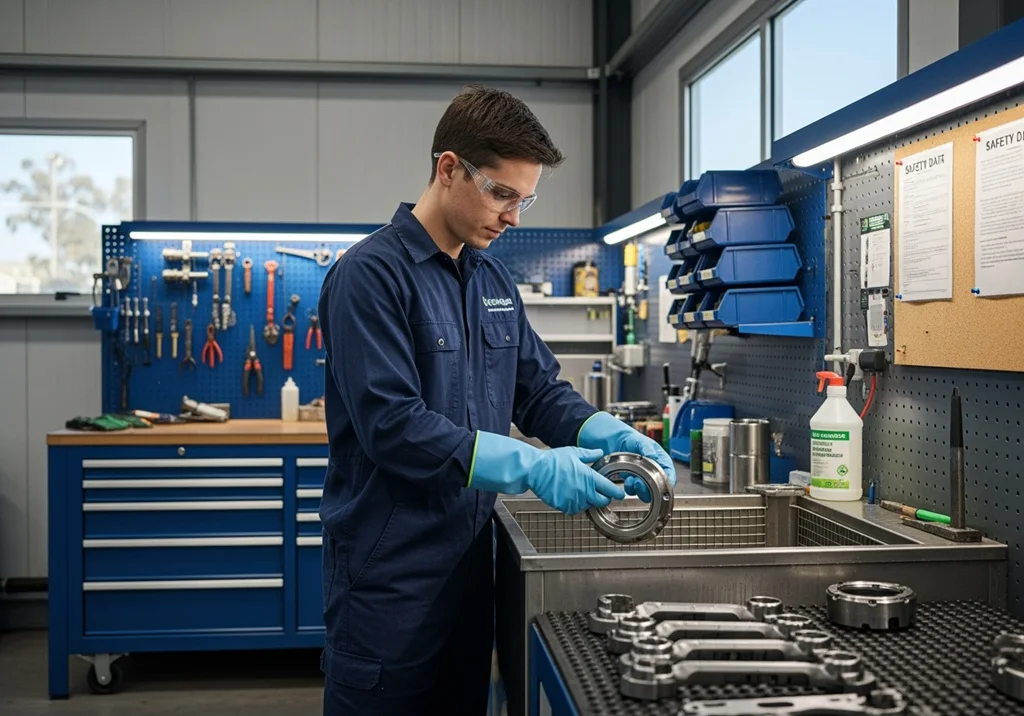
When workshop temperatures drop below 10 degrees Celsius, solvent-based parts cleaning becomes a more serious hazard than most managers realise. Doors and windows close to keep out the cold. Ventilation drops. Solvent vapours build up inside the workspace. Technicians work through full shifts breathing concentrated chemical fumes at levels that summer ventilation would never allow.
The health consequences are measurable. Respiratory complaints, skin conditions, and lost productivity tend to be attributed to winter in general rather than a specific, changeable cause. This guide explains how aqueous cleaning eliminates these cold-weather risks and what Australian workshops have observed after making the switch.
Why Cold Weather Makes Solvent Cleaning More Dangerous
Reduced Ventilation and Chemical Build-Up
Workshops close doors and windows during cold months to retain heat. This traps solvent vapours inside the workspace. Technicians breathe concentrated chemical fumes for entire shifts – sometimes 8 to 12 hours of continuous exposure with nowhere for vapours to go.
Measured vapour concentrations in closed winter workshops can be dramatically higher than in the same space during summer. The same cleaning products and procedures produce a fundamentally different exposure level. The difference is not the solvent. It is the loss of ventilation.
Cold weather workshop safety extends well beyond slipping hazards and poor visibility. Chemical exposure is one of the most overlooked winter risks in Australian industrial operations. Aqueous parts washer safety addresses this by removing toxic vapours from the cleaning process entirely.
Stainless steel parts washers use hot water and biodegradable detergent to clean components. They produce no harmful fumes – whether workshop doors are open in summer or sealed against winter cold.
Cold Temperatures, Slower Evaporation, and More Skin Contact
Solvents evaporate more slowly in cold temperatures. When technicians handle cleaned parts, chemical residue stays on surfaces longer. Skin contact time extends across every component touched during a shift.
Workshops that track dermatitis cases across seasons consistently find higher rates in winter despite identical cleaning procedures. Cold weather keeps solvent residue on parts and tools far longer. Absorption through skin increases throughout every winter working day.
Workshop Heaters That Spread Contaminated Air
Workshop heaters pull air from the workspace and blow it back across the floor. When that air contains solvent vapours, heaters distribute those fumes throughout the entire facility. Areas not involved in cleaning operations are affected too.
Workers positioned near heating units experience the worst respiratory symptoms in winter for exactly this reason. Solvent-free washing eliminates this problem at the source – no vapours means nothing for heaters to circulate.
Health Risks Technicians Face in Winter
Respiratory System Damage
Breathing solvent vapours inflames airways and reduces lung function. In a poorly ventilated winter workshop, technicians inhale these chemicals continuously throughout their shift. Coughing, throat irritation, shortness of breath, and headaches that persist after leaving are all documented outcomes.
Technician health cleaning practices directly shape long-term respiratory health. Switching to aqueous systems prevents this ongoing exposure. Occupational health research consistently links regular solvent exposure with measurably reduced lung capacity. Workers using aqueous cleaning methods show significantly better outcomes over time. That is a permanent health consequence from a preventable cause.
Skin Conditions and Dermatitis
Solvent contact strips natural oils from skin, causing cracks, inflammation, and chemical burns. Cold weather already dries skin. Adding solvent exposure on top creates severe dermatitis conditions that require medical treatment and time away from normal duties.
Heavy duty parts washers using biodegradable, water-based detergent eliminate this skin contact risk entirely. Workplace hygiene failures in cold weather carry direct financial consequences – medical costs, modified duty days, and workers’ compensation exposure. These costs disappear when the source of exposure is removed.
Neurological Effects from Chronic Exposure
Repeated solvent inhalation affects brain function. Technicians experience concentration problems, memory issues, and mood changes that appear as performance decline during winter months. Workers make more mistakes, take longer on familiar tasks, and report feeling mentally foggy by the afternoon.
Occupational health research confirms these effects are measurable and consistent. They reverse when workers switch to solvent-free washing – but reversal takes weeks. Every winter season of solvent exposure carries a sustained productivity cost beyond the direct health impact.
How Aqueous Cleaning Eliminates Cold-Weather Health Risks
No Toxic Vapours in the Workspace
Aqueous parts washers heat water to 85 degrees Celsius and spray it under pressure with biodegradable detergent. This process produces no harmful fumes. Technicians work in the same space without breathing chemical vapours – whether the workshop is sealed against winter cold or ventilated in summer.
Aqueous parts washer safety is built into the process itself. It does not depend on ventilation conditions or the time of year. Workshops that measure air quality before and after switching consistently record VOC levels dropping to near zero. Workers report no respiratory symptoms through entire winter seasons.
Safe Skin Contact with Biodegradable Detergent
Water-based detergent will not burn skin or cause dermatitis. Technicians handle cleaned parts immediately without the extended chemical contact time that drives winter dermatitis rates. Chemical-free parts washing improves workplace hygiene from the first shift of operation.
One Australian mining contractor tracked skin condition reports after installing aqueous cleaning systems. Dermatitis cases dropped from dozens of incidents per year to near zero. The biodegradable detergent rinses clean with hot water and leaves no chemical residue on components.
Consistent Performance Regardless of Temperature
Aqueous systems heat water to working temperature regardless of ambient conditions. A parts washer in a cold workshop performs identically to one in a warm facility. Chemical-free parts washing delivers the same result in a freezing maintenance bay as in a heated workshop.
Hotwash Australia designs and builds aqueous cleaning systems for Australian industrial conditions. Systems operate in unheated maintenance bays where winter temperatures drop well below comfortable levels – maintaining consistent water temperature and cleaning results year-round.
Real Workshop Observations: Health Improvements After Switching
Respiratory Incident Reduction
Operations switching from solvent degreasing to aqueous systems report dramatic reductions in respiratory complaints. Incidents running at dozens per winter dropped to near zero. Savings in medical costs and recovered productivity are substantial. The improvement holds across every subsequent winter.
Technician health cleaning records show the change clearly. The cause-and-effect relationship between solvent removal and respiratory improvement is consistent across operations of different sizes and industries.
Dermatitis Case Elimination
Workshops document the change in their own records. Medical referrals for skin conditions drop sharply after switching. Modified duty days disappear. The switch to solvent-free washing produces a permanent improvement that compounds – each winter costs less in health incidents than the previous one.
Manual parts washers using aqueous detergent achieve the same result for smaller operations. Eliminating skin contact with solvents improves technician outcomes regardless of workshop size or budget.
Improved Winter Productivity
The productivity penalty from cold-weather solvent exposure disappears with aqueous cleaning. More breaks, cautious parts handling, and afternoon cognitive fatigue are all symptoms of chemical exposure. These behaviours stop when the exposure stops.
Workers complete the same volume of parts cleaning in the same timeframes regardless of season. The winter productivity gap closes entirely. Extra heavy duty parts washers used in large mining and earthmoving operations combine hot water cleaning with oversized heating elements. These maintain temperature through continuous back-to-back cycles across long shifts.
Additional Benefits Beyond Health Protection
Faster Parts Cleaning in Cold Workshops
Hot water at 80 to 85 degrees Celsius cuts through grease and oil quickly, even in freezing workshops. Solvent degreasing slows in cold temperatures. Aqueous systems maintain consistent cleaning performance year-round.
Cold weather workshop safety compliance also becomes simpler. Aqueous cleaning eliminates the fire hazard created when workshop heaters ignite solvent vapours. Australian workplace safety regulations require extensive ventilation and explosion-proof equipment when using flammable solvents near heating sources. Water-based systems remove that compliance burden entirely.
Reduced Chemical Storage Requirements
Aqueous systems use concentrated biodegradable detergent in small quantities. The need for bulk solvent drum storage disappears. Closed winter workshops no longer carry the vapour concentration risk from stored solvents – a secondary exposure source most operations overlook entirely.
Hot tanks offer immersion cleaning that is particularly effective for heavily contaminated components. Their closed design minimises steam release into the workshop compared to open spray systems. This makes them well-suited to enclosed winter maintenance environments.
Making the Switch: Practical Steps for Cold Climate Operations
Selecting the Right System for Your Workshop
Unheated or partially heated workshops need machines with robust heating elements. These maintain water temperature in cold ambient conditions throughout a shift. Match machine capacity to your parts cleaning volume and the sizes of components your team regularly processes.
For workshops handling large volumes of heavily contaminated parts – typical of mining and earthmoving maintenance – super heavy duty parts washers provide the throughput to eliminate manual cleaning backlogs across full operating shifts.
Installation and Training
Install aqueous systems before winter begins. This gives technicians time to familiarise themselves with the equipment during warmer months. By the time cold weather arrives, the team operates efficiently and has already experienced the health improvement firsthand.
Training covers starting heating cycles earlier in cold workshops and monitoring water temperature before beginning cleaning tasks. Aqueous parts washer safety procedures are straightforward. Most operations report technicians master the essentials within a few shifts.
Conclusion
Cold weather turns solvent-based parts cleaning from a manageable hazard into a serious health threat. Reduced ventilation, slower evaporation, and heater-driven vapour distribution expose technicians to dangerous concentrations all winter. Respiratory problems, skin conditions, and performance decline all carry measurable costs.
Solvent-free washing with hot water and biodegradable detergent protects technician health, maintains reliable cleaning performance, and delivers operational advantages that compound across every winter season. Aqueous parts washer safety is built into the process – no toxic vapours, no harsh skin contact, no flammable storage. Technician health cleaning standards improve from the first day of operation.
For advice on aqueous cleaning systems suited to your workshop, contact our cleaning equipment specialists or email us at sales@hotwash.com.au.

Leave A Comment